Imagine waking up without the dread of checking your blood sugar. No more midnight alarms because your glucose dropped too low. No more mental math before every meal to calculate exactly how much insulin you need. For millions of people with Type 1 Diabetes, which is an autoimmune condition where the body stops producing insulin, this scenario was once a distant dream. Today, it is becoming a daily reality thanks to closed-loop systems, also known as artificial pancreas systems. These devices combine continuous glucose monitoring (CGM) with insulin pumps to automate dosing based on real-time data.
The promise of these systems is huge: less cognitive burden, better sleep, and improved health metrics. But does the technology actually work in the messy, unpredictable real world? The short answer is yes, but with caveats. This article breaks down how automated insulin delivery works, compares the leading options available in 2026, and looks at what users are really experiencing beyond the clinical trials.
How Closed-Loop Systems Work
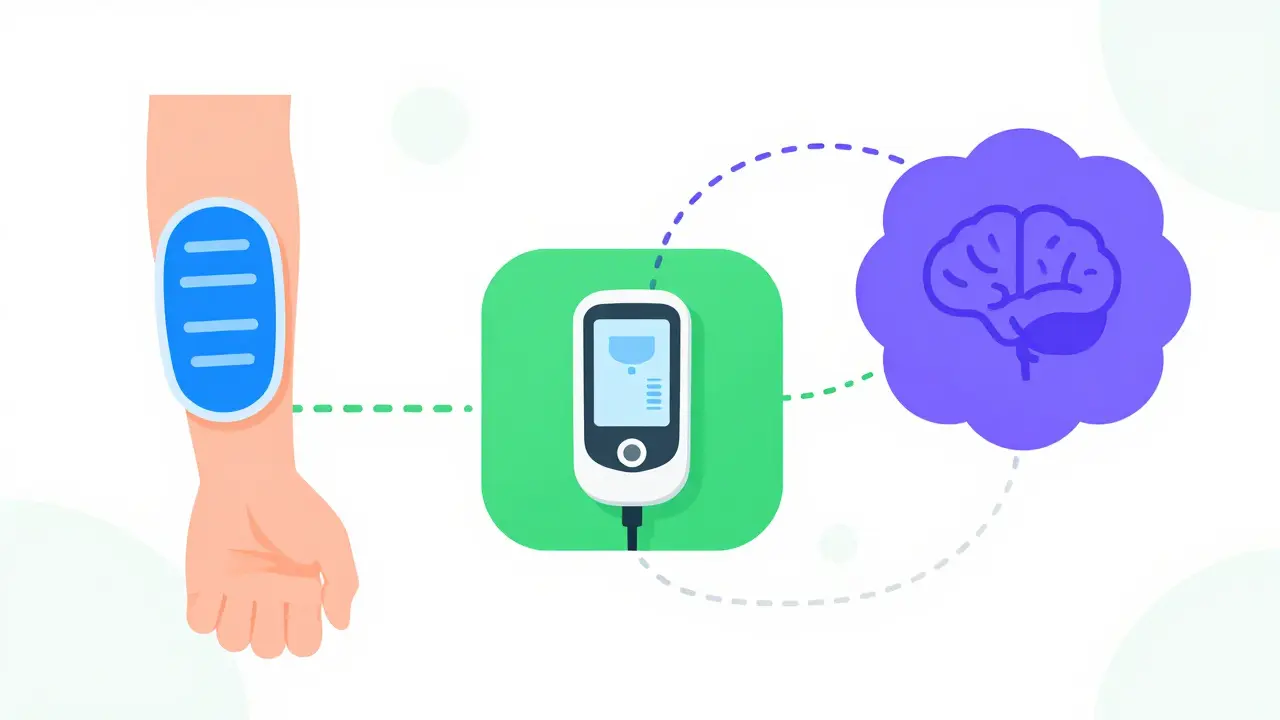
To understand why hybrid closed-loop systems are the current standard for automated insulin delivery, you first need to know their three core components. First, there is the continuous glucose monitor (CGM), a sensor that measures interstitial fluid glucose levels every few minutes. Second, there is the insulin pump, a small device that delivers rapid-acting insulin subcutaneously. Third, and most importantly, there is the algorithm-the "brain" that connects them.
In a traditional setup, you wear a CGM and a pump, but you still have to look at the numbers and decide when to bolus. In a closed-loop system, the algorithm constantly reads your glucose trends. If your blood sugar is rising, it suggests or automatically delivers more insulin. If it’s falling, it suspends or reduces basal insulin delivery. Most modern systems are "hybrid" because they still require you to manually announce meals. Fully closed-loop systems, which handle meal coverage automatically, are still emerging.
The goal is to keep your glucose within the target range of 70-180 mg/dL, which is the recommended blood glucose range for most adults with diabetes. Clinical studies show that hybrid closed-loop systems can increase time-in-range by 10-15 percentage points compared to manual pump therapy. That might sound like a small number, but over a year, it translates to hundreds of hours spent out of the danger zone.
Leading Systems on the Market
Not all closed-loop systems are created equal. By 2026, several major players dominate the market, each with distinct advantages and drawbacks. Here is how the top contenders stack up:
| System | Key Feature | Meal Announcement | Approx. Cost (USD) |
|---|---|---|---|
| Tandem t:slim X2 with Control-IQ | Automatic correction boluses | Required | $6,500 pump + $299/year software |
| Insulet Omnipod 5 | Tubless pod design | Required (Autonomous mode in beta) | $320 per pod (3-day life) |
| Beta Bionics iLet | Adaptive algorithm (no carb counting) | Recommended | Varies by insurance/provider |
| Medtronic MiniMed 780G | All-in-one integrated device | Required | Higher upfront cost, lower recurring |
Control-IQ, developed by Tandem Diabetes Care, is widely praised for its ability to deliver automatic correction boluses. This means if your blood sugar spikes after a snack, the system can respond without you needing to press buttons. However, it requires a smartphone connection and regular software updates.
Omnipod 5, made by Insulet, appeals to those who hate tubes. The entire system is a small pod worn on the abdomen or thigh. It has a 2-hour warm-up time and holds 150 units of insulin. Its recent "Autonomous" mode aims to eliminate meal announcements, though this feature is still rolling out.
iLet, from Beta Bionics, takes a different approach. Instead of requiring complex insulin-to-carb ratios, it uses an adaptive algorithm that only needs your body weight as input. It learns your body’s response over time. This simplifies setup significantly, making it attractive for children or those struggling with carb counting.
Real-World Performance Metrics
Clinical trials are controlled environments. Real life involves stress, illness, erratic sleep, and unpredictable meals. So, how do these systems perform outside the lab?
Data from the CLEAR study (2022) and subsequent real-world analyses show sustained improvements. Users typically see their time-in-range jump from baseline averages of 50-60% to 70-75%. More importantly, time below range (<70 mg/dL) drops from 5-7% to just 2-4%. This reduction in hypoglycemia events is life-changing for many, especially parents of young children with diabetes.
HbA1c levels, the average blood sugar marker, also improve by 0.3-0.5 percentage points. While this may seem modest, it significantly lowers the risk of long-term complications like neuropathy and retinopathy. Dr. Boris Kovatchev of the University of Virginia notes that hybrid closed-loop systems offer the most significant improvement in time-in-range since the introduction of rapid-acting insulin analogs.
However, there are risks. A 2023 study in *The Lancet Diabetes & Endocrinology* found a 1.2x higher rate of diabetic ketoacidosis (DKA) incidents among HCL users compared to open-loop systems. This is often due to pump site failures or occlusions going unnoticed. Users must remain vigilant about checking infusion sites regularly.
User Experiences: The Good and the Bad
Technology is only as good as its usability. Online forums like T1D Exchange and Reddit reveal a mixed but generally positive sentiment. About 78% of hybrid closed-loop users report significant improvements in sleep quality. One user shared, "I haven’t had a severe hypo in 8 months since starting Control-IQ-previously I averaged one per month."
But frustration exists. Approximately 42% of negative reviews cite inconsistent post-meal glucose control. Algorithms struggle with high-fat or high-protein meals, which cause delayed glucose spikes. Users often find themselves overriding the system frequently, leading to "algorithm fatigue." Additionally, sensor lag time of 5-15 minutes means the system is always reacting to past data, not present conditions.
Site adhesion issues affect 38% of users, according to Glooko’s 2023 survey. Rain, sweat, and exercise can dislodge sensors or pumps, breaking the loop. Many users resort to third-party adhesives like Skin Tac to keep everything secure.

Setting Up and Learning Curve
Getting started with a closed-loop system isn’t plug-and-play. Most users need 2-4 weeks to achieve proficiency. Initial setup takes 3-5 hours, including CGM calibration, pump priming, and algorithm training. You’ll need to understand carbohydrate counting, insulin-to-carb ratios, and correction factors-even if the system automates some of it.
Common challenges include:
- Sensor calibration errors (affecting 15% of users)
- Algorithm misinterpretation of exercise effects (22% of users)
- Difficulty managing irregular eating patterns (shift workers report 35% higher abandonment rates)
Pro tips from experienced users include pre-bolusing 15-20 minutes before high-carb meals and using "exercise mode" settings during physical activity. Manufacturer support varies; Tandem’s hotline averages an 8.2-minute response time, while community forums like OpenAPS provide extensive peer support.
Market Trends and Future Outlook
The global closed-loop system market is booming. Valued at $1.8 billion in 2023, it is projected to reach $5.7 billion by 2030, growing at a 17.8% CAGR. Adoption rates in the US stand at approximately 28% among insulin pump users, with highest uptake among children (35%) and young adults (32%).
Regulatory bodies are pushing for interoperability. The FDA’s 2022 guidance on cybersecurity in medical devices mandates security updates, addressing concerns about hacking risks. Meanwhile, next-generation algorithms aim to incorporate activity tracking and stress biomarkers. Beta Bionics’ Project Eiger targets 2026 for release, promising even greater autonomy.
Reimbursement remains a barrier. Medicare covers 80% of pump costs, leaving 20% patient responsibility. This creates access disparities for low-income patients. Advocacy groups continue to push for broader coverage, arguing that improved outcomes reduce overall healthcare costs.
What is the difference between hybrid and fully closed-loop systems?
Hybrid closed-loop systems automate basal insulin delivery but require manual meal announcements. Fully closed-loop systems handle both basal and bolus insulin automatically, eliminating the need for carb counting. Fully closed-loop technology is still emerging and not yet widely available commercially.
Are closed-loop systems safe for children?
Yes, most major systems are FDA-approved for use in children, often as young as 2 years old. Parents report significant reductions in overnight hypoglycemia. However, careful monitoring and education are essential to manage risks like DKA.
Do I need a smartphone to use a closed-loop system?
Most modern systems, like Tandem’s Control-IQ and Omnipod 5, require a compatible smartphone (iOS 13.0+ or Android 8.0+) to run the algorithm and connect via Bluetooth. Medtronic’s integrated systems operate independently of phones but still benefit from app connectivity for data logging.
What happens if my sensor fails?
If the CGM sensor fails, the closed-loop system will suspend insulin delivery or revert to a safe basal rate. You must immediately check your blood sugar with a fingerstick and replace the sensor. Regular site checks are crucial to prevent prolonged disruptions.
Is insurance likely to cover these systems?
Coverage varies by insurer and region. Medicare covers 80% of pump costs, but private insurers may require prior authorization. Many plans consider hybrid closed-loop systems medically necessary for eligible patients, but out-of-pocket expenses can still be significant.
 Medications