Vaccine Safety & Timing Calculator for Immunocompromised Patients
Your Treatment Profile
Quick Reference Guide
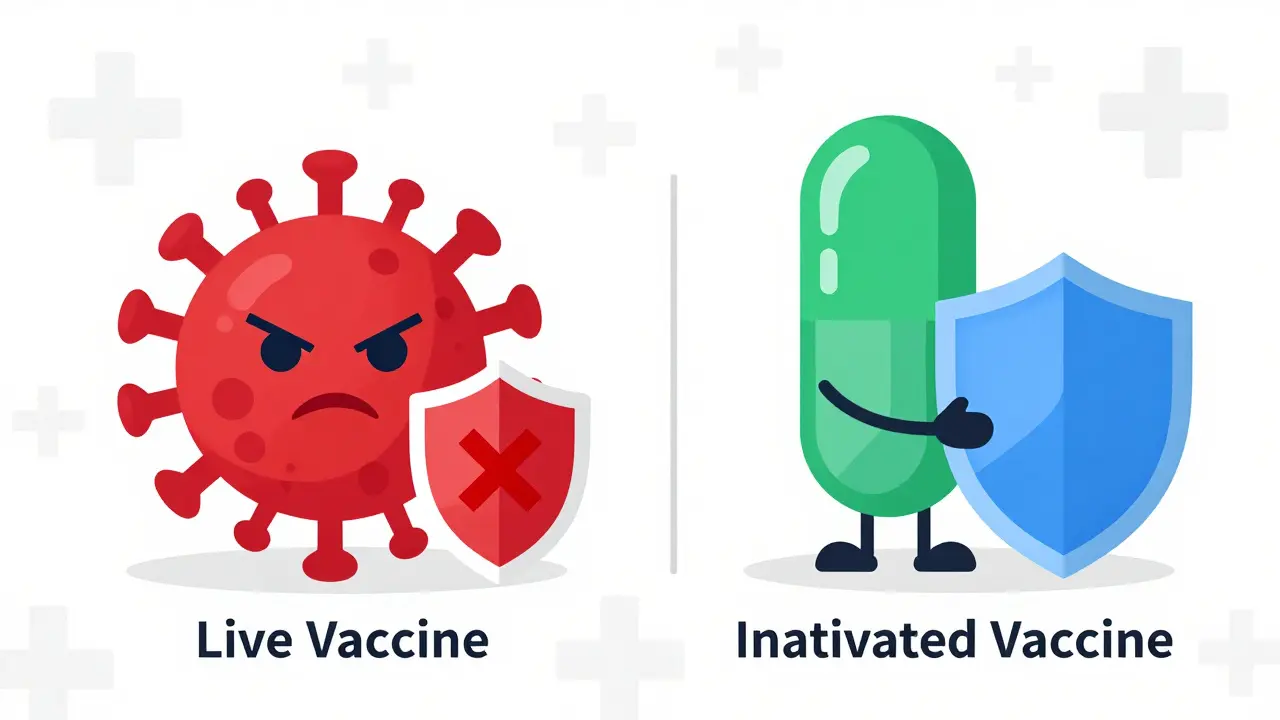
Getting sick while your immune system is suppressed is not just an inconvenience; it can be life-threatening. If you are taking steroids, biologics, or chemotherapy, the standard advice about vaccines does not always apply to you. The biggest question isn't just if you should get vaccinated, but which type and when. This distinction between live and inactivated vaccines is critical for your safety.
The guidelines have shifted significantly. Recent updates from major health organizations, including the Infectious Diseases Society of America (IDSA) in late 2025, provide a clear roadmap. You need to know that live vaccines carry serious risks for you, while inactivated ones are safe but require specific timing to work effectively. Here is what you need to know to stay protected without putting yourself at risk.
Live vs Inactivated: The Core Difference
To understand why timing matters, you first need to understand how these two types of vaccines work. They use completely different methods to train your body’s defenses.
| Vaccine Type | How It Works | Safety for You | Examples |
|---|---|---|---|
| Live Attenuated | Uses a weakened version of the actual virus or bacteria. It replicates slightly to mimic infection. | Contraindicated (Avoid) for most moderately to severely immunocompromised patients. Risk of causing the disease itself. | MMR (Measles, Mumps, Rubella), Varicella (Chickenpox), Zostavax (older shingles vaccine), Nasal Flu Spray (LAIV). |
| Inactivated/Killed | Uses killed viruses, parts of viruses, or mRNA/protein instructions. Cannot replicate or cause infection. | Safe to administer. However, your body may produce fewer antibodies, requiring extra doses or boosters. | Influenza shot (injection), Hepatitis B, Pneumococcal (PCV20/PPSV23), mRNA COVID-19 vaccines (Pfizer/Moderna), Novavax. |
If you are on strong immunosuppressive therapy, live vaccines are generally off-limits. Your immune system might not be able to control even the weakened virus, leading to severe illness. Inactivated vaccines are safe because they cannot cause disease, but the challenge is ensuring your body creates enough protection from them.
Critical Timing Windows
Timing is everything. Getting a vaccine when your drug levels are highest can render it useless. Conversely, getting it too early before starting treatment might leave you unprotected during your most vulnerable period. The IDSA 2025 guidelines emphasize precise coordination with your care team.
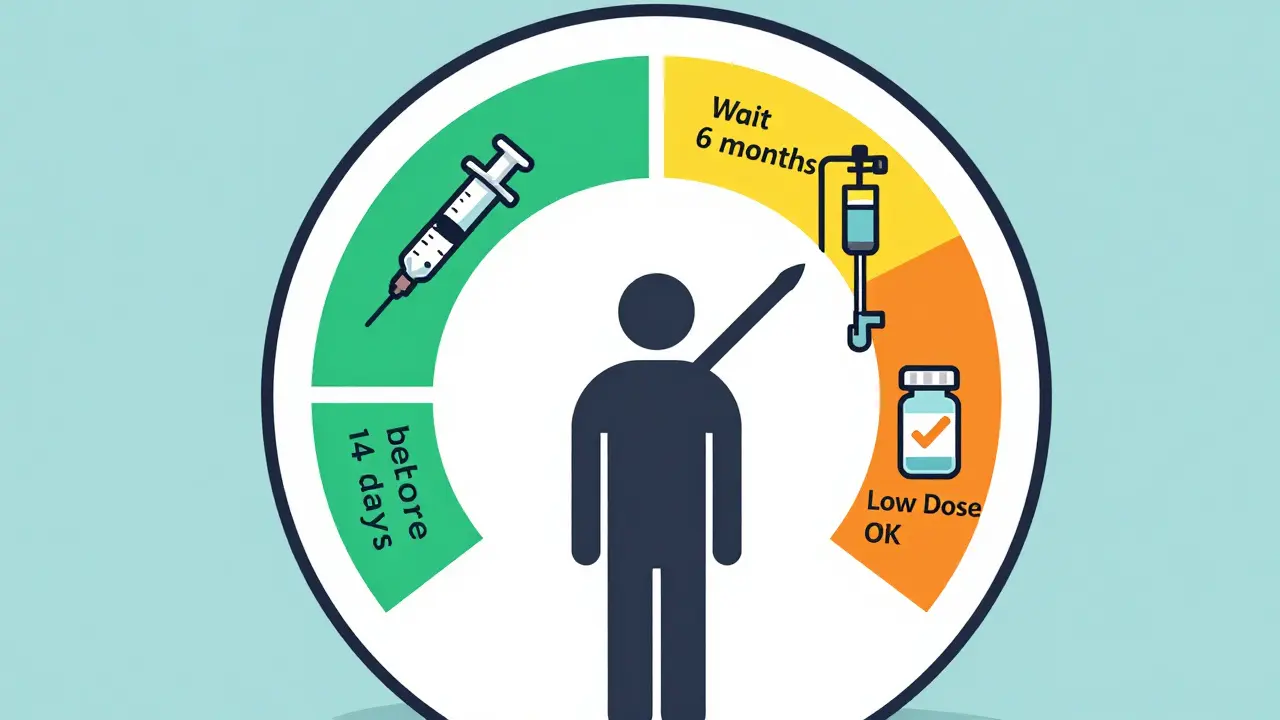
- Before Starting Therapy: Ideally, all appropriate vaccines should be administered at least 14 days before you begin any new immunosuppressive medication. This allows your immune system to build a baseline defense.
- During Cyclical Therapy: For treatments like chemotherapy given in cycles, aim for the "nadir" week-the time between cycles when your white blood cell counts are recovering. This is often the window of lowest immunosuppression.
- B-Cell Depleting Agents (e.g., Rituximab): These drugs wipe out the cells responsible for making antibodies. The IDSA mandates a minimum 6-month interval after your last dose before receiving most vaccines. Some protocols suggest waiting 3-6 months for optimal response. If you must vaccinate while on maintenance therapy, try to do so approximately 4 weeks before your next scheduled infusion.
- Corticosteroids: If you are taking high-dose steroids (≥20 mg prednisone equivalent daily for ≥14 days), vaccination should ideally occur when the dose is reduced below this threshold. Low-dose steroids usually do not interfere significantly.
Dr. Carlos del Rio, an infectious disease specialist, notes that the window for optimal vaccine response in immunocompromised patients is narrow. Missing this window doesn't just mean a less effective shot; it means you remain unprotected during periods of high exposure risk.
Vaccine-Specific Guidance
Not all vaccines follow the same rules. Let’s look at the most common ones you will encounter.
Influenza (Flu)
You should receive the inactivated influenza vaccine (the shot) annually. Do not take the live attenuated influenza vaccine (LAIV), which is the nasal spray. Studies show that immunocompromised individuals benefit significantly from annual flu shots, reducing hospitalization rates by up to 40% compared to unvaccinated peers. No additional booster doses are typically needed for the flu vaccine beyond the single annual shot.
COVID-19
mRNA vaccines (Pfizer-BioNTech and Moderna) have the strongest evidence base for immunocompromised populations. The ACIP voted unanimously in September 2025 to recommend additional doses for persons aged ≥6 months with moderate or severe immunocompromise. While the general public might need one updated dose per season, you may need two or more to achieve adequate antibody levels. Stick to the same manufacturer for your initial series if possible, as mixing brands can sometimes reduce efficacy in compromised systems.
Hepatitis B
If you are not already immune, hepatitis B vaccination is crucial. Standard regimens include Engerix-B or Recombivax HB (3 doses over 6 months). For healthcare workers or those needing faster immunity, Heplisav-B offers a 2-dose schedule (0 and 1 month). Ensure your provider checks your antibody titers after completion to confirm immunity, as responses can be weak.
Pneumococcal Disease
Pneumonia is a major risk. Current guidelines recommend PCV20 (a conjugate vaccine) for most adults. Depending on your specific condition and age, you might also need PPSV23 (polysaccharide vaccine). The spacing between these depends on your history-consult your doctor for the exact sequence.
The Role of Household Contacts (Cocooning)
Your protection doesn't rely solely on your own vaccines. Because your response to vaccines may be blunted, protecting those around you is a vital strategy known as "cocooning." The IDSA 2025 guidelines highlight that household members and close contacts should be up to date with all recommended vaccinations.
Data from the Payne 2025 cohort study showed that this strategy reduced household transmission of respiratory viruses by 57% among immunocompromised patients. Ask your family, roommates, and frequent caregivers to ensure their Tdap, flu, and COVID-19 vaccines are current. This creates a buffer zone around you, significantly lowering your exposure risk.

Practical Steps for Coordination
Navigating this requires communication. Don't assume your oncologist knows your primary care physician's vaccination schedule, or vice versa.
- Create a Unified Record: Maintain a detailed log of your immunosuppressive agents, dosages, and dates. Share this with every provider who administers vaccines.
- Use Decision Tools: The IDSA launched an online decision support tool in November 2025. Ask your care team if they use this or similar software to check contraindications automatically.
- Plan Ahead: If you know you will start a new biologic therapy in three months, schedule your vaccines now. If you are traveling, discuss pre-travel vaccines well in advance, as some require months to complete.
- Monitor Response: For critical vaccines like Hepatitis B or Influenza, ask if post-vaccination serology (blood tests to check antibody levels) is appropriate for your case. Knowing if you are actually protected changes future decisions.
Challenges exist. Pharmacy shortages, especially for updated seasonal vaccines, can delay optimal timing. One patient reported missing their ideal window due to stock issues, leaving them unprotected during a winter surge. Call pharmacies early and consider specialized clinics that coordinate directly with oncology practices.
When to Seek Immediate Advice
Contact your specialist immediately if:
- You accidentally receive a live vaccine (like the nasal flu spray or MMR) while on significant immunosuppression.
- You develop signs of infection shortly after vaccination (fever, rash, persistent cough).
- Your treatment schedule changes abruptly, affecting your planned vaccination timeline.
Remember, the goal is balance. You need protection from dangerous diseases, but you must avoid introducing risks that your body cannot handle. With the right timing and the right vaccine type, you can significantly reduce your health risks.
Can I get the shingles vaccine if I am on immunosuppressants?
Yes, but only the recombinant zoster vaccine (Shingrix), which is inactivated. The older live zoster vaccine (Zostavax) is contraindicated for immunocompromised individuals. Shingrix is highly effective and safe, though you may experience stronger side effects. Timing should still be coordinated with your doctor, ideally during periods of lower immunosuppression.
Does methotrexate affect my vaccine response?
Methotrexate can reduce vaccine efficacy, particularly for influenza and COVID-19 vaccines. Some specialists recommend holding methotrexate for 1-2 weeks after receiving certain vaccines to improve antibody production, but this must be decided by your rheumatologist. Never stop or alter your medication without medical guidance.
What if I missed the 14-day window before starting my new drug?
Don't panic. Contact your healthcare provider immediately. They may advise delaying the start of your immunosuppressive therapy if possible, or they may recommend vaccinating later when drug levels are lower. In some cases, they might proceed with the vaccine despite the shorter window, accepting a potentially reduced response, and plan for a booster later.
Are travel vaccines safe for me?
Many travel vaccines are inactivated (like typhoid injection, hepatitis A/B, and rabies) and are safe. However, yellow fever and cholera vaccines are live and generally contraindicated. Consult a travel medicine specialist well in advance (at least 8 weeks before travel) to create a safe itinerary of necessary protections.
Why do I need extra doses of the COVID-19 vaccine?
Immunocompromised individuals often produce lower levels of neutralizing antibodies after standard vaccination. Additional doses help boost these levels to protective thresholds. The ACIP recommends extra doses for those with moderate to severe immunocompromise to bridge the gap in immune response caused by medications like rituximab or chemotherapy.
 Medications