

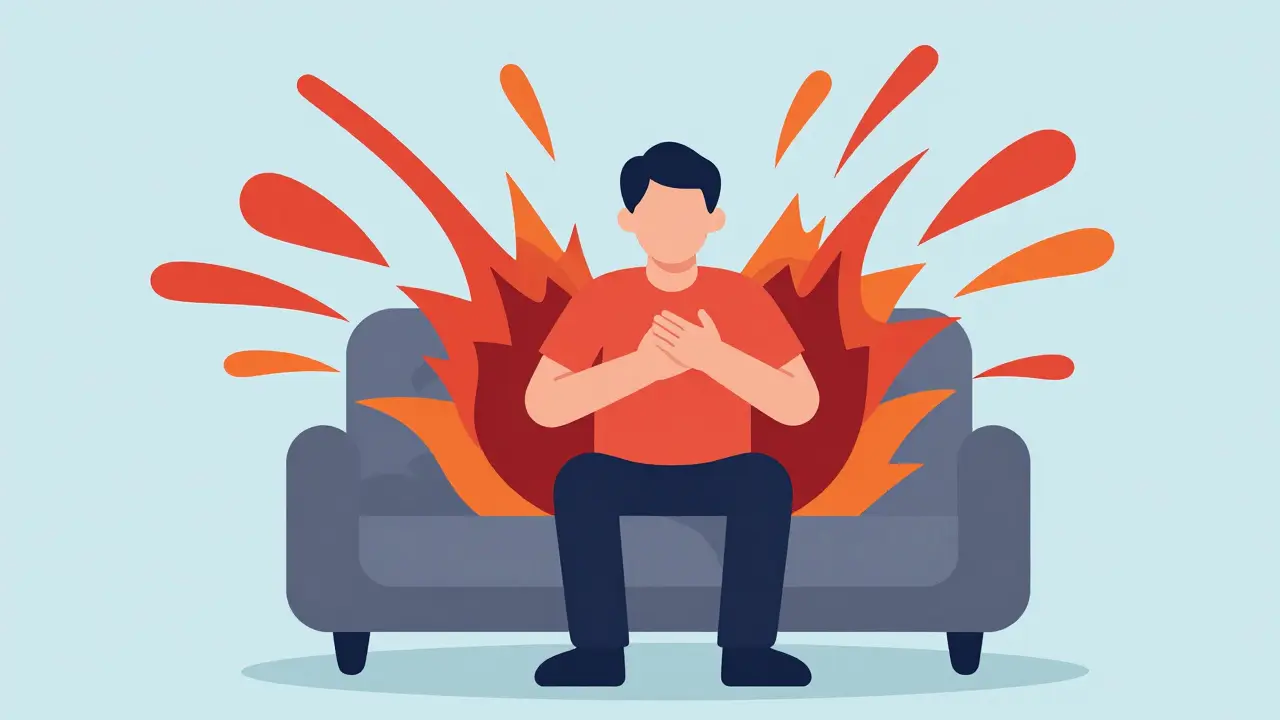
Imagine your heart suddenly starts hammering against your ribs. Your breath gets short, and a cold sweat breaks out on your skin. You feel like you are having a heart attack or losing your mind, even though you are sitting safely on a couch. This is the terrifying reality of a Panic Attacka sudden episode of intense fear that triggers severe physical reactions when there is no real danger or apparent cause. While many people experience anxiety, Panic Disorder is a specific condition where these attacks happen repeatedly and unexpectedly, often leading to a life of avoidance and fear.
This isn't just about feeling stressed before a big meeting. It is a medical condition that affects millions of people globally. According to recent data, approximately 4.7% of adults in the U.S. experience this condition in their lifetime. Women are affected at twice the rate of men, and it often strikes during late adolescence or early adulthood. Understanding what is happening in your body and brain is the first step toward taking your life back.
What Actually Happens During a Panic Attack?
When you have a panic attack, your body's fight-or-flight system goes into overdrive. It's as if your brain's alarm system has been hacked. The Sympathetic Nervous Systemthe part of the autonomic nervous system responsible for the body's fight-or-flight response floods your body with adrenaline. This causes your heart rate to spike, often exceeding 120 beats per minute. You might feel like you can't breathe, even though your oxygen levels are normal.
Diagnosing this condition relies on specific criteria outlined in the DSM-5-TR. To be considered a panic attack, you need to experience an abrupt surge of intense fear that peaks within minutes. You must have at least four of the following symptoms:
- Palpitations or a racing heart (reported by 98% of patients)
- Sweating profusely
- Trembling or shaking
- Sensations of shortness of breath or smothering
- Feelings of choking
- Chest pain or discomfort
- Nausea or abdominal distress
- Dizziness or lightheadedness
- Chills or hot flashes
- Numbness or tingling sensations
- Derealization (feeling detached from reality)
- Fear of losing control
- Fear of dying
These symptoms are intense but temporary. Most attacks last between 5 to 20 minutes, though the aftermath can linger for hours. The fear of the next attack is often worse than the attack itself, leading to a cycle of constant worry.
The Connection to Agoraphobia
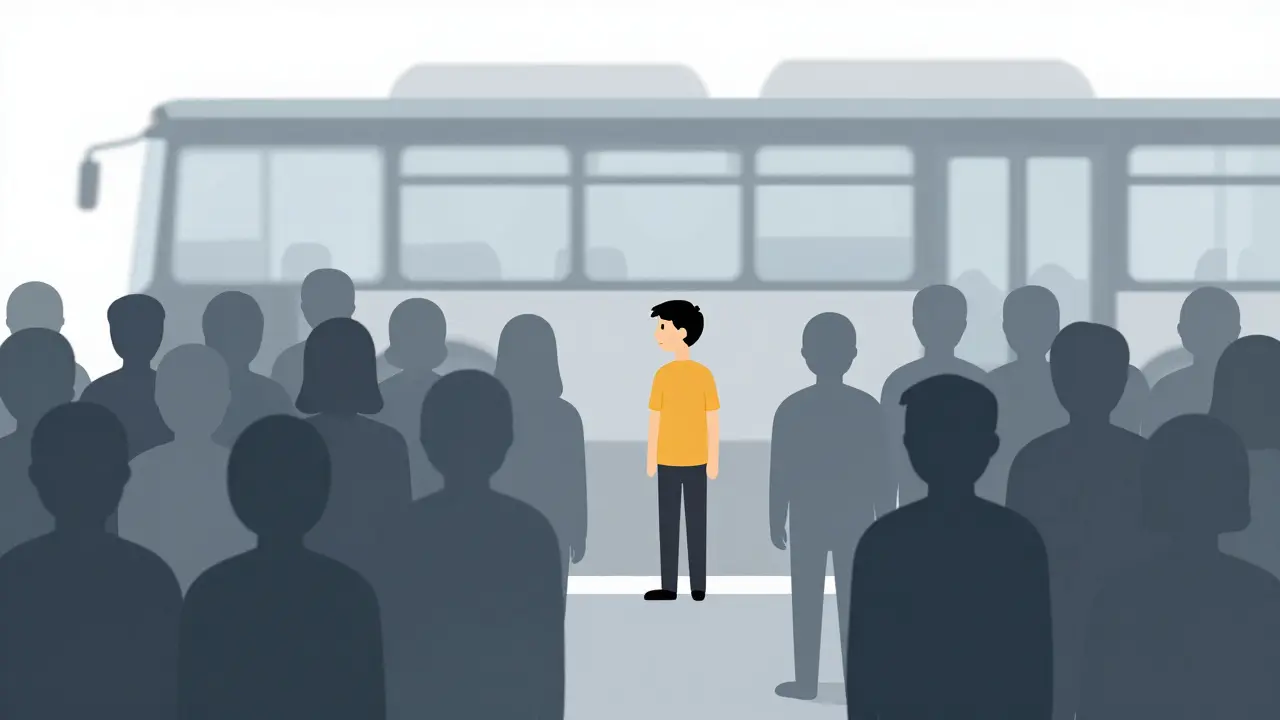
Many people who suffer from recurrent panic attacks develop Agoraphobiaan anxiety disorder characterized by fear and avoidance of situations where escape might be difficult or help unavailable. This isn't just a fear of open spaces; it is a fear of being trapped in a situation where a panic attack could happen without a way out. About 30% to 50% of individuals with panic disorder develop this complication.
Common avoidance patterns include:
- Public transportation like buses or trains (62% of cases)
- Open spaces like parking lots or bridges (55%)
- Enclosed places like theaters or shops (48%)
- Being outside the home alone (72%)
This avoidance behavior can severely shrink your world. You might stop going to work, visiting friends, or even leaving the house. The goal of treatment is not just to stop the attacks, but to help you regain the freedom to move through the world without fear.
Why Does This Happen? Causes and Risk Factors
There is no single cause for panic disorder. It is a complex mix of biology, genetics, and environment. Research shows that neurobiological factors play a huge role. The Amygdalaa small almond-shaped structure in the brain involved in processing emotions, especially fear tends to be 25% more active in people with panic disorder when they are exposed to threat-related stimuli. Additionally, the locus coeruleus-norepinephrine system, which regulates stress responses, often shows heightened activity.
Genetics also matter. Twin studies suggest heritability estimates range from 30% to 48%. If you have a close relative with panic disorder, your risk is higher. However, genes are not destiny. Environmental triggers are often the spark that lights the fire. Major life stressors precede 65% of first-onset cases within six months. This could be a job loss, a breakup, or a significant health scare.
Cognitive theories also highlight the role of 'anxiety sensitivity.' This is the fear of anxiety-related sensations themselves. If you believe that a racing heart means you are having a heart attack, you are 4.7 times more likely to develop panic disorder. It is the interpretation of the physical sensation that drives the panic, not just the sensation itself.
Effective Treatment Options
Good news: Panic disorder is highly treatable. You do not have to live with this forever. The gold standard for treatment involves a combination of therapy and medication, though many people find success with therapy alone.
Cognitive Behavioral Therapy (CBT)
Cognitive Behavioral Therapya form of psychological treatment that focuses on changing negative thought patterns and behaviors is the most effective first-line intervention. Studies show it has efficacy rates of 70% to 80%. The therapy typically lasts 12 to 15 weekly sessions. It works by targeting the catastrophic misinterpretations of bodily sensations.
CBT includes specific techniques:
- Cognitive Restructuring: Learning to challenge thoughts like "I'm going to die" with evidence like "I have felt this before and survived."
- Interoceptive Exposure: Deliberately inducing physical sensations like dizziness through spinning or hyperventilation to learn they are harmless.
- In Vivo Exposure: Gradually confronting avoided situations, like taking a bus, in a controlled hierarchy.
Patients often report significant improvement after completing exposure hierarchies. One patient shared that after avoiding buses for three years, they worked with a therapist to take progressively longer rides until they could commute without panic.
Medication Management
Medication can be a helpful tool, especially when symptoms are severe. The most commonly prescribed drugs are SSRIsSelective Serotonin Reuptake Inhibitors, a class of drugs used to treat depression and anxiety such as sertraline or paroxetine. These usually take 8 to 12 weeks to show full effect, with response rates of 60% to 75%.
Another class of drugs, Benzodiazepinesa group of psychoactive drugs that depress the central nervous system and are used for anxiety relief like alprazolam, provide rapid relief. However, they carry significant risks. About 30% to 40% of long-term users develop physiological dependence. Experts generally recommend them only for short-term use while waiting for SSRIs to kick in.
| Treatment Type | Effectiveness | Duration | Key Benefit | Key Risk |
|---|---|---|---|---|
| Cognitive Behavioral Therapy | 70-80% | 12-15 weeks | Long-term skills | Requires active participation |
| SSRIs (Medication) | 60-75% | 8-12 weeks onset | Reduces physical symptoms | Side effects like weight gain |
| Benzodiazepines | Rapid relief | Immediate | Fast symptom control | High dependence risk |
Dr. Murray B. Stein, a leading expert in the field, notes that combining CBT with SSRI medication produces remission rates of 85%, compared to 65-70% with either modality alone. However, stopping medication without addressing the underlying thoughts can lead to a 60% relapse rate within six months.
Recovery and Long-Term Outlook
Recovery is possible. Long-term outcome studies indicate that 65% of properly treated patients achieve sustained remission. However, 25% may experience recurrent episodes, often triggered by major life stressors. This highlights the importance of maintenance strategies, such as quarterly booster sessions with a therapist.
Digital health is also changing the landscape. Apps like 'Panic Relief' and prescription digital therapeutics like 'CalmWave' are showing promise. These tools deliver CBT modules with biometric feedback, making treatment more accessible. Telehealth adoption has grown significantly, with 28% of anxiety treatments now delivered digitally.
If you are struggling, know that the diagnostic delay is often long, averaging over seven years for many people. Don't wait. Many patients initially seek emergency care believing they are having heart attacks. If you have been checked for heart issues and found healthy, but the fear persists, it is time to see a mental health professional.
Frequently Asked Questions
Can panic attacks be fatal?
No, panic attacks are not fatal. While the sensation of dying is very real and terrifying, the physical symptoms are caused by adrenaline and cannot cause death. However, the fear of dying is one of the most common symptoms.
How long does it take for CBT to work?
Most patients see significant improvement after 12 to 15 weekly sessions. Some symptom reduction can occur within the first few weeks as you learn breathing techniques and cognitive restructuring strategies.
Do I need medication to recover?
Medication is not strictly necessary for everyone. CBT alone is highly effective. However, for severe cases or those with comorbid depression, a combination of therapy and medication often yields the best results.
What is the difference between anxiety and a panic attack?
Anxiety usually builds up over time and is often tied to a specific stressor. A panic attack is sudden, peaks within minutes, and occurs without an obvious trigger. It involves intense physical symptoms that mimic a medical emergency.
Can I drive if I have panic disorder?
Most people with panic disorder can drive safely. If agoraphobia is severe, you might avoid highways. Therapy can help you gradually reintroduce driving situations until you feel confident behind the wheel.
 Medications

Jesse Hall
March 25, 2026 AT 21:52CBT is amazing and I really felt the difference after a few sessions :) It helps you reframe the thoughts that scare you the most. I used to think every heart palpitation was a sign of death but now I know better. The breathing techniques alone saved me from so many bad moments. I recommend everyone to try it before jumping on meds. It takes work but the payoff is huge for your mental health. You can actually live your life again without constant fear. Just stick with the therapist and do the homework they give you. It is worth every minute of effort you put into it :)
Aaron Sims
March 26, 2026 AT 22:58This is completely wrong!!! The medical industry wants you to believe you are broken!!! They push these drugs to make money not to help you!!! You are not sick you are just reacting to the world!!! Stop taking the pills and look at the real causes!!!
Stephen Alabi
March 28, 2026 AT 16:22It is imperative to note that the pharmacological interventions are evidence-based and supported by extensive clinical trials. The assertion that the industry is solely motivated by profit ignores the rigorous regulatory oversight in place. Patients with severe symptoms often require stabilization before therapy can be effective. Dismissing medication entirely can lead to unnecessary suffering for those in acute distress. The data indicates that combined approaches yield the highest remission rates. One should consider the individual case before making broad generalizations about treatment efficacy.
Donna Fogelsong
March 29, 2026 AT 20:13chemical imbalance is a myth jargon heavy stuff no periods the amygdala is not the enemy the system is rigged to keep you dependent on meds they do not want you to heal naturally because healing is free and they need you sick to sell the cure so ignore the doctors and listen to your body instead
James Moreau
March 29, 2026 AT 22:54I understand your concern but the data suggests otherwise regarding the biological markers. It is important to respect the research that has been conducted over decades. Many people find relief through the combination of therapy and medication. Dismissing the science entirely might prevent someone from finding what works for them. We should all support each other in finding the best path forward.
Zola Parker
March 30, 2026 AT 16:59Fear is just a construct of the mind that we allow to control us :) It is fascinating how the body reacts to a thought. The panic is real but the danger is often imagined. We create these monsters in our heads and then try to escape them. The solution is not to run but to face the thought. It is a philosophical journey as much as a medical one. You have to decide what is real and what is just noise. The mind is powerful and it can be your best friend or worst enemy. Choose wisely how you interpret your sensations.
Mihir Patel
April 1, 2026 AT 07:20My heart stoped beating one day and i thought i was going to die it was the worst feeling ever i could not breath and my hands were shaking so bad i could not hold my phone. i thought the end was near but i survived and now i know it is just panic. it is scary but you can get through it if you stay calm.
Seth Eugenne
April 1, 2026 AT 17:38You are doing great 💪 Keep going and remember you are not alone in this. It is amazing how you survived that moment and learned from it. Many people feel the same way but do not talk about it. You should be proud of yourself for sharing your story here. Sending you all the best vibes for your recovery journey 🌟
winnipeg whitegloves
April 1, 2026 AT 21:08The dread washes over you like a tidal wave crashing against the shore of your sanity. It is a visceral experience that leaves you gasping for air in the quietest room. Your body betrays you with signals that scream danger when there is none. It is a cruel trick played by your own nervous system on a loop. Yet there is hope in understanding the mechanics of this storm.
florence matthews
April 3, 2026 AT 06:53We should all support each other here :) It is so important to share these experiences and help one another. Your story about CBT really resonates with me and gives me hope. We can get through this together with patience and kindness. Thank you for sharing your positive outcome with the group.
Kenneth Jones
April 3, 2026 AT 22:22Stop listening to the doctors and trust yourself
Sean Bechtelheimer
April 5, 2026 AT 12:32It is interesting how they push the medication narrative. You see the same patterns everywhere in the industry. They want you dependent on the pills forever. Think about the profit margins on these SSRIs. It is not about healing you. It is about keeping you coming back for more. The therapy part is just a band-aid solution. They do not want to fix the root cause. The root cause is often environmental or spiritual. But telling you that is not profitable. So they label you with a disorder. Then they sell you the cure. It is a cycle that never ends. People need to wake up to this reality. The data is manipulated to support the drug companies. Look at the funding behind these studies. It is all connected to the same big pharma groups. Do not trust the statistics blindly. Your body knows better than their charts. Listen to your own intuition instead.