

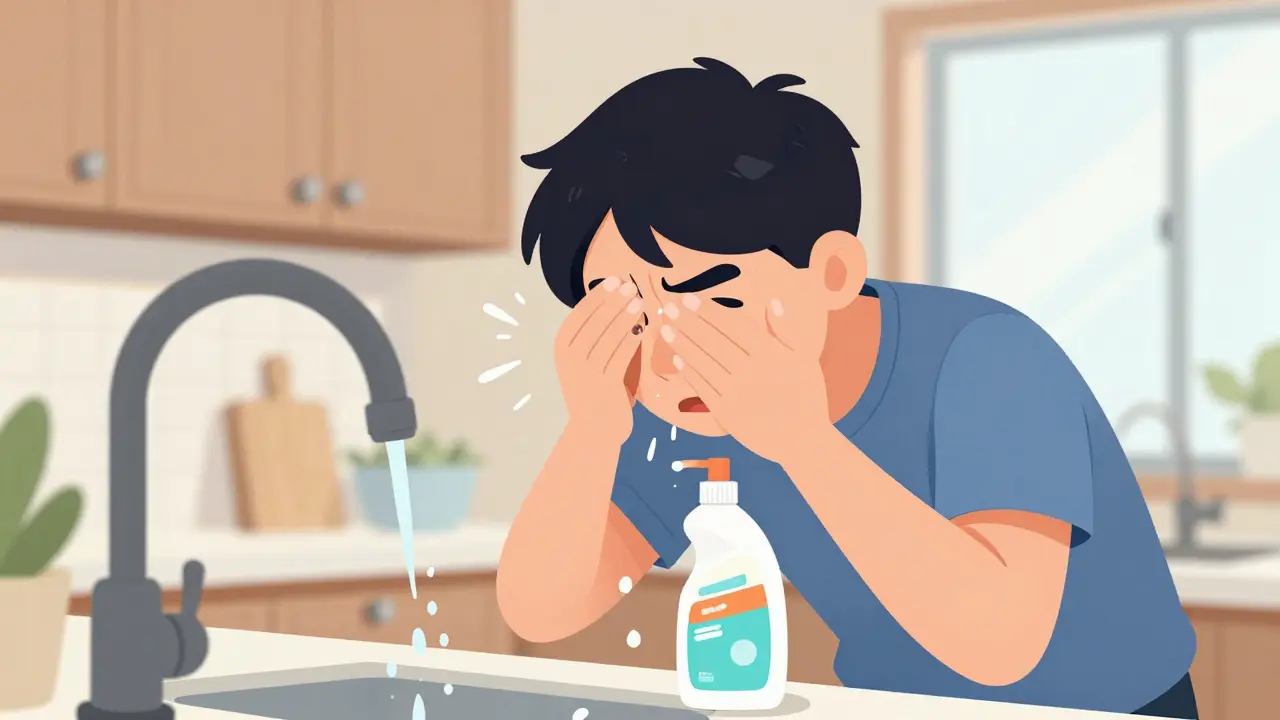
When a chemical splash hits your eye, you don’t have minutes to react-you have seconds. A single drop of drain cleaner, bleach, or industrial solvent can start burning through your cornea in under 10 seconds. The damage isn’t always visible right away, but the clock is ticking. Chemical eye injury is one of the most urgent eye emergencies you can face, and the difference between saving your vision and losing it comes down to what you do in the first few moments after exposure.
Why Immediate Action Is Non-Negotiable
Chemical splashes don’t just sting-they destroy. Alkali substances like ammonia, lye, or lime (pH above 11.5) are especially dangerous because they dissolve fats and proteins in the eye, letting them seep deep into the tissue. Acid burns, like those from battery acid or hydrochloric acid (pH below 2.5), cause immediate surface damage but often stop at the outer layers. Still, both can lead to blindness if not treated fast. Research from the British Journal of Ophthalmology shows that starting irrigation within 10 seconds of exposure cuts the risk of permanent vision loss by 76%. That’s not a suggestion-it’s a life-saving window. A 2022 study of workplace injuries found that the average delay before people started rinsing their eyes was over two minutes. By then, the damage was often irreversible.What to Do Right After a Chemical Splash
Here’s the exact sequence you need to follow, no matter where you are:- Don’t rub your eye. Rubbing spreads the chemical and grinds particles into the surface. It’s instinctive, but it makes everything worse.
- Start flushing immediately. Use the nearest source of clean water-tap water, a sink, a shower, even a bottle of water. Don’t wait for saline or a special eyewash station. Tap water works just as well, according to studies published in JAMA Ophthalmology.
- Hold your eye open. Use your fingers to pull your eyelids apart. If you’re alone, tilt your head back and turn it toward the injured side so the water flows out, not into your other eye.
- Flush for at least 20 minutes. Healthdirect Australia, the Better Health Channel, and the American Red Cross all agree: 20 minutes is the minimum. Some cases, especially with strong alkalis, need longer. Don’t stop because it feels better. The pain may lessen, but the chemical is still active.
- Remove contact lenses if possible. If the lens isn’t stuck or the eye isn’t severely swollen, gently try to remove it. If you can’t, keep flushing-the water will wash it out over time.
What Not to Do
People make the same mistakes over and over-and they cost vision.- Don’t use eye drops. They’re not strong enough to flush out chemicals. They might even trap the substance against your eye.
- Don’t apply pressure. No matter how much it hurts, never press on the eyeball. That can cause a rupture.
- Don’t wait for someone else to help. In 68% of cases, victims didn’t get help right away because they hoped someone else would act. You are the only one who can start the process immediately.
- Don’t stop early. A 2022 study found that 57% of people stopped irrigation too soon because they thought the pain meant it was over. It doesn’t. The chemical can still be active even if you feel fine.
Workplace vs. Home: Different Rules, Same Goal
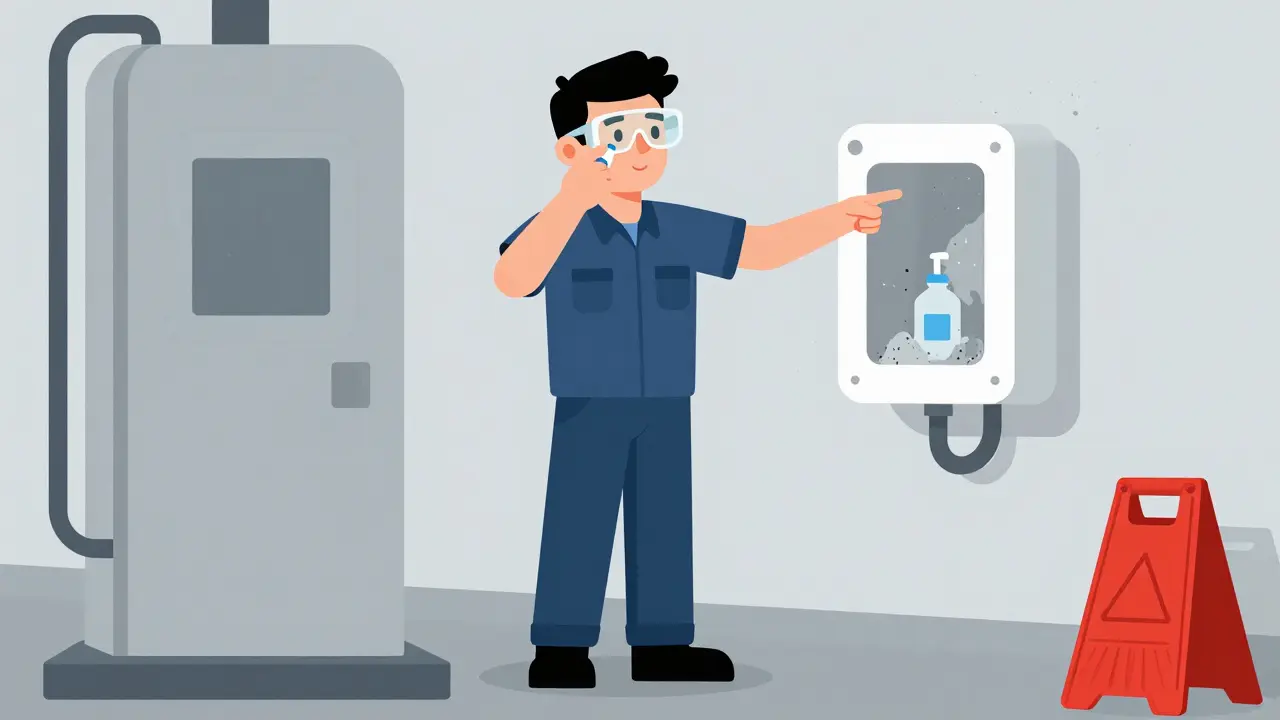
If you’re at work, ANSI Z358.1-2021 requires eyewash stations to be accessible within 10 seconds and deliver tepid water (60-100°F) at 0.4 gallons per minute for at least 15 minutes. But not every workplace follows this. OSHA inspections in 2023 found that nearly 23% of chemical-handling sites didn’t have compliant stations. At home, you don’t have those stations. That’s why you need to plan ahead. Keep a bottle of clean water or a squeeze bulb near areas where you use cleaning products, paint, or chemicals. Don’t assume your kitchen sink will be fast enough-get your water running before you start working.What Happens After Irrigation?
Even after you’ve flushed for 20 minutes, you still need medical care. Chemical damage doesn’t always show up right away. Swelling, blurred vision, or light sensitivity might appear hours later. Go to an emergency room or see an ophthalmologist immediately. Doctors will check your eye’s pH using litmus paper. If it’s still above 7.4, they’ll keep flushing. In severe cases, they may use specialized solutions like Diphoterine, a newer FDA-approved rinse that binds to chemicals and neutralizes them faster than water. But none of that matters if you didn’t start the first step yourself.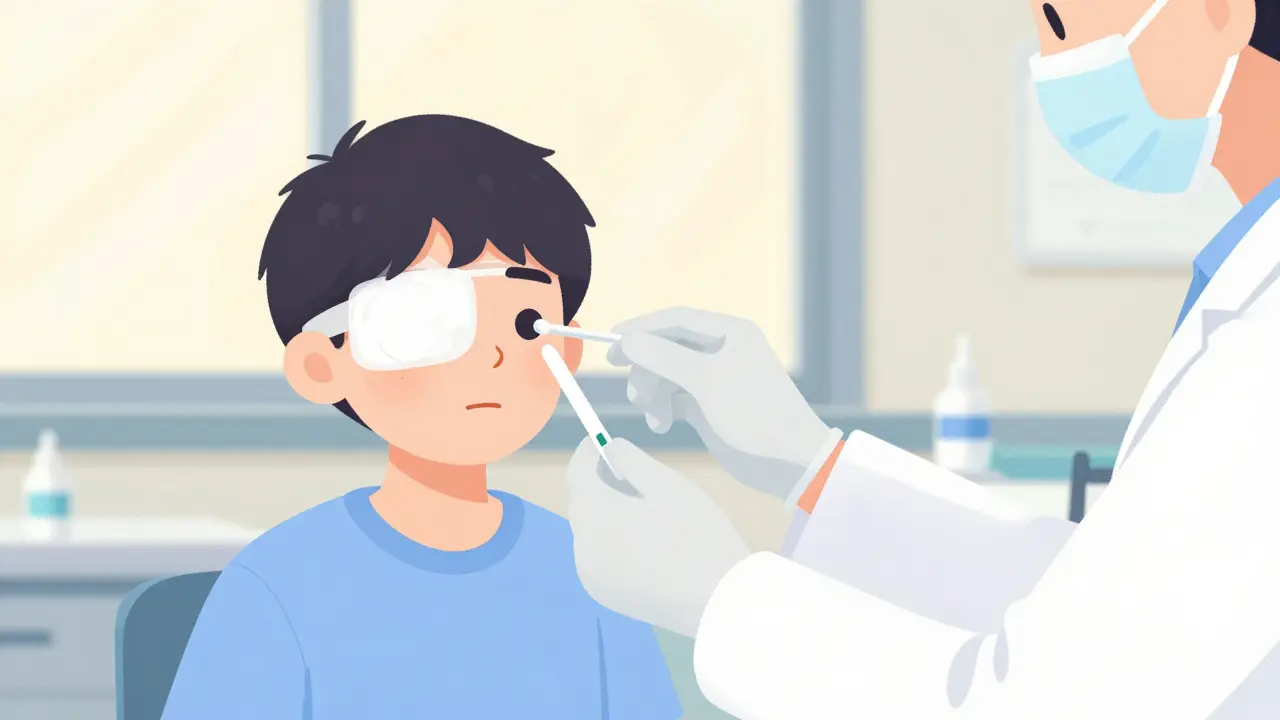
Why Most People Fail at First Aid
The biggest problem isn’t lack of knowledge-it’s lack of preparedness. A CDC survey of 500 households in 2022 found that 78% had no emergency eye rinse ready. Only 12% could correctly say how long to flush. And only 44% of workers in chemical environments started irrigation within 60 seconds. Training works. People who’ve had hands-on first aid training are over three times more likely to do it right. That’s why workplaces with regular safety drills see 30% fewer serious eye injuries.What’s New in Eye Injury Care
New tools are emerging. In 2022, the FDA approved Diphoterine, a chemical-specific rinse that reduces irrigation time by 40%. Researchers are testing citrate buffers that neutralize alkalis better than plain water. 3M is developing smart goggles with built-in pH sensors that flash a warning if they detect a chemical splash. But none of these replace the most powerful tool you already have: water and the will to use it fast.Prevention Is the Best Treatment
The best way to avoid a chemical eye injury is to never get splashed. Always wear safety goggles when working with chemicals-even if you’re just cleaning the bathroom. Make sure they fit snugly and seal around your eyes. Keep chemicals in labeled, child-proof containers. Store them away from food and drinks. If you work with chemicals, ask your employer: Where’s the eyewash station? Is it tested weekly? Is it within 10 seconds of my work area? If the answer is unclear, speak up. Your vision is worth it.Chemical eye injuries are preventable. But when they happen, the only thing that matters is what you do in the first 20 seconds. Don’t wait. Don’t hesitate. Start flushing-and keep going.
How long should I flush my eye after a chemical splash?
Flush for at least 20 minutes. Some guidelines say 15 minutes, but 20 is the safest minimum. Even if the pain stops, keep going. Chemicals can keep damaging tissue long after you feel relief. Use running water, and don’t stop until you’ve reached the full time.
Can I use saline solution instead of tap water?
Tap water is just as effective as saline for initial irrigation, according to research published in JAMA Ophthalmology. Saline is ideal if it’s already prepared and nearby, but don’t delay flushing to find it. Tap water is fast, free, and works. The goal is speed and volume-not perfection.
Should I remove my contact lenses?
If your eye isn’t severely swollen or damaged, try to remove the lens while flushing. If it’s stuck or you can’t do it safely, keep flushing-the water will flush it out. Don’t risk poking your eye trying to remove it. The priority is washing out the chemical.
Is it safe to use eye drops or ointments after a chemical splash?
No. Eye drops and ointments are not designed to flush out chemicals. They’re too small in volume and can trap the substance against your eye. Only use them after medical professionals have fully cleaned the eye and given you permission.
Do I still need to see a doctor after flushing my eye?
Yes. Even if your eye feels fine after flushing, chemical damage can worsen over hours. Corneal burns, ulcers, and scarring may not show symptoms right away. An ophthalmologist can check for hidden damage, test your eye’s pH, and start treatment to prevent long-term vision loss.
What’s the most common mistake people make during first aid?
Stopping irrigation too soon. Most people think the pain means the injury is over. It doesn’t. The chemical can still be active. Other common mistakes include rubbing the eye, applying pressure, using too little water, or waiting for someone else to act. Speed and persistence are everything.
 Medications

Janette Martens
December 29, 2025 AT 17:15so u flush for 20 mins??? lol i tried that once with bleach and my eye was on fire for 3 hours straight. tap water is useless, u need that fancy diphoterine stuff or u r just wasting time. why do they even teach this if it dont work???
Marie-Pierre Gonzalez
December 29, 2025 AT 22:54Thank you for this vital information. I appreciate the clarity and urgency conveyed in your post. As a healthcare professional in Canada, I have witnessed too many preventable injuries due to delayed irrigation. The 20-minute guideline is not arbitrary-it is evidence-based. Please share this with your community. 💪
Louis Paré
December 29, 2025 AT 23:46Let’s be real-this whole ‘flush for 20 minutes’ thing is just a placebo for people who don’t want to admit that most chemical injuries are career-enders. You think water fixes corneal necrosis? Nah. You just delay the inevitable. The real problem is lazy employers who don’t train people properly. And now we’re supposed to be heroes with a sink? Please.
Payton Daily
December 31, 2025 AT 06:36OMG I JUST REALIZED I’VE BEEN DOING IT WRONG MY WHOLE LIFE. I THOUGHT 5 MINUTES WAS ENOUGH. I’M SO SORRY TO EVERYONE WHO GOT BLIND BECAUSE OF ME. I JUST THOUGHT IT WAS LIKE A SUNBURN. I’M SORRY. 😭
Kelsey Youmans
January 1, 2026 AT 05:19This is an exceptionally well-researched and compassionate guide. The emphasis on immediate action, coupled with the clarification of common misconceptions, makes this one of the most responsible pieces of public health communication I’ve encountered in recent memory. Thank you for taking the time to articulate this with such precision.
Bradly Draper
January 2, 2026 AT 02:44i work in a lab and we got those fancy eyewash stations but nobody ever uses them. we just grab a water bottle and go. i used to think it was dumb but now i get it-speed matters more than perfect equipment. just get water on it. fast.
Gran Badshah
January 3, 2026 AT 00:41bro in india we dont even have tap water clean enough to drink, how u expect us to flush eyes? i used milk once when acid splashed. it helped? idk. but i lived. maybe try milk?
Ellen-Cathryn Nash
January 3, 2026 AT 16:22It’s tragic how many people treat their eyes like they’re disposable. You wouldn’t pour battery acid on your hand and then wait to see if it ‘gets better.’ Why do you think your eyes deserve less? This isn’t just about first aid-it’s about valuing your own body. And if you’re not prepared? That’s not ignorance. That’s negligence.
Samantha Hobbs
January 4, 2026 AT 22:34wait so if i have contacts in and i get splash do i just keep flushing?? like for 20 mins?? my contacts are like 100 bucks a pair 😭
Nicole Beasley
January 6, 2026 AT 17:31Thank you for this! 🙏 I just shared it with my whole family. I keep a water bottle in my cleaning cabinet now. And I taught my 8-year-old how to pull their eyelids open. 💙 #EyeSafety #PreventionWins