

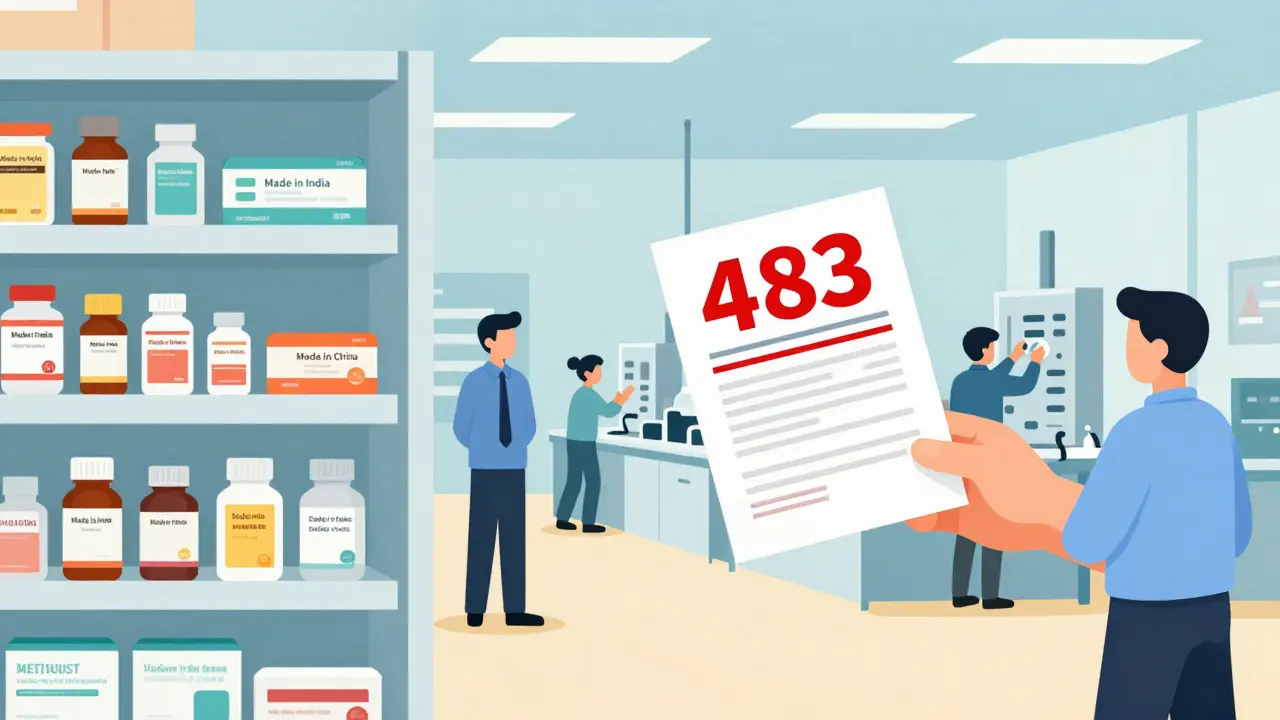
When you pick up a bottle of generic ibuprofen or metformin at your local pharmacy, there’s a good chance it was made halfway across the world. About 80% of the active ingredients in U.S. medicines and 40% of finished generic drugs come from foreign factories-mostly in India and China. That’s not a flaw in the system. It’s how the market works. But here’s the problem: for years, the FDA treated foreign drug factories differently than American ones. And that difference put patients at risk.
Same Rules, Different Enforcement
The FDA says all drugmakers-whether in Ohio or Odisha-must follow the same rules: Current Good Manufacturing Practices (CGMP). These aren’t suggestions. They’re legal requirements. Facilities must control contamination, verify every batch, train staff properly, and keep accurate records. No exceptions. But enforcement? That’s where things broke down. For decades, U.S. factories got surprise inspections. No warning. No time to clean up. Foreign factories? They often got 8 to 12 weeks’ notice. That’s long enough to fix a broken thermometer, polish up records, or hide a contaminated room. The result? Foreign facilities were more than twice as likely to fail inspections. In 2024, 45% of foreign inspections found serious problems-like falsified data or poor contamination controls. At U.S. sites? Only 21%.Why the Double Standard Existed
It wasn’t that the FDA didn’t care. It was that they couldn’t do more. Inspecting a factory in Bangalore takes more than a plane ticket. It requires visas, language support, travel logistics, and a limited number of trained inspectors. The FDA had about 12,000 domestic inspections a year-but only 3,000 overseas. That’s one inspector for every 30 foreign factories. Meanwhile, domestic factories were checked every 18 months on average. The gap wasn’t just about resources. It was a mindset. For years, the FDA assumed foreign manufacturers would self-police because they wanted access to the U.S. market. That assumption failed. ProPublica’s 2024 investigation found that even after the FDA banned one Indian plant from exporting drugs in 2021, four of its products still slipped into the U.S. market. How? Because oversight relied on paperwork, not presence.The 2025 Shift: Unannounced Inspections Everywhere
Everything changed in May 2025. FDA Commissioner Marty Makary announced a hard reset: no more advance notice for foreign inspections. Starting that month, foreign factories would be subject to the same surprise visits as U.S. ones. The change wasn’t just symbolic. It was backed by real action. President Trump’s Executive Order 14135, signed on May 5, 2025, forced the FDA to eliminate the inspection gap within 18 months. By Q2 2026, at least 50% of all foreign inspections will be unannounced. That’s up from just 15% before. The agency is hiring 200 new foreign inspection specialists by 2026. That’s a 40% increase in capacity. The goal? Catch bad actors before they ship. As Makary said: “We’re not trying to punish companies. We’re trying to protect people.”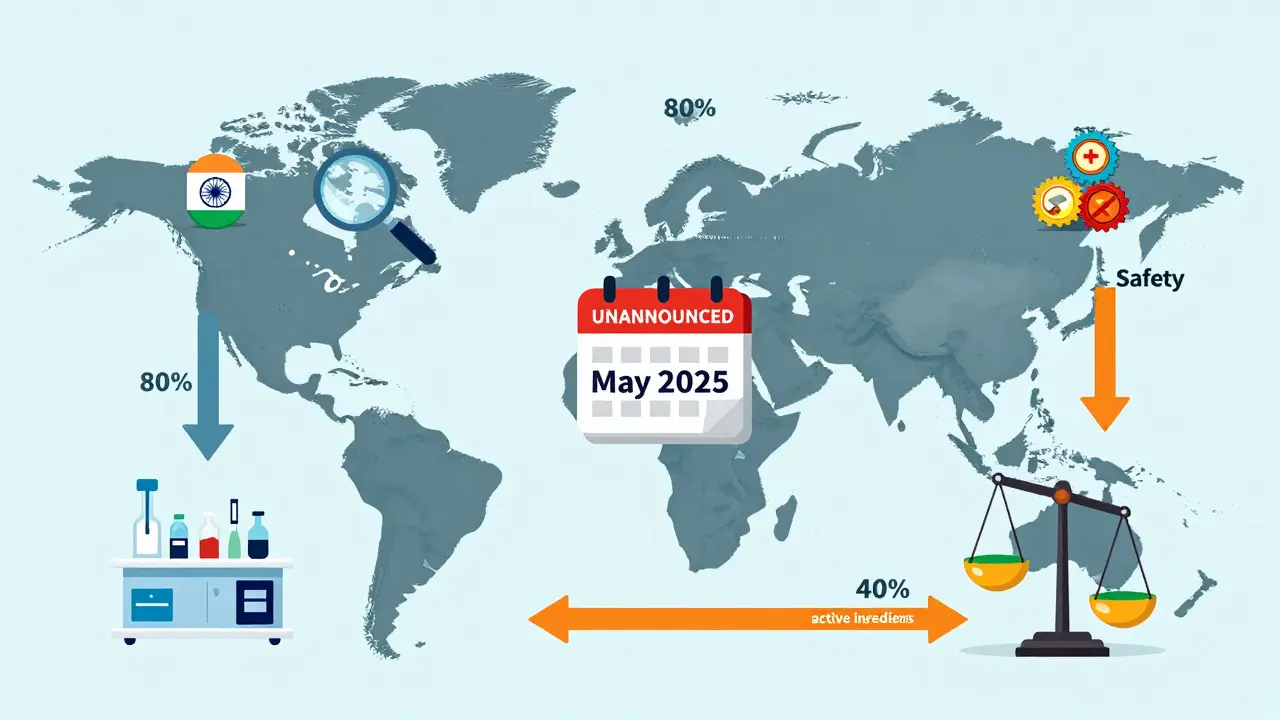
What Gets Checked During an Inspection
An FDA inspector doesn’t just walk in and ask for paperwork. They dig. Here’s what they look for:- Documentation integrity: Are test results real? Are logs backdated? Are data entries altered?
- Contamination controls: Are air filters working? Are cleaning procedures followed? Is there cross-contamination between batches?
- Equipment maintenance: Is the machine that mixes the drug properly calibrated? Is it cleaned after every batch?
- Staff training: Do workers know how to handle a spill? Do they understand why their job matters?
- Quality control testing: Does the lab actually test for potency and purity-or just check a box?
How Foreign Manufacturers Are Responding
The new rules hit hard. A Parenteral Drug Association survey in early 2025 found that 68% of foreign manufacturers expect compliance costs to rise by 15-25%. Smaller companies, especially in India and China, are struggling. They don’t have the budget for round-the-clock quality teams or real-time digital record systems. But some are adapting fast. The Generic Pharmaceutical Association reported that 42% of their member companies with overseas factories have already added new quality checks, trained staff on unannounced inspection protocols, and started monthly mock inspections. Experts recommend doing exactly that: treat every day like inspection day. One manufacturer in Hyderabad told McGuireWoods: “We used to clean up before inspections. Now we clean up every morning.”The EU Model: A Better Way?
The European Union doesn’t rely on surprise visits alone. They require every batch of medicine to be certified by a Qualified Person-a trained professional who physically signs off on each shipment before it leaves the factory. That person is legally responsible. If something goes wrong, they’re on the hook. Brookings Institution’s Dr. Ameet Sarpatwari says the U.S. should adopt something similar for imported drugs. Instead of just inspecting factories, the U.S. could require U.S.-based importers to designate a qualified individual who certifies every batch meets CGMP standards. That shifts accountability from the factory floor to the importer’s desk. It’s not a perfect fix. But it adds a layer of responsibility that’s missing now. Right now, the FDA inspects a factory in China. The factory passes. The drug ships. The importer doesn’t verify anything. If the drug turns out to be weak or contaminated, who’s to blame? The factory? The FDA? The importer? No one really.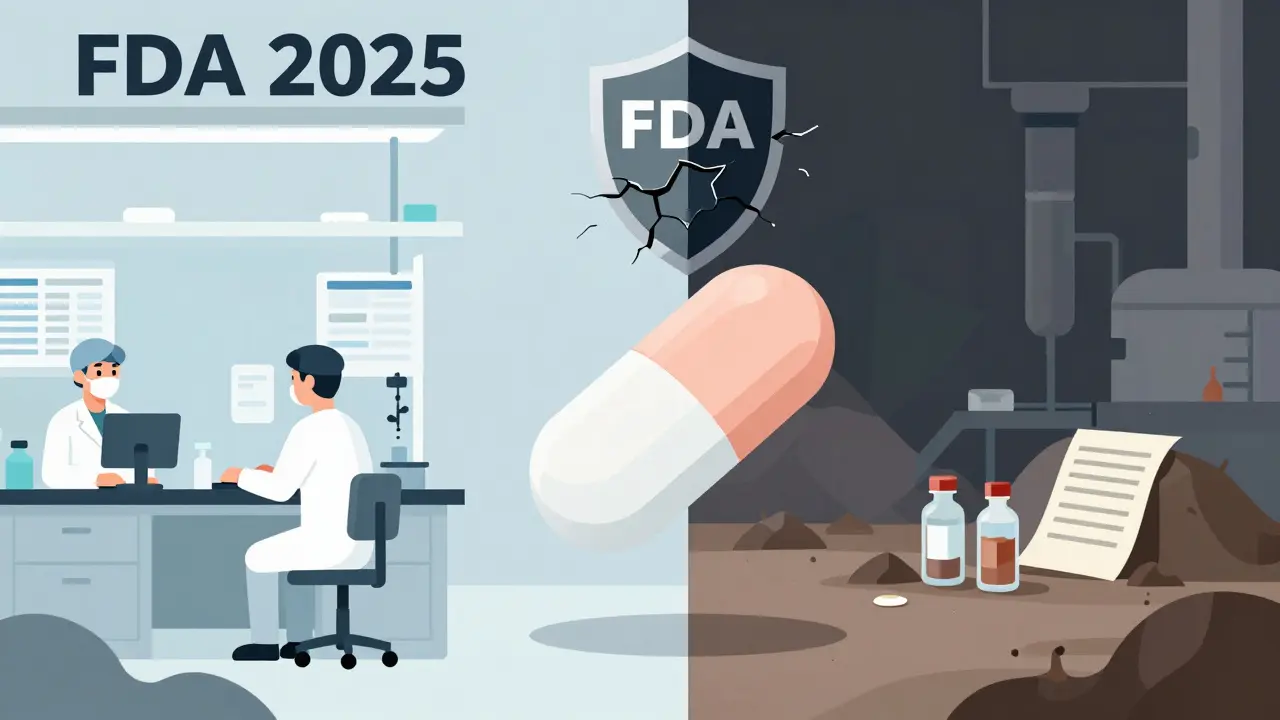
What This Means for You
You might be wondering: “Does this affect me?” Yes. In 2025, 90% of all generic prescriptions in the U.S. come from foreign manufacturers. That’s your blood pressure pill, your insulin, your antibiotics. If those drugs aren’t made safely, they won’t work-or worse, they could harm you. The FDA’s crackdown isn’t about protecting American jobs. It’s about protecting American lives. The data shows that foreign facilities with unannounced inspections have fewer data integrity violations. Fewer contamination events. Fewer recalls. The risk isn’t theoretical. In 2024, the FDA blocked shipments from 14 foreign plants due to falsified records. One of those plants was producing metformin linked to a cancer-causing impurity. If inspections had been random and frequent, that batch might have been caught before it reached pharmacies.What’s Next?
By 2026, the FDA plans to:- Conduct unannounced inspections at half of all foreign facilities
- Expand Mutual Recognition Agreements with the EU, Japan, and Australia
- Share inspection data in real time with international regulators
- Start piloting the “Qualified Person” model for high-risk imports
What Manufacturers Need to Do Now
If you’re a foreign drugmaker supplying the U.S. market, here’s your checklist:- Conduct daily audits of your quality system. Don’t wait for an inspection.
- Train every employee on documentation rules. No exceptions.
- Run mock inspections every quarter-with no warning.
- Digitize your records. Paper logs are too easy to alter.
- Designate a compliance officer who reports directly to leadership.
Are foreign-made generic drugs safe?
Yes-when they’re made right. The FDA requires all generic drugs, no matter where they’re made, to meet the same standards as brand-name drugs. The issue isn’t the country of origin-it’s whether the factory follows the rules. Since May 2025, unannounced inspections have made it harder to hide violations. Drugs from facilities with a clean inspection record are just as safe as those made in the U.S.
How often does the FDA inspect foreign drug factories?
Before May 2025, the FDA inspected about 3,000 foreign facilities a year, mostly with advance notice. Now, the goal is to conduct unannounced inspections at 50% of all foreign sites by mid-2026. That means roughly 1,500 unannounced visits annually, up from fewer than 500 before.
Why are most generic drugs made overseas?
Cost. Labor, raw materials, and regulatory compliance are significantly cheaper in countries like India and China. India produces 40% of the active ingredients used in U.S. generics. China makes another 13%. The U.S. doesn’t have the infrastructure or cost structure to produce low-margin generics at scale anymore.
Can the FDA shut down a foreign factory for good?
Yes. If a facility repeatedly violates CGMP standards, the FDA can issue an import alert. That means all drugs from that factory are automatically blocked from entering the U.S. until the problems are fixed and re-inspected. Several Indian and Chinese plants have been shut out since 2021, including Sun Pharma’s facility in Telangana.
What happens if a foreign factory refuses an unannounced inspection?
Refusing entry is treated as a serious violation. The FDA will issue an import alert immediately, blocking all products from that facility. The company must then prove compliance through a third-party audit and pass a follow-up inspection before shipments resume. This can take months-and cost millions in lost revenue.
Do I have a way to know if my generic drug is from a compliant factory?
Not directly. The FDA doesn’t publish a public list of approved foreign factories. But you can check if your drug has been recalled or if the manufacturer has received warning letters by searching the FDA’s Drug Shortages and Warning Letter databases. If your drug has been on the market for years without recalls, it’s likely from a facility that passed inspections.
 Medications
Adrienne Dagg
December 18, 2025 AT 20:40Erica Vest
December 20, 2025 AT 15:02Chris Davidson
December 22, 2025 AT 02:37Kelly Mulder
December 23, 2025 AT 14:27Tim Goodfellow
December 25, 2025 AT 05:15mark shortus
December 26, 2025 AT 22:02Elaine Douglass
December 27, 2025 AT 23:46Takeysha Turnquest
December 28, 2025 AT 08:42Emily P
December 28, 2025 AT 18:05