

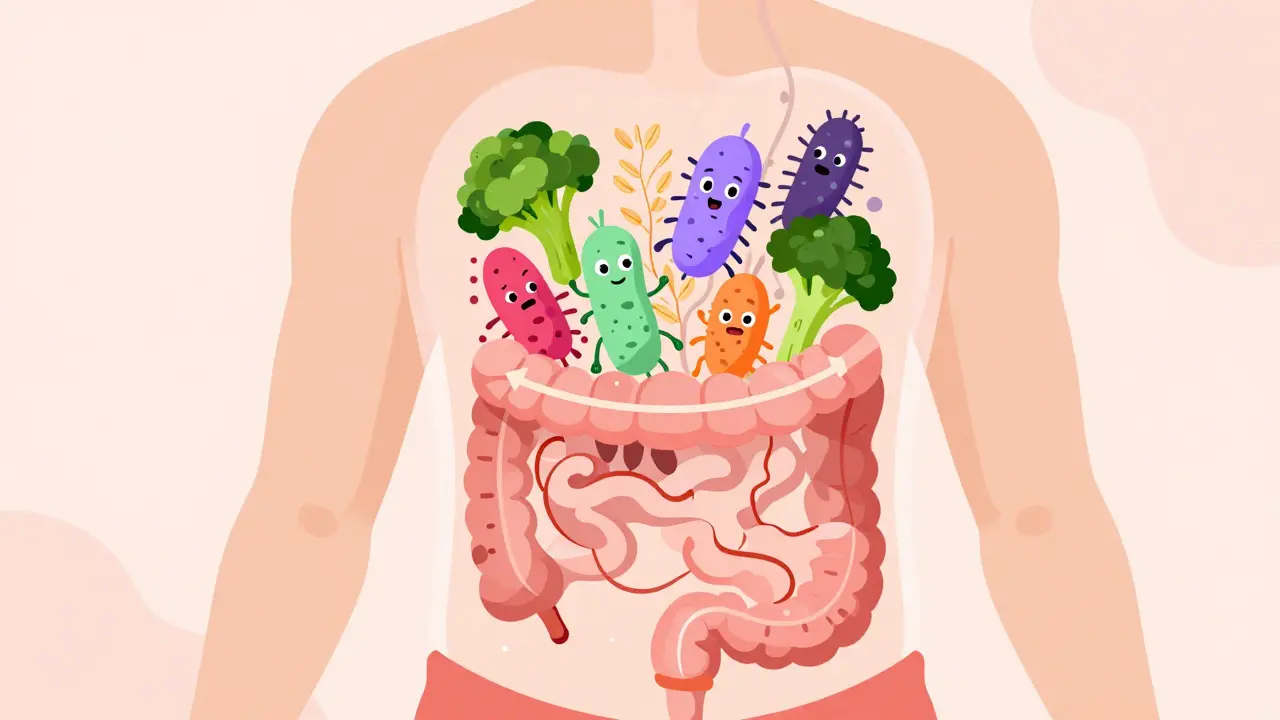
When you think about losing weight, you probably imagine counting calories, hitting the gym, or cutting out sugar. But what if the key to managing your weight is hiding inside your gut? Trillions of tiny organisms-bacteria, fungi, viruses-live in your digestive tract. Together, they form your gut microbiota, and growing evidence shows they play a direct role in whether you gain, lose, or hold onto weight.
What Your Gut Bacteria Are Doing to Your Weight
Your gut microbiota isn’t just along for the ride-it’s actively involved in how your body processes food. Studies dating back to the mid-2000s showed that lean people and obese people have different bacterial makeups in their intestines. In obese individuals, there’s often a higher ratio of Firmicutes to Bacteroidetes. One 2023 study in Brazilian adolescents found that obese teens had a 2.3:1 ratio, while lean teens had 1.7:1. That might sound small, but it matters.Why? Firmicutes are better at breaking down complex carbs that your body can’t digest on its own. They turn those fibers into extra calories your body absorbs. In fact, research suggests obese individuals may extract 2-10% more energy from the same food than lean people. That’s like eating an extra snack every day without realizing it.
But it’s not just about calories. The gut lining in obese people tends to be more permeable-sometimes called a “leaky gut.” This lets harmful bacterial byproducts, like lipopolysaccharides (LPS), slip into the bloodstream. Once there, they trigger inflammation, which leads to insulin resistance. And insulin resistance? That’s the engine behind weight gain, especially around the belly.
At the same time, levels of beneficial short-chain fatty acids (SCFAs)-especially butyrate-drop by 15-20% in obese individuals. Butyrate doesn’t just feed your gut cells; it helps regulate appetite, reduces inflammation, and improves insulin sensitivity. Less butyrate means your body struggles to control hunger and blood sugar.
Probiotics: The Real Effects on Weight
Probiotics are live bacteria that, when taken in the right amounts, can help restore balance in your gut. They’re not magic pills, but they’re not placebo either. A 2025 meta-analysis of 28 clinical trials involving over 2,300 people found that probiotic supplementation led to an average weight loss of 1.78 kg and a waistline reduction of 2.56 cm over several weeks.Not all probiotics are created equal. The most studied strains for weight management include:
- Lactobacillus gasseri SBT2055: Showed a 7.9% reduction in visceral fat after 12 weeks in a Japanese trial
- Lactobacillus rhamnosus GG: Linked to modest weight loss, especially in women
- Bifidobacterium longum: Helps reduce inflammation and improve gut barrier function
- Multi-strain blends: Often more effective than single strains for overall metabolic health
Dosage matters too. Most effective studies used between 109 and 1011 colony-forming units (CFU) per day. That’s roughly the amount found in high-quality supplements or fermented foods like kefir and sauerkraut.
But here’s the catch: not everyone responds. Studies show that 45-75% of people see some benefit, while others don’t. Why? Because your starting microbiome matters. People in Asian populations, for example, saw 22% greater weight loss from probiotics than those in Western countries-likely due to differences in diet and baseline bacteria.
Synbiotics: Probiotics + Prebiotics = Better Results
If probiotics are the seeds, prebiotics are the fertilizer. Synbiotics combine both. A 2025 review found that synbiotic interventions led to 37% greater weight loss than probiotics alone.Why? Prebiotics-like inulin, FOS, and resistant starch-feed the good bacteria you’re trying to grow. They boost SCFA production, especially butyrate, and help the probiotics stick around longer. One study showed synbiotics increased SCFAs by 15-25%, which directly improved fat metabolism and reduced inflammation.
Real-world example: A 2017 trial gave overweight adults a daily mix of omega-3s and a high-dose probiotic blend (Bifidobacterium, Lactobacillus, Streptococcus). After 12 weeks, they saw:
- 12.3% drop in total cholesterol
- 18.7% improvement in insulin sensitivity (HOMA-IR)
- 24.5% reduction in CRP, a key inflammation marker
That’s not just weight loss-it’s metabolic reset.
How Probiotics Actually Work in Your Body
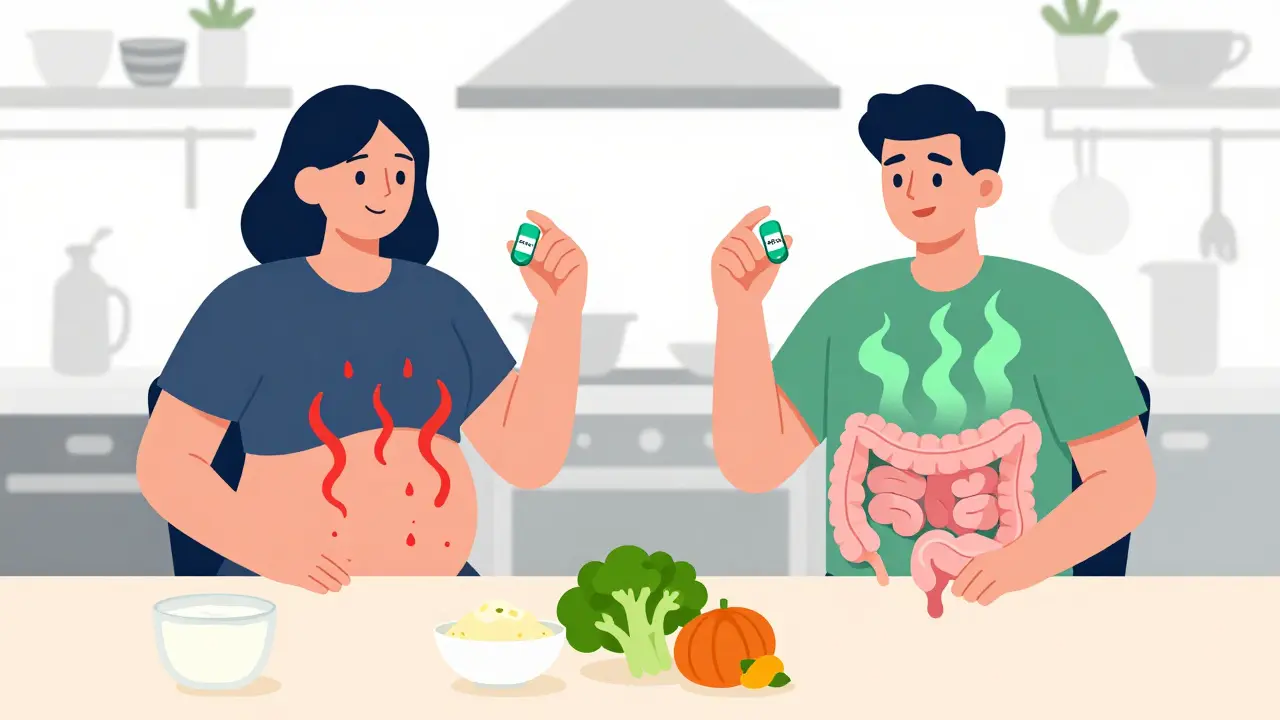
It’s not just about adding good bacteria. Probiotics change how your body functions:- Strengthen the gut lining: They boost proteins like occludin and claudin-1 by 30-40%, sealing the gaps that let toxins leak into your blood.
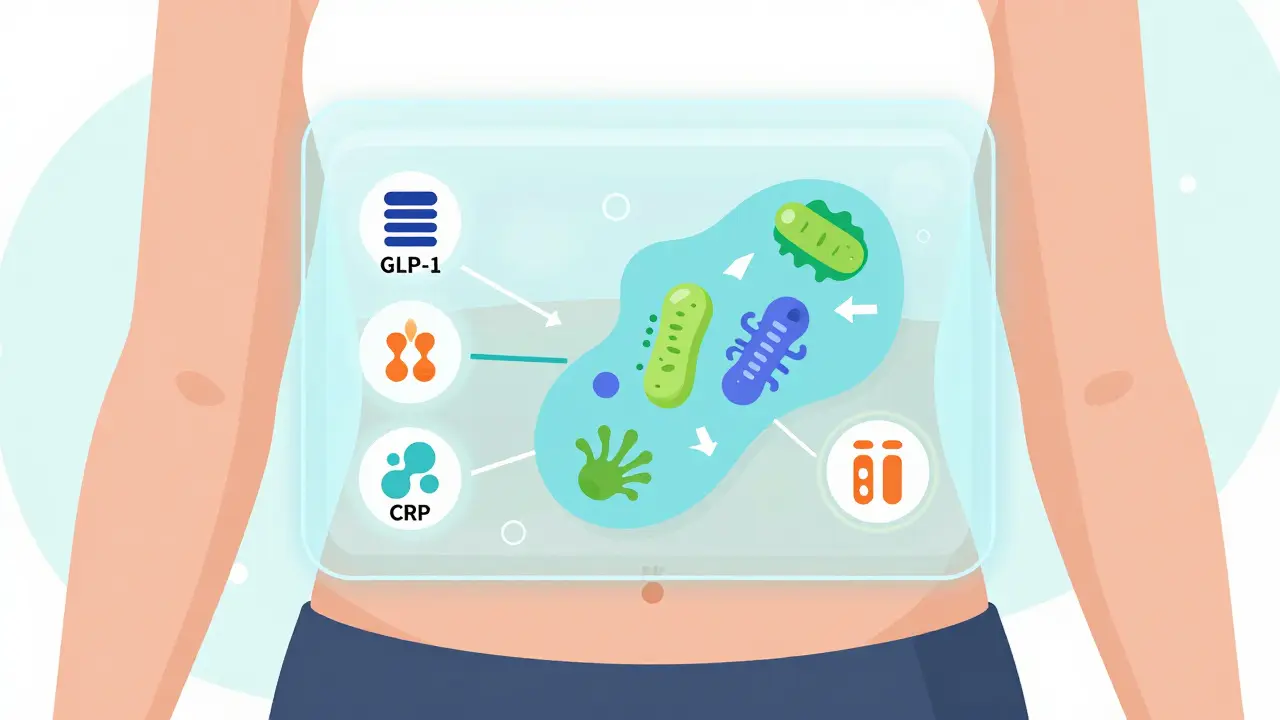
- Lower inflammation: They reduce TNF-alpha by 25-35% and IL-6 by 15-25%, calming the chronic inflammation that drives fat storage.
- Balance bile acids: They influence FXR and TGR5 receptors, which control fat breakdown and energy use.
- Regulate appetite: They increase GLP-1, a hormone that makes you feel full. One study saw a 20-30% rise in GLP-1 after probiotic use.
These changes don’t happen overnight. Most trials lasted 8-12 weeks. And the benefits? They often fade once you stop taking them. One 2023 study found that 60-80% of the improvements disappeared within 8-12 weeks after stopping probiotics. That means consistency matters.
Why Some Studies Say Probiotics Don’t Work
You’ve probably seen headlines claiming probiotics don’t help with weight loss. And yes, some studies say that. The 2025 Nature meta-analysis concluded that probiotics had “no significant effect on BMI” in overweight people.But here’s the nuance: BMI doesn’t tell the whole story. You can lose belly fat and gain muscle and your BMI won’t change. The same study found clear reductions in weight and waist size-both more meaningful than BMI.
Also, many studies use the wrong strains, wrong doses, or short timeframes. Some trials included people with type 2 diabetes, which muddies the results. Others didn’t track microbiome changes at all-just weight. That’s like judging a car’s performance by how loud the engine sounds, not how fast it goes.
Dr. Susan S. Pereira from Oxford puts it plainly: “Future clinical trials are required to understand the optimal dose and frequency.” We’re still learning.
What Should You Do Right Now?
If you’re struggling with weight and metabolic health, here’s what the science says to try:- Start with food: Eat more fiber-rich plants-broccoli, oats, legumes, berries. They feed good bacteria naturally.
- Add fermented foods: Kefir, kimchi, sauerkraut, and plain yogurt with live cultures. Aim for daily.
- Try a high-quality probiotic: Look for L. gasseri, B. longum, or a multi-strain blend with at least 10 billion CFU. Take it consistently for at least 12 weeks.
- Combine with prebiotics: Add garlic, onions, asparagus, or a supplement with inulin or resistant starch.
- Be patient and track changes: Measure waist size, energy levels, and digestion-not just the scale.
Don’t expect miracles. But if you’ve tried diet and exercise and still feel stuck, your gut might be the missing piece.
What’s Next in Research?
The future isn’t one-size-fits-all probiotics. Scientists are now building algorithms that analyze your gut bacteria and recommend the exact strains you need. Early pilot studies in 2024 got it right 65-75% of the time. Imagine getting a personalized probiotic prescription based on your microbiome-like a DNA test for your gut.Right now, we’re in the early stages. Most studies are small, short, and don’t track long-term outcomes. But the direction is clear: gut health isn’t just about digestion. It’s central to metabolism, inflammation, and weight control.
If you’re serious about managing your weight, don’t just count calories. Look inside. Your gut bacteria are already working for-or against-you. It’s time to give them the right tools to help you win.
 Medications
Andrew Freeman
January 15, 2026 AT 19:04says haze
January 15, 2026 AT 19:21TooAfraid ToSay
January 17, 2026 AT 16:48Robert Way
January 17, 2026 AT 17:26Sarah Triphahn
January 18, 2026 AT 09:09Allison Deming
January 19, 2026 AT 07:04Dylan Livingston
January 21, 2026 AT 01:34Anna Hunger
January 22, 2026 AT 18:05Jason Yan
January 23, 2026 AT 19:19shiv singh
January 25, 2026 AT 03:33Vicky Zhang
January 26, 2026 AT 08:42Susie Deer
January 26, 2026 AT 18:14Alvin Bregman
January 28, 2026 AT 02:47Sarah -Jane Vincent
January 28, 2026 AT 14:59Henry Sy
January 29, 2026 AT 17:51