

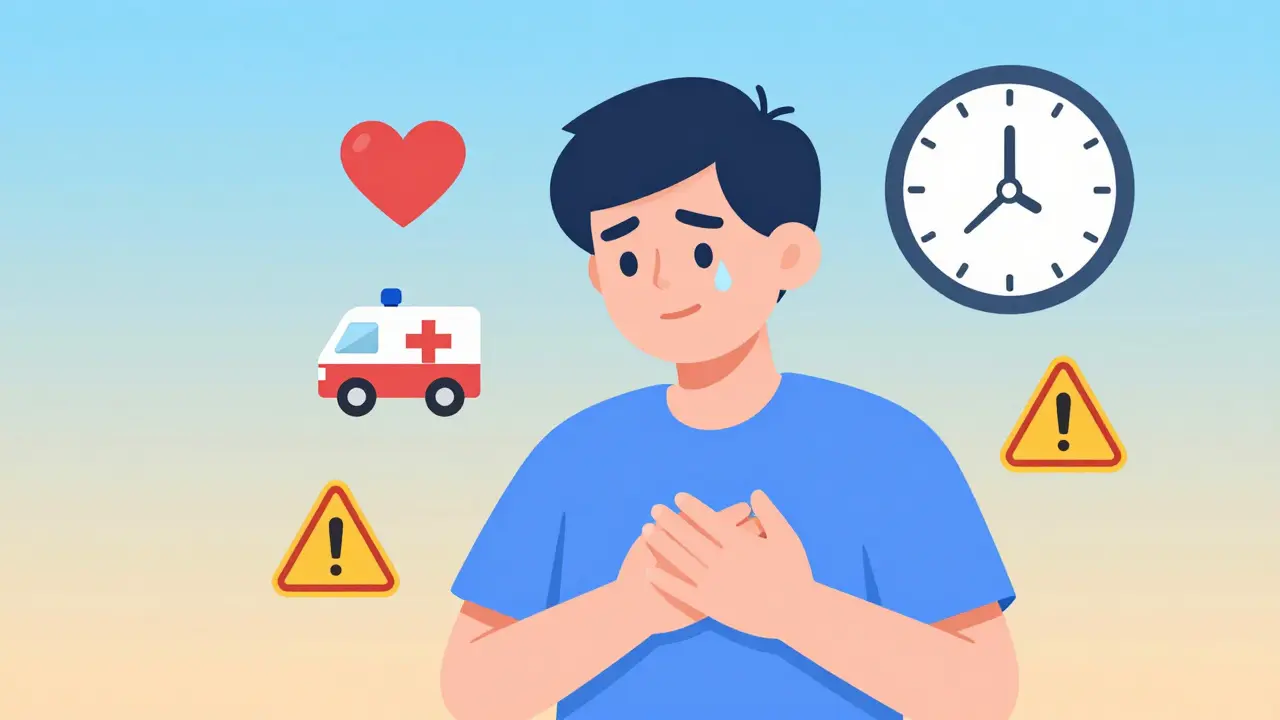
When your chest hurts, it’s easy to panic. Is it heartburn? A pulled muscle? Or something life-threatening? The truth is, chest pain isn’t always a heart attack-but it can be. Knowing when to rush to the emergency department could save your life-or someone else’s.
What Chest Pain Really Means
Chest pain isn’t just a sharp stab or crushing pressure in the middle of your chest. It can feel like tightness, burning, heaviness, or even like someone’s sitting on your ribs. Sometimes, it doesn’t even feel like pain at all. You might just feel unusually tired, short of breath, or nauseous. These are called anginal equivalents, and they’re just as important as chest pain when it comes to heart trouble. The American Heart Association defines chest pain broadly: discomfort in the chest, shoulders, arms, neck, jaw, upper back, or upper abdomen. If you’re having any of these symptoms-especially if they’re new, worsening, or happening with activity-it’s not something to ignore.When to Call 9-1-1 Right Away
Don’t wait. Don’t text a friend. Don’t Google it. If you’re experiencing any of these, call emergency services immediately:- Chest pain that lasts more than 5 minutes and doesn’t go away with rest
- Pain that spreads to your arm, jaw, neck, or back
- Breaking out in a cold sweat for no reason
- Sudden shortness of breath, even when sitting still
- Nausea, vomiting, or dizziness along with chest discomfort
- Feeling like you’re going to pass out
Why Ambulance Over a Ride?
You might think driving yourself or having a family member take you is faster. It’s not. Emergency Medical Services (EMS) can start treatment before you even reach the hospital. They can get your first ECG in the back of the ambulance, notify the ER team ahead of time, and even begin oxygen or aspirin therapy on the way. Studies show that people who drive themselves to the ER have a 25-30% higher risk of complications than those who use EMS. Why? Because delays in diagnosis and treatment can cost lives. By the time you get to the hospital, you could already be missing the critical window for clot-busting drugs or angioplasty.What Happens in the Emergency Department
When you arrive, the first thing they do is check your vitals: heart rate, blood pressure, breathing, and oxygen levels. Then comes the ECG-a simple, painless test that records your heart’s electrical activity. This must be done within 10 minutes of arrival, no exceptions. If your ECG shows signs of a heart attack-like ST-elevation-you’ll be rushed to the cath lab immediately. The goal? Get a balloon opened in your blocked artery within 90 minutes of arriving at the hospital. That’s called door-to-balloon time, and it’s a hard benchmark hospitals are measured by. If your ECG doesn’t show clear signs of a heart attack, they’ll check your blood for high-sensitivity cardiac troponin. This protein leaks into the bloodstream when heart muscle is damaged. Modern tests can detect tiny amounts, and two samples taken 1-2 hours apart can rule out a heart attack in 70-80% of cases within just a few hours.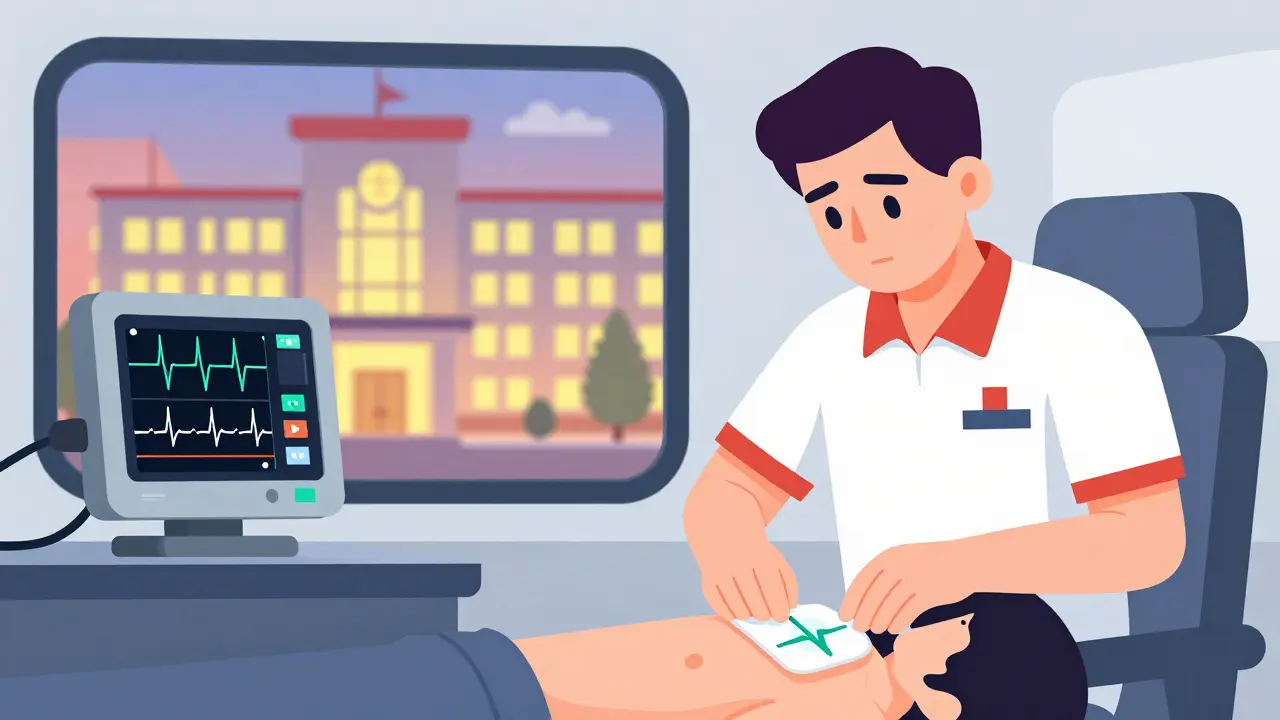
What They’re Looking For Beyond the Heart
Not every chest pain is cardiac. Emergency doctors also check for:- Pulmonary embolism: A blood clot in the lungs. Often causes sharp, stabbing pain that gets worse with breathing.
- Aortic dissection: A tear in the main artery. Pain is sudden, severe, and feels like something’s ripping through your chest.
- Pneumonia or pleurisy: Inflammation in the lungs or lining. Pain worsens with deep breaths.
- GERD or esophageal spasm: Can mimic heart pain, but often improves with antacids.
When You Can Wait-And When You Can’t
If your chest discomfort comes and goes with exertion, goes away with rest, and has been happening for months, it might be stable angina. That’s still serious-but it doesn’t require an emergency visit. You need to see your doctor soon, but not necessarily right now. But if it’s different from before-if it’s stronger, longer, happening at rest, or coming with new symptoms like sweating or nausea-that’s unstable. And unstable means emergency. Don’t rely on how bad the pain feels. Some people have massive heart attacks with barely any discomfort. Others feel a twinge and end up having one. Age, diabetes, and being female can make symptoms less obvious. That’s why it’s better to be safe than sorry.What You Should Know About Troponin Tests
Not all troponin tests are the same. Older versions take hours to show results and aren’t sensitive enough to rule out minor damage. But most hospitals in the U.S. and Australia now use high-sensitivity troponin assays. These can detect tiny changes and help doctors make faster decisions. Important note: If your doctor tries to use an old troponin test on you, ask if they have the newer version. Using the wrong test could delay diagnosis or lead to a false sense of security.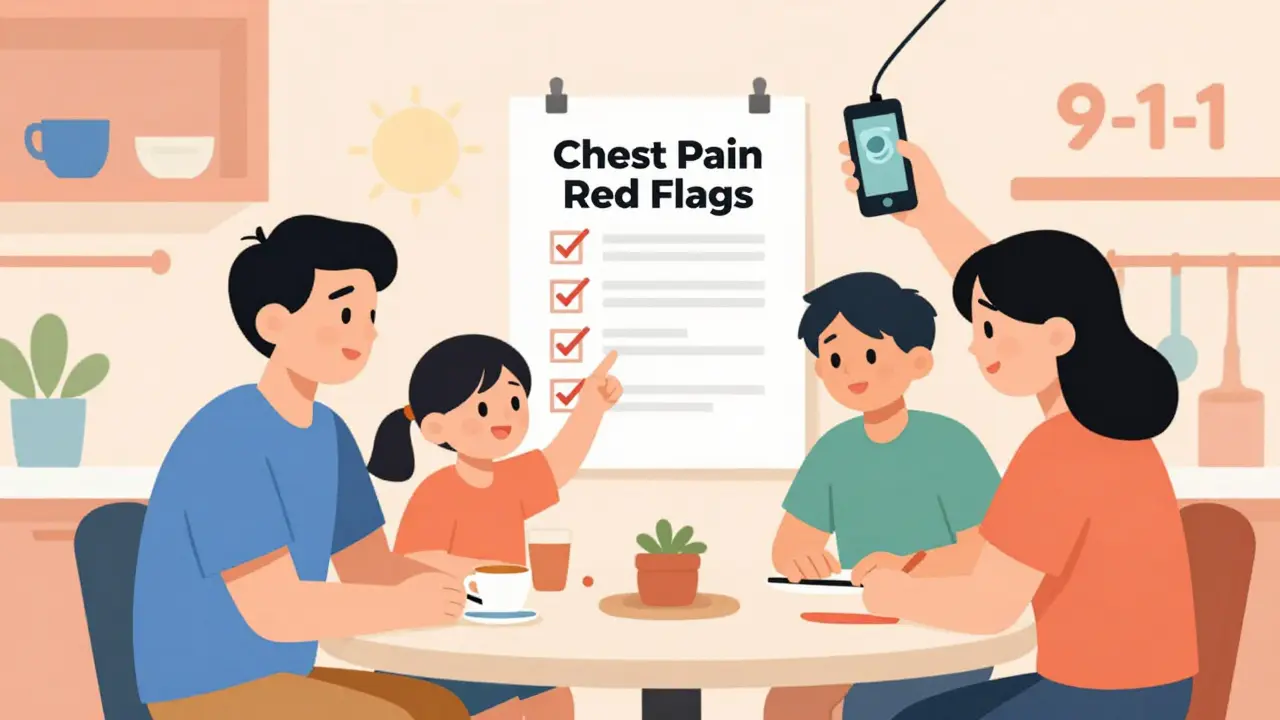
What Happens After the ER
If you’re cleared and sent home, you still need follow-up. Even if your tests are normal, you might have INOCA-ischemia with no obstructive coronary arteries. That means your heart isn’t getting enough blood, but there’s no major blockage. It’s real, it’s common (5-10% of chest pain cases), and it needs proper management. You might be referred for stress testing, cardiac MRI, or a coronary CT angiogram. These help find tiny artery spasms, microvascular disease, or other hidden problems.What You Can Do Now
- Know your risk factors: High blood pressure, diabetes, smoking, obesity, family history of early heart disease. - Keep aspirin in your medicine cabinet: If you think you’re having a heart attack, chew one 325mg tablet while waiting for EMS (unless you’re allergic). - Teach your family: Make sure your partner, kids, or roommates know the signs and know to call 9-1-1. - Don’t drive yourself: Even if you feel fine. Wait for EMS. - Don’t wait for confirmation: If something feels wrong, trust your gut. Your instincts matter.Final Thought: Better Safe Than Sorry
Only 10-15% of people who show up to the ER with chest pain have a heart attack. That means 85-90% don’t. But if you’re in that 10-15%, waiting could be fatal. Emergency departments aren’t perfect. But they’re the fastest, most equipped place to rule out death. And if it’s not your heart? You’ll get answers-and peace of mind.When in doubt, call 9-1-1. It’s not overreacting. It’s being smart.
Is chest pain always a sign of a heart attack?
No, chest pain isn’t always a heart attack. It can be caused by indigestion, muscle strain, anxiety, lung issues, or inflammation. But because heart attacks can present with subtle or atypical symptoms, any new or unexplained chest discomfort should be evaluated by a medical professional immediately.
Can I drive myself to the hospital if I think I’m having a heart attack?
No. Driving yourself increases your risk of complications by 25-30%. Emergency Medical Services can start treatment on the way, perform an ECG, and alert the hospital before you arrive. They’re trained to handle cardiac emergencies and can save critical time.
What if my ECG and troponin tests are normal? Does that mean I’m fine?
Not necessarily. Normal tests rule out a heart attack, but not all heart problems show up right away. Conditions like INOCA (ischemia with no obstructive arteries) or microvascular disease may require further testing like stress tests or cardiac MRI. Always follow up with your doctor even if you’re sent home.
How quickly should I get an ECG if I have chest pain?
An ECG should be done within 10 minutes of arriving at any medical facility. Delaying this test by even 20-30 minutes can delay life-saving treatment. This is a strict standard in emergency departments under current guidelines.
Are high-sensitivity troponin tests better than older ones?
Yes. High-sensitivity troponin tests can detect tiny amounts of heart muscle damage that older tests miss. They allow doctors to rule out a heart attack in 70-80% of patients within 1-2 hours. Most hospitals now use them, but if you’re tested and the results seem slow or unclear, ask if they’re using the high-sensitivity version.
Can women have heart attacks without chest pain?
Yes. Women are more likely than men to experience atypical symptoms like extreme fatigue, nausea, jaw pain, back pain, or shortness of breath without classic chest pressure. These symptoms are often mistaken for the flu or stress, leading to delays in diagnosis. Don’t dismiss them.
What’s the HEART score, and why does it matter?
The HEART score is a tool doctors use to assess your risk of a heart attack based on five factors: your History of symptoms, ECG findings, Age, Risk factors (like smoking or diabetes), and Troponin levels. A score of 0-3 means low risk, 4-6 means intermediate, and 7-10 means high risk. It helps decide whether you can go home or need immediate intervention.
Is it safe to wait and see if chest pain goes away on its own?
No. Chest pain that comes on suddenly, especially with other symptoms like sweating, nausea, or shortness of breath, should never be waited out. Heart attacks can worsen rapidly. Waiting even an hour can lead to permanent heart damage or death. Call 9-1-1 immediately.
 Medications



Alvin Bregman
January 13, 2026 AT 17:37Been through this twice now and honestly i still dont trust my own body
One time it was just gas the other time it was a mini heart thing
why do they make it so hard to tell the difference
Sarah Triphahn
January 14, 2026 AT 12:53people are so lazy now theyd rather die than call 911
you think your heartburn but its actually your artery dissolving
then you die and your family cries and the hospital gets a lawsuit
its not rocket science
Vicky Zhang
January 15, 2026 AT 06:06i just want to say to anyone reading this please please please if you even think something is off call 911
i lost my dad because he waited to see if it would go away
he was 54 and he loved his morning coffee and his garden
now i cant even look at tomatoes without crying
you dont get a second chance with your heart
Allison Deming
January 16, 2026 AT 17:01It is deeply concerning that the general public continues to underestimate the urgency of cardiac symptoms
Delaying care due to uncertainty is not prudent-it is negligent
Medical professionals operate under strict protocols for a reason
the door-to-balloon time metric exists for mortality reduction, not convenience
Susie Deer
January 16, 2026 AT 18:27usa has the best hospitals in the world
if you cant get help here you deserve to die
call 911 and stop being a baby
TooAfraid ToSay
January 17, 2026 AT 07:41you know what they dont tell you
the ambulance drivers are paid to rush you in
but the hospital bills you for everything
they want you to panic so they can charge you 50k
im not saying dont go
but dont trust the system
Dylan Livingston
January 17, 2026 AT 13:12how ironic that we live in an age where we can diagnose cancer from a spit sample
but people still die because they thought their chest pain was "just stress"
the real tragedy isn't the heart attack
its that we've normalized ignoring our own bodies until its too late
and now we're all just waiting for the next one to hit
Andrew Freeman
January 18, 2026 AT 12:01troponin tests arent magic
i had one done and they said fine
turned out i had a 90 blockage
they missed it because they used the old test
ask for the new one or dont bother
says haze
January 18, 2026 AT 20:05the HEART score is a useful heuristic but it reduces human suffering to a spreadsheet
what about the woman with microvascular disease who has no blockages but still can't breathe
or the diabetic with silent ischemia who never feels pain
we're treating symptoms not stories
and that's the real failure of modern medicine
Sarah -Jane Vincent
January 19, 2026 AT 15:40theyre hiding something
the real reason they push 911 is so they can bill you under emergency codes
and the ECG is done in 10 minutes because theyre trying to clear the waiting room
they dont care if you live or die
they care about your insurance status
ask yourself why they dont offer free screening
because if you knew your risk youd stop being a patient
and start being a problem