

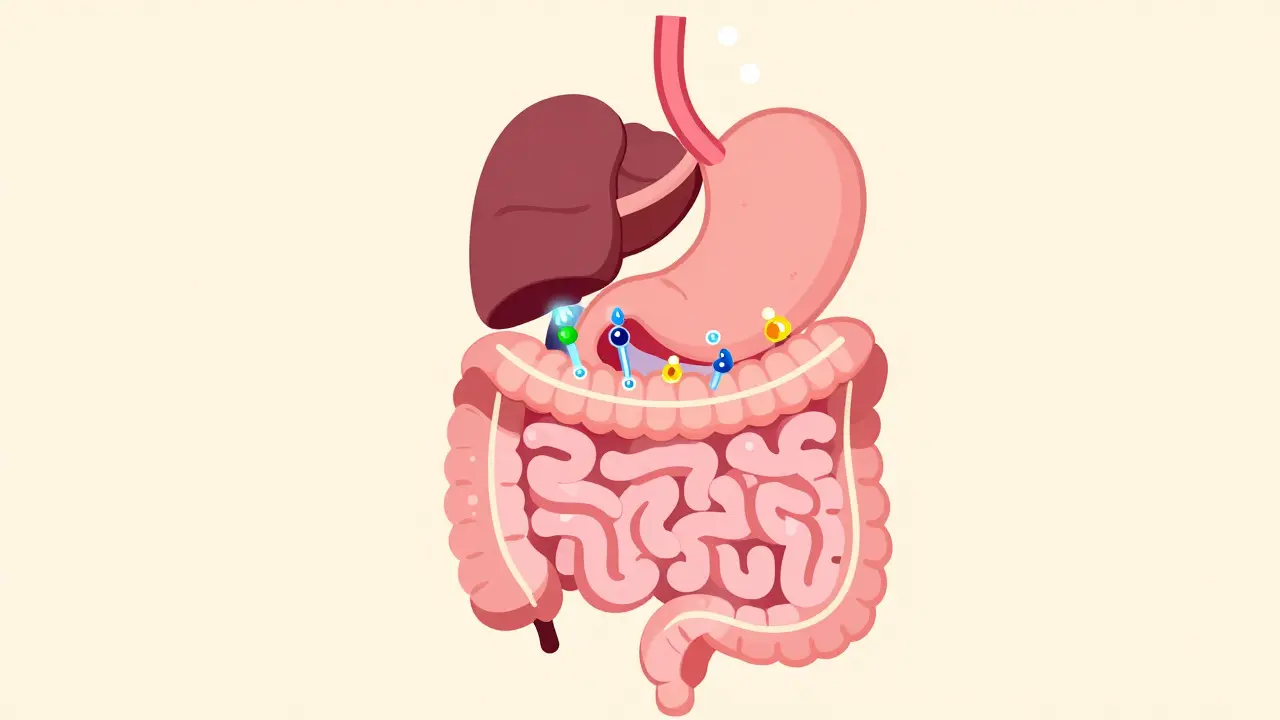
When you eat a meal and still feel bloated, gassy, or sluggish afterward, it’s easy to blame the food. But sometimes, the problem isn’t what you ate-it’s what your body can’t break down. Digestive enzymes are the body’s natural tools for splitting food into nutrients your gut can absorb. When those enzymes aren’t working right, symptoms like diarrhea, fatty stools, or constant bloating can follow. For some people, enzyme supplements can make a real difference. But not everyone needs them-and not all supplements are created equal.
What Are Digestive Enzymes, Really?
Your body makes digestive enzymes every day. The pancreas alone releases between 800 and 1,500 milliliters of pancreatic juice, packed with amylase (for carbs), protease (for proteins), and lipase (for fats). These enzymes start working as soon as food leaves your stomach and enters the small intestine. Without them, nutrients like protein, fat, and even some sugars just pass through undigested-leading to discomfort and, over time, nutrient deficiencies.
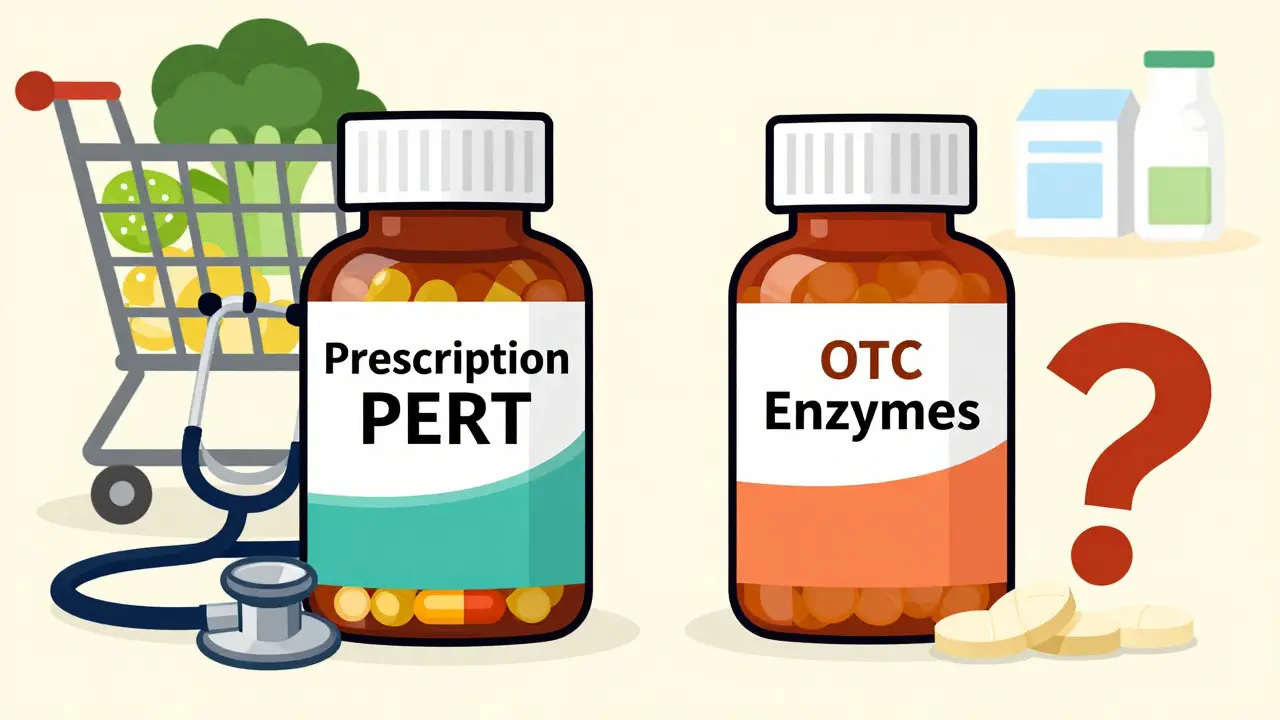
Enzyme supplements mimic this process. They come in two main types: prescription pancreatic enzyme replacement therapy (PERT), and over-the-counter (OTC) blends. Prescription versions like Creon, Zenpep, and Pancreaze are FDA-approved drugs. They’re made from pig pancreas, coated to survive stomach acid, and dosed precisely in lipase units. OTC supplements, on the other hand, are sold as dietary supplements. They often use plant or microbial sources-like Aspergillus oryzae-and rarely have enteric coating. That means they may break down too early in the stomach and never reach where they’re needed.
Who Actually Needs Enzyme Supplements?
Not everyone with bloating needs enzymes. The strongest evidence supports their use for exocrine pancreatic insufficiency (EPI), a condition where the pancreas doesn’t produce enough enzymes. EPI affects 1-5% of the general population, but jumps to 30-50% in people with chronic pancreatitis and up to 90% in those with pancreatic cancer. Symptoms include oily, foul-smelling stools, unexplained weight loss, and vitamin deficiencies (especially A, D, E, and K).
For EPI, prescription PERT is the gold standard. A 2016 clinical trial showed it reduces fatty stools by 70-85%. Patients report life-changing improvements-like being able to eat without fear of urgent bathroom trips. Without treatment, EPI can lead to serious malnutrition. That’s why doctors strongly recommend PERT for diagnosed cases.
But what about people without EPI? Many turn to OTC enzymes for IBS, lactose intolerance, or general bloating after meals. Here, the story gets more complicated. For lactose intolerance, lactase supplements like Lactaid work well-82% of users report being able to eat dairy without symptoms. For IBS, studies show OTC enzymes can reduce bloating and gas by 50-60% in some people, especially after high-FODMAP meals. But they don’t fix the root cause. If your symptoms come from small intestinal bacterial overgrowth (SIBO), enzymes can actually make things worse by feeding the overgrown bacteria.
Prescription vs. OTC: What’s the Real Difference?
Here’s where most people get confused. Prescription enzymes aren’t just stronger-they’re designed differently.
- Prescription (PERT): Enteric-coated capsules, standardized dosing (10,000-40,000 lipase units per capsule), FDA-regulated, covered by most insurance. Used for EPI.
- OTC Supplements: No coating, inconsistent potency (some contain only 60-80% of labeled enzymes), no standardization, no insurance coverage. Often marketed for general digestion.
A 2019 study found OTC enzyme products vary by 20-30% between batches. ConsumerLab testing showed 15-25% of them didn’t deliver the enzyme levels promised on the label. That’s not just disappointing-it’s risky. If you’re taking an OTC product thinking it’s helping, but it’s underdosed, you’re not getting any real benefit.
Prescription PERT costs $100-$300 a month, but insurance typically covers 70-90%. OTC versions cost $25-$40 monthly. For someone with EPI, the higher price is worth it. For someone with occasional bloating after beans? It’s probably not.
When OTC Enzymes Might Actually Help
Dr. Russell Havranek, a gastroenterologist with 15 years of clinical experience, says OTC enzymes are often his first suggestion for IBS patients. He specifically recommends Digestive Gold (Enzymedica) because of its consistent formulation and microbial enzymes that work across a wider pH range. He’s seen patients reduce gas, bloating, and diarrhea after meals high in dairy, gluten, or cruciferous vegetables.
Real-world feedback backs this up. On Amazon, NOW Foods Super Enzymes has over 4,800 reviews with a 4.2-star rating. The most common positive comment: “No more gas after eating broccoli or beans.” That’s not magic-it’s science. The enzymes in these blends help break down hard-to-digest carbs and proteins that cause fermentation in the gut.
But here’s the catch: these supplements don’t cure IBS. They just manage symptoms. If you’re relying on them long-term without addressing diet, stress, or possible SIBO, you’re treating the symptom, not the cause.
How to Use Them Correctly (And Avoid Mistakes)
Timing matters more than you think. Enzymes need to be taken right before you eat-not 30 minutes before, not after. They work best when they’re in the small intestine at the same time as food. If you take them too early, they’re already used up. Too late, and the food’s already fermenting.
Start low. For OTC supplements, begin with one capsule per main meal. If you don’t notice a difference after a week, try increasing the dose. For prescription PERT, dosing is based on fat intake: about 500 lipase units per gram of fat. A cheeseburger might need 20,000-30,000 units. A salad? Maybe 5,000.
Common mistakes:
- Taking enzymes with antacids or PPIs (like omeprazole). Stomach acid helps activate some enzymes. If you’re suppressing acid, the enzymes might not work properly.
- Not splitting doses. If you eat slowly over 30 minutes, take half the enzymes at the start and half halfway through.
- Expecting miracles. Enzymes won’t help with constipation, reflux, or abdominal pain from other causes.
Some users report constipation with PERT-this happens when fat isn’t properly broken down and forms hard masses in the gut. If this occurs, talk to your doctor. It’s rare but serious.
What Experts Say-and What They Don’t
Dr. Shane from the University of Miami Health says: “OTC supplements aren’t designed to treat GI ailments. They don’t speed up metabolism.” That’s true. Don’t fall for claims that enzymes help with weight loss, energy, or “detox.” The FDA has issued 12 warning letters in 2022 alone to companies making those claims.
Dr. Schneider at Cleveland Clinic acknowledges some studies show symptom relief with enzymes for functional disorders like dyspepsia-but stresses: “More large-scale trials are needed.” The American Gastroenterological Association agrees: PERT is strongly recommended for EPI. For everything else? “Insufficient evidence.”
That doesn’t mean OTC enzymes are useless. It means they’re not magic pills. They’re tools-useful in specific cases, but not replacements for diagnosis.
What to Do If You’re Considering Enzymes
If you’re thinking about trying enzyme supplements, here’s a practical step-by-step:
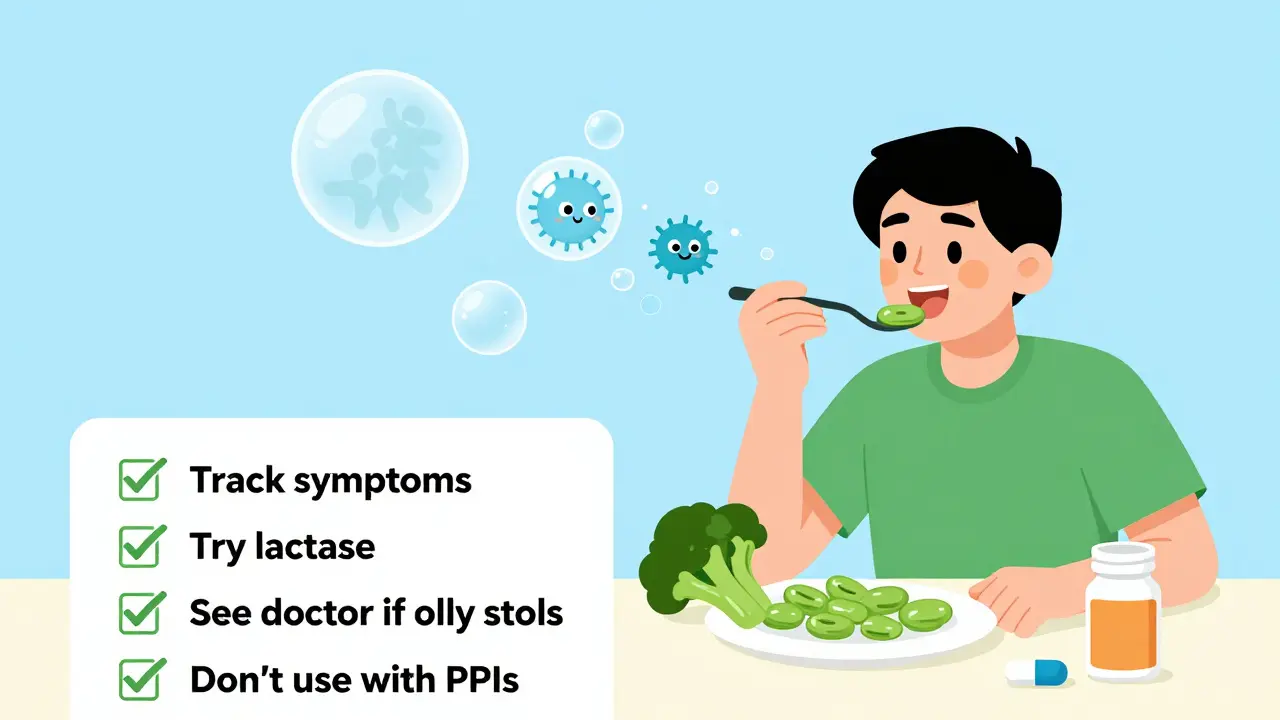
- Track your symptoms for two weeks. Note what you eat and when symptoms occur.
- If you consistently have bloating after dairy, try a lactase supplement (Lactaid) for a week.
- If you have oily, floating stools or unexplained weight loss, see a doctor. You may have EPI.
- If you have IBS and eat lots of beans, onions, or cruciferous veggies, try an OTC broad-spectrum enzyme like Digestive Gold or NOW Foods Super Enzymes.
- Don’t combine with PPIs without medical advice.
- Give it 2-4 weeks. If nothing changes, stop. It’s not working.
And if symptoms persist? Don’t keep self-treating. See a gastroenterologist. You could have SIBO, celiac disease, or another condition that needs different treatment.
The Future of Enzyme Therapy
Research is moving fast. A 2023 study showed a combination enzyme (including gluten-specific proteases) reduced gluten toxicity by 80% in celiac patients-offering hope for limited gluten tolerance. New microbial enzymes are being engineered to survive stomach acid without coating, which could make OTC products more effective.
Companies like Viome are even testing personalized enzyme blends based on your gut microbiome. But for now, the best advice remains simple: know why you’re taking them. If you have EPI, use prescription enzymes. If you have occasional bloating, try an OTC one-but don’t expect a cure. And always, always talk to a doctor before starting anything new.
Can digestive enzymes help with IBS?
Yes, for some people with IBS, especially those who get bloating and gas after eating high-FODMAP foods like beans, onions, or dairy. OTC enzyme supplements can reduce symptoms by 50-60% in clinical studies. But they don’t cure IBS-they just help manage flare-ups. If symptoms persist, other causes like SIBO or food intolerances should be ruled out.
Are OTC digestive enzymes safe?
Generally, yes-for short-term use. But quality varies widely. Some products contain less enzyme than advertised, and others include fillers or allergens. Avoid products making claims like “boosts metabolism” or “detoxes your body”-those are unapproved by the FDA. Always choose reputable brands with third-party testing (like USP or ConsumerLab).
Do I need a prescription for digestive enzymes?
Only if you have exocrine pancreatic insufficiency (EPI). Prescription enzymes like Creon are FDA-approved drugs for EPI and require a doctor’s prescription. For general bloating or lactose intolerance, OTC enzymes are available without a prescription. But if you’re unsure why you have symptoms, see a doctor before self-treating.
Can digestive enzymes cause side effects?
Yes, though rare. Common side effects include constipation, nausea, or stomach cramps. In people with EPI on high-dose PERT, undigested food can form bezoars (solid masses) in the gut. Enzymes can also worsen symptoms if you have SIBO. If you feel worse after taking them, stop and consult a doctor.
How long does it take for digestive enzymes to work?
For most people, you’ll notice a difference within a few days to a week if the supplement is right for your issue. For example, lactase works within minutes of eating dairy. For broader enzyme blends, it can take 2-4 weeks of consistent use to see clear improvement. Don’t expect overnight results-and don’t keep using them if there’s no change after a month.
 Medications



Ryan Riesterer
January 22, 2026 AT 00:38Prescription PERT is the only evidence-based intervention for EPI, and the dosing paradigm-500 lipase units per gram of fat-is physiologically grounded. OTC products lack standardized potency, and their non-enteric formulations are pharmacokinetically inadequate for duodenal delivery. The 2019 batch variability data (20–30%) renders them unreliable for clinical use. If you’re symptomatic, get tested for fecal elastase-1 before self-prescribing.
Akriti Jain
January 23, 2026 AT 15:02lol the FDA’s ‘warning letters’? 😂 they’re too busy chasing gummy bears with CBD to care about enzyme scams. Also, ‘Digestive Gold’? More like ‘Digestive Gullibility’ 🤡💸 Your gut doesn’t need a spa day-it needs to stop eating processed garbage. #EnzymeScam #BigDigestion
Malik Ronquillo
January 24, 2026 AT 17:02Man I tried those OTC enzymes after beans and it was like magic. No more gas, no more hiding in the bathroom. I don’t care if it’s not FDA approved, it works. Why are people so scared of something that just helps you not feel like a balloon? 🤷♂️
Chiraghuddin Qureshi
January 25, 2026 AT 10:29In India, we’ve used ginger, asafoetida, and ajwain for centuries to aid digestion-no pills needed. Enzymes might help, but why not fix the root? Processed food, stress, late dinners. We’ve forgotten how to eat. 🙏
Lauren Wall
January 26, 2026 AT 21:12OTC enzymes are a waste of money. If you’re bloated, cut out the FODMAPs. Simple.
Liberty C
January 27, 2026 AT 02:40Let’s be real-most people taking OTC enzymes are just trying to justify eating 3 slices of pizza while pretending they’re not a metabolic disaster. You don’t need enzymes. You need to stop treating your gut like a landfill. And no, ‘Digestive Gold’ won’t turn you into a goddess. You’re not a goddess. You’re a woman who ate nachos at 2 a.m. and now wants a chemical fix.
Daphne Mallari - Tolentino
January 29, 2026 AT 00:38It is of paramount importance to underscore that the regulatory distinction between pharmaceutical-grade pancreatic enzyme replacement therapy and dietary supplement formulations is not merely a matter of potency, but of bioavailability, consistency, and clinical accountability. The absence of standardized dosing protocols in OTC products constitutes a significant public health vulnerability.
Alec Amiri
January 29, 2026 AT 06:05Bro I had SIBO for 3 years and I tried every enzyme under the sun. They made it WORSE. Like, I was bloated like a balloon and then started cramping like I was giving birth. Google ‘enzymes and SIBO’ before you waste your cash. This isn’t a supplement-it’s a trap.
Lana Kabulova
January 29, 2026 AT 19:56Wait-so if you’re taking PERT and still getting constipation, it’s because fat isn’t being broken down? So then the undigested fat forms bezoars? But if the enzymes are working, shouldn’t the fat be digested? Or is it that the dose is too high? And if it’s too high, why isn’t that documented in the prescribing info? And why does no one talk about this? This feels like a hidden risk.
Patrick Roth
January 29, 2026 AT 23:15Actually, the 2016 trial you cited? It was funded by Abbott. And Creon? Made from pig pancreas. So if you’re vegan, religious, or just don’t want to eat dead pig guts, you’re SOL. Meanwhile, microbial enzymes from Aspergillus are plant-based, stable, and work just fine. But nope-Big Pharma wants you hooked on pork enzymes. Wake up.
Kenji Gaerlan
January 30, 2026 AT 18:06i took those now foods ones and it did nothing. also i think they r fake. like the bottle looked sketchy. also i think my dog ate one. he’s fine. so i guess its safe? idk
Oren Prettyman
January 31, 2026 AT 14:46It is, of course, axiomatic that the structural integrity of enteric coating in pharmaceutical-grade pancreatic enzyme replacement therapy is a non-negotiable prerequisite for therapeutic efficacy in the duodenal milieu. The absence of such a mechanism in over-the-counter formulations, which are invariably subjected to gastric acid hydrolysis prior to reaching the site of enzymatic action, renders their pharmacological utility not merely questionable, but effectively negligible. One might, with reasonable justification, characterize their use as a form of placebo-driven consumerism masquerading as physiological intervention.
Mike P
February 2, 2026 AT 13:59Look, I’m American, and we don’t fix problems-we buy things to mask them. Enzymes? Sure. But why not just eat less crap? I mean, if you’re eating a whole pizza and then blaming your gut for not being a chemical plant, maybe the problem’s not your enzymes-it’s your life choices. Also, I’m not paying $300 a month for pig poop pills. That’s just sad.
Sarvesh CK
February 3, 2026 AT 20:22While the biochemical rationale for enzyme supplementation is compelling, particularly in cases of exocrine pancreatic insufficiency, one must also consider the broader philosophical implications of medicalizing digestive discomfort. In many traditional systems of medicine, including Ayurveda and Traditional Chinese Medicine, gastrointestinal symptoms are interpreted not as isolated enzymatic deficiencies, but as manifestations of systemic imbalance-dietary, emotional, and energetic. To reduce the complexity of human digestion to a single molecule or capsule may, in the long term, erode our capacity for embodied self-awareness. Perhaps the most profound enzyme is mindful eating.