

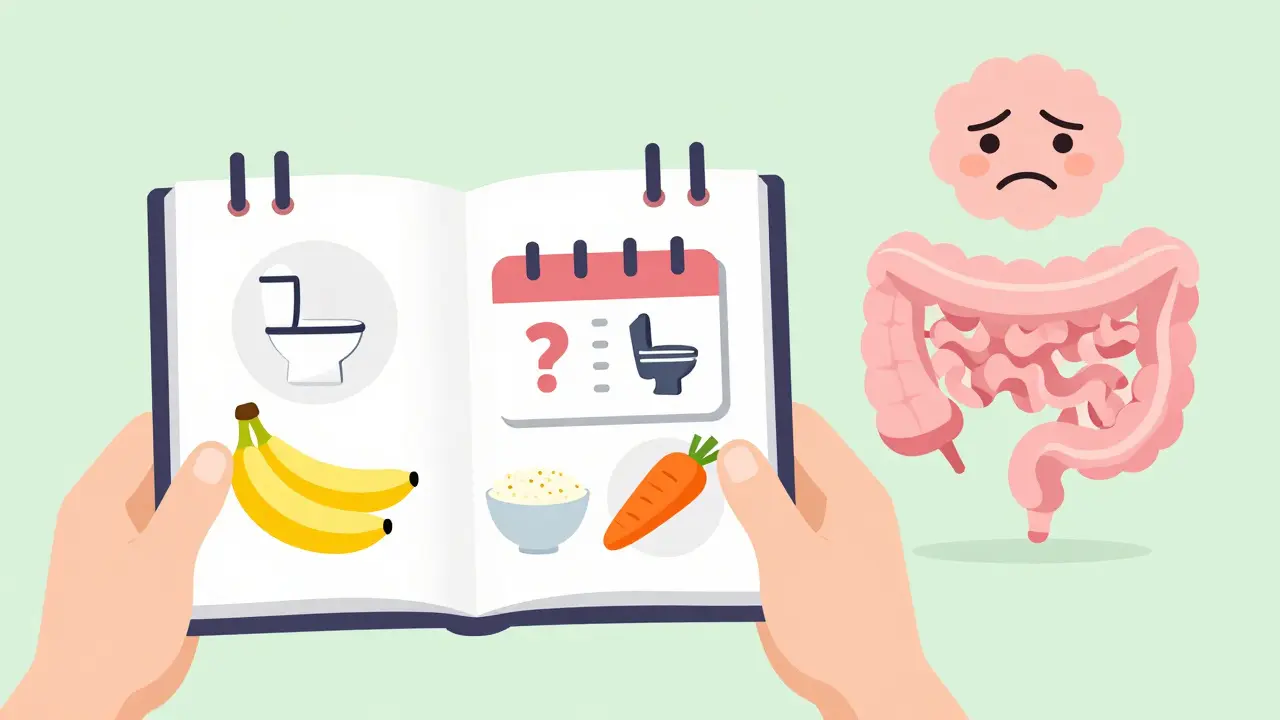
Living with IBS-Mixed means your gut doesn’t know what it wants. One day you’re stuck, the next you’re racing to the bathroom. Abdominal pain comes and goes, bloating feels constant, and no two bowel movements are the same. If you’ve been told it’s just stress or you’re "just sensitive," you’re not alone-and you’re not imagining it. IBS-Mixed, or IBS-M, is a real, diagnosable condition affecting about 20-25% of all IBS patients globally. Unlike IBS with only constipation or only diarrhea, IBS-M throws you into a cycle where both happen regularly, making treatment tricky. But there’s a way forward. It’s not about finding one magic fix. It’s about building a system that adapts to your gut’s mood swings.
What Exactly Is IBS-Mixed?
IBS-Mixed isn’t just "IBS that acts up sometimes." It’s defined by specific criteria: you must have abdominal pain at least once a week for three months, along with changes in stool frequency and form. And here’s the key-you must see both hard, lumpy stools (Bristol Stool Scale 1-2) and loose, watery stools (Bristol Stool Scale 6-7) in at least 25% of your bowel movements. That’s not occasional. That’s regular back-and-forth.
There’s no inflammation. No ulcers. No tumors. Your colon looks normal on a scope. But your gut brain-your enteric nervous system-is on high alert. It overreacts to food, stress, and even normal gut movements. That’s why two people can eat the same meal and one stays fine while the other ends up in pain and panic.
Diagnosis isn’t a single test. Doctors rule out celiac disease, inflammatory bowel disease, and infections first. Blood tests, stool tests, and sometimes a colonoscopy are used to eliminate other causes. Once those are out, the Rome IV criteria are used to confirm IBS-M. And yes, it often takes years. On average, people see 3-4 doctors before getting the right label. That delay adds stress, which makes symptoms worse. It’s a loop no one should have to live in.
Why IBS-Mixed Is Harder to Treat Than Other Types
Think of IBS-C as a car stuck in first gear. IBS-D is a car with no brakes. IBS-M is a car that keeps switching between the two. That’s why most single-target drugs fail.
Linaclotide, a common prescription for constipation-predominant IBS, helps about 48% of IBS-C patients. But for IBS-M? Only 22%. Eluxadoline, used for diarrhea-predominant IBS, works for 38% of IBS-D patients-but just 19% of IBS-M. Why? Because treating one symptom often makes the other worse. A laxative that unblocks you today might trigger diarrhea tomorrow. An antidiarrheal that calms you down today could leave you stranded tomorrow.
That’s why the best approach isn’t one drug. It’s a toolkit. You need options ready for both extremes. And you need to know when to use each one.
The Low FODMAP Diet: Your Most Powerful Tool
Of all the strategies out there, the low FODMAP diet has the strongest evidence for IBS-M. Studies show it helps 50-60% of IBS-M patients-slightly less than for IBS-D, but still the most effective single intervention.
FODMAPs are short-chain carbs that ferment in your gut, pulling in water and producing gas. High-FODMAP foods include onions, garlic, wheat, dairy, apples, and artificial sweeteners like sorbitol. These aren’t "bad" foods-they’re just troublemakers for sensitive guts.
The diet has three phases:
- Elimination (2-6 weeks): Cut out all high-FODMAP foods. Stick to safe options like bananas, carrots, rice, eggs, and lactose-free dairy.
- Reintroduction (8-12 weeks): One by one, add back FODMAP groups. Track symptoms after each. Do apples trigger you? What about garlic?
- Personalization: Keep only the foods you tolerate. You don’t need to avoid forever-just avoid what hurts.
Most people see improvement within 4-6 weeks. Reddit users report symptom days dropping from 25 per month to 8. But doing this alone is hard. A registered dietitian who specializes in IBS can guide you through reintroduction so you don’t miss triggers or cut out too much. The Monash University app is a gold standard for checking FODMAP levels in foods.
Medications: The Right Tool for the Right Day
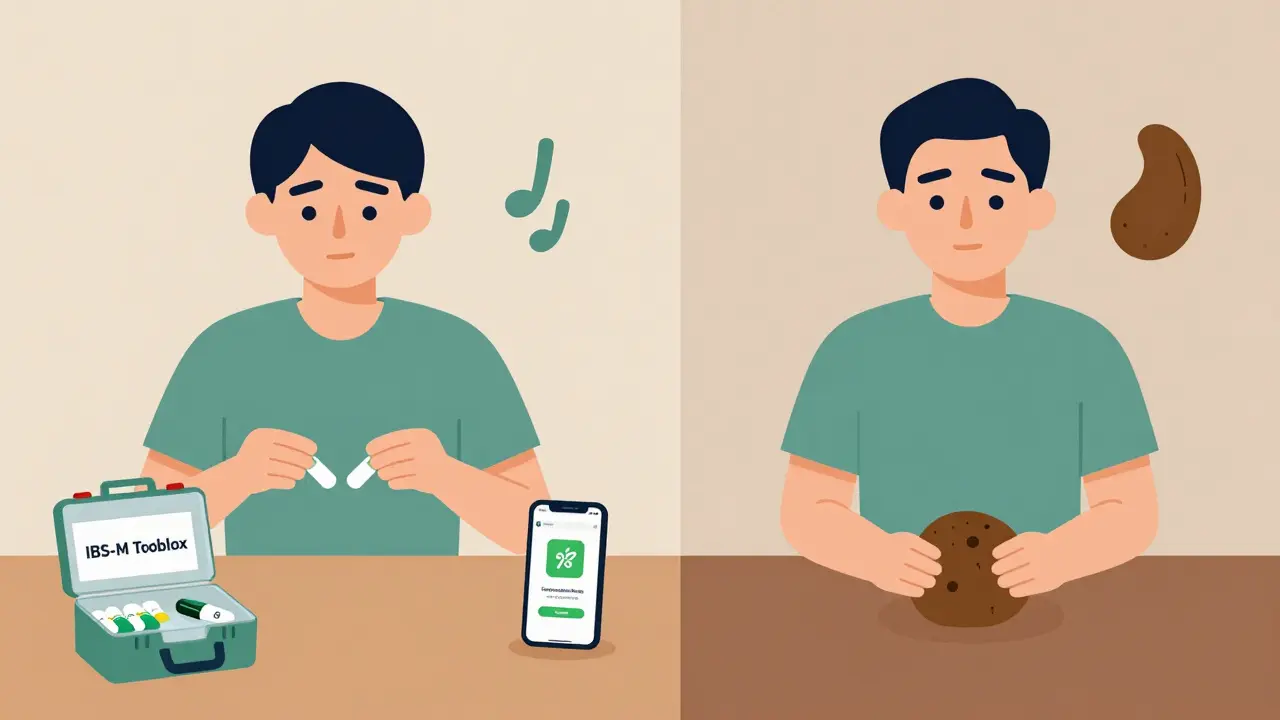
You don’t need to take meds every day. You need them ready when your gut flips.
For diarrhea flares: Loperamide (Imodium) works fast. Take 2mg at the first sign of loose stools. Don’t go over 4mg in 24 hours. Too much can backfire and cause severe constipation.
For constipation flares: Polyethylene glycol (Miralax) is gentle. Take 17g daily. It draws water into the colon without cramping. Avoid stimulant laxatives like senna-they can worsen pain and create dependency.
For pain and bloating: Antispasmodics like dicyclomine (10-20mg, as needed) relax gut muscles. Peppermint oil capsules (IBgard) are backed by strong data-68% of users report less pain, 57% less bloating. They’re enteric-coated, so they release in the intestine, not your stomach. Some report heartburn, but it’s rare.
For ongoing pain and brain-gut dysregulation: Low-dose tricyclic antidepressants (like amitriptyline 10-25mg at night) are surprisingly effective. They don’t treat depression here-they calm nerve signals in the gut. Studies show 55-60% of IBS-M patients improve with these, better than in IBS-C or IBS-D. SSRIs like fluoxetine work too, but TCAs are stronger for pain.
Stress Isn’t Just "In Your Head"-It’s in Your Gut
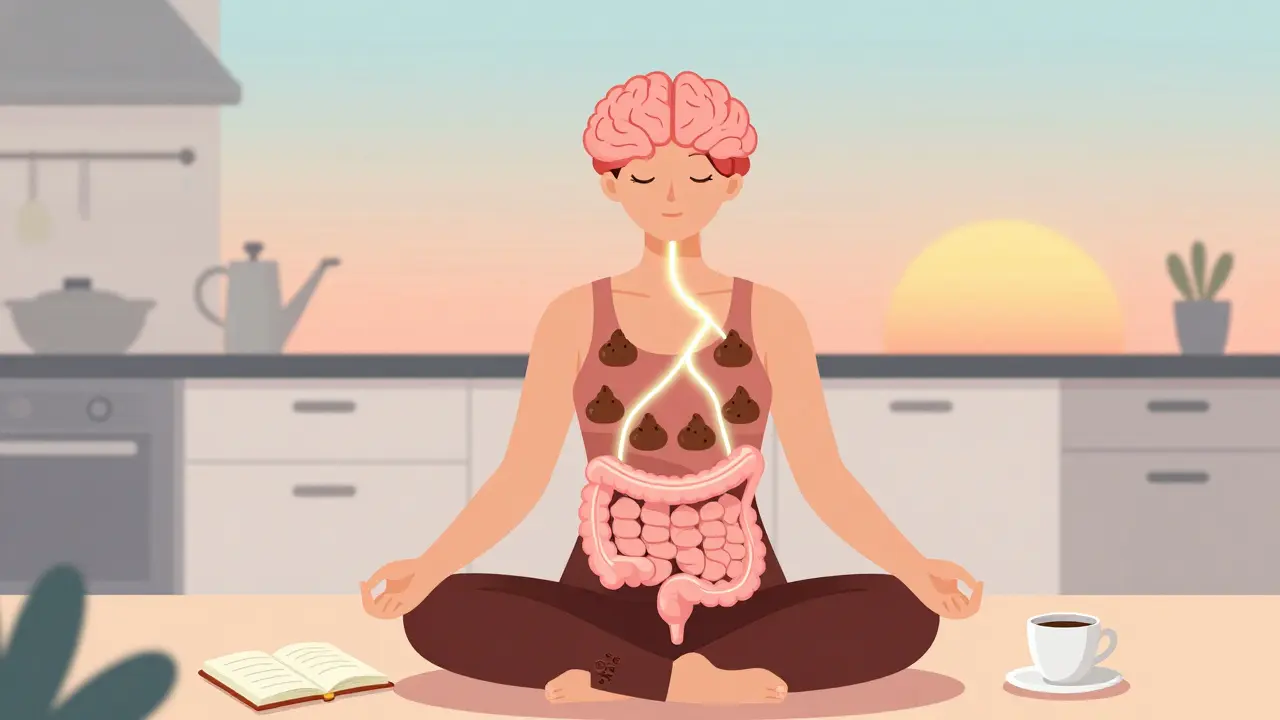
Stress doesn’t cause IBS-M. But it turns up the volume. A 2019 study found 68% of IBS-M patients say stress makes their symptoms worse. That’s not coincidence. Your gut and brain are wired together. When you’re anxious, your gut tightens. When you’re tense, your digestion slows or speeds up unpredictably.
Cognitive Behavioral Therapy (CBT) isn’t a luxury-it’s a medical tool. The American Gastroenterological Association gives it a strong recommendation for IBS-M. In 12 trials, CBT reduced symptom severity by 40-50%. That’s better than most meds. Online CBT programs like those from the IBS Network UK or the University of North Carolina are accessible and effective.
Even simple daily practices help: 10 minutes of diaphragmatic breathing, a 20-minute walk, or mindfulness apps like Insight Timer can lower your gut’s sensitivity over time. You’re not "just relaxing"-you’re rewiring your nervous system.
Tracking: The Key to Taking Back Control
Without tracking, you’re guessing. Guessing leads to frustration. Tracking leads to patterns.
Use a simple journal or app (like Cara Care or Bowelle) to record:
- Bowel movement (use Bristol Stool Scale 1-7)
- Pain level (0-10)
- Food eaten (include portion size)
- Stress level (low, medium, high)
- Medications taken
After 4 weeks, look for patterns. Do symptoms spike after coffee? After a bad night’s sleep? After eating gluten-free bread (which often has high-FODMAP ingredients)?
One user tracked for 6 weeks and found her diarrhea flares always happened on Monday mornings-after weekend takeout. She stopped eating fried chicken on Saturdays. Her symptoms dropped 70%.
What Doesn’t Work (And Why)
Not every trendy fix helps. Here’s what to avoid:
- Over-the-counter fiber supplements with insoluble fiber: Wheat bran, corn bran-these irritate sensitive guts. Stick to soluble fiber like psyllium husk (5g daily).
- Extreme diets: Keto, carnivore, or juice cleanses may seem helpful short-term but often worsen dysbiosis and nutrient gaps.
- Probiotics without strain specificity: Not all probiotics are equal. VSL#3 and Bifidobacterium infantis 35624 have evidence for IBS. Random store-bought brands? Often useless.
- Ignoring sleep: Poor sleep increases gut sensitivity. Aim for 7+ hours. Keep a consistent bedtime.
What’s Coming Next
Science is moving fast. In 2023, a new drug called ibodutant showed 45% symptom improvement in IBS-M patients-nearly double the placebo effect. It’s not approved yet, but it’s promising.
Microbiome testing is getting smarter. Companies like Viome use AI to analyze your gut bacteria and suggest personalized diets. Early results show 58% symptom improvement in pilot studies.
The Rome V criteria, coming in 2024, will raise the bar: instead of 25% of bowel movements showing alternating patterns, you’ll need 30%. That means diagnosis will be more precise.
But the core won’t change. IBS-M isn’t curable. But it’s manageable. And with the right tools, you can live a full life-no matter what your gut does next.
Real-Life Strategy: A Sample Week
Here’s how one person manages IBS-M:
- Monday: Eat low-FODMAP breakfast (oatmeal with banana). Take psyllium husk. No coffee. Take dicyclomine if pain starts.
- Tuesday: Diarrhea flare. Take 2mg loperamide. Skip lunch. Eat rice and chicken. Rest.
- Wednesday: Constipation. Take Miralax. Walk 30 minutes. Drink warm lemon water.
- Thursday: Stressful meeting. Do 10-minute breathing before work. No sugar or artificial sweeteners.
- Friday: Dinner with friends. Choose safe options: grilled fish, spinach, potatoes. No garlic bread.
- Saturday: No alcohol. No fried food. Take IBgard before bed.
- Sunday: Review journal. Note triggers. Plan next week.
It’s not perfect. But it’s consistent. And consistency is what brings control.
Can IBS-Mixed turn into Crohn’s disease or ulcerative colitis?
No. IBS-M is a functional disorder-it affects how your gut works, not its structure. Crohn’s and ulcerative colitis are inflammatory diseases with visible damage. Blood tests, stool markers, and scopes can easily tell the difference. Having IBS-M doesn’t increase your risk of developing IBD.
How long does it take to see results from the low FODMAP diet?
Most people notice improvement within 2 to 6 weeks of starting the elimination phase. Some feel better in just days. But full benefit comes after reintroducing foods and personalizing your diet-this takes 8 to 12 weeks. Patience and tracking are key.
Should I take probiotics for IBS-Mixed?
Only specific strains have proven benefits. Bifidobacterium infantis 35624 (found in Align) and VSL#3 (a multi-strain formula) are backed by research. Avoid random probiotics from the grocery store-they often don’t contain the right strains or enough live bacteria. Always check the label for strain names and CFU count.
Can stress management really help with physical symptoms?
Yes. Your gut and brain are connected by the vagus nerve. Chronic stress keeps your gut in fight-or-flight mode, making it hypersensitive. CBT, mindfulness, and breathing exercises reduce this overactivity. Studies show they lower pain scores and improve stool regularity as effectively as some medications.
Are there any new medications for IBS-Mixed?
As of 2026, no drug is FDA-approved specifically for IBS-M. But ibodutant, a new neurokinin-2 receptor blocker, showed 45% improvement in phase 3 trials-much better than placebo. It’s expected to be submitted for approval in late 2026. Until then, the best approach remains combining diet, stress tools, and symptom-targeted meds.
 Medications
Jennifer Glass
January 4, 2026 AT 15:40Really appreciate how you broke this down-especially the part about the low FODMAP diet phases. I’ve been stuck in elimination for 8 weeks and was starting to feel like I’d never get to reintroduce anything. Your mention of the Monash app saved me-I just found out my ‘gluten-free’ bread was loaded with inulin. Who knew?
Also, the fact that you clarified IBS-M isn’t a precursor to IBD? Huge relief. I’ve been Googling ‘can IBS turn into Crohn’s’ every night for a year. Thanks for ending that cycle.
Akshaya Gandra _ Student - EastCaryMS
January 6, 2026 AT 07:23omg same!! i did the low fodmap and thought i was doing it right but turns out i was eating too much honey and that was my whole problem. also peppermint oil is magic. i take 2 before bed and no more bloating. psyllium husk though? nope. made me feel like a balloon. avoid.
Jacob Milano
January 7, 2026 AT 08:00Man, this post reads like someone finally handed me the manual I didn’t know I was missing. I’ve spent $2000 on supplements, probiotics, and ‘gut detox’ teas-all of which did jack. Then I tried Miralax on a constipation day and it was like my colon finally remembered how to breathe.
And the CBT thing? I thought it was just for anxiety. Turns out, it’s like physical therapy for your gut-brain connection. Mind blown. Seriously, thank you.
saurabh singh
January 7, 2026 AT 23:34As an Indian guy who grew up eating spicy food and dairy, this hit hard. My grandma said ‘gut problems = bad karma.’ I thought I was broken. Turns out, I just needed to stop eating onion-garlic curry every night.
Low FODMAP isn’t about deprivation-it’s about freedom. I still eat dal, rice, and yogurt. Just no garlic. And guess what? I can now travel without planning my route to 12 bathrooms. Life changed.
en Max
January 9, 2026 AT 17:55While the low FODMAP protocol is empirically supported, one must exercise caution regarding its long-term application. The restriction of fermentable oligo-, di-, mono-saccharides, and polyols may induce microbiota dysbiosis if not properly managed during the reintroduction phase. Furthermore, the use of low-dose tricyclic antidepressants for visceral hypersensitivity is supported by a meta-analysis published in Gastroenterology (2021), demonstrating a statistically significant reduction in pain scores (p < 0.01) versus placebo. The enteric-coated peppermint oil formulation, specifically IBgard, has demonstrated efficacy in randomized controlled trials with a number needed to treat (NNT) of 3.7 for global IBS symptom improvement. Adherence to the Monash University database remains the gold standard for dietary guidance.
Abhishek Mondal
January 11, 2026 AT 02:36Low FODMAP? Please. That’s just a fancy way of saying ‘eat nothing.’ I’ve been on carnivore for 14 months. Zero carbs. Zero bloating. Zero diarrhea. Why are people still clinging to this ‘diet’ nonsense? Your gut doesn’t need ‘fiber’-it needs protein and fat. And if you’re stressed, just stop being weak. IBS isn’t a medical condition-it’s a lifestyle failure.
Allen Ye
January 12, 2026 AT 22:06There’s a deeper philosophical layer here, isn’t there? We treat the gut as a machine-fix the parts, replace the fuel, recalibrate the sensors. But what if the gut isn’t malfunctioning? What if it’s communicating? The pain, the chaos, the alternating rhythms-perhaps it’s not a disorder, but a rebellion against the modern world’s relentless pace, processed foods, and emotional suppression. The low FODMAP diet isn’t a cure-it’s a truce. A ceasefire between the body and the chaos we’ve imposed upon it. And CBT? It’s not therapy-it’s relearning how to listen to a voice we’ve spent decades drowning out with coffee, screens, and stress.
Peyton Feuer
January 13, 2026 AT 14:29Just wanted to say thank you for not saying ‘just reduce stress.’ That phrase used to make me want to throw my laptop out the window. You actually gave tools. I started tracking with Cara Care and found my flare-ups always happened after my Sunday brunch with my mom. Turns out, her ‘healthy’ smoothie had apple and pear. I still see her-just no smoothies. Small change. Big difference.
Aaron Mercado
January 15, 2026 AT 13:38They don’t want you to know this-but the real cause of IBS-M is glyphosate in your food. Big Pharma doesn’t care about your gut-they care about your monthly prescriptions. That’s why they push FODMAP and meds. The truth? Eat organic. Avoid all processed stuff. Stop drinking water from the tap. Your colon is being poisoned by the system. And no, probiotics won’t fix it. Only raw, unprocessed, grass-fed, moon-phase-aligned food will. I’ve been symptom-free for 3 years since I started eating only food grown within 50 miles of my house during a waxing moon.
Angie Rehe
January 16, 2026 AT 17:32Ugh, another ‘low FODMAP’ post. Like we haven’t seen this 500 times. And you act like peppermint oil is some miracle cure? I tried it. Gave me heartburn and made me feel like I swallowed a candle. And ‘low-dose antidepressants’? You’re just drugging people to numb their pain. What about the root cause? Why is everyone so quick to medicate instead of asking why? This isn’t science-it’s corporate wellness theater.
Jay Tejada
January 18, 2026 AT 00:40My gut’s been doing the cha-cha since college. I thought I was broken. Then I found out my ‘healthy’ oatmeal had raisins. Raisins. Who knew? Now I eat rice cakes with peanut butter for breakfast. No stress. No meds. Just common sense. And yeah, I still eat garlic. But only on Tuesdays. That’s my rebellion.
Enrique González
January 18, 2026 AT 04:23You’ve got this. I’ve been where you are. The bad days feel endless-but they’re not permanent. You’re not broken. You’re adapting. Keep tracking. Keep trying. One day you’ll wake up and realize you haven’t thought about your gut all week. That’s the win. You’re not fighting your body-you’re learning its language. Keep going.
mark etang
January 20, 2026 AT 01:01It is imperative to underscore the clinical significance of the Rome IV diagnostic criteria in the context of Irritable Bowel Syndrome with Mixed Bowel Habits. The exclusionary diagnostic paradigm, coupled with meticulous symptom documentation over a minimum 3-month interval, remains the cornerstone of accurate diagnosis. Furthermore, the integration of pharmacological agents such as loperamide and polyethylene glycol, in conjunction with neuromodulatory therapy, constitutes a multimodal therapeutic framework endorsed by the American College of Gastroenterology. Adherence to evidence-based protocols is not optional-it is the standard of care.
josh plum
January 21, 2026 AT 00:56Let me guess-you’re also taking ‘IBgard’ and drinking ‘warm lemon water’ like it’s some sacred ritual. Newsflash: your gut doesn’t care about your ‘journal’ or your ‘breathing exercises.’ What you really need is a colon cleanse. And maybe a spiritual awakening. I know someone who cured her IBS by fasting for 7 days and chanting mantras. No meds. No apps. Just pure energy. You’re overcomplicating this. The answer is always simpler than they want you to believe.