LDAA Metabolic Risk & Dose Estimator
This tool helps visualize the transition from standard azathioprine monotherapy to the Low-Dose Azathioprine with Allopurinol (LDAA) protocol based on Therapeutic Drug Monitoring (TDM) values.
Clinical Guidance Summary:
Imagine taking a medication to calm your immune system, only to find out your liver is reacting violently to it. For many people treating inflammatory bowel disease (IBD), this isn't a hypothetical-it's a common side effect of Azathioprine is an immunosuppressant drug used to treat autoimmune conditions and prevent organ transplant rejection. The problem is that our bodies process this drug differently. For some, it turns into a therapeutic tool; for others, it creates a toxic byproduct that attacks the liver. This is where the strategic addition of Allopurinol enters the picture, turning a potentially dangerous interaction into a targeted treatment strategy known as Low-Dose Azathioprine with Allopurinol (LDAA).
Why the Combination Causes a Metabolic Shift
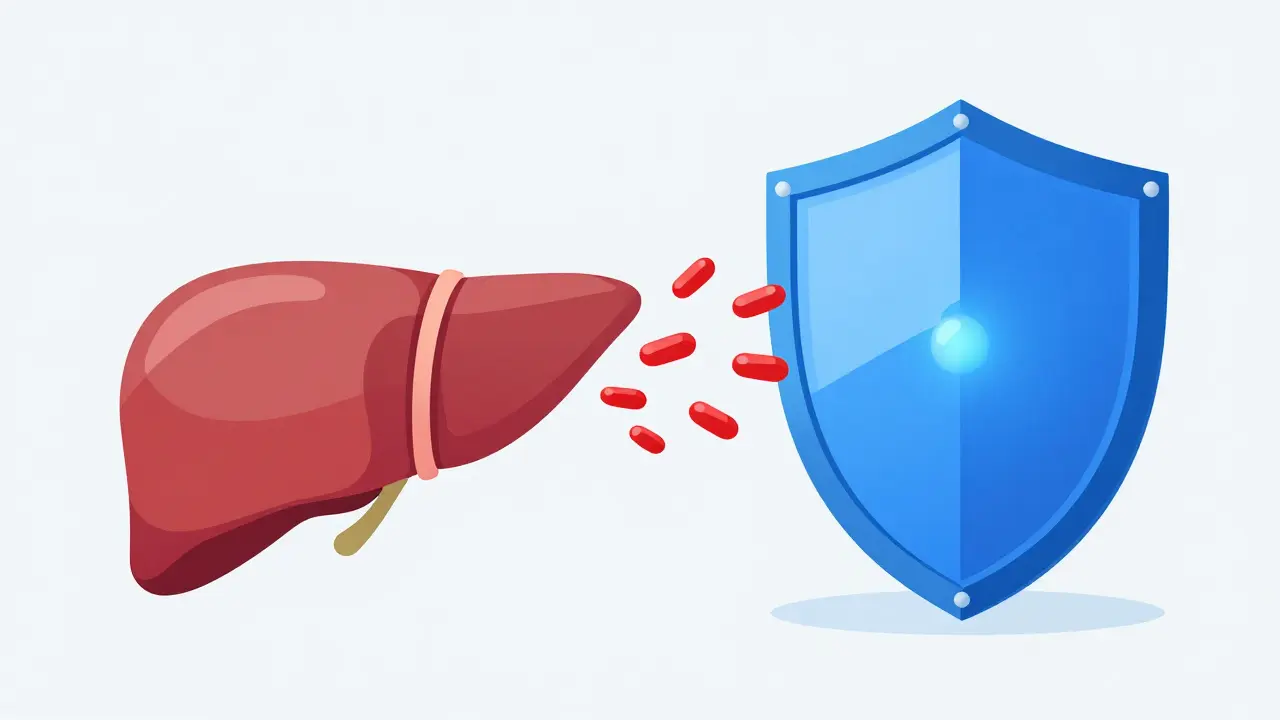
To understand why these two drugs are paired, we have to look at how Azathioprine actually works. It doesn't do the heavy lifting itself; it's a prodrug that first converts into 6-Mercaptopurine (6-MP). From there, your body takes one of three paths. The "good" path creates 6-thioguanine nucleotides (6-TGN), which are the active parts that actually treat your disease. The "bad" path, driven by the enzyme Thiopurine Methyltransferase (TPMT), creates 6-methylmercaptopurine (6-MMP). This metabolite is the culprit behind liver toxicity.
Now, here is the twist: Allopurinol, which most people know as a gout medication, inhibits an enzyme called Xanthine Oxidase (XO). By blocking XO, allopurinol effectively "shunts" the metabolic traffic. Instead of the drug being wasted through inactivation or piling up as toxic 6-MMP, it is forced toward the therapeutic 6-TGN pathway. In simple terms, allopurinol acts like a traffic cop, redirecting the medication away from the liver-damaging route and toward the healing route.
Identifying the 'Hypermethylator' Patient
Not everyone needs this combination. It is specifically designed for a subgroup called "hypermethylators." These are patients whose bodies are overly efficient at producing the toxic 6-MMP metabolite. According to a 2022 review in the Journal of Gastroenterology and Hepatology, about 15-20% of IBD patients fall into this category. If you have high TPMT activity, your body might produce so much 6-MMP that you either experience hepatotoxicity (liver inflammation) or you simply don't get any benefit from the drug because the therapeutic 6-TGN levels never get high enough.
Doctors usually spot this through Therapeutic Drug Monitoring (TDM). If a blood test shows 6-MMP levels above 5,700 pmol/8×10^8 RBCs and 6-TGN levels below 230 pmol/8×10^8 RBCs, you are likely a hypermethylator. For these patients, standard azathioprine doses are often useless or dangerous. Switching to the LDAA protocol can flip the script, often resolving liver toxicity in 85-90% of cases.
The LDAA Protocol: Dosing and Safety
You cannot simply add allopurinol to a full dose of azathioprine. Doing so would be incredibly dangerous, as it could send 6-TGN levels skyrocketing, leading to severe bone marrow suppression. The key to this therapy is the toxic metabolite accumulation management through drastic dose reduction. The standard LDAA approach involves cutting the azathioprine dose to just 25-33% of the conventional amount.
| Feature | Standard Monotherapy | LDAA Combination |
|---|---|---|
| Azathioprine Dose | 150-200 mg/day | 50 mg/day (approx.) |
| Allopurinol Addition | None | 100 mg/day |
| Primary Target | General Immunosuppression | Hypermethylators / Liver Toxicity |
| 6-MMP Levels | Often high in hypermethylators | Reduced by 70-90% |
| 6-TGN Levels | Variable/Low in hypermethylators | Increased 2- to 5-fold |

The Critical Risk: Myelosuppression
While LDAA saves the liver, it puts the bone marrow at risk. Myelosuppression-where the bone marrow stops producing enough white blood cells (leukopenia) or platelets-is the primary danger. Because allopurinol is so effective at boosting 6-TGN levels, it is easy to overshoot the therapeutic window. The "sweet spot" for 6-TGN is between 230 and 450 pmol/8×10^8 RBCs. If you cross that 450 mark, the risk of crashing your white blood cell count increases significantly.
This is why monitoring is non-negotiable. The 2020 ECCO guidelines suggest a strict schedule: complete blood counts (CBC) every week for the first month, and then every two weeks after that. A dip in the absolute neutrophil count (ANC) can happen suddenly, often between weeks 4 and 8. If this happens, doctors usually pause the azathioprine temporarily. In about 90% of cases, the drug can be restarted at a lower dose once the marrow recovers.
Who Should Avoid This Combination?
LDAA is a powerful tool, but it is not for everyone. There are two major "red flags" that make this combination a no-go: severe renal impairment and TPMT deficiency. Because allopurinol is cleared by the kidneys, anyone with a creatinine clearance below 30 mL/min is at high risk for drug buildup and toxicity.
Even more critical is the TPMT status. While LDAA helps those with too much TPMT activity, it is dangerous for those with a total TPMT deficiency (less than 5 U/mL). People with this genetic deficiency cannot process thiopurines safely regardless of whether they take allopurinol; they are predisposed to life-threatening bone marrow failure. For these individuals, alternative therapies like biologics are the only safe route.

Real-World Outcomes and Expert Views
In the clinic, the results for the right candidates are often dramatic. Many patients who failed standard therapy due to "sky-high" liver enzymes find that their enzymes normalize within eight weeks of starting LDAA. Remission rates for hypermethylators jump from about 30-40% with standard therapy to 65-75% with the combination. This makes it a highly cost-effective alternative to expensive anti-TNF biologics, which can cost tens of thousands of dollars annually compared to the modest cost of generic tablets.
However, the medical community remains cautious. Some experts, like Dr. Stephen Hanauer, remind us that the historical association with fatal bone marrow suppression requires constant vigilance. The consensus is clear: LDAA is a "precision medicine" approach. When the dose is low and the monitoring is tight, it transforms a toxic interaction into a life-changing treatment.
What are the signs that I might need the Allopurinol combination?
The most common sign is the development of thiopurine-induced hepatotoxicity, where liver enzymes (ALT/AST) increase significantly after starting Azathioprine. Additionally, if your disease remains active despite a standard dose, and blood tests show high levels of 6-MMP (the toxic metabolite) and low levels of 6-TGN (the active metabolite), you may be a 'hypermethylator' who would benefit from LDAA.
Is the dose reduction in LDAA mandatory?
Yes, it is absolutely critical. Because Allopurinol inhibits the breakdown of Azathioprine, it drastically increases the amount of active drug in your system. Taking a full dose of Azathioprine with Allopurinol can lead to severe, potentially fatal myelosuppression (bone marrow failure). The dose must typically be reduced to 25-33% of the original dose.
How often do I need blood tests while on this therapy?
According to ECCO guidelines, you should have a complete blood count (CBC) every week for the first four weeks. After that, tests are usually required every two weeks. This is necessary to catch any drop in white blood cells (neutropenia) early, as this side effect often appears between the 4th and 8th week of treatment.
Can I use LDAA if I have kidney disease?
Generally, no. Allopurinol is contraindicated or requires extreme caution in patients with severe renal impairment (specifically a creatinine clearance of less than 30 mL/min). Since the kidneys handle the clearance of allopurinol and its metabolite oxypurinol, impaired function can lead to dangerous drug accumulation.
What is the difference between 6-MMP and 6-TGN?
6-TGN (6-thioguanine nucleotides) are the therapeutic metabolites that incorporate into DNA to stop the overactive immune response; they are what you want to increase. 6-MMP (6-methylmercaptopurine) is a byproduct of the methyltransferase pathway that is associated with liver toxicity and offers no therapeutic benefit; this is what you want to decrease.
Next Steps and Troubleshooting
If you are considering this path, your first step should be a TPMT activity test. This blood test tells your doctor if you are a poor, intermediate, or high metabolizer, which dictates your starting dose. If you are already on Azathioprine and seeing rising liver enzymes, ask your gastroenterologist about your 6-MMP levels via TDM.
For those already on LDAA: if you develop a fever or sore throat, contact your clinic immediately. These can be early signs of neutropenia (low white blood cells). Do not stop the medication abruptly without medical supervision, as this can cause a flare-up of your primary condition, but be prepared for a temporary dose adjustment to let your bone marrow recover.
 Medications