

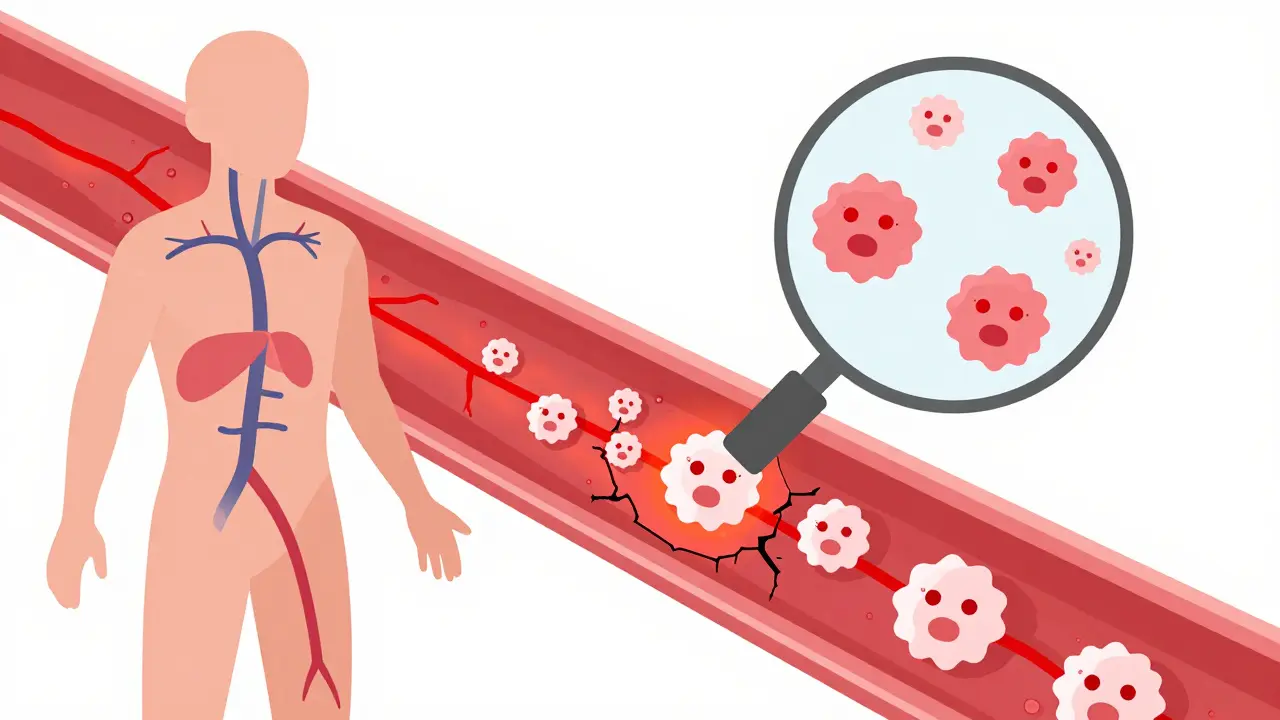
When your immune system turns against your own blood vessels, it’s not just a glitch-it’s a medical emergency. Vasculitis is when your body’s defense system mistakes the walls of your arteries, veins, and capillaries for invaders and starts attacking them. This inflammation can narrow, weaken, or even block blood flow to vital organs. Left untreated, it can lead to organ failure, stroke, or death. But here’s the truth: if caught early, most forms of vasculitis can be controlled. You don’t need to live in fear-just in awareness.
What Happens Inside Your Blood Vessels?
Your blood vessels aren’t just passive tubes. They’re dynamic structures that respond to signals from your immune system. In vasculitis, that signal goes wrong. White blood cells swarm the vessel walls, triggering inflammation. Early on, it’s mostly neutrophils-cells designed to fight infection-climbing into the vessel wall. Over time, lymphocytes take over, and the damage deepens. The inner lining thickens. The middle layer, where elasticity lives, gets shredded. That’s when aneurysms form-bulges in weakened walls that can burst. Or the vessel closes off entirely, starving tissue of oxygen. This isn’t just pain-it’s tissue death waiting to happen.How Vasculitis Is Classified by Blood Vessel Size
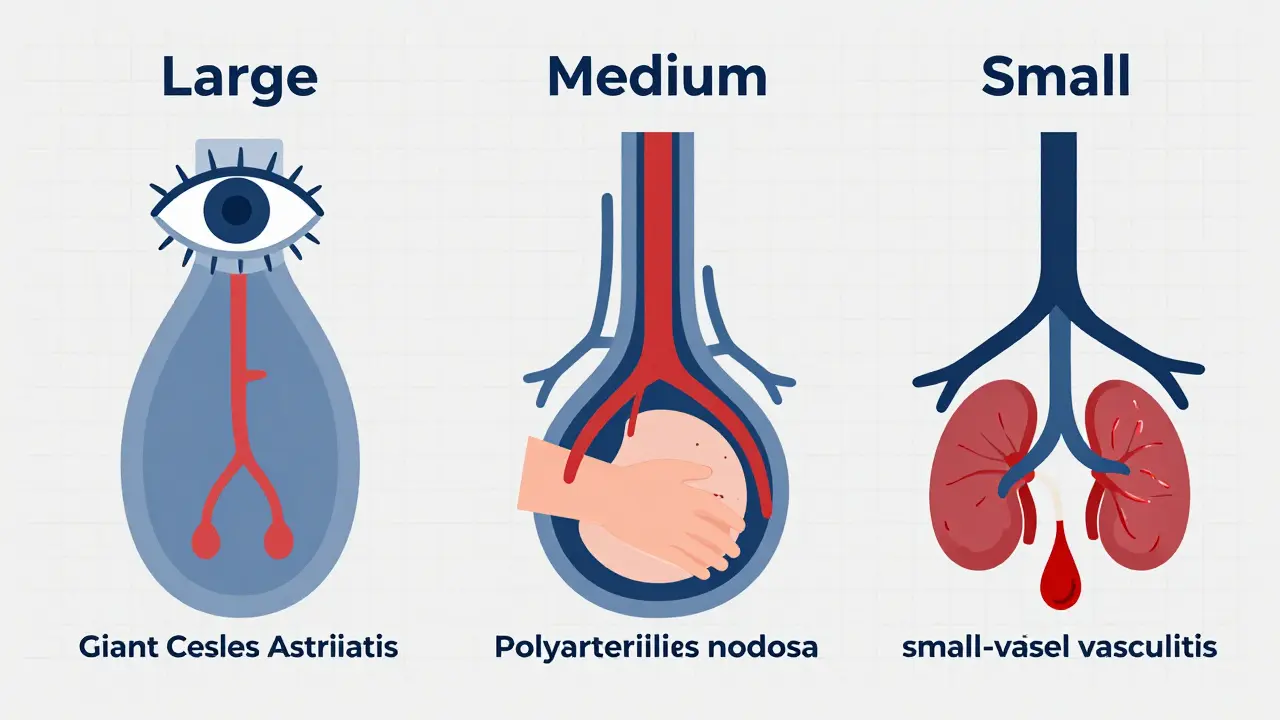
Doctors don’t treat all vasculitis the same. The key is figuring out which vessels are under attack. The classification is simple: large, medium, or small.- Large-vessel vasculitis targets the aorta and its biggest branches. Giant cell arteritis (GCA) is the most common. It hits people over 50, especially in the temples. If you’re over 50 and get a new, severe headache, jaw pain when chewing, or sudden vision loss-don’t wait. GCA can cause permanent blindness in days.
- Medium-vessel vasculitis affects arteries like the renal or hepatic arteries. Polyarteritis nodosa (PAN) falls here. It often shows up with abdominal pain, nerve damage, or skin ulcers. Kawasaki disease, mostly seen in kids under 5, is another medium-vessel type. It can cause coronary artery aneurysms in 20-25% of untreated cases.
- Small-vessel vasculitis is the most dangerous because it hits the tiny vessels feeding your kidneys, lungs, and nerves. This group includes granulomatosis with polyangiitis (GPA), microscopic polyangiitis (MPA), and eosinophilic granulomatosis with polyangiitis (EGPA). These are often tied to ANCA antibodies-autoantibodies that attack white blood cells and trigger vessel damage.
There’s no one-size-fits-all. A rash on your legs might be harmless in one person, but a sign of kidney failure in another. That’s why diagnosis isn’t about one test-it’s about piecing together symptoms, labs, imaging, and sometimes a biopsy.
Key Symptoms You Can’t Ignore
Vasculitis doesn’t announce itself with a loud alarm. It whispers at first. Fatigue. Low-grade fever. Weight loss. These are the red flags that get missed because they look like the flu, stress, or aging.- Skin: Purple or red spots, bumps, clusters of dots, or bruise-like patches that don’t fade under pressure. These aren’t just allergies-they’re bleeding under the skin from damaged capillaries.
- Lungs: Coughing up blood, shortness of breath, or new chest pain. In GPA and MPA, this is often the first sign of lung involvement.
- Kidneys: You might not feel anything. But blood or protein in your urine? That’s a red flag. The kidneys are silent victims-they show damage long before you feel pain.
- Nerves: Numbness, tingling, or weakness in hands or feet. This isn’t carpal tunnel. It’s nerve damage from inflamed small vessels cutting off blood supply.
- Joints and muscles: Pain and stiffness that moves around, not tied to injury. It’s not arthritis-it’s vasculitis mimicking it.
- GI tract: Abdominal pain after eating, nausea, or bloody stools. This can mean bowel ischemia-a life-threatening blockage.
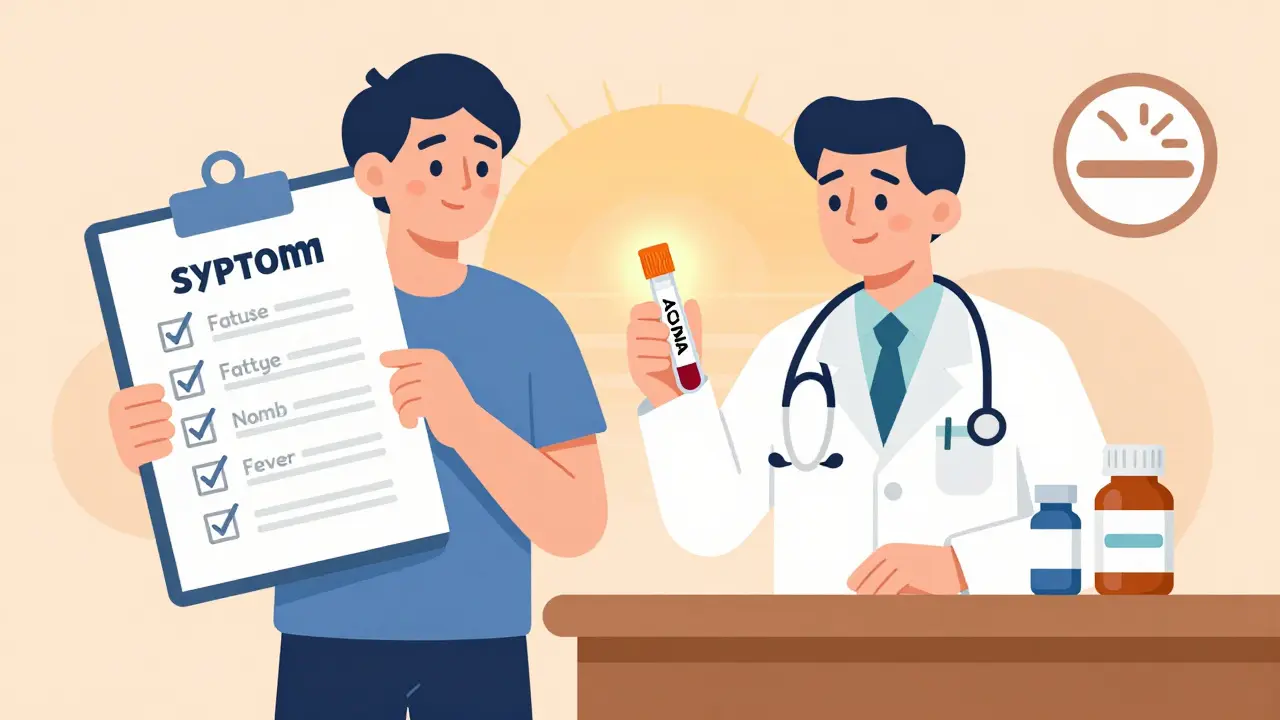
One study found patients wait 6 to 12 months before getting a correct diagnosis. Why? Because symptoms look like common problems. But if you have more than one of these-especially with unexplained fatigue or fever-see a rheumatologist. Don’t wait for the worst to happen.
How Doctors Diagnose Vasculitis
There’s no single blood test for vasculitis. Diagnosis is a puzzle. Here’s how it’s solved:- Blood tests: ESR and CRP measure inflammation. If they’re sky-high-over 50 mm/hr and 5 mg/dL respectively-it’s a red flag. ANCA testing is critical. c-ANCA (anti-PR3) points to GPA. p-ANCA (anti-MPO) often means MPA. But here’s the catch: ANCA can be negative in up to 20% of cases. A negative test doesn’t rule it out.
- Urine tests: Even if you feel fine, check for blood or protein. Kidney damage is silent until it’s advanced.
- Imaging: CT or MRI scans show swollen or narrowed vessels. In giant cell arteritis, ultrasound of the temporal artery can reveal a “halo sign”-a thickened wall from inflammation.
- Tissue biopsy: The gold standard. A small sample from affected skin, nerve, kidney, or artery shows the inflammation under the microscope. In cutaneous vasculitis, you’ll see leukocytoclastic debris-nuclear fragments from dead white blood cells-clumped around the vessel walls.
- The Five Factor Score: Used for polyarteritis nodosa, this tool predicts survival. It checks for heart, kidney, GI, or nerve involvement. No major factors? 95% 5-year survival. Two or more? Survival drops to 50%.
Doctors don’t just look for one thing. They look for patterns. A 60-year-old with new headaches and elevated ESR? Think GCA. A 40-year-old with lung nodules, kidney failure, and p-ANCA? Think MPA. The right diagnosis changes everything.
Treatment: From Steroids to Targeted Drugs
Treatment isn’t about curing vasculitis-it’s about stopping the attack and preventing relapse. The goal is remission, not just symptom control.- High-dose steroids: Prednisone is the first line. Doses start at 0.5-1 mg per kg of body weight. It works fast-often reducing symptoms in days. But long-term use causes bone loss, diabetes, weight gain, and infections. That’s why we don’t keep it on forever.
- Immunosuppressants: Cyclophosphamide was the standard for decades. Now, rituximab (a B-cell killer) is often preferred. It’s just as effective with fewer long-term side effects. For maintenance, methotrexate or azathioprine are used for 18-24 months.
- New drugs: Avacopan, approved in 2021, is a game-changer. It blocks a specific part of the immune system (C5a receptor) and reduces steroid use by about 2,000 mg over a year. Patients get the same results with far less steroid damage.
- For giant cell arteritis: Tocilizumab, an IL-6 inhibitor, is now approved as an add-on. It lets patients taper steroids faster and reduces relapse risk.
- For EGPA: Mepolizumab, originally for asthma, is showing promise in trials-cutting relapse rates by half.
And then there’s Buerger’s disease-vasculitis tied to smoking. No drug works if you keep smoking. Quitting is the only treatment. Period.
Prognosis: Can You Live With It?
The good news? Most people with ANCA-associated vasculitis go into remission. 80-90% do. The bad news? Half of them relapse within five years. This isn’t a one-time fix. It’s a lifelong watch.Survival depends on how much damage was done before treatment. If your kidneys or lungs were already failing, recovery is harder. But if caught early-before organ damage-your chances are excellent. A 2023 study showed that patients diagnosed and treated within 4 weeks had 3x lower risk of permanent kidney damage than those who waited 6 months.
Children with Kawasaki disease have a different outlook. With timely IVIG and aspirin, most recover fully. But without treatment, 20-25% develop coronary aneurysms. That’s why pediatricians now screen every child with prolonged fever for signs of vasculitis.
What You Can Do Now
If you suspect vasculitis:- Write down every symptom-even the small ones. Fatigue, a rash, numbness, a new headache.
- Don’t wait for a GP to “rule out the common stuff.” Ask for a referral to a rheumatologist.
- Get a urine test and blood work for ESR, CRP, and ANCA-even if you feel fine.
- If you smoke, stop now. It’s not just about lungs-it’s about your blood vessels.
- Keep a symptom journal. Relapses often start with subtle changes.
Vasculitis isn’t a death sentence. It’s a signal. A sign that something inside your body is out of balance. With the right care, you can live a full life. But you have to act before the damage becomes permanent.
Can vasculitis be cured?
There’s no cure for vasculitis, but most types can be controlled with treatment. Many people achieve long-term remission and live normal lives. The goal is to stop the immune attack, prevent organ damage, and reduce relapses. Lifelong monitoring is often needed because relapses are common.
Is vasculitis hereditary?
Vasculitis isn’t directly inherited like cystic fibrosis or sickle cell. But some people have genetic traits that make their immune systems more likely to overreact. If you have a close relative with an autoimmune disease-like lupus or rheumatoid arthritis-you may have a slightly higher risk. But environment, infections, and lifestyle play bigger roles.
Can vasculitis affect the brain?
Yes. In giant cell arteritis, inflammation in the arteries supplying the eyes or brain can cause sudden vision loss or stroke. In other types, like GPA, small vessels in the brain can become inflamed, leading to seizures, headaches, or nerve damage. Any new neurological symptom in someone with suspected vasculitis needs urgent evaluation.
How long does treatment last?
Induction treatment (to get into remission) usually lasts 3-6 months. Maintenance therapy to prevent relapse typically lasts 18-24 months, sometimes longer. Some people need low-dose medication for years. Stopping too soon is the most common reason for relapse.
Are there natural remedies for vasculitis?
No. There are no proven natural cures or supplements that stop vasculitis. Some people try anti-inflammatory diets or turmeric, but these don’t replace immunosuppressants. Delaying proper treatment can lead to irreversible damage. Always work with a rheumatologist-don’t rely on alternative therapies alone.
Can children get vasculitis?
Yes. Kawasaki disease is the most common type in children under 5. It causes fever, rash, swollen hands and feet, and red eyes. If untreated, it can lead to coronary artery aneurysms. Other forms like Henoch-Schönlein purpura also occur in kids. Pediatric rheumatologists specialize in these cases and focus on preventing long-term heart damage.
What’s the difference between vasculitis and lupus?
Lupus is a systemic autoimmune disease that can affect many organs, including blood vessels. Vasculitis is inflammation of the blood vessels themselves. In some cases, lupus can cause vasculitis as a complication. But vasculitis can also occur on its own-like in GPA or giant cell arteritis-without any signs of lupus. The key difference is whether the blood vessel inflammation is the main problem or a side effect of another disease.
Can stress cause vasculitis?
Stress doesn’t cause vasculitis, but it can trigger flares in people who already have it. The root cause is an immune system malfunction, often linked to genetics or past infections. However, high stress levels can make symptoms worse and reduce the effectiveness of treatment. Managing stress through sleep, exercise, and support is part of good disease management.
 Medications




Erwin Kodiat
January 18, 2026 AT 13:42Man, I never realized how much our blood vessels are like highways under siege. This post broke it down like a documentary. I’ve got a cousin who had GPA-she was misdiagnosed for a year with ‘chronic fatigue.’ When she finally got the ANCA test? Game over for the guesswork. Early detection saved her kidneys. Seriously, if you’re tired and have weird rashes? Don’t shrug it off.
Tracy Howard
January 20, 2026 AT 08:21Wow. Just… wow. This isn’t just medicine-it’s a war report from inside your own body. I’m Canadian, and honestly? Our healthcare system would’ve taken six months to even *look* at those symptoms. Meanwhile, in the US, you’re lucky if you get a referral before your lung collapses. This post should be mandatory reading for every damn GP. No more ‘it’s just stress.’
Josh Kenna
January 20, 2026 AT 10:57so i had this weird rash on my legs last year and my doc said it was eczema but then i got this crazy numbness in my feet and i was like wait a sec and i looked up vasculitis and holy crap it matched like 7 of the symptoms and i demanded an ANCA test and they were like ‘uhhh maybe’ but then i went to a rheum and boom-MPA. i was 32. i didn’t even smoke. i just got lucky. don’t wait. just go. now.
Phil Hillson
January 22, 2026 AT 07:13Okay but let’s be real this whole thing is just Big Pharma’s way of selling more steroids and rituximab. I mean, have you seen the price of avacopan? It’s like $100k a year. And they’re telling you to quit smoking like it’s the only cure? What about detox tea and infrared saunas? I’m just saying maybe we’re missing the real root cause here
Jacob Hill
January 23, 2026 AT 02:44Josh, I get where you’re coming from-but dismissing medical science because of drug prices is dangerous. Avacopan isn’t perfect, but it cuts steroid use by 2,000mg over a year. That’s huge for bone density, diabetes risk, cataracts. And yes, quitting smoking is the *only* cure for Buerger’s. No supplement, no tea, no ‘energy healing’ changes that. This isn’t conspiracy-it’s biology.
Aman Kumar
January 23, 2026 AT 15:01Let me elucidate the pathophysiological underpinnings: the ANCA-mediated neutrophilic degranulation cascade, particularly against PR3 and MPO antigens, induces endothelial apoptosis via NETosis, thereby triggering a cytokine storm that destabilizes the vascular basement membrane. The temporal artery biopsy, when positive, reveals multinucleated giant cells infiltrating the internal elastic lamina-a hallmark of granulomatous inflammation. Moreover, the Five-Factor Score’s predictive validity hinges on renal, cardiac, gastrointestinal, and neurological involvement-each independently correlating with mortality. Do not conflate this with non-specific vasculopathy.
sujit paul
January 23, 2026 AT 17:59Interesting… but have you considered that vasculitis is not a disease at all? It is a symptom of the 5G towers, fluoridated water, and mRNA injections that are poisoning the lymphatic system. The real cause is electromagnetic resonance disrupting mitochondrial function in endothelial cells. The doctors don’t want you to know this. They profit from the steroids. I’ve seen 37 cases in my village in Uttar Pradesh-all after the vaccine rollout. The WHO is complicit.
Valerie DeLoach
January 24, 2026 AT 22:24I appreciate how this post emphasizes that vasculitis isn’t one disease-it’s a family of silent assassins. As a former nurse in a rheumatology clinic, I’ve watched patients come in with ‘just a rash’ and leave with dialysis plans. The most heartbreaking part? They were told to ‘wait and see.’ But waiting is the enemy here. If you’re tired, you’re losing. If you’re numb, you’re dying. Act. Now. Not tomorrow.
Christi Steinbeck
January 25, 2026 AT 20:40I’m not a doctor but I’ve lived with EGPA for 8 years. Mepolizumab changed my life. I used to be in the ER every 3 months with asthma attacks and nose sores. Now? I hike. I travel. I bake. Yes, I’m on meds. Yes, I get blood tests every 3 months. But I’m alive. And if you’re reading this and scared? You’re not alone. There’s hope. Just don’t wait.
Astha Jain
January 26, 2026 AT 15:52so like… i read this and i was like wow but then i realized i had all these symptoms last year and i just thought i was overworked? like the foot numbness and the weird purple spots? and now im scared i might have mpa? but i dont have insurance and i dont know who to see? pls help
Jackson Doughart
January 28, 2026 AT 14:10Thank you for this. It’s rare to see a medical explanation that respects the reader’s intelligence without drowning them in jargon. I’ve seen patients dismissed for years because their symptoms didn’t fit a textbook. This is the kind of clarity that saves lives. The silent nature of kidney and nerve damage is especially chilling-and crucial to emphasize. Well done.
Malikah Rajap
January 29, 2026 AT 05:56Wait… so if you have a rash AND a headache AND numb toes… it’s not just ‘aging’ or ‘stress’? Like… really? I thought everyone just dealt with this stuff. I’m 41 and I’ve been ignoring my ‘weird fatigue’ since 2020. Maybe I should go get tested…? But what if it’s something bad? What if I’m too late? 😭
Lydia H.
January 29, 2026 AT 23:13This is the kind of post that makes you pause. Not because it’s scary-but because it’s true. We’ve been taught to ignore small signs until they become emergencies. Vasculitis doesn’t scream. It whispers. And we’ve trained ourselves to be deaf. Maybe the real illness isn’t the inflammation-it’s our collective denial.
Lewis Yeaple
January 31, 2026 AT 01:09It is imperative to note that the diagnostic criteria for vasculitis, as delineated by the American College of Rheumatology in 1990 and subsequently revised by the 2022 EULAR/ACR guidelines, require a combination of clinical, serological, radiological, and histopathological evidence. The absence of ANCA does not preclude diagnosis, as demonstrated in the 20% of ANCA-negative cases. Furthermore, the Five-Factor Score remains a validated prognostic tool in polyarteritis nodosa, with a sensitivity of 89% and specificity of 92%. Misinterpretation of diagnostic algorithms may lead to catastrophic outcomes.
Jake Rudin
February 1, 2026 AT 22:46...and yet... we still treat inflammation like a bug to be eradicated... when perhaps... it's a signal... a desperate cry from a system that's been pushed too far... by toxins... by trauma... by silence... by the belief that we can 'fix' biology with chemicals... without asking why it broke in the first place...