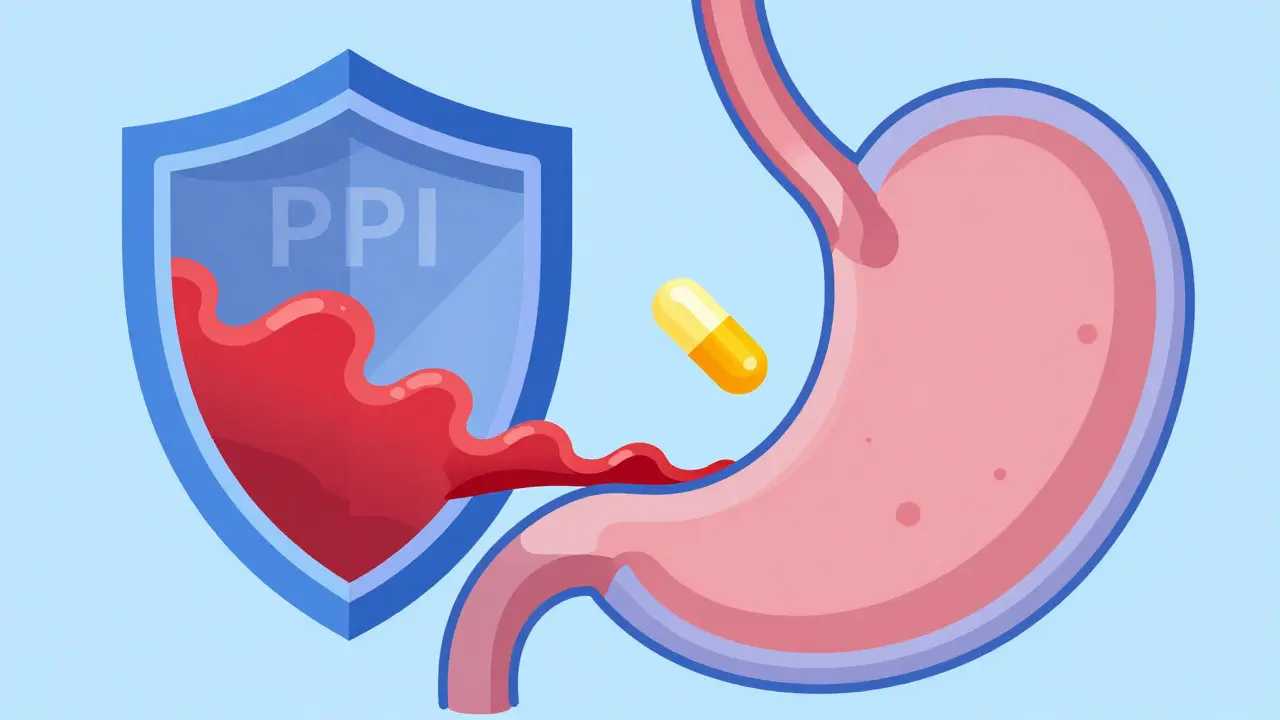
Imagine taking a life-saving medication every day, only to have another routine pill quietly neutralize its effectiveness. This isn't a hypothetical scenario; it is the daily reality for thousands of patients taking proton pump inhibitors (PPIs) alongside certain antifungal medications. PPIs are among the most prescribed drugs in the world, used to treat heartburn and acid reflux. Yet, when combined with specific azole antifungals like itraconazole or posaconazole, they can reduce drug absorption by up to 60%. The result? Treatment failures, resistant fungal infections, and unnecessary hospital stays.
This interaction is not just a minor footnote in medical textbooks. It is a critical pharmacokinetic clash that affects clinical outcomes significantly. Understanding how these two classes of drugs interact requires looking beyond simple side effects and into the chemistry of your stomach. If you are managing chronic acid issues while fighting a serious fungal infection, knowing this mechanism could save your treatment plan from collapsing.
The Chemistry of Failure: Why Gastric pH Matters
To understand why PPIs interfere with antifungals, we first need to look at what PPIs actually do. Omeprazole, lansoprazole, and pantoprazole are all proton pump inhibitors. They work by irreversibly blocking the H+/K+-ATPase enzyme pumps in the lining of your stomach. Think of these pumps as the engines that produce stomach acid. When PPIs shut them down, the acidity of your stomach drops dramatically. Normal gastric pH ranges from 1 to 2-highly acidic. With PPIs, that number rises to 4 or even 6, making the environment much more neutral.
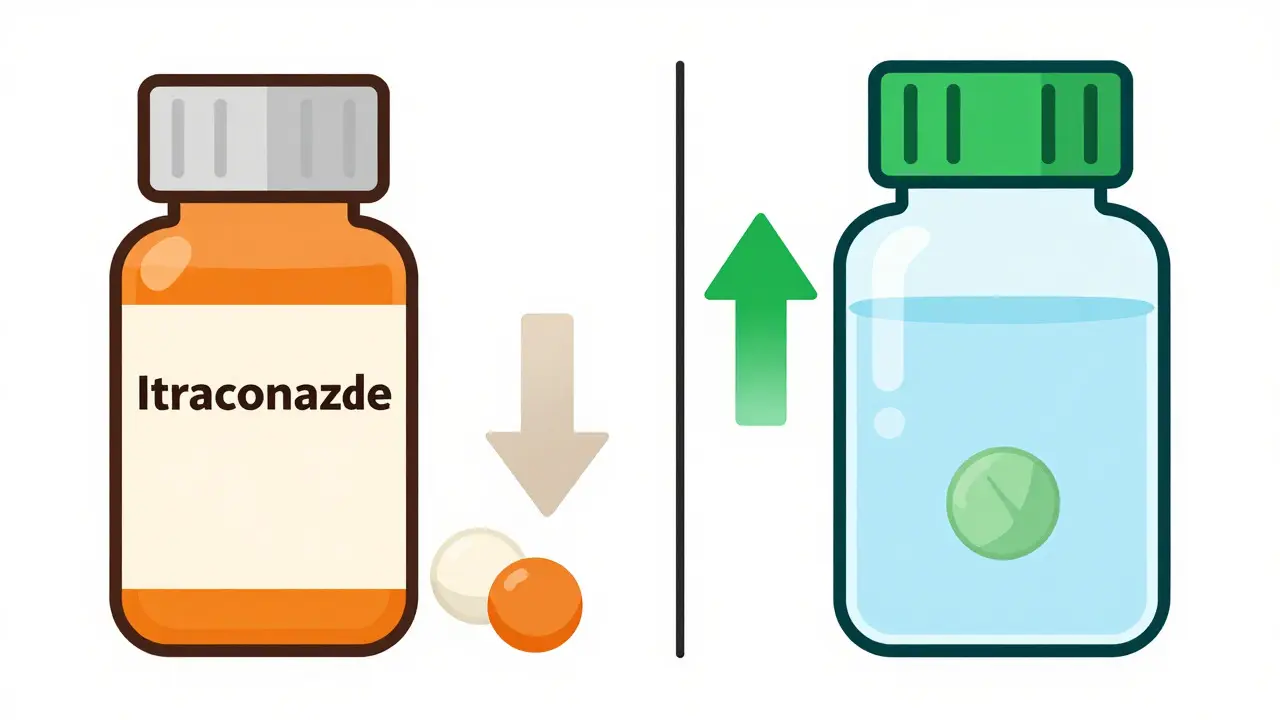
Most oral medications dissolve easily regardless of this change. However, certain antifungal drugs are "weak bases." This chemical property means they rely on a highly acidic environment to break down and enter your bloodstream. Itraconazole is the prime example here. Specifically, encapsulated itraconazole requires a gastric pH below 3 to dissolve properly. Without that acid, the capsule passes through your digestive system largely intact, meaning your body never absorbs the active drug. Studies published in the JAMA Network Open in 2023 confirmed that PPIs can reduce the area under the concentration-time curve (AUC) of itraconazole by 60%. In plain English, your blood levels of the drug drop to dangerously low amounts, leaving the fungus unchecked.
This isn't just about one drug. The solubility of itraconazole decreases ten-fold for every single unit increase in pH above 3. So, moving from a pH of 2 to a pH of 4 doesn't just slightly hinder absorption; it cripples it. This mechanism was first systematically documented in the early 1990s, but despite decades of awareness, co-prescribing remains common. Approximately 15% of US adults use PPIs chronically, creating a massive overlap with patients who require systemic antifungal therapy for conditions like aspergillosis or coccidioidomycosis.
Not All Antifungals Are Created Equal
If you are worried about this interaction, take a breath-not every antifungal suffers from this issue. The impact varies wildly depending on the specific molecule and its formulation. Knowing which drugs are vulnerable helps you navigate your prescription list with confidence.
| Antifungal Drug | Formulation | Absorption Impact with PPIs | Clinical Risk Level |
|---|---|---|---|
| Itraconazole | Capsules | High (50-60% AUC reduction) | Critical |
| Itraconazole | Solution | Low (10-15% AUC reduction) | Moderate |
| Fluconazole | Tablets/Capsules | Negligible | Low |
| Voriconazole | Tablets | Moderate (22-35% AUC reduction) | Moderate |
| Posaconazole | Delayed-Release Tablets | High (40% lower exposure) | High |
| Posaconazole | Oral Suspension | Moderate (15% reduction) | Moderate |
Fluconazole stands out as the exception. Because it is highly water-soluble, its absorption does not depend on stomach acid. You can take fluconazole with omeprazole without worrying about reduced efficacy. This makes fluconazole a safer bet for patients who absolutely cannot stop their acid-suppression therapy, provided the fungus causing the infection is susceptible to it.
Voriconazole falls somewhere in the middle. Data from the European Medicines Agency indicates a moderate reduction in absorption (around 22%) when taken with PPIs. While not as catastrophic as itraconazole capsules, this drop can still push some patients below therapeutic levels, especially those with variable metabolism.
The formulation matters immensely. Itraconazole solution, for instance, contains pre-dissolved drug molecules. Since the drug is already dissolved, it doesn't need stomach acid to break it down further. Consequently, the interaction is minimal compared to the capsule form. Similarly, posaconazole delayed-release tablets are highly sensitive to pH, whereas the older suspension form is less affected. Always check the specific form of your medication, not just the name.
Beyond PPIs: Comparing Acid Suppressants
If you need acid suppression while on an antifungal, switching the type of acid blocker can make a significant difference. Not all acid-reducing drugs create the same level of interference.
PPIs cause profound and long-lasting pH elevation, often lasting 12 to 24 hours. H2-receptor antagonists, such as famotidine or ranitidine, work differently. They block histamine receptors rather than the proton pump itself. Their effect is shorter-lived, typically lasting 4 to 10 hours, and they raise the pH less drastically. Studies show that famotidine reduces itraconazole AUC by about 41%, compared to 57% for omeprazole. That 16% difference can be the gap between a successful treatment and a failure.
Antacids, like Tums or Maalox, provide immediate but transient relief. They neutralize existing acid but don't stop production. If you space antacid doses at least two hours apart from your antifungal, the impact on absorption is usually negligible. They are a viable short-term alternative if you are struggling with breakthrough symptoms while on a sensitive antifungal regimen.
Practical Management Strategies for Patients
So, what should you do if you are prescribed both? Don't panic, but do act. Ignoring this interaction is risky, but stopping your PPI abruptly can also be dangerous if you have severe gastroesophageal reflux disease (GERD) or a history of ulcers. Here is how clinicians typically manage this conflict:
- Switch Formulations: If you are on itraconazole capsules, ask your doctor about switching to the liquid solution. As noted, the solution is far less dependent on gastric acid. Alternatively, newer formulations like Tolsura (approved in 2023) offer pH-independent absorption, reducing the AUC drop to just 8% even with PPIs.
- Change the Acid Suppressor: If possible, switch from a PPI to an H2-blocker like famotidine. Time the doses carefully. Taking the H2-blocker 10 hours after your antifungal allows the antifungal to absorb in a more acidic window before the H2-blocker raises the pH.
- Timing Is Everything: For voriconazole, some hematologists recommend administering the antifungal at least two hours before the PPI. This gives the antifungal a head start in dissolving before the stomach becomes too neutral.
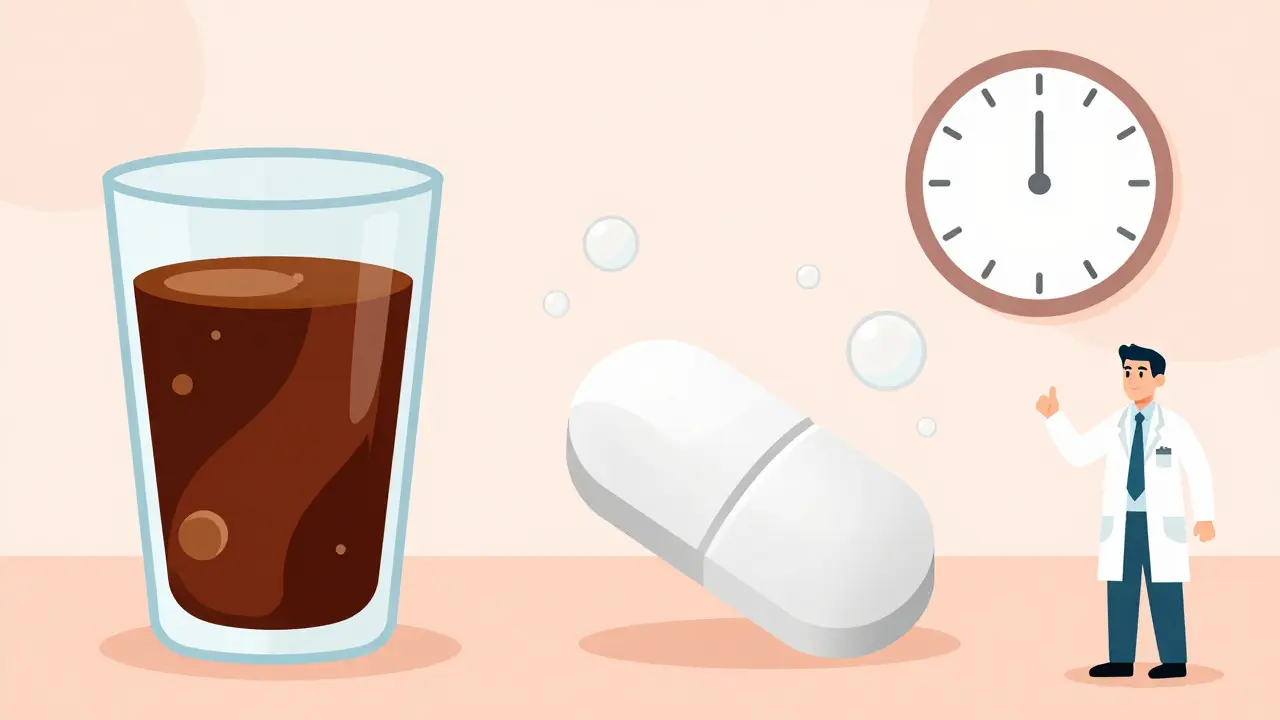
- The Cola Trick: For posaconazole delayed-release tablets, research suggests taking the pill with an acidic beverage like cola can partially overcome the PPI effect. One study showed this increased AUC by 35% compared to taking it with water. It sounds unusual, but the acidity in the cola helps mimic the stomach environment needed for dissolution.
- Therapeutic Drug Monitoring (TDM): This is the gold standard. Ask for blood tests to measure your trough levels. For itraconazole treating invasive aspergillosis, the target range is 0.5-1.0 mcg/mL. If your levels are low, your doctor can adjust the dose or change the strategy. Relying on guesswork is unsafe.
A survey of hospital pharmacists found that 68% encounter this interaction monthly. Many report success simply by involving a pharmacist in the decision-making process. Don't hesitate to ask for a medication review. A 15-minute consultation can prevent weeks of ineffective treatment.
The Hidden Synergy: A New Twist in Research
Here is where things get fascinating. While we worry about PPIs killing antifungal absorption, new research suggests they might actually help kill fungi in other ways. A 2025 study in Frontiers in Pharmacology revealed an unexpected finding: combining omeprazole with itraconazole demonstrated synergistic effects against 77.6% of pathogenic fungal strains, including some resistant to azoles alone.
How is this possible? It seems that while PPIs reduce the amount of antifungal entering the bloodstream, the combination creates a hostile environment for the fungus at the cellular level. Dr. David Perlin from the Public Health Research Institute highlighted that this synergy works particularly well against resistant Aspergillus fumigatus isolates. This paradox has sparked Phase I clinical trials at the National Institutes of Health, testing low-dose omeprazole with subtherapeutic itraconazole for resistant cases.
However, until these trials conclude, the current guideline remains cautious. The risk of subtherapeutic blood levels leading to treatment failure outweighs the theoretical benefit of in vitro synergy for most patients. But keep an eye on this development-it could revolutionize how we treat resistant fungal infections in the coming years.
Economic and Clinical Burden
The cost of ignoring this interaction is high. Unnecessary co-prescription of PPIs with pH-dependent antifungals costs the US healthcare system approximately $287 million annually. This figure accounts for wasted drug doses and the additional expenses associated with treating failed therapies, including hospital readmissions and second-line antifungals, which are often more expensive and toxic.
Clinically, the stakes are even higher. Dr. John R. Perfect from Duke University Medical Center notes that this interaction leads to documented treatment failures in serious conditions like coccidioidomycosis. The European Committee on Antimicrobial Susceptibility Testing (EUCAST) warned in 2021 that subtherapeutic concentrations caused by PPIs can convert susceptible fungal isolates into resistant phenotypes. In other words, failing to absorb enough drug doesn't just mean the infection persists; it trains the fungus to survive future treatments.
Frequently Asked Questions
Can I take fluconazole with omeprazole?
Yes, generally speaking. Fluconazole is highly water-soluble, so its absorption is not significantly affected by changes in stomach pH. Unlike itraconazole, you do not need to separate the doses or switch formulations when taking fluconazole with proton pump inhibitors.
Which antifungal is least affected by PPIs?
Fluconazole is the least affected due to its high water solubility. Among the other azoles, itraconazole solution and posaconazole suspension are less affected than their tablet/capsule counterparts because the drug is already dissolved or formulated to be less pH-dependent.
How long should I wait between taking a PPI and itraconazole?
For itraconazole capsules, co-administration is generally discouraged because the pH change lasts too long. For itraconazole solution, guidelines suggest separating administration by at least 2 hours. However, the most effective strategy is often switching to a non-PPI acid suppressant or using a pH-independent formulation.
Does famotidine interact with antifungals?
Famotidine, an H2-receptor antagonist, does interact with some antifungals like itraconazole, but the effect is less severe than with PPIs. It reduces itraconazole absorption by about 41% compared to 57% for omeprazole. Timing the doses (e.g., taking famotidine 10 hours after the antifungal) can mitigate this risk.
What is therapeutic drug monitoring for antifungals?
Therapeutic drug monitoring (TDM) involves measuring the concentration of the antifungal drug in your blood to ensure it is within a safe and effective range. For itraconazole, the target trough level for invasive aspergillosis is typically 0.5-1.0 mcg/mL. TDM is crucial when taking interacting medications like PPIs to prevent treatment failure.
Can drinking cola help with posaconazole absorption?
Yes, studies have shown that taking posaconazole delayed-release tablets with an acidic beverage like cola can increase absorption by approximately 35% compared to water. The acidity helps dissolve the drug in the presence of PPIs. However, always consult your pharmacist before trying this, as sugar content may matter for some patients.
 Medications