Diphenhydramine Risk Calculator
Your Profile
Enter your details to assess potential risks.
Enter Your Data
Input your profile to see how diphenhydramine might affect your health and safety.
It is 3 AM. You have been staring at the ceiling for two hours, your mind racing through every worry of the day. You reach for that bottle on your nightstand-the one with the bright label promising "temporary relief of occasional sleeplessness." It contains Diphenhydramine, a first-generation antihistamine originally developed to treat allergies but widely used as an over-the-counter sedative since the 1940s. You pop a pill, expecting rest. Instead, you might be setting yourself up for a groggy morning, impaired memory, or worse.
For decades, diphenhydramine has been the go-to fix for bad nights. But medical science has moved on. What we know now about how this drug affects the brain-especially in older adults-is alarming. This article breaks down why that cheap bottle in the pharmacy aisle might be doing more harm than good, and what actually works when sleep eludes you.
The Hidden Cost of "Just One Pill"
Diphenhydramine works by blocking histamine receptors in the brain, which induces drowsiness. It sounds simple enough. The problem is that it doesn't just block histamine; it also blocks acetylcholine, a neurotransmitter critical for memory, learning, and attention. This property is called "anticholinergic activity," and it is the root of most side effects.
When you take 50 mg of diphenhydramine (the standard dose in products like Benadryl or Unisom), the drug crosses the blood-brain barrier easily. According to a 2021 study published in Sleep Medicine Reviews, 68% of users reported impaired cognitive function the following day. That means nearly seven out of ten people felt mentally fogged, slow, or distracted after using it as a sleep aid. Compare that to only 12% of people taking a placebo. You aren't just sleeping; you are chemically sedating yourself, and the hangover lasts long after you wake up.
| Side Effect | Diphenhydramine Users | Placebo Group |
|---|---|---|
| Next-day Cognitive Impairment | 68% | 12% |
| Dry Mouth | 76% | 15% |
| Dizziness | 63% | 10% |
| Stomach Upset | 42% | 8% |
The half-life of the drug varies wildly depending on your age. In children, it leaves the system in about 4 hours. In elderly patients, it can linger for up to 18 hours. If you are over 65, that single pill taken at 10 PM is still active in your bloodstream at 4 AM, disrupting your natural sleep architecture and keeping you sedated well into the afternoon.
Why Older Adults Should Avoid It Entirely
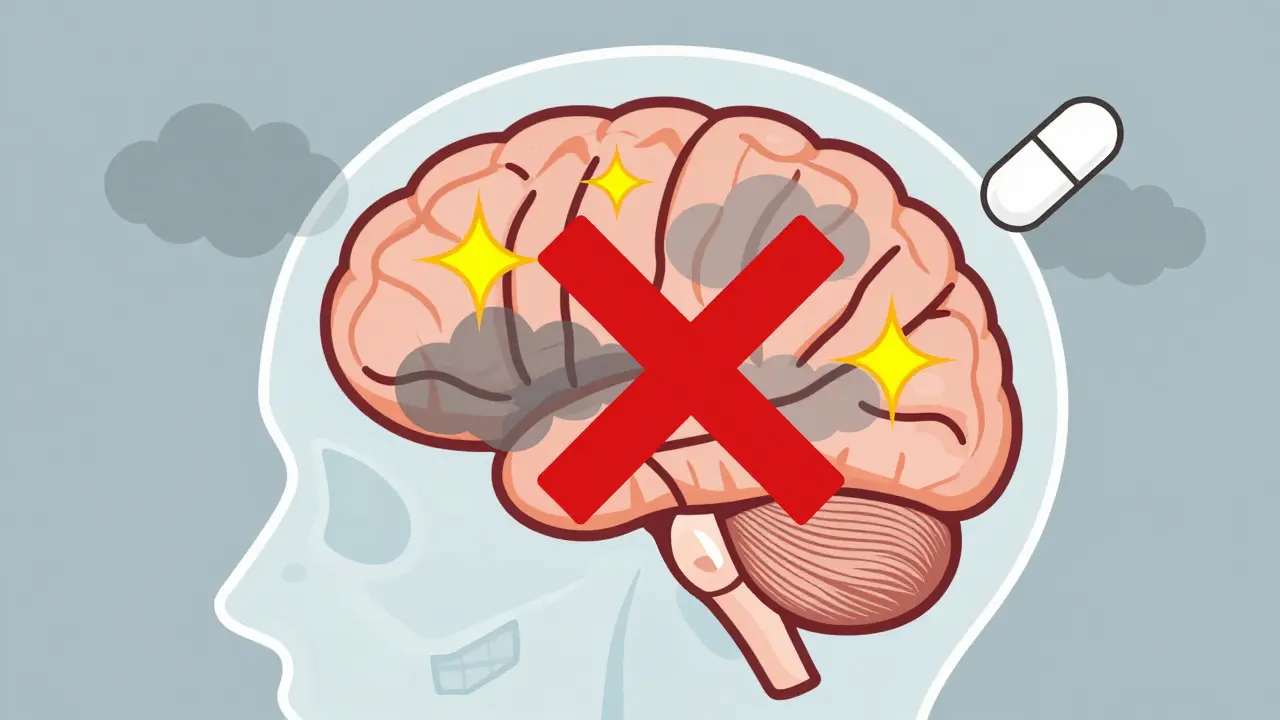
If you are reading this for a parent or grandparent, pay close attention. Diphenhydramine is particularly dangerous for adults aged 65 and older. Dr. Alon Avidan, director of the UCLA Sleep Disorders Center, has called it "the worst possible choice for sleep in older adults." Why? Because of the cumulative effect of anticholinergic drugs on the aging brain.
A landmark 2024 systematic review from Johns Hopkins University, published in the Journal of the American Geriatrics Society, followed thousands of seniors over seven years. They found that long-term use of anticholinergic medications like diphenhydramine was associated with a 54% increased risk of dementia. That is not a small margin of error. It suggests that regular use could significantly accelerate cognitive decline.
Beyond dementia, there are immediate physical risks:
- Falls and Fractures: WebMD user reviews indicate that 43% of users over 65 experienced falls or accidents related to drowsiness. For a senior, a fall can be life-altering.
- Urinary Retention: Men with benign prostatic hyperplasia (enlarged prostate) face a 30-50% increased risk of urinary retention. The drug relaxes the bladder muscles too much, making it difficult or impossible to urinate.
- Glaucoma Exacerbation: There is a 45% increased risk of angle-closure glaucoma attacks in susceptible individuals, which can lead to permanent vision loss if not treated immediately.
The European Medicines Agency completed a safety review in January 2024 recommending additional restrictions on diphenhydramine use in adults over 65. Despite this, 19% of seniors in the U.S. still use it regularly. The gap between medical advice and consumer behavior is widening, and it is costing people their health.
Tolerance Builds Faster Than You Think
You might argue, "But it works for me!" And yes, initially, it does. Diphenhydramine is effective at knocking you out. However, its effectiveness is fleeting. A 2021 University of Michigan study found that 68% of users reported diminished effectiveness after just 7 days of regular use. Your body adapts quickly. To get the same sedative effect, you feel compelled to take more, creating a cycle of dependency and increasing the side effects.
This leads to a paradoxical situation where people stay awake longer because the drug stops working, so they take higher doses, which causes more next-day grogginess, which disrupts their circadian rhythm further. The FDA labels these products for "temporary relief" lasting no more than 14 days. Yet, a 2022 study showed that 73% of users continued taking it beyond two weeks, with 41% using it for over a month. You are treating a symptom while worsening the underlying condition.
Safer Alternatives: What Actually Works?
If diphenhydramine is risky and ineffective long-term, what should you do? The answer depends on whether your insomnia is occasional or chronic.
Melatonin: The Hormone Approach
Melatonin is a hormone naturally produced by the pineal gland that regulates the sleep-wake cycle. Unlike diphenhydramine, it does not force sedation; it signals to your body that it is time to sleep. A 2023 meta-analysis in Sleep Medicine Reviews found that doses of 2-5 mg showed 62% efficacy for sleep onset issues. Crucially, it does not carry the anticholinergic risks. Sales of melatonin grew 22% year-over-year in 2023, reflecting a shift toward safer options. However, timing matters. Take it 1-2 hours before bed, not right as you lie down.
Cognitive Behavioral Therapy for Insomnia (CBT-I)
If you struggle with sleep more than twice a week for three months, you likely have chronic insomnia. Pills will not fix this. Cognitive Behavioral Therapy for Insomnia is a structured program that helps you identify and replace thoughts and behaviors that cause or worsen sleep problems. The American Academy of Sleep Medicine (AASM) considers CBT-I the first-line treatment for chronic insomnia. It boasts 70-80% efficacy rates, and unlike medication, the benefits last 12-24 months after treatment ends. It addresses the root cause-racing thoughts, poor sleep hygiene, and conditioned arousal-rather than masking it with chemicals.
Second-Generation Antihistamines
If you need allergy relief during the day, switch to non-sedating options like Fexofenadine (Allegra) or Loratadine (Claritin). These drugs do not cross the blood-brain barrier significantly. A 2023 study in the Journal of Psychopharmacology confirmed that fexofenadine shows no significant impairment in driving performance, whereas diphenhydramine impairs users to a level equivalent to a blood alcohol concentration of 0.10%. Save the sedating antihistamines for emergencies, not nightly routines.

Regulatory Warnings and Legal Limits
The regulatory landscape is tightening around diphenhydramine. In 2023, the FDA issued a Drug Safety Communication requiring updated labeling for all diphenhydramine-containing products. These labels must now include stronger warnings about "serious mental and mood changes," including hallucinations, confusion, and nervousness, particularly in children. The Federal Aviation Administration explicitly prohibits pilots from using diphenhydramine due to its CNS depressant effects. If it is unsafe for someone flying a plane, should you be driving your car after taking it?
In the UK and EU, diphenhydramine is classified in Category 3 for driving, meaning it may affect your ability to drive and use machines. The legal limit for alcohol in many jurisdictions is 0.08% BAC. Taking 50 mg of diphenhydramine can impair your reaction times to a similar degree. Do not risk a DUI charge or, worse, an accident because you took an OTC sleep aid.
Practical Steps to Better Sleep Tonight
Stop relying on the quick fix. Here is a realistic plan to reset your sleep without the risks of diphenhydramine:
- Establish a Wind-Down Routine: Start dimming lights and avoiding screens 60 minutes before bed. Blue light suppresses natural melatonin production.
- Try Melatonin Temporarily: If you are jet-lagged or have shifted your schedule, use 1-3 mg of melatonin for no more than two weeks to reset your clock.
- Seek CBT-I Resources: Look for digital CBT-I programs (like Sleepio or CBT-i Coach) which are often covered by insurance and provide evidence-based techniques.
- Consult a Doctor for Chronic Issues: If sleeplessness persists, see a specialist. Prescription options like low-dose doxepin or zolpidem (Ambien) exist but require medical supervision and are intended for short-term use only.
- Check Your Meds: Review all current medications with your pharmacist. Many common drugs (for allergies, bladder control, depression) have anticholinergic effects. You might be getting a double dose of diphenhydramine-like side effects without realizing it.
Sleep is not a commodity you buy in a bottle. It is a biological process that requires the right conditions. Diphenhydramine disrupts those conditions even as it forces unconsciousness. By switching to safer, evidence-based strategies, you protect your brain, your balance, and your long-term health.
Is diphenhydramine safe for occasional use in young adults?
While less risky than for seniors, it is not ideal. Young adults still experience next-day cognitive impairment (68% in studies) and rapid tolerance development (within 7 days). It should be reserved for rare emergencies, not weekly use, due to the disruption of natural sleep architecture and potential for dependency.
How long does diphenhydramine stay in your system?
The half-life varies by age. In children, it is approximately 4 hours. In healthy adults, it ranges from 4 to 9 hours. In elderly patients, it can extend up to 18 hours. This means the drug remains active in your body for a significant portion of the next day, causing grogginess and impaired coordination.
What is the link between diphenhydramine and dementia?
Diphenhydramine has strong anticholinergic properties, which block acetylcholine, a neurotransmitter vital for memory and learning. A 2024 Johns Hopkins study found that long-term use in adults over 65 was associated with a 54% increased risk of dementia over a 7-year period. Regular use accumulates anticholinergic burden, potentially accelerating cognitive decline.
Can I drive after taking diphenhydramine?
No. Studies show that 50 mg of diphenhydramine impairs driving performance to a level equivalent to a blood alcohol concentration of 0.10%, which is above the legal limit in most places. The FDA and FAA warn against operating machinery or vehicles after taking this medication due to significant CNS depression.
What is the best alternative to diphenhydramine for sleep?
For occasional sleep onset issues, melatonin (2-5 mg) is a safer option with fewer side effects. For chronic insomnia, Cognitive Behavioral Therapy for Insomnia (CBT-I) is the gold standard recommended by the American Academy of Sleep Medicine, offering 70-80% efficacy with long-lasting results and no drug-related risks.
 Medications