

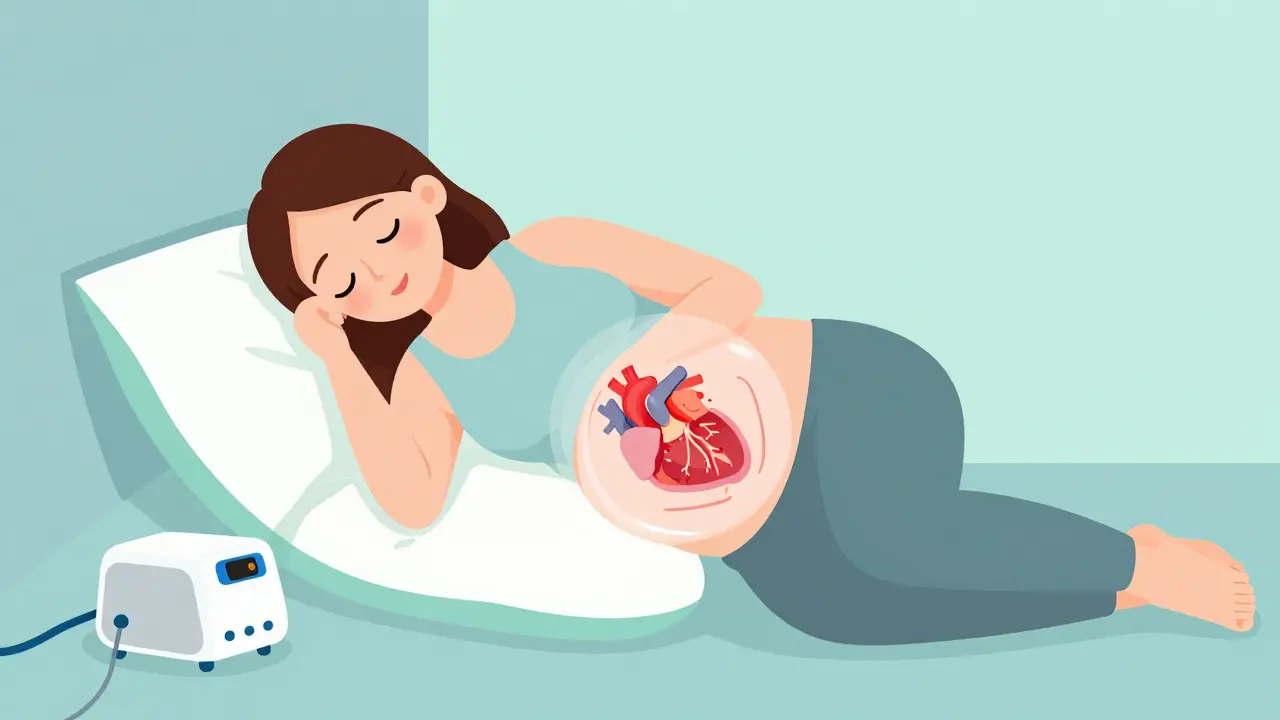
When you're pregnant, sleep isn't just about rest-it’s about survival. Your body is working overtime, and poor sleep doesn’t just leave you tired. It can raise your risk of preeclampsia, gestational diabetes, and even cesarean delivery. The good news? You can fix this. Many women don’t realize that snoring, gasping at night, or waking up with a dry throat aren’t normal pregnancy side effects-they’re signs of something treatable. Pregnancy sleep apnea affects more than 1 in 10 pregnant women by the third trimester, and up to 1 in 4 if you have a higher BMI. It’s not just about comfort. It’s about your baby’s health and your own.
Why Sleep Gets So Hard During Pregnancy
Your body changes fast. Hormones like progesterone relax the muscles in your airway, making it easier to collapse when you lie down. Your growing uterus pushes up on your diaphragm, so breathing feels shallow. Fluid retention causes swelling in your nose and throat, narrowing your airway even more. By the third trimester, your neck circumference might increase by 2-3 inches. That’s not just a fashion change-it’s a medical risk.
And it’s not just apnea. Heartburn and reflux get worse at night because pregnancy slows digestion and relaxes the valve between your stomach and esophagus. Lying flat makes it worse. You might think propping yourself up with a few pillows helps-but if you’re not elevating your whole upper body, you’re just bending at the waist, which can squeeze your stomach and make reflux worse.
What Is Sleep Apnea in Pregnancy-and Why It’s Dangerous
Obstructive sleep apnea (OSA) means your airway blocks off briefly during sleep, often for 10 seconds or more. You stop breathing, your oxygen drops, and your brain jolts you awake just enough to restart breathing. You won’t remember it, but your body does. Repeated drops in oxygen stress your heart, raise your blood pressure, and trigger inflammation.
Studies show women with untreated OSA during pregnancy are:
- 2.3 times more likely to develop preeclampsia
- 1.7 times more likely to get gestational diabetes
- 2.1 times more likely to need a C-section
These aren’t rare outcomes. In fact, the American College of Obstetricians and Gynecologists now says sleep apnea is a risk factor you should be screened for. And it’s not just about delivery. Women who had OSA during pregnancy are 58% more likely to develop chronic high blood pressure within 10 years after birth-even if the apnea went away.
How to Know If You Have Sleep Apnea
Snoring? Yes. But not all snorers have apnea. The real red flags are:
- Gasping or choking during sleep (your partner might notice)
- Waking up with a dry mouth or headache
- Feeling exhausted even after 8 hours in bed
- High blood pressure that won’t improve
Doctors use two simple tools to screen: the STOP-Bang questionnaire and the Epworth Sleepiness Scale. STOP-Bang asks about snoring, tiredness, observed breathing pauses, high blood pressure, BMI, age, neck size, and gender. If you score 3 or higher, you should get tested.
Gold standard testing is a sleep study-either in a lab or at home with a portable monitor. Home tests are now widely accepted and covered by insurance. Don’t wait. The earlier you diagnose it, the more you can prevent complications.
CPAP: The Most Effective Treatment
If you’re diagnosed with moderate to severe sleep apnea (AHI ≥15), CPAP is the first-line treatment. It’s not optional-it’s protective. A 2023 study in JAMA Network Open found that starting CPAP between 24-28 weeks cut preeclampsia risk by 30% and gestational hypertension by 35%.
But not all CPAP machines are the same. Newer models like ResMed’s AirSense 11 Pregnancy Mode automatically adjust pressure as your body changes. They’re designed to handle the higher airway resistance of late pregnancy. Use nasal pillows instead of full-face masks-they’re less likely to leak as your face swells. Humidification at 37°C helps with nasal congestion, which is common in pregnancy.
Adherence is the biggest hurdle. Only 62% of pregnant women stick with CPAP past 4 weeks. But when clinics offer a 30-minute orientation-teaching mask fit, humidity settings, and troubleshooting-adherence jumps to 82%. Two follow-up calls at 3 and 7 days make all the difference.
Positioning: The Simple Fix That Works
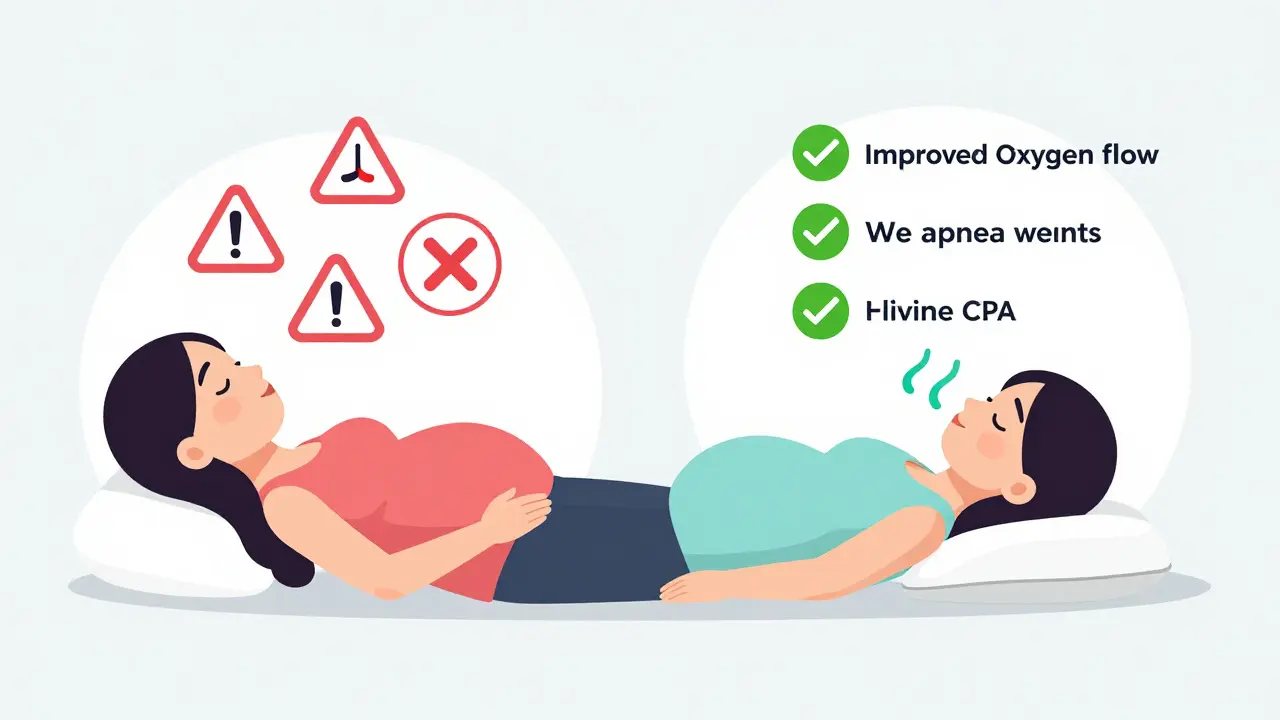
If you have mild sleep apnea (AHI <15), changing your position can help a lot. Sleeping on your left side is best. Why? It improves blood flow to your heart and baby, and it reduces pressure on your airway. A 2022 study from Brown Health found left-side sleeping reduced apnea events by nearly 23%.
But you can’t just roll over and hope it sticks. Use a full-body pregnancy pillow. Look for ones that hug your belly, support your back, and keep your knees slightly bent. Brands like Leachco’s Full Body Pillow Pro are designed for this. They cost around $90 but are worth it.
Also, elevate your upper body. Not just your head-your whole chest. Use a wedge pillow that’s 7-8 inches high. Don’t stack regular pillows. That just bends your spine and squeezes your stomach, making reflux worse. Elevating your torso by 15-30 degrees improves oxygen saturation by over 3%-a meaningful change when you’re fighting low oxygen at night.
Managing Reflux Without Medication
Heartburn at night? You’re not alone. But the usual advice-"just take an antacid"-isn’t always safe or smart. Some antacids contain sodium or aluminum, which aren’t ideal in pregnancy.
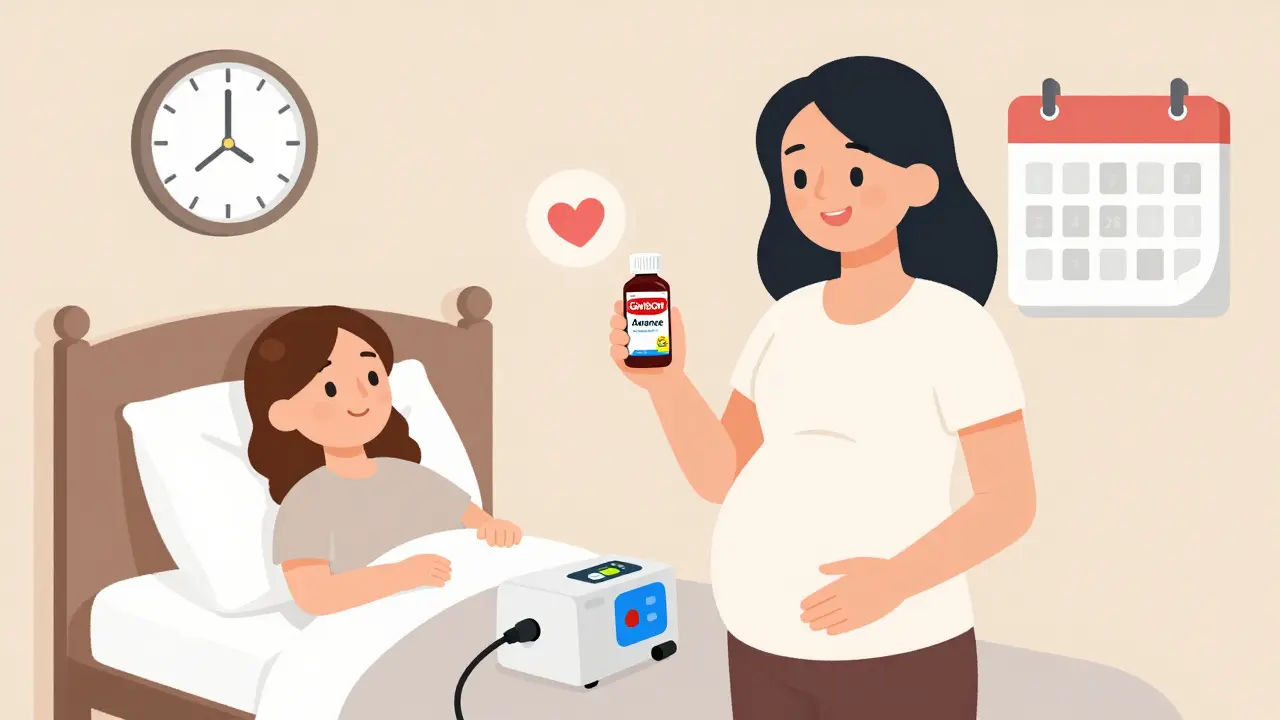
The best solution? Alginate-based products like Gaviscon Advance. They form a gel barrier on top of stomach contents, keeping acid down. No systemic absorption. Safe. Effective. A 500ml bottle costs about $15 and lasts weeks.
Also:
- Stop eating 3 hours before bed
- Avoid spicy, fatty, or acidic foods after 6 p.m.
- Don’t lie flat-elevate your torso
- Wear loose pajamas
And never use pillows under your head only. That doesn’t help reflux-it makes it worse.
What Doesn’t Work (And Why)
Some products claim to help, but they’re not backed by pregnancy data.
- Mandibular devices (mouth guards): These work for non-pregnant people, but pregnancy changes your jaw and TMJ. There’s no safety data. Avoid them.
- Weight loss: Don’t try to lose weight during pregnancy. But staying within Institute of Medicine guidelines (11.5-16 kg for normal weight, 5-9 kg for obese) helps. Focus on balanced meals, not restriction.
- Over-the-counter sleep aids: Zero safety data. Don’t risk it.
What to Do Next
If you’re pregnant and struggling with sleep:
- Ask your OB/GYN to screen you with the STOP-Bang questionnaire at your first visit.
- If you snore, feel tired, or have high blood pressure, push for a sleep study.
- If diagnosed with OSA, start CPAP between 20-28 weeks. Don’t wait.
- Use a pregnancy pillow to stay on your left side.
- Elevate your upper body with a wedge-not pillows.
- Use Gaviscon Advance for reflux, not regular antacids.
And remember: this isn’t just about sleeping better. It’s about giving your baby a healthier start and protecting your own long-term health. Many women say their energy levels improved within days of starting CPAP. Morning headaches vanished. Blood pressure stabilized. One user on Reddit wrote: "My AHI dropped from 18 to 6 in two weeks. I finally feel like myself again."
Frequently Asked Questions
Can I use CPAP during labor and delivery?
Yes, and you should. Untreated sleep apnea increases the risk of complications during anesthesia by over 3 times. Hospitals are starting to recognize this-some now have protocols to continue CPAP during labor. Talk to your care team ahead of time. Bring your machine to the hospital. Most OB units can accommodate it.
Will my sleep apnea go away after the baby is born?
For many women, yes-but not all. About half of those diagnosed during pregnancy see their apnea resolve within 3-6 months postpartum. But 58% of women who had pregnancy-related OSA develop chronic high blood pressure within 10 years. That’s why some experts recommend a follow-up sleep study at 12 weeks postpartum. Even if you feel fine, your body might still be at risk.
Is it safe to use a home sleep test during pregnancy?
Yes. Since 2021, the American Academy of Sleep Medicine has approved home sleep apnea testing for pregnant women, especially if you’re low-risk. The devices are simple: you wear a nasal sensor, a chest belt, and a finger clip. You sleep at home, mail it back, and get results in 5-7 days. It’s accurate enough to guide treatment.
Can I use a regular pillow to elevate my head for reflux?
No. Stacking pillows only bends your body at the waist, which increases pressure on your stomach and makes reflux worse. Instead, use a wedge pillow under your mattress or under your upper back. It should lift your torso 6-8 inches from hips to shoulders. That’s the only way to truly reduce acid backup.
How long does it take to get used to CPAP during pregnancy?
Most women adapt within 7-14 days. The first week is the hardest-mask leaks, noise, feeling claustrophobic. But after two follow-up visits (at 3 and 7 days), 92% of patients are using CPAP consistently. Support matters. Ask your sleep clinic for a pregnancy-specific coach. They’ll help you adjust the pressure, choose the right mask, and troubleshoot swelling.
Next Steps for Better Sleep
If you’re reading this and thinking, "I might have this," don’t wait. Start with your OB. Ask for the STOP-Bang questionnaire. If you score high, request a sleep study. If you’re already diagnosed, don’t give up on CPAP. Use a pregnancy pillow. Elevate your upper body. Avoid late meals. And if your mask leaks because of facial swelling, switch to nasal pillows. You’re not alone. Thousands of women have done this-and their babies are healthier because of it.
 Medications

Paul Ratliff
March 19, 2026 AT 14:51SNEHA GUPTA
March 21, 2026 AT 00:45Gaurav Kumar
March 21, 2026 AT 19:30gemeika hernandez
March 22, 2026 AT 16:51Nicole Blain
March 24, 2026 AT 01:57Kathy Underhill
March 24, 2026 AT 22:05Srividhya Srinivasan
March 25, 2026 AT 02:55Prathamesh Ghodke
March 25, 2026 AT 19:52Stephen Habegger
March 27, 2026 AT 15:09Aileen Nasywa Shabira
March 29, 2026 AT 03:01Kendrick Heyward
March 29, 2026 AT 05:45lawanna major
March 30, 2026 AT 01:53Ryan Voeltner
March 31, 2026 AT 17:03Linda Olsson
April 2, 2026 AT 00:51Ayan Khan
April 2, 2026 AT 01:03