

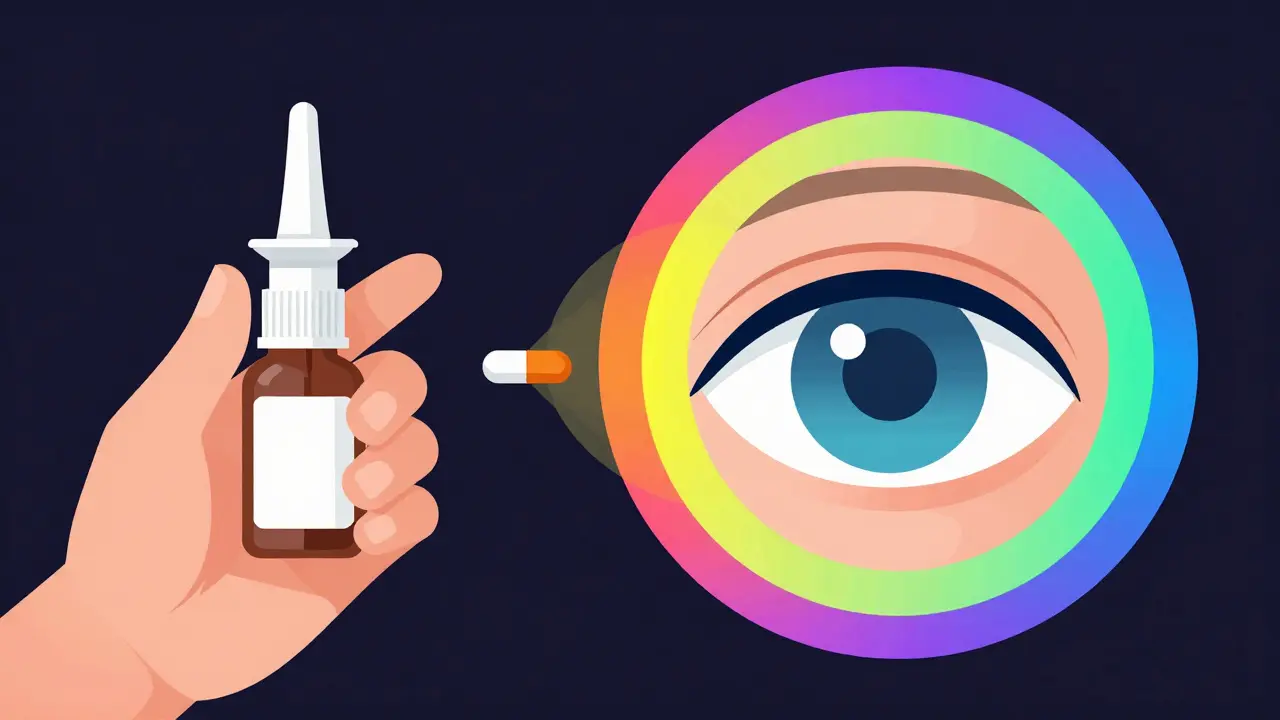
Imagine taking a routine nasal spray for a cold or a prescription antidepressant, only to wake up with excruciating eye pain, blurred vision, and rainbows dancing around every light source. This isn't a typical side effect; it's a full-blown medical emergency. Acute Angle-Closure Glaucoma (AACG) is a sudden, dangerous spike in eye pressure that can lead to permanent blindness if not treated within 24 to 72 hours. While some people are born with a predisposition to this, certain medications can act as a trigger, pushing a stable eye into a crisis state.
How Medications Trigger an Eye Crisis
To understand how a pill or a drop causes this, you have to look at the eye's plumbing. Your eye produces a fluid called aqueous humor to maintain its shape. Normally, this fluid drains through a microscopic mesh called the trabecular meshwork. In drug-induced AACG, the drain gets blocked almost instantly.
There are three main ways this happens. The most common is a pupillary block. Certain drugs cause the pupil to dilate, which pushes the iris against the drainage angle, effectively plugging the drain. Then there is the plateau iris configuration, where the ciliary processes sit too far forward. Finally, some medications cause the ciliary body to swell-a condition known as malignant glaucoma-which pushes everything forward and shuts down the exit route for fluid.
When the fluid can't get out, Intraocular Pressure (IOP) skyrockets. While a normal eye stays around 10-21 mm Hg, a person in the midst of an attack often hits 40-80 mm Hg. This pressure crushes the optic nerve, and once that damage happens, it's irreversible.
The High-Risk Medication List
Not every drug is a threat, but several common classes are notorious for triggering attacks in people with narrow iridocorneal angles (the narrow space between the iris and the cornea). If you have a shallow anterior chamber-less than 2.5 mm-you are at significantly higher risk.
- Adrenergic Agents: Drugs like phenylephrine, found in many over-the-counter nasal decongestants and eye drops, are major culprits. In fact, phenylephrine is linked to about 35% of documented drug-induced cases.
- Anticholinergics: This includes tropicamide (often used by eye doctors to dilate pupils) and certain allergy medications like diphenhydramine. These cause the pupil to open wide, triggering the pupillary block.
- Sulfonamides: Sulfa-based drugs can cause the ciliary body to swell, which is a different mechanism than simple pupil dilation but just as dangerous.
- Serotonergic Antidepressants: Certain SSRIs (like paroxetine) and tricyclic antidepressants (like amitriptyline) have been linked to these episodes in about 12% of cases.
- Antihistamines: Many older-generation allergy meds have anticholinergic properties that can trigger a spike in pressure.
| Medication Class | Example Drug | Primary Mechanism | Estimated Case Percentage |
|---|---|---|---|
| Adrenergic | Phenylephrine | Pupil Dilation | 35% |
| Anticholinergic | Tropicamide | Pupil Dilation/Iris Swelling | 28% |
| Sulfonamides | Acetazolamide | Ciliary Body Edema | 15% |
| SSRIs/TCAs | Paroxetine | Variable/Pupillary | 12% |
Warning Signs: When to Rush to the ER
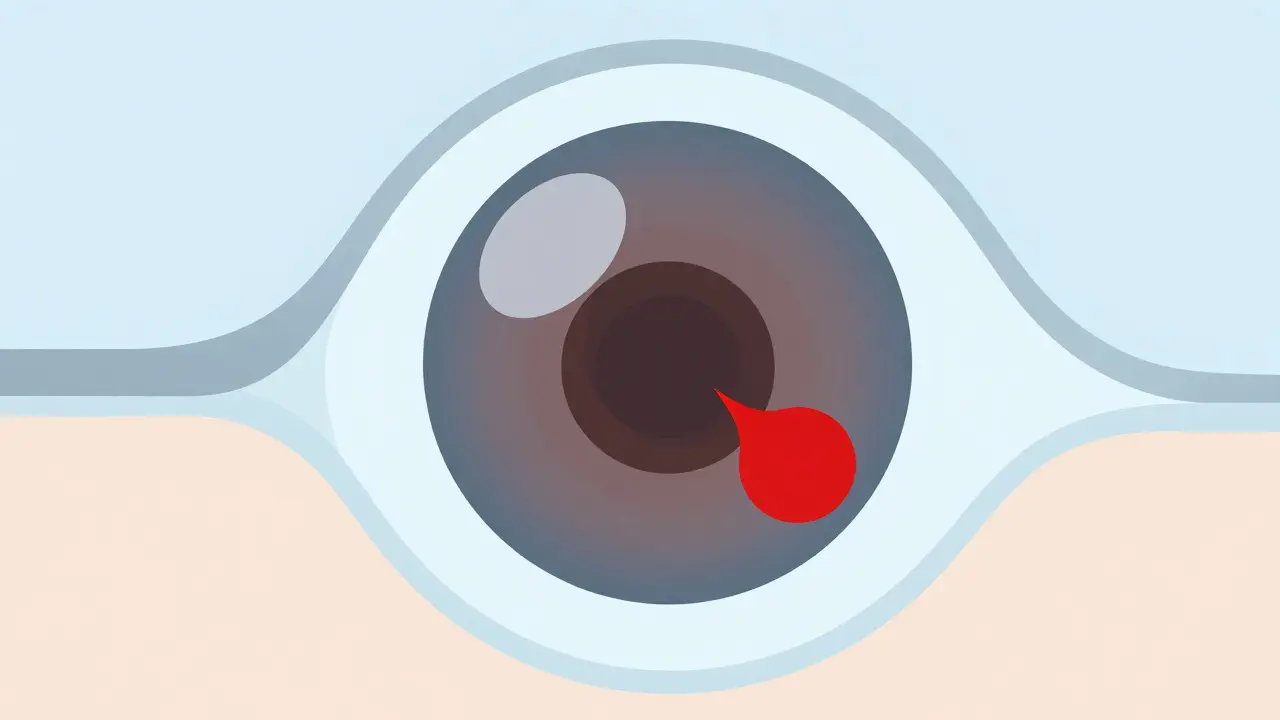
The tragedy of drug-induced AACG is that it's often misdiagnosed as a migraine or a simple eye infection. You need to recognize the "red flags" immediately. If you've recently started a new medication and experience the following, don't wait for a scheduled appointment:
- Severe Eye Pain: This isn't a dull ache; it's often an intense, stabbing pain that can radiate to the forehead.
- Halos Around Lights: Seeing rainbow-colored rings around light bulbs or street lamps is a classic sign of corneal edema (swelling).
- Fixed, Mid-Dilated Pupil: The pupil usually looks slightly enlarged (4-6 mm) and doesn't react to light.
- Cloudy Cornea: The surface of the eye may look hazy or "steamy."
- Nausea: The pressure spike can be so severe that it triggers systemic symptoms like vomiting.
Because non-ophthalmologists only correctly diagnose this about 38% of the time in emergency rooms, you must be your own advocate. Tell the doctor exactly which medications you've taken in the last 48 hours.
The Path to Prevention
This emergency is almost entirely preventable if you know your anatomy. The gold standard for screening is gonioscopy, a quick exam where a doctor uses a special lens to look at the drainage angle of your eye. If your angle is narrow (graded as ≤2 on the Shaffer scale), you simply need to avoid the high-risk drugs mentioned above.
For those who need treatment for allergies or asthma but have narrow angles, there are safer alternatives. For instance, choosing loratadine instead of diphenhydramine for allergies, or using selective beta-2 agonists like formoterol instead of epinephrine, can keep your vision safe. Newer technology like Optical Coherence Tomography (OCT) is also helping doctors spot narrow angles with up to 94% sensitivity without needing an invasive lens.
Emergency Treatment: What Happens Now?
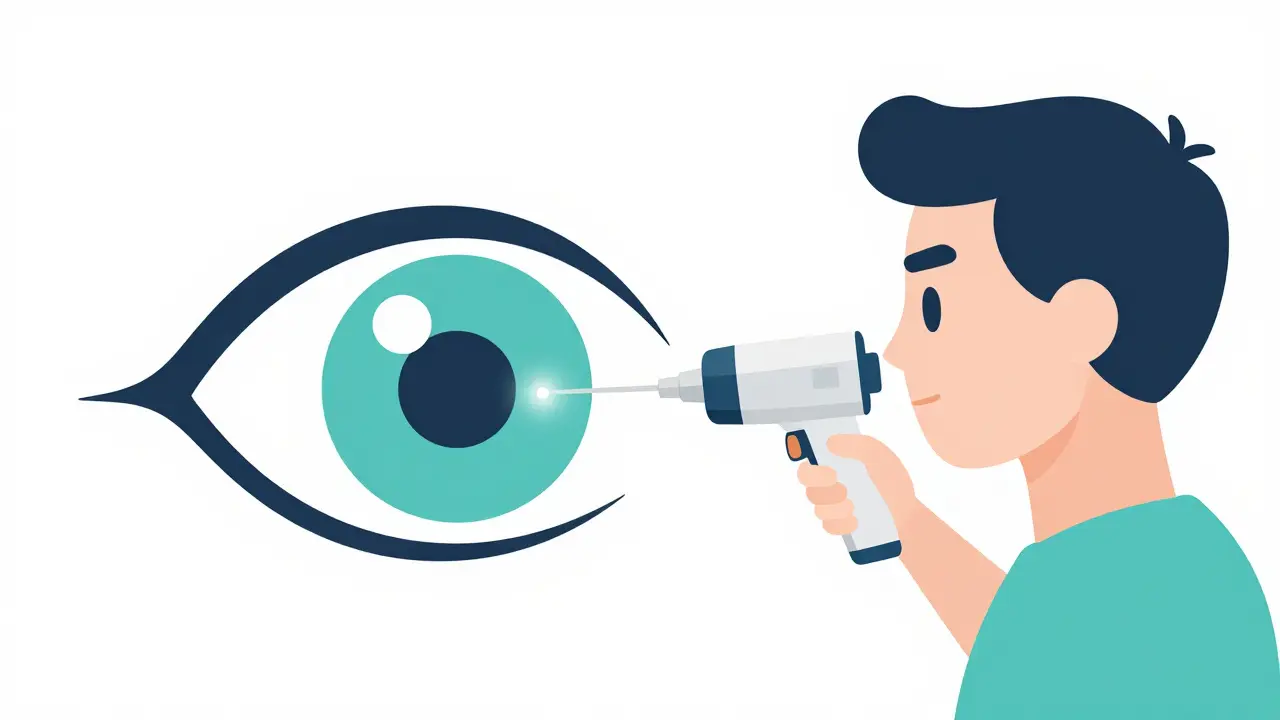
Once you reach the clinic, the goal is to drop the pressure as fast as possible to save the optic nerve. Doctors typically use a three-pronged attack:
- Immediate Pressure Reduction: Medications like pilocarpine are used to constrict the pupil and open the angle.
- Osmotic Agents: Intravenous mannitol is often administered to draw fluid out of the eye and lower the IOP rapidly.
- Surgical Intervention: A laser peripheral iridotomy is often performed. The laser creates a tiny hole in the iris, providing a permanent bypass for the fluid to reach the drainage angle.
Can a regular eye exam cause this?
Yes. Some eye doctors use dilating drops like tropicamide. If a patient has narrow angles and the doctor doesn't check the angle width first, the drops can trigger an acute attack. Always inform your optometrist if you have a family history of glaucoma.
Is the vision loss permanent?
It depends on the timing. Irreversible optic nerve damage can begin within 6 to 12 hours. If pressure stays above 40 mm Hg for more than 24 hours, permanent loss of peripheral vision is highly likely, even if the pressure is later lowered.
Are certain ethnicities more at risk?
Yes. Anatomical differences play a huge role. East Asian populations have a 2.2 times higher risk than Caucasians because their anterior chambers are typically shallower. Narrow angles are found in about 8.5% of Asians compared to 3.8% of White populations.
Should I stop my antidepressants if I'm worried?
Never stop prescription medication without consulting your doctor. Instead, ask your physician to coordinate with an ophthalmologist to ensure your eye anatomy is compatible with the medication.
What is the best way to screen for risk?
Gonioscopy is the most reliable method. It takes only a few minutes per eye and allows a specialist to see the actual drainage angle. If you are over 40 and considering high-risk meds, this is the safest precaution.
Next Steps and Troubleshooting
If you are currently taking a medication on the high-risk list, don't panic, but do be proactive. Your first step should be to schedule a comprehensive eye exam and specifically ask for an angle assessment. If you have already experienced a mild episode-such as temporary blurring or mild pain after using a decongestant-do not ignore it. This is often a "warning attack" that signals a major crisis is coming.
For caregivers, keep a list of the patient's current medications handy when visiting the ER. If a patient presents with sudden eye pain and confusion, specifically mention the use of anticholinergics or sulfa-drugs to the triage nurse. This can shave hours off the diagnosis time, which is the difference between sight and blindness.
 Medications




Hudson Nascimento Santos
April 4, 2026 AT 07:32It's wild how a tiny anatomical quirk can turn a common cold remedy into a permanent disability. Makes you realize how fragile our biological systems actually are when faced with synthetic chemicals.
Divine Manna
April 5, 2026 AT 14:17The fundamental oversight here is the lack of mandatory screening for narrow angles during routine check-ups. It is an egregious failure of the primary care system to prescribe systemic anticholinergics without ensuring the patient's ocular anatomy can withstand the pupillary dilation. One must wonder why the medical establishment prioritizes convenience over such a critical, yet simple, preventative measure. It's a matter of basic biological risk management that is being ignored for the sake of billing efficiency.
Brian Shiroma
April 6, 2026 AT 11:26Oh great, another list of things that can unexpectedly blind me. Just what I needed to hear today. Thanks for the anxiety!
simran kaur
April 6, 2026 AT 16:42Funny how the "medical establishment" suddenly cares about these niche risks now. I bet the pharmaceutical companies are just pushing these specific warnings to avoid massive lawsuits rather than actually caring about our eyes. They probably know exactly which ones cause this and just hide the data until it becomes too public to ignore. The whole system is a joke designed to keep us dependent on their "safer" alternatives which probably have their own hidden agendas.
Aysha Hind
April 6, 2026 AT 23:46Absolute madness. Imagine trusting a nasal spray from a drugstore with your actual sight. This is some dystopian nightmare fuel right here. Most people just blindly pop these pills without realizing they're gambling with their optic nerve. It's honestly pathetic how clueless the general public is about their own bodies. Absolute chaos!
sophia alex
April 8, 2026 AT 09:26Um, excuse me? I've been using these drops for years and I'm totally fine! This sounds like an extreme overreaction 🙄 Like, please, let's not cause a mass panic over some rare side effect. My vision is perfect, thanks! 💅
Mark Zhang
April 10, 2026 AT 00:00I really appreciate the breakdown of the symptoms. For anyone feeling overwhelmed by this, just remember that a quick visit to the eye doctor for a gonioscopy can give you total peace of mind. It's better to know now than to find out during an emergency. Stay safe everyone!
Rachelle Z
April 10, 2026 AT 14:33Wow... just wow!!! I love how we're told to "be our own advocate" because the doctors only get it right 38% of the time... typical!!! 🙄✨ Truly a masterpiece of a healthcare system we have here!!! 😂💖
Jenna Carpenter
April 11, 2026 AT 12:16honestly people who dont check there eyes are just asking for it... its not that hard to go to the docter once a year. stop complaining and just get a checkup lmfao
Dee McDonald
April 11, 2026 AT 14:59GET YOUR EYES CHECKED NOW!! No excuses! If you're reading this and you're on any of those meds, stop procrastinating and call your optometrist today! Your sight is literally not worth the risk of waiting another week. Just do it!
Branden Prunica
April 11, 2026 AT 17:12I actually had a mild blurring episode once after a heavy dose of Benadryl and I just thought I was tired. Looking back at this, I'm terrified. I literally almost lost my sight because I thought it was just a "nap feeling". This is absolutely insane!
Hope Azzaratta-Rubyhawk
April 12, 2026 AT 09:07It is imperative that we maintain a high standard of vigilance regarding our health! While the risks are daunting, we must approach this with a positive and proactive mindset to ensure our long-term wellbeing. Everyone should insist on the highest quality of diagnostic care immediately!