

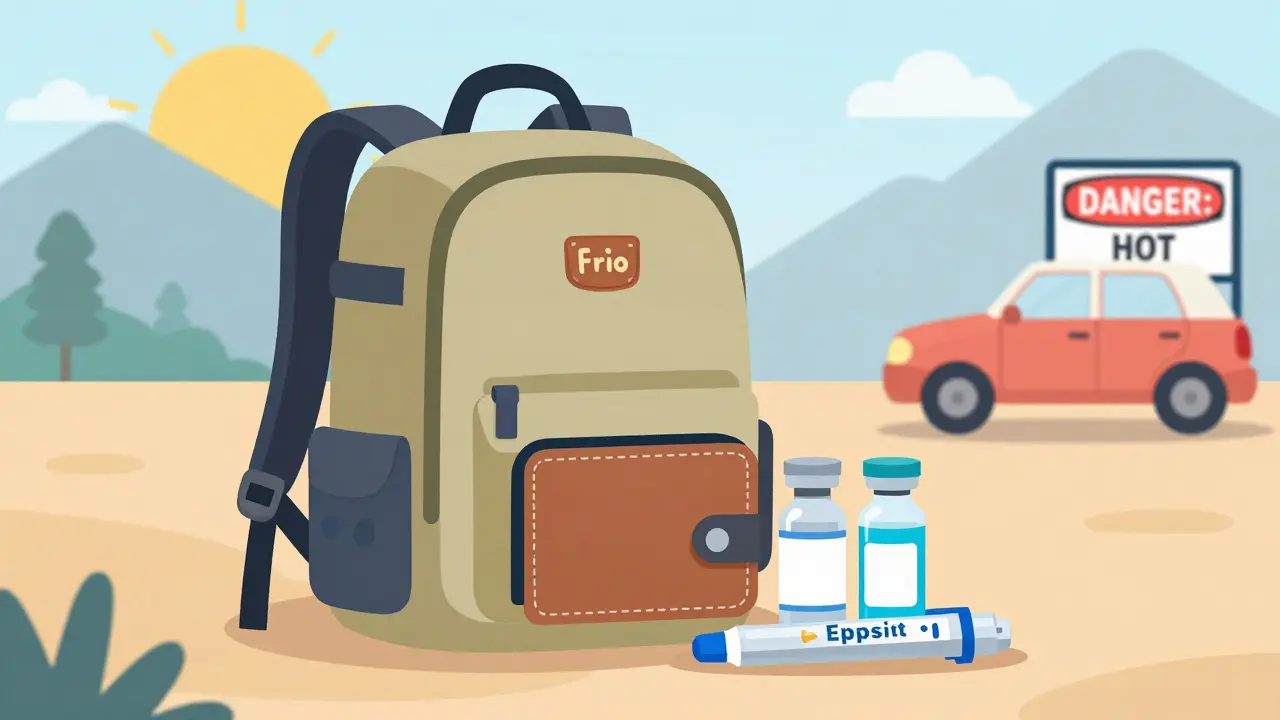
Imagine this: you’re hiking in the mountains of Peru, your heart medication is supposed to be kept cool, but your backpack got left in a hot car for three hours. You take your pill, and nothing happens. No chest tightness relief. No steady heartbeat. That’s not speculation-it’s a real risk. Medications aren’t like snacks or sunscreen. They’re precision-engineered chemicals, and heat, cold, or sunlight can break them down faster than you think. On long trips, especially in hot or humid places, keeping your meds effective isn’t optional. It’s life-saving.
Why Medications Lose Effectiveness on the Road
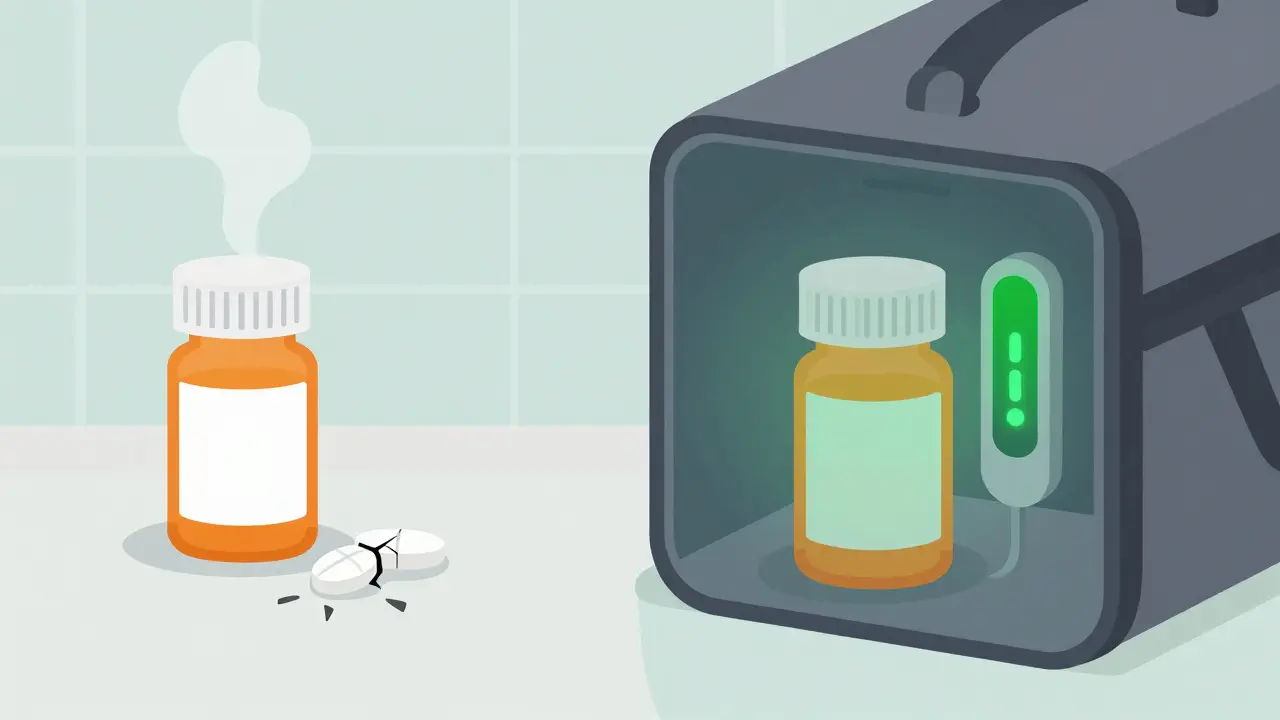
Not all medications react the same way to temperature changes. The majority-about 78%-are fine at room temperature (68°F to 77°F or 20°C to 25°C). But if your meds are insulin, EpiPens, certain antibiotics, or biologics like Humira or Enbrel, they’re in the 12% that need refrigeration. And that’s where things go wrong. A 2021 study in the Journal of Pharmaceutical Sciences found that just 30 minutes outside the right temperature range can reduce potency by up to 25% for sensitive drugs. Insulin? It loses 1.2% of its strength every hour at 77°F. That means after 12 hours in a warm car, you could be getting less than 85% of the dose you need. For someone with diabetes, that’s dangerous. For someone with severe allergies relying on an EpiPen, it could be deadly. Light matters too. Epinephrine in EpiPens breaks down when exposed to sunlight. Just 15 minutes in direct sun can cut its potency by 18%. Moisture is another enemy. Storing pills in your bathroom? Bad idea. Humidity turns tablets into mush or makes them stick together. Aspirin turns into vinegar and salicylic acid when damp-ouch for your stomach.Know Your Meds: What Needs Cooling?
Before you pack, check every prescription and OTC item. Here’s a quick breakdown:- Refrigerated (36°F-46°F / 2°C-8°C): Insulin, glucagon, EpiPens, certain antibiotics (like reconstituted amoxicillin), injectable biologics (adalimumab, etanercept), some migraine meds (like sumatriptan injections), and compounded medications.
- Room temperature (68°F-77°F / 20°C-25°C): Most pills, tablets, capsules-like blood pressure meds, antidepressants, birth control, and pain relievers. Excursions to 59°F-86°F (15°C-30°C) are usually okay for short periods.
- Freezer-stable (-4°F-5°F / -20°C--15°C): Only a few specialty drugs, like some chemotherapy agents. Rare for travelers.
- Light-sensitive: Epinephrine, nitroglycerin, tetracycline, and some antifungals. Always keep in original opaque containers.
Pro tip: When you pick up a new prescription, ask your pharmacist: “How long can this stay out of the fridge?” Many people don’t know that some insulins can last up to 28 days at room temperature after opening. Others need constant cooling. Don’t guess.
Best Cooling Solutions for Travel
Not all coolers are created equal. A regular insulated lunch bag? It won’t cut it. You need something designed for pharmaceuticals.- Frio wallets or similar gel packs: These activate with water and stay cool for 48-72 hours in 95°F heat. Travelers in Southeast Asia and the Middle East swear by them. They’re TSA-friendly and don’t freeze meds.
- Medical-grade coolers (like Pelican or MedActiv): These maintain stable temps for up to 72 hours. Great for longer trips or multiple refrigerated meds. They’re pricier, but worth it if you’re on insulin or biologics.
- Ice packs? Avoid them. They can freeze your meds, especially insulin. Frozen insulin is ruined. Gel packs are safer-they stay in the 36°F-42°F sweet spot.
- Temperature monitors: Devices like TempTraq or iButton sensors log every temperature spike. Place one next to your meds. If it hits 86°F for more than 24 hours, your meds are compromised. These cost $20-$50 but prevent costly, dangerous mistakes.
One Reddit user, ‘MedTraveler2023,’ used a Frio wallet for a 14-day trip across Thailand. The gel packs kept insulin between 38°F and 42°F even when outside temps hit 95°F. That’s the gold standard.
How to Pack Medications for Air Travel
The TSA lets you bring meds in your carry-on-no limits. But here’s what they don’t tell you:- Keep everything in original containers with labels. Thailand, Dubai, and other countries have strict rules. One traveler had meds confiscated because they were in a pill organizer. No labels = no entry.
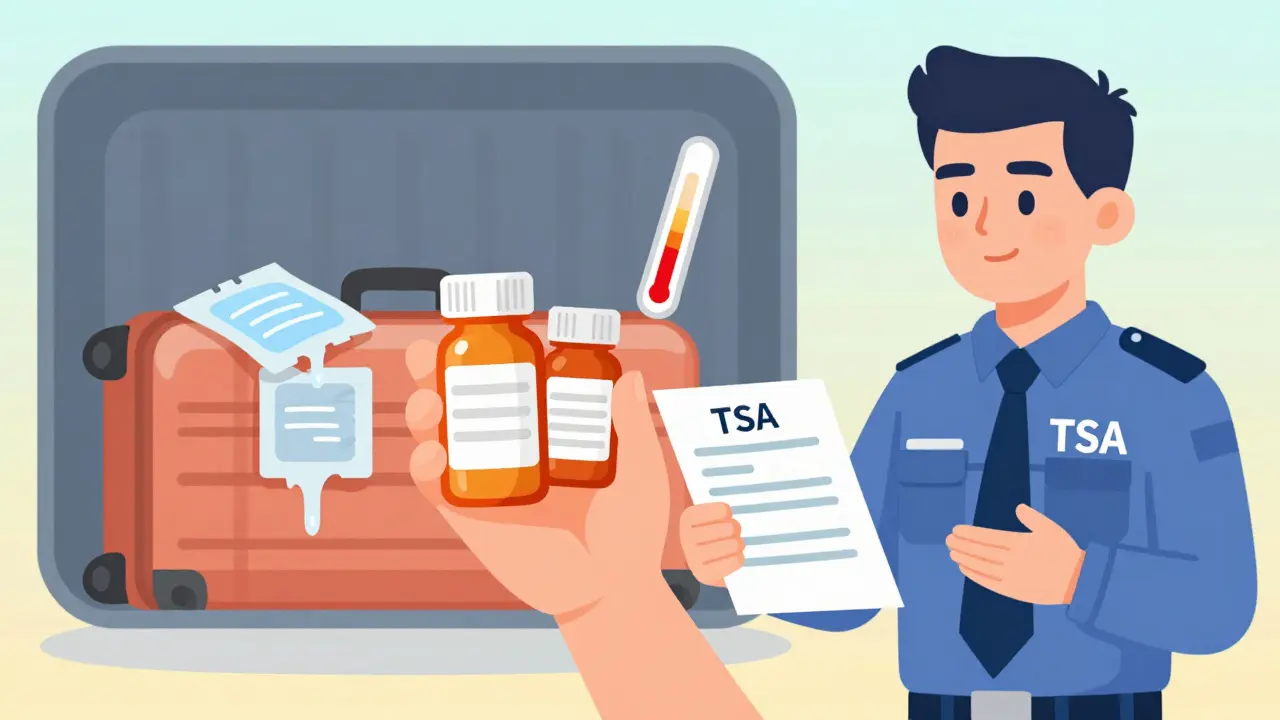
- Declare your meds at security. If you have refrigerated meds, say so. Bring a printed note from your doctor or pharmacist explaining what they are and why they need cooling. The TSA’s 2023 guidelines say this helps avoid delays.
- Don’t check your meds. Bags get left in hot cargo holds. Temperatures can hit 120°F. Even a few hours there can ruin insulin or EpiPens.
- Bring extra. Always carry at least a 3-day backup. Lost luggage happens. Flight delays happen. Don’t risk running out.
What to Do If Your Meds Get Too Hot
If you realize your insulin or EpiPen was left in a hot car for an hour or more:- Don’t use it. Even if it looks fine, it might not work.
- Check for visible changes: Cloudy insulin, discolored tablets, or leaking EpiPens are signs of damage.
- Call your pharmacy. Many can provide emergency refills or mail-order options.
- Use a backup if you have one. Always pack a spare.
A GoodRx user in Arizona left an EpiPen in a car at 102°F for 90 minutes. A post-trip test at CVS showed a 40% drop in potency. That’s not a small risk-it’s a near-catastrophe waiting to happen.
Pre-Trip Checklist: 7 Steps to Avoid Medication Failure
Do this 2-3 weeks before you leave:- Review all meds with your pharmacist. Ask: “How long can this stay out of the fridge? Is there a travel-stable version?”
- Get extra prescriptions if possible. Some countries don’t allow refills without a local doctor’s note.
- Buy the right cooler-Frio, MedActiv, or similar. Don’t use a regular ice chest.
- Pack a temperature monitor next to your meds.
- Label everything with your name, drug name, and dosage. Use waterproof stickers.
- Carry a doctor’s note explaining your meds, especially if they’re injectables or controlled substances.
- Set phone alarms for dose times. Jet lag messes with routines. 92% of families using this trick in a St. Jude study avoided missed doses.
The Bigger Picture: Why This Matters
The WHO estimates $200 billion is wasted globally each year because medications are stored wrong. That’s not just money-it’s health. People die because their asthma inhaler didn’t work. Their blood pressure spiked because their pill lost potency. Your meds aren’t just pills in a bottle. They’re your lifeline.And it’s getting worse. Climate change means hotter destinations. Longer trips. More people traveling with chronic conditions. The global cold chain market for meds is expected to hit $32 billion by 2028. New tech is coming-like labels that change color when meds overheat. The FDA approved those in May 2023. But until then, you’re your own best defense.
Don’t wait until you’re in a foreign airport with a broken EpiPen to learn this. Plan ahead. Pack smart. Ask questions. Your body depends on it.
Can I keep my insulin in a regular cooler with ice?
No. Ice can freeze insulin, which ruins it. Use gel packs instead-they stay in the safe 36°F-46°F range without freezing. Medical-grade coolers with gel packs are designed for this exact purpose.
What if I forget my cooler on a day trip?
If your insulin or EpiPen was out of refrigeration for less than 12 hours and the temperature stayed below 86°F, it’s likely still safe. But if it was in direct sun or over 90°F for more than 2 hours, don’t use it. Always carry a backup. If you’re unsure, call your pharmacy.
Do I need to keep all my pills in the fridge?
No. Only about 12% of medications need refrigeration-mostly injectables like insulin, EpiPens, and certain biologics. Most pills, including blood pressure, cholesterol, and antidepressants, are fine at room temperature. Check the label or ask your pharmacist.
Can I bring meds in a pill organizer?
Only if you also carry the original bottles with labels. Many countries require prescription meds to be in original packaging. TSA and customs can confiscate pills in organizers if they’re not labeled. Use organizers for convenience, but always pack originals in your carry-on.
Are there travel-friendly versions of my meds?
Yes. Some companies now make travel-stable versions of insulin and biologics that can last up to 72 hours at room temperature. Ask your doctor or pharmacist if a version exists for your medication. It could save you from carrying a cooler.
What’s the biggest mistake travelers make?
Storing meds in the bathroom. Humidity ruins pills and capsules. The second biggest mistake? Leaving them in a hot car or checked luggage. Always keep meds with you in your carry-on, in a cool, dry place-not the glove compartment or suitcase.
 Medications

Anu radha
December 15, 2025 AT 16:17This made me cry a little. I carry my mom's insulin when we travel, and I never thought about how heat could break it down. Thank you for saying this so clearly.
Erik J
December 17, 2025 AT 10:43Interesting. I’ve used Frio wallets before but never paired them with a temp monitor. Wonder if the $50 investment is worth it for a 2-week trip. Maybe I’ll test one with a cheap thermometer next time.
Donna Packard
December 18, 2025 AT 20:27So many people don’t realize how fragile meds are. I used to keep my antidepressants in my purse during summer hikes-never thought about the sun breaking them down. This is a wake-up call. Thank you for sharing.
Brooks Beveridge
December 18, 2025 AT 23:34Let me tell you something real: your meds aren’t just pills. They’re your body’s last line of defense when everything else is falling apart. You don’t just pack them-you protect them like you’d protect your kid’s life. I’ve seen people ignore this, then show up in ERs wondering why their EpiPen didn’t work. It’s not magic. It’s chemistry. And chemistry doesn’t care how tough you think you are. If it’s hot, it breaks. If it’s damp, it dies. If you’re not careful, it kills. So yeah-carry the cooler. Bring the backup. Label everything. Don’t be the person who says, ‘I didn’t know.’ You know now. Act like it.
Jessica Salgado
December 20, 2025 AT 11:09Okay, I’m going to say this out loud because no one else will: I’ve been storing my Humira in my hotel bathroom for YEARS. I thought it was fine because the fridge was too full. I just… I just didn’t think. And now I’m terrified. I’m calling my doctor tomorrow. This article didn’t just inform me-it gutted me. I’m going to buy a Frio wallet today. And I’m going to stop pretending I’m invincible. Thank you for this. Seriously.
Patrick A. Ck. Trip
December 20, 2025 AT 11:54As a long-term traveler with multiple chronic conditions, I must say: the advice here is generally sound. However, I must point out a minor error: the FDA approved temperature-sensitive labels in May 2023, but they are not yet widely available outside the US. Also, 'MedActiv' is a brand, not a product class-please clarify. And while gel packs are preferred, some medical-grade coolers use phase-change materials that are even more stable. Lastly, I’ve personally carried insulin in checked luggage during 17 international flights without incident-but I did use a dual-layer insulated case with desiccant. So while your advice is good, please avoid absolutism. There are exceptions.
Chris Van Horn
December 20, 2025 AT 14:30Wow. This is such a basic, almost kindergarten-level guide. Did you really need to write 1,200 words to say ‘don’t leave your insulin in a hot car’? I’ve been managing biologics since 2012. I use a Pelican cooler, carry two backups, and have a PhD in pharmacology. This reads like a blog post written by someone who Googled ‘insulin storage’ for the first time. And why are you telling people to ask pharmacists? They’re not scientists-they’re salespeople. Ask your doctor. Or better yet, read the FDA’s official monographs. Also, typo: ‘excursions’ should be ‘exposure.’
Sam Clark
December 21, 2025 AT 23:56Chris, your tone is unnecessarily aggressive, and your expertise doesn’t negate the value of this post for the majority of travelers who aren’t pharmacologists. The goal here isn’t to impress with jargon-it’s to save lives. The author didn’t write this for you. They wrote it for the single mother in Ohio who’s flying to Mexico with her diabetic child and has never heard of a Frio wallet. Your critique is valid in a lab, but in the real world, clarity and compassion matter more than perfection. Thank you, author, for writing this with care.