

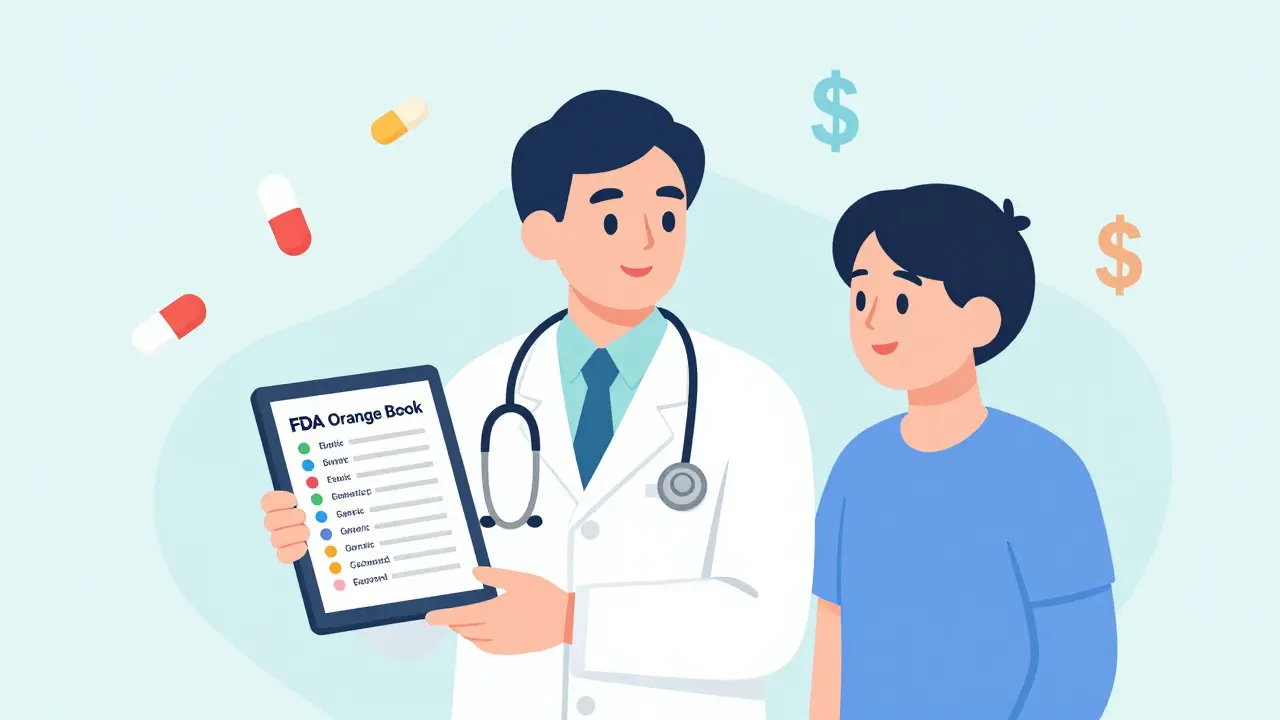
When a doctor prescribes a pill, they’re not just choosing a treatment-they’re choosing a cost, a habit, and sometimes, a patient’s entire relationship with their health. And more than 90% of those prescriptions today are for generic medications. Yet, many physicians still feel unsure about when and how to switch from brand-name drugs to their generic equivalents. That’s where continuing medical education (CME) comes in-not as a box to tick, but as a daily tool to improve care, cut costs, and build trust.
Why Generics Matter More Than Ever
Generics aren’t just cheaper versions of brand drugs. They’re legally required to be identical in active ingredients, strength, dosage form, and route of administration. The FDA’s approval process for generics demands bioequivalence: the drug must perform the same way in the body as the brand-name version. In fact, the FDA’s Orange Book shows that over 1,000 new generics were approved in 2023 alone. That’s not noise-that’s a flood of new options, and doctors need to keep up.Here’s the real impact: a 2022 RAND study found that if generic prescribing rose by just 10%, the U.S. healthcare system could save $156 billion a year. That’s money that stays in patients’ pockets and reduces insurance burdens. Studies also show a 23.7% increase in medication adherence when patients are prescribed generics instead of brand-name drugs. Why? Because cost is one of the biggest reasons people skip doses or stop treatment entirely.
What CME Actually Requires
CME rules vary wildly across states. In California, physicians need 50 hours of Category 1 CME every two years. No specific number of those hours is reserved for pharmacology. But in Georgia, 10 of those 40 required hours must be Category 1-and if you hold a DEA license, you need 3 hours focused on opioid prescribing. Then there’s Maryland, which requires half an hour specifically on Prescription Drug Monitoring Programs (PDMPs). And now, thanks to the MATE Act, every DEA-registered provider must complete 8 hours of substance use disorder training by June 2025. That training must include education on generic alternatives to controlled substances.So what’s the pattern? It’s not about generics alone-it’s about pharmacology as a whole. The National Board of Medical Examiners found that 68% of state medical boards require some form of pharmacology education, and 42 of them include generic vs. brand-name identification as a core competency. That means if you’re taking CME, you’re likely learning about generics-even if it’s not labeled that way.
What Doctors Need to Know
Not all generics are created equal. For most drugs-antibiotics, blood pressure meds, antidepressants-the switch is seamless. But for drugs with a narrow therapeutic index (like warfarin, levothyroxine, or phenytoin), even tiny differences in absorption can matter. That’s why education isn’t just about knowing generics exist-it’s about understanding when to trust them and when to stay cautious.Key topics every doctor should cover in CME:
- How the FDA defines bioequivalence and pharmaceutical equivalence
- What the Orange Book actually says about therapeutic equivalence ratings (AB ratings)
- How to explain generic substitution to patients who are skeptical
- When to avoid switching (e.g., transplant patients on immunosuppressants)
- How biosimilars differ from traditional generics (and why California now requires 2 hours on them)
Dr. Susan R. Berry from Johns Hopkins put it simply: “Understanding generic equivalency isn’t about saving money-it’s about removing barriers to adherence.” And that’s the real goal.
How Doctors Are Learning
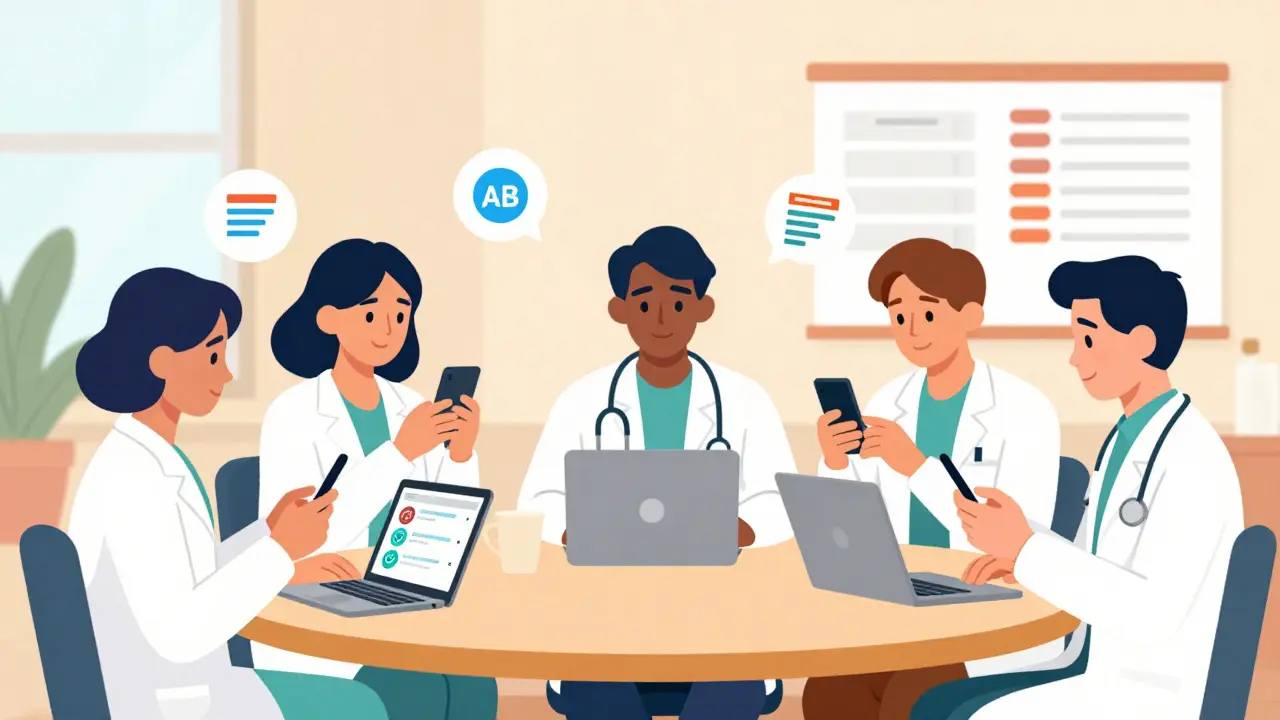
Most physicians aren’t sitting through 12-hour lectures anymore. The top platforms-UpToDate, Medscape, WebMD-are now integrated into electronic health records. UpToDate, for example, gives you 0.5 CME credits just for reading a drug monograph during patient care. That’s learning that happens at the point of care, not in a conference room.Surveys show 83% of doctors now use digital platforms for CME. Mobile completion rates for pharmacology courses have grown 47% year-over-year. That’s because the content is getting better-short modules, real case studies, interactive quizzes. One California family physician reported that after taking a 10-hour pharmacology course through RenewNowCE, her patients’ concerns about generics dropped by 40%. She learned how to show them the FDA’s bioequivalence data on her tablet during the visit.
But it’s not perfect. A 2022 study in Academic Medicine found that physicians completed only 68% of required pharmacology modules-compared to 87% for general clinical topics. Why? Because too many courses feel generic (pun intended). A radiologist on Sermo said, “I need to know about contrast agents, not opioids.” And they’re right. One-size-fits-all CME doesn’t work.
The Future Is Personalized
The next big shift isn’t more hours-it’s smarter learning. The National Academy of Medicine is piloting competency-based assessments in 12 states. Instead of counting hours, they’ll test whether you can correctly choose between generics based on patient factors. McKinsey predicts that by 2027, AI will personalize CME content based on your prescribing patterns. If you prescribe a lot of statins, you’ll get updates on new generic versions. If you rarely prescribe insulin, you won’t be forced through 20 slides on biosimilars.And the FDA isn’t slowing down. With 59 new molecular entities approved in 2023, and more generics hitting the market every quarter, staying current isn’t optional-it’s part of clinical practice.
What Works in Practice
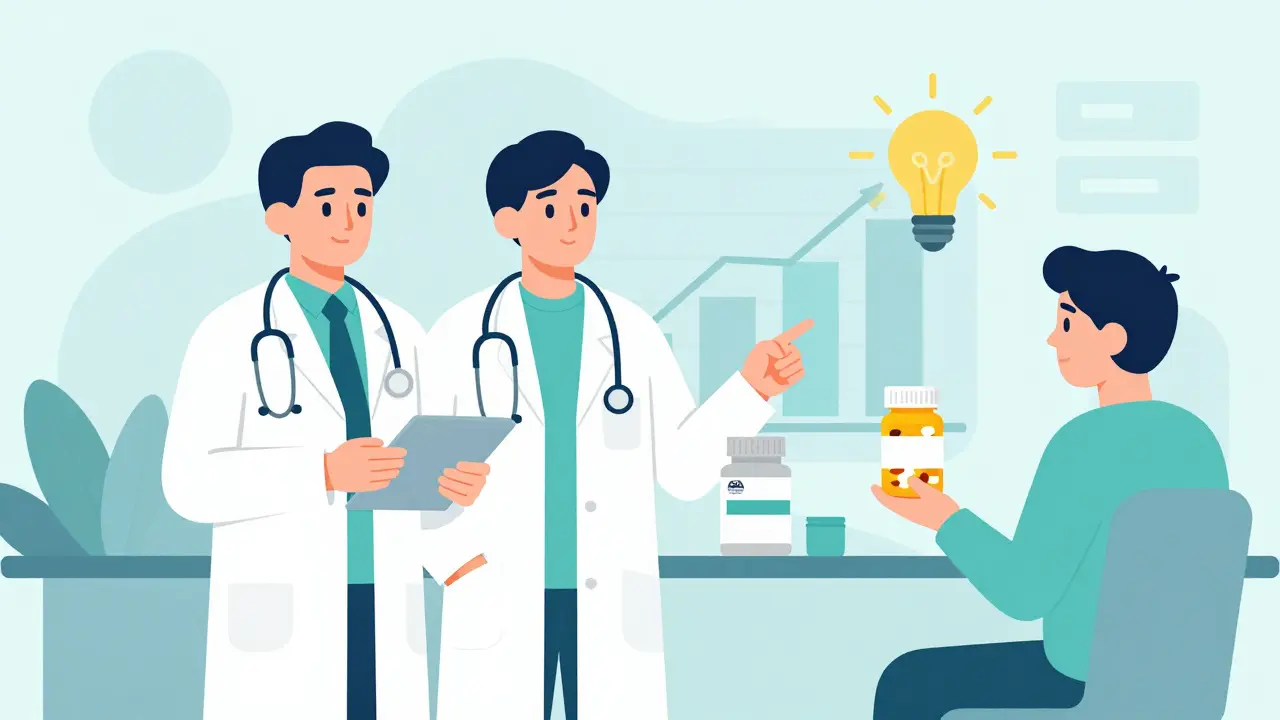
Here’s what successful doctors are doing:- They use the FDA’s free Orange Book Primers-updated quarterly-to stay on top of new approvals.
- They integrate CME into their workflow: 30 minutes a week during chart review, not one marathon session every two years.
- They ask patients: “Have you been on this medication before? Did you notice a difference?” That feedback loop is the best teacher.
- They avoid blanket substitution. For patients on long-term anticoagulants or epilepsy meds, they stick with what’s working unless there’s a clear clinical reason to switch.
- They talk to pharmacists. Pharmacists are the frontline experts on generics-and they’re often the ones who catch a substitution error before it happens.
The data doesn’t lie: doctors who complete pharmacology-focused CME make better generic substitution decisions. A 2022 NBME study showed a 17.3% improvement in accuracy. That’s not just a number-it’s fewer hospitalizations, fewer side effects, and more patients sticking to their treatment.
Where the System Falls Short
There’s still a gap between policy and practice. Ten states have no mandatory CME at all. And even in states with requirements, many courses are outdated, overly broad, or disconnected from real prescribing decisions. The American Medical Association’s 2022 survey found that 42% of physicians found pharmacology CME “somewhat to not at all useful.” That’s a red flag.The fix? More specialty-specific content. A cardiologist needs to know about generic statins and anticoagulants. A psychiatrist needs to understand the nuances of generic SSRIs and mood stabilizers. A radiologist? They need to know about generic contrast agents and how their bioequivalence differs from oral meds. Generic education shouldn’t be one-size-fits-all. It should be tailored to what you actually prescribe.
Final Thought: It’s Not About Cost-It’s About Care
Doctors don’t resist generics because they’re skeptical of science. They resist because they’ve been burned by bad experiences, confusing guidelines, or patients who panic at the word “generic.” The solution isn’t more mandates-it’s better education. Real, practical, patient-centered learning that answers the question: “When should I switch, and how do I explain it?”When a patient asks, “Is this really the same?”-you need to be ready. Not with a textbook quote, but with a clear, confident answer backed by evidence. That’s what continuing education is for. Not to check a box. But to keep your patients healthy, affordable, and heard.
Do all states require CME on generic medications?
No. While 40 states require 20-50 hours of CME every two years, 10 states have no mandatory CME requirements. Even in states that do require CME, few mandate a specific number of hours on generics. Instead, pharmacology education-including generic vs. brand-name identification-is often embedded within broader requirements. As of 2023, 42 states include drug nomenclature (including generic names) as a required component of CME.
Is there a difference between generics and biosimilars?
Yes. Traditional generics are chemically identical copies of small-molecule drugs, like metformin or lisinopril. Biosimilars are highly similar versions of complex biologic drugs-like insulin, Humira, or Enbrel. Unlike generics, biosimilars aren’t exact copies because biologics are made from living cells. They require additional testing to prove similarity in safety and effectiveness. California became the first state in 2024 to require 2 hours of CME specifically on biosimilars, recognizing their growing role in chronic disease management.
Can I get CME credit just by using UpToDate or other clinical tools?
Yes. Many accredited CME providers now offer credit for point-of-care learning. UpToDate, for example, awards 0.5 CME credits when you review a drug monograph during patient care. This is part of a broader shift toward integrating education into daily practice. Over 63% of physicians now use this approach, and it’s especially effective for pharmacology topics because it’s timely and relevant.
What’s the MATE Act, and how does it affect generics?
Implemented on June 27, 2023, the MATE Act requires all DEA-registered practitioners to complete 8 hours of training on substance use disorders by June 27, 2025. A key component of this training is education on generic alternatives to controlled substances. This means doctors prescribing opioids or stimulants must now understand which generic versions are available, how they compare, and how to use them to reduce misuse risk and cost.
Why do some patients refuse generic medications?
Patient resistance often stems from misinformation, past negative experiences, or confusion over packaging and pill appearance. A 2023 study found that 38% of patients believe generics are “weaker” or “less effective.” Doctors who take CME on how to communicate bioequivalence report a 40% reduction in patient concerns. Simple tools-like showing the FDA’s Orange Book rating or comparing pill images side-by-side-help build trust.
 Medications

Justin Archuletta
March 17, 2026 AT 04:25Generics saved my dad’s life. He was on brand-name warfarin for years, then switched after his insurance dropped coverage. No issues. No side effects. Just cheaper, same results. Doctors need to stop acting like generics are a gamble.
cara s
March 19, 2026 AT 00:41It’s fascinating how we’ve turned something as fundamentally scientific as bioequivalence into a cultural battleground. The FDA’s standards are rigorous-absolutely rigorous-and yet, we still have physicians who treat generics like they’re second-rate, because patients have been conditioned by marketing to equate price with quality. It’s not about the pill. It’s about perception. And perception, in medicine, is often more dangerous than any inactive ingredient.
When I was in residency, I had a patient who refused levothyroxine because it looked different. She’d been on Synthroid for 12 years. We showed her the FDA’s Orange Book entry side-by-side. Same active ingredient. Same dissolution profile. Same bioavailability. She cried. Not from fear. From guilt. She’d been afraid of a color change. That’s the real crisis.
CME doesn’t need more hours. It needs better storytelling. We need case studies where the patient’s life improved because they stopped paying $300 for a pill that was chemically identical to one that cost $4. We need doctors who can look a patient in the eye and say, ‘This isn’t a downgrade. It’s an upgrade in access.’
And yes-I’m aware that some drugs like phenytoin require caution. But that’s why we have therapeutic drug monitoring. Not blanket fear.
The real tragedy isn’t that doctors don’t know generics work. It’s that they’re afraid to tell patients they do.
Amadi Kenneth
March 20, 2026 AT 08:26Sanjana Rajan
March 21, 2026 AT 02:37Kyle Young
March 22, 2026 AT 21:48It’s curious how we frame this as a matter of cost-efficiency when the deeper issue is epistemic humility. Physicians are trained to associate precision with brand names-because brand names were once the only verifiable standard. But in a world where the FDA mandates bioequivalence through rigorous statistical analysis, the resistance is not scientific-it’s psychological. We cling to the brand not because it’s better, but because it’s familiar. And familiarity, in medicine, is mistaken for safety.
Perhaps the real CME requirement should be on the philosophy of equivalence. Not just what generics are-but why we fear them. And how our own biases, shaped by advertising and inertia, undermine patient autonomy.
Aileen Nasywa Shabira
March 24, 2026 AT 08:45Kendrick Heyward
March 25, 2026 AT 08:11My wife was on generic lisinopril for 3 months. She went from 120/80 to 160/95. We switched back. Back to normal. I don’t care what the Orange Book says. I care that my wife didn’t have a stroke. And now you want me to trust some pharmacist’s substitution? No thanks. I’ve seen too many stories like this. You can’t quantify trust. And you can’t replace it with a chart.
PS: I’m not anti-generic. I’m pro-peace of mind. 😔
lawanna major
March 27, 2026 AT 01:38One of the most under-discussed aspects of this issue is the role of pharmaceutical packaging. The FDA doesn’t regulate pill color, shape, or imprint for generics-but those things matter more than we admit. A patient who’s taken a blue oval pill for 15 years doesn’t just see a pill-they see stability. They see routine. When that changes, even if the chemistry is identical, the psychological disruption can break adherence.
That’s why the most effective CME modules aren’t about pharmacokinetics-they’re about communication. How to show the patient the FDA’s equivalence data. How to compare pill images. How to say, "I know this looks different, but here’s why it’s the same." And yes-pharmacists are the unsung heroes here. They’re the ones who catch the 2% of cases where a switch causes real issues. We need to empower them, not sideline them.
Also: biosimilars are not generics. They’re not even close. But that’s a whole other conversation.
Linda Olsson
March 28, 2026 AT 21:23Let’s be honest-this whole conversation is a distraction. The real problem isn’t that doctors don’t know generics are equivalent. It’s that the entire healthcare system is designed to extract profit from confusion. Insurance companies push generics not because they care about patients-they care about margins. Pharmacies push substitutions because they get rebates. Patients are just pawns in a game they don’t understand.
And now we’re giving doctors 8 hours of CME on biosimilars? Brilliant. Because nothing says "patient-centered care" like another mandatory lecture on a topic you’ll never use in your specialty.
Why not just fix the system? Pay doctors fairly. Let them spend 20 minutes with patients. Stop letting pharmacy benefit managers dictate prescriptions. Then we won’t need CME on generics-we’ll just prescribe what’s best.
Ayan Khan
March 29, 2026 AT 08:21In India, generics are the backbone of healthcare. We don’t have the luxury of brand-name drugs for everyone. And yet, our outcomes are comparable-sometimes better-because we’ve normalized generics. We don’t see them as inferior. We see them as necessary.
Here’s the thing: trust isn’t built by regulatory documents. It’s built by community. By stories. By doctors who say, "I take this same pill."
I had a patient last month-78-year-old woman with hypertension. She refused her generic amlodipine because "it wasn’t the blue one." I showed her my own prescription. Same pill. Same manufacturer. Same batch code. She laughed. Said, "Oh, so you’re just like me."
That’s the CME we need. Not slides. Not credits. Just honesty.
Emily Hager
March 30, 2026 AT 04:21Melissa Starks
April 1, 2026 AT 03:53I’m a family nurse practitioner. I’ve been doing this for 14 years. I used to think generics were a gamble. Then I started using UpToDate during patient visits. I showed patients the bioequivalence data. I showed them the FDA’s rating. I showed them that the same company that makes the brand makes the generic too.
Within six months, my patients’ adherence went up 35%. Their out-of-pocket costs dropped by $200/month. They started asking for generics. Not because I told them to. Because they understood.
Stop making CME a chore. Make it a tool. Let doctors use it during the visit. Let them learn while they care. That’s how you change behavior. Not with a 12-hour webinar.
Also-I love that pharmacists are finally being recognized. They’re the real MVPs.
Lauren Volpi
April 1, 2026 AT 15:50Kal Lambert
April 1, 2026 AT 19:21Justin Archuletta
April 3, 2026 AT 18:07That ER doc comment? Perfect. That’s the whole thing in one sentence. No drama. No jargon. Just: "I’m fine."
Why do we make this so complicated? Because we’ve turned medicine into a performance. We need to go back to: "Does it work? Is it safe? Can they afford it?"
Everything else is noise.