Adverse Drug Reaction (ADR) Risk Estimator
Patient Profile & Medication Factors
Risk Assessment
Contributing Factors:
Calculate your profile to see recommendations.
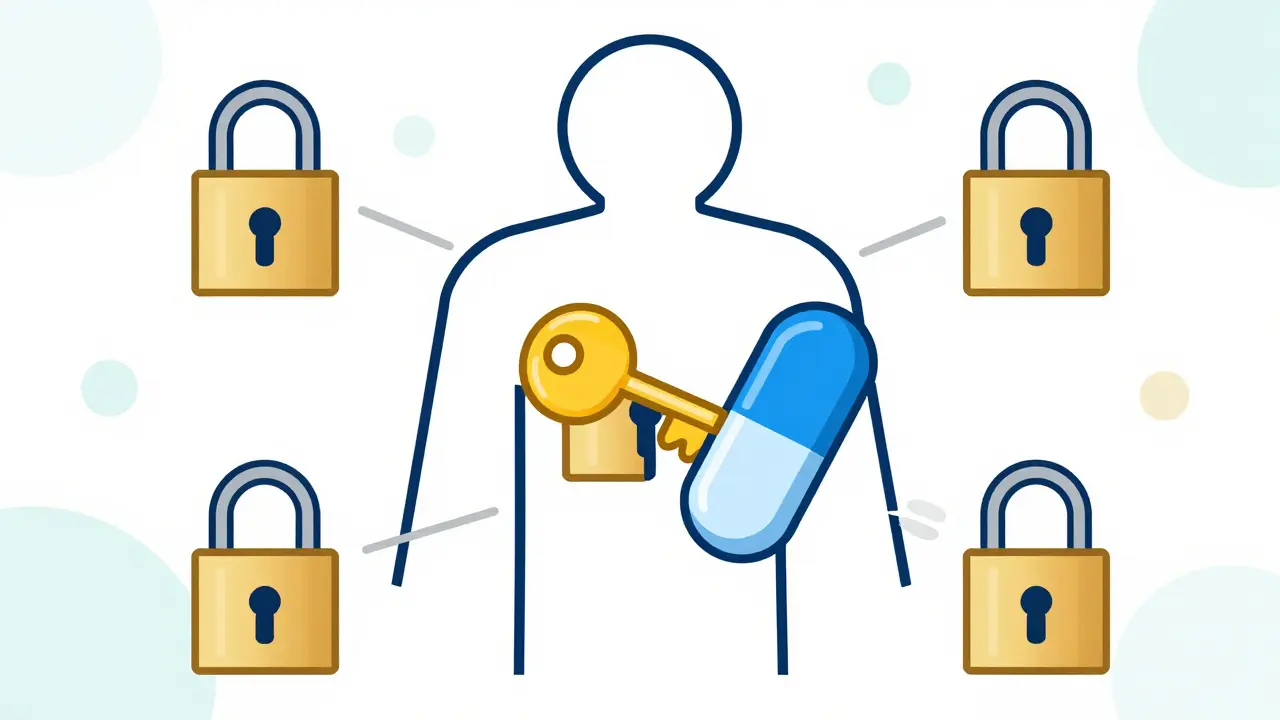
You take a pill for your headache, and suddenly your stomach turns. You start a new antibiotic for an infection, and you break out in a rash. It feels personal, like your body is rebelling against the cure. But it’s not a rebellion. It’s biology. Every medication is a chemical key designed to fit a specific lock in your body. The problem? Your body has millions of other locks that look suspiciously similar.
Side effects, formally known as adverse drug reactions (ADRs), are defined by the FDA as "unwanted undesirable effects that are possibly related to a drug". They aren't mistakes or bad luck. They are predictable outcomes of complex biochemical interactions. Understanding why they happen changes how we view medicine-not as magic bullets, but as powerful tools with trade-offs.
The History That Changed Everything
We don’t take side effects lightly because we used to. Before the 1960s, drugs didn’t need to prove they were safe before hitting the market. That changed tragically with thalidomide, a sedative prescribed to pregnant women in the late 1950s and early 1960s. It caused severe limb deformities in over 10,000 infants worldwide. This disaster led to the Kefauver-Harris Amendment of 1962, which required proof of both safety and efficacy.
Today, we know that approximately 75-80% of adverse drug reactions are predictable, nonimmunologic effects. The remaining 20-25% are unpredictable, often involving the immune system. These numbers matter because they tell us that most side effects follow rules we can understand-and sometimes prevent.
How Your Body Handles Drugs: Pharmacokinetics
Think of pharmacokinetics as what your body does to the drug. It involves four steps: absorption, distribution, metabolism, and excretion. If any of these steps go off-script, side effects follow.
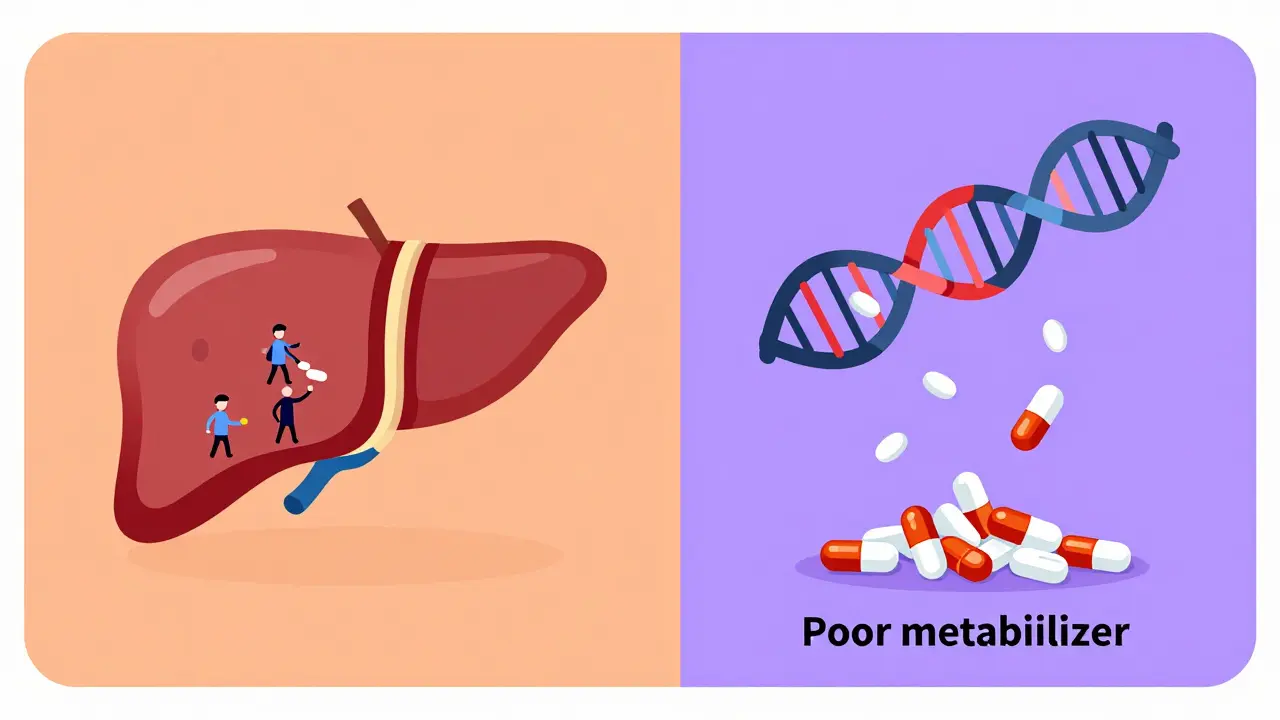
Metabolism is where genetics play a huge role. Your liver uses enzymes called cytochrome P450 to break down medications. But not everyone has the same version of these enzymes. For example, about 5-10% of Caucasians have a genetic variation in the CYP2D6 enzyme that makes them "poor metabolizers." When these people take codeine, their bodies can’t convert it properly into its active form, or conversely, if they are ultra-rapid metabolizers, they produce too much active opioid, leading to dangerous respiratory depression. One dose fits no one.
Where Drugs Hit: Pharmacodynamics and Off-Target Effects
If pharmacokinetics is what your body does to the drug, pharmacodynamics is what the drug does to your body. Most drugs work by binding to specific receptors-like a key turning a lock. But some keys are poorly cut. They fit the intended lock but also jiggle open others nearby. This is called "off-target toxicity."
Take NSAIDs like ibuprofen. They work by blocking cyclooxygenase-2 (COX-2) enzymes to reduce pain and inflammation. But they also block COX-1, which protects your stomach lining. In 15-30% of regular users, this leads to gastric irritation or ulcers. The drug did exactly what it was supposed to do; it just did it in the wrong place too.
Another example is haloperidol, an antipsychotic. It blocks dopamine receptors in the brain to treat psychosis. But it also hits dopamine receptors in the basal ganglia, causing tremors and rigidity in up to 50% of patients within the first week. The side effect isn't a bug; it's a feature of how broadly the drug acts.
The Membrane Problem: A New Scientific Frontier
Recent research has uncovered another layer of complexity. In November 2021, researchers at Weill Cornell Medicine published a study in PNAS showing that many drugs interact with cell membranes themselves, not just the proteins inside them. Dr. Radda Rusinova and her team found that membrane-associated drugs can alter the thickness and elasticity of cell membranes. This changes how all the proteins embedded in those membranes function, even if the drug doesn't bind to them directly. It explains why some drugs cause widespread, hard-to-predict issues-they’re shaking up the entire cellular neighborhood.
When the Immune System Joins the Fight
About 5-10% of side effects are true hypersensitivity reactions, where your immune system attacks the drug. These are classified into types based on how they occur:
- Type I (IgE-mediated): Immediate reactions like anaphylaxis. Penicillin causes this in 1-5 per 10,000 courses. It happens fast, within minutes.
- Type III: Immune complexes form and deposit in tissues, causing serum sickness-like reactions after 2-3 weeks. Seen in 0.1-0.5% of patients on certain antibiotics.
- Type IV: T-cell mediated, delayed reactions. This includes Stevens-Johnson Syndrome (SJS), a severe skin condition affecting 1-6 people per million annually, often linked to allopurinol or anticonvulsants.
There are also pseudoallergic reactions, like vancomycin flushing syndrome. Here, the drug directly triggers mast cells to release histamine without involving antibodies. It looks like an allergy, but it’s not. Slowing down the infusion usually prevents it.
Genetics: Why Your DNA Matters
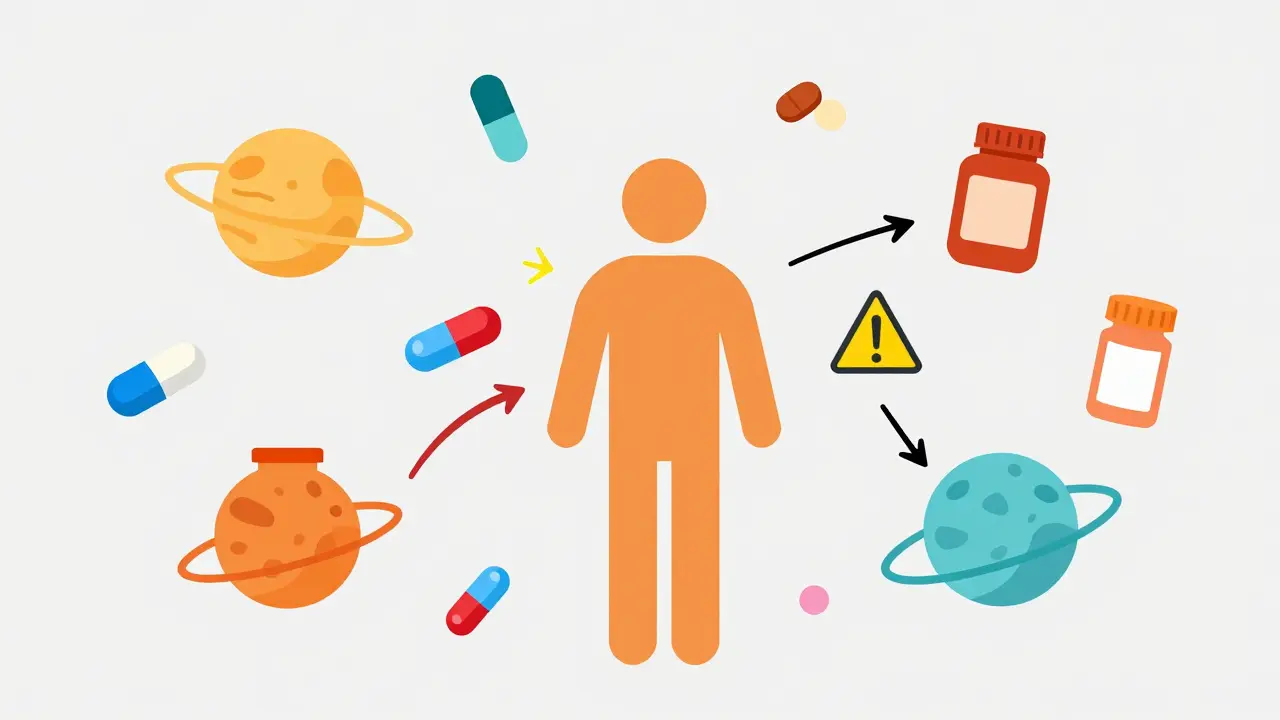
Your genes hold clues to how you’ll react to drugs. This field, pharmacogenomics, is moving from niche to standard care. For instance, the HLA-B*57:01 allele increases the risk of abacavir hypersensitivity by 50-100 times. Before testing became routine, 5-8% of carriers had severe reactions. Now, screening reduces that risk to less than 0.5%.
Similarly, slow acetylators due to NAT2 gene polymorphisms face a 1 in 10,000 risk of severe liver damage from isoniazid, an antibiotic for tuberculosis. Knowing your genetic profile allows doctors to avoid these landmines entirely.
Drug Interactions: The Multiplier Effect
Taking more than one medication multiplies the risk of side effects. Drug interactions account for 6-7% of hospital admissions in older adults. There are three main ways drugs interfere with each other:
- Enzyme Induction/Inhibition: Rifampicin boosts P-glycoprotein, reducing digoxin absorption by 30-50%. Grapefruit juice inhibits CYP3A4, spiking felodipine levels by 260%, risking severe low blood pressure.
- Renal Excretion: NSAIDs reduce kidney blood flow, cutting methotrexate clearance by 20-30%. This can lead to life-threatening bone marrow suppression.
- Pharmacodynamic Synergy: Taking two drugs that affect the same system, like blood thinners, can amplify bleeding risks exponentially.
Polypharmacy-taking five or more meds-is a major red flag. The more keys you throw at the door, the more likely you are to pick the wrong lock.
Managing the Unavoidable
We can’t eliminate all side effects, but we can manage them. Strategies include:
- Therapeutic Drug Monitoring: Keeping blood levels of narrow-therapeutic-index drugs like digoxin between 0.5-0.9 ng/mL.
- Prophylaxis: Prescribing proton pump inhibitors with NSAIDs for high-risk patients, reducing ulcer complications by 70-80%.
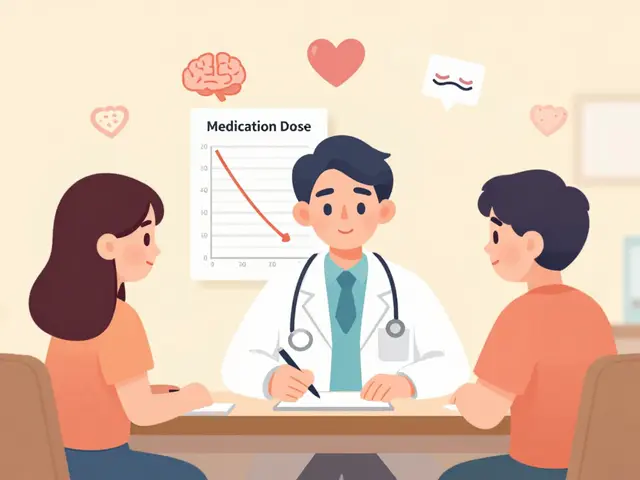
- Dose Titration: Starting SSRIs at low doses to minimize initial nausea, which affects 20-30% of patients.
- Genetic Screening: Testing for CYP2C19 before clopidogrel therapy to prevent treatment failure in poor metabolizers.
The future looks promising. AI models could reduce late-stage clinical trial failures due to toxicity by 25-30%, saving billions. The FDA’s Sentinel Initiative monitors 300 million patient records in real-time, catching signals like the increased heart failure risk with pioglitazone long before traditional methods would.
Are side effects always dangerous?
No. Many side effects are mild, like drowsiness or dry mouth, and may fade as your body adjusts. However, any sign of an allergic reaction, such as difficulty breathing or swelling, requires immediate medical attention.
Can I stop taking my medication if I experience side effects?
Never stop abruptly without consulting your doctor. Suddenly stopping some medications, like antidepressants or blood pressure drugs, can cause severe withdrawal symptoms or rebound conditions. Your doctor can help adjust the dose or switch to an alternative.
What is pharmacogenomic testing?
It’s a blood or saliva test that analyzes your genes to predict how you’ll metabolize certain drugs. It helps doctors choose the right medication and dose for your unique biology, reducing the risk of side effects and treatment failure.
Why do some people get rashes from antibiotics?
Rashes can be Type IV hypersensitivity reactions, where T-cells attack the drug. In rare cases, it can progress to severe conditions like Stevens-Johnson Syndrome. Genetic factors, such as specific HLA alleles, significantly increase this risk.
How can I reduce the risk of drug interactions?
Keep an updated list of all prescriptions, over-the-counter drugs, and supplements. Share this list with every healthcare provider you see. Use a single pharmacy so the pharmacist can screen for interactions automatically.
 Medications