

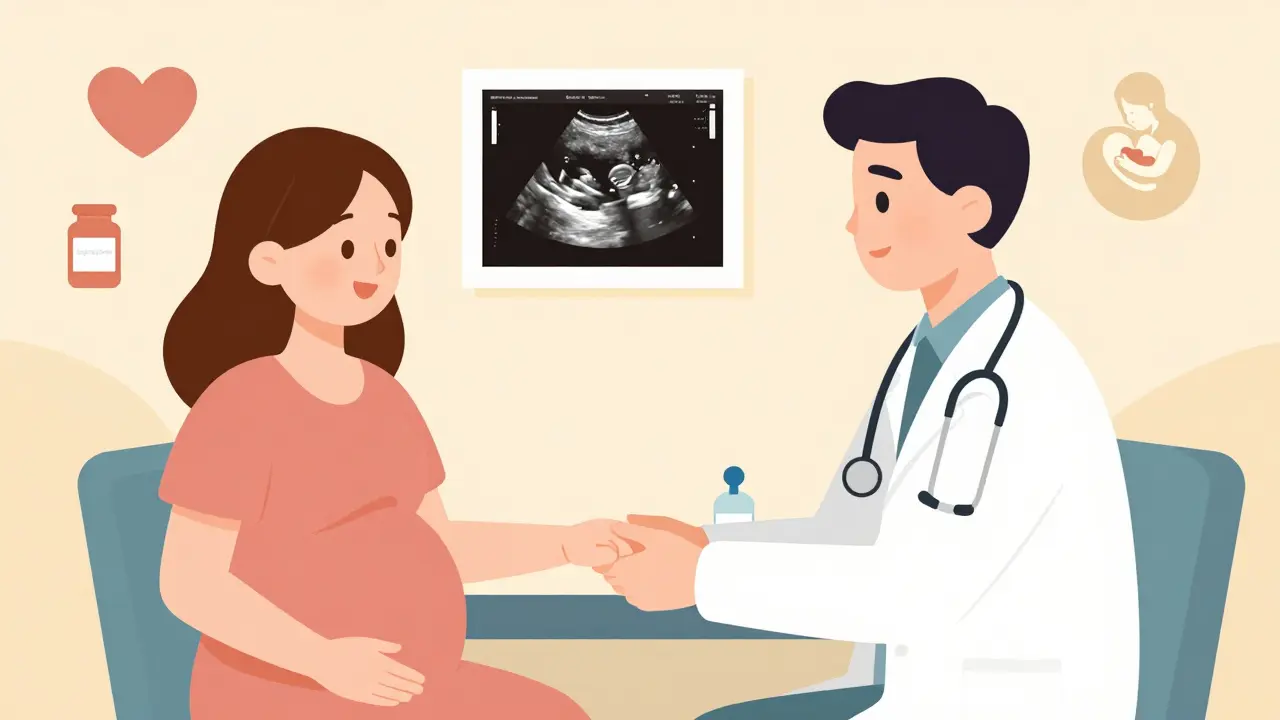
When a pregnant person is using opioids - whether prescribed for pain or misused - the stakes aren’t just theirs. The baby’s health is on the line too. Opioid use during pregnancy doesn’t mean a bad outcome is guaranteed, but it does mean you need clear, science-backed care. The goal isn’t punishment or shame. It’s stability. Safety. A healthy birth and a chance for both mother and baby to thrive.
What Happens When Opioids Cross the Placenta
Opioids like heroin, oxycodone, hydrocodone, and even methadone or buprenorphine used for treatment, cross the placenta. That means the baby’s body gets exposed. Their developing nervous system adapts to the presence of these drugs. When the baby is born and that constant supply stops, withdrawal kicks in. This isn’t a rare side effect - it’s expected. Between 50% and 80% of babies exposed to opioids in the womb will show signs of Neonatal Opioid Withdrawal Syndrome (NOWS), sometimes still called Neonatal Abstinence Syndrome (NAS).Symptoms don’t show up right away. Most babies start showing signs 48 to 72 hours after birth. You might notice:
- High-pitched crying that won’t calm down
- Tremors or jittery movements
- Feeding problems - poor suck, vomiting, diarrhea (more than 3 loose stools an hour)
- Fast breathing (over 60 breaths per minute)
- Temperature that swings - too high (over 37.2°C) or too low
- Excessive sweating or skin mottling
These aren’t just uncomfortable for the baby. They’re a sign the nervous system is overworked. Left unmanaged, severe withdrawal can lead to seizures or poor weight gain. But here’s the key: NOWS is treatable. And the best way to prevent the worst of it? Keep the mother stable during pregnancy.
Medication-Assisted Treatment (MAT) Is the Gold Standard
For years, the idea was to get pregnant people off opioids completely - medically supervised withdrawal. That’s not the answer anymore. The CDC, ACOG, and the American Society of Addiction Medicine all agree: medication-assisted treatment (MAT) is the standard of care.MAT means using FDA-approved medications like methadone or buprenorphine to manage opioid use disorder (OUD) during pregnancy. These aren’t substitutes - they’re tools. They block cravings, prevent withdrawal, and reduce the urge to use street drugs. And they do something else: they improve outcomes for the baby.
Compared to withdrawal, MAT leads to:
- 60-70% lower chance of relapse
- Babies born 1-2 weeks later on average
- Babies with 200-300 grams more birth weight
- Lower risk of preterm labor (15-20% with MAT vs. 25-30% with withdrawal)
- Reduced risk of fetal distress (8-12% with MAT vs. 18-22% with withdrawal)
Two main medications are used: methadone and buprenorphine. Both work well, but they have different profiles.
Methadone vs. Buprenorphine: What’s the Difference?
Methadone is a full opioid agonist. It’s been used for decades. Dosing starts low - around 10-20 mg a day - and is slowly increased to 60-120 mg daily. It’s taken daily at a clinic, which means more oversight but also more stigma and travel.Buprenorphine is a partial agonist. It’s taken as a dissolving tablet or film under the tongue. Starting dose is usually 2-4 mg, increased to 8-24 mg daily. It’s easier to access - many providers can prescribe it in an office, not just a specialized clinic. Studies show slightly lower rates of retention at six months (60-70% for buprenorphine vs. 70-80% for methadone), but it’s often preferred because of fewer side effects and more flexibility.
Here’s the trade-off: Babies born to mothers on methadone tend to have more severe withdrawal symptoms. Average Finnegan scores (a tool to measure NAS severity) are around 14.3. Babies exposed to buprenorphine score lower - about 11.8. That means methadone-exposed babies often stay in the hospital longer - 17.6 days on average - compared to 12.3 days for buprenorphine-exposed babies.
And then there’s naltrexone. It’s not an opioid. It blocks opioid receptors. A 2022 Boston Medical Center study found that infants exposed to naltrexone during pregnancy had 0% incidence of NOWS during hospitalization. That’s huge. But here’s the catch: mothers on naltrexone started treatment later - at 28.4 weeks on average - compared to 19.7 weeks for those on buprenorphine. That delay means many missed the critical early window to stabilize. Naltrexone isn’t approved for use in pregnancy in the U.S., and it’s not widely available. Still, it’s an important signal: stability matters more than the drug itself.

Monitoring the Baby After Birth
Once the baby is born, the real work begins. Hospitals must monitor for NOWS for at least 72 hours. Some babies show signs earlier, some later. Monitoring happens every 3-4 hours in the first 24 hours, then every 4-6 hours after that.Traditional scoring tools like the Finnegan scale are still used - but they’re being replaced in many places by the Eat, Sleep, Console (ESC) model. This approach asks three simple questions:
- Can the baby eat well?
- Can the baby sleep for at least an hour at a time?
- Can the baby be consoled within 10 minutes?
If the answer is yes to all three, the baby doesn’t need medication - even if they’re fussy. This model cuts down on unnecessary drug use. Hospitals using ESC report 30-40% fewer babies needing morphine or methadone for withdrawal.
But here’s the problem: not every hospital does this. As of 2021, only 45% of U.S. hospitals had standardized protocols for managing OUD in pregnancy. Rural hospitals? Only 28% offer on-site MAT. That means a lot of pregnant people are traveling hours for care - if they can even get in.
What About Breastfeeding?
Breastfeeding is safe and encouraged for most mothers on methadone or buprenorphine. The amount of drug passed through breast milk is tiny - far less than what the baby was exposed to in the womb. In fact, breastfeeding can help reduce withdrawal symptoms. One study found that 83% of mothers on naltrexone successfully breastfed without issues. For those on buprenorphine or methadone, the numbers are similar.But stigma is real. Many moms report being told not to breastfeed - even though guidelines say they should. If you’re on MAT, ask your provider: Is breastfeeding safe for me and my baby? The answer should be yes.
Emotional and Social Challenges
This isn’t just a medical issue. It’s deeply personal.On online forums, moms talk about the fear of being judged. One mother wrote: “My baby scored 12 on the Finnegan scale. They took him to the NICU. I felt like a criminal.” Another said: “I was told I was ‘ruining my baby’s life’ - but I was doing everything right.”
Over half of the mothers in these communities report feeling judged by healthcare workers. That’s not just hurtful - it’s dangerous. Shame drives people away from care. Trauma-informed care isn’t a buzzword here - it’s a necessity. Thirty percent of pregnant women with OUD screen positive for moderate to severe depression. Over 40% report postpartum depression. You can’t treat addiction without treating mental health.
And then there’s housing. Nearly half of pregnant women with OUD don’t have stable housing. No place to sleep? No way to keep meds safe? No support? That’s why treatment fails - not because of lack of willpower, but because of broken systems.

New Hope on the Horizon
In 2023, the FDA approved Brixadi - an extended-release form of buprenorphine given as a monthly injection. Early trials show 89% of pregnant women stayed in treatment at 24 weeks, compared to 76% with daily pills. That’s a game-changer for people who struggle with daily routines.The American Academy of Pediatrics now says: try non-drug care first. Hold your baby. Skin-to-skin. Rock them. Feed them. Quiet room. That’s the first line of defense. Medication should be a last resort - not the first.
The NIH’s HEALing Communities Study is testing full-team care: MAT, mental health, housing help, and peer support - all in one place. Early results show a 22% drop in NAS severity when all these pieces come together.
What does this mean for you? If you’re pregnant and using opioids, you’re not alone. You’re not broken. You’re not failing. You’re someone who needs help - and that help exists. MAT works. Monitoring works. Support works. The system isn’t perfect, but progress is real.
What to Do Next
If you’re pregnant and using opioids:- Don’t wait. Contact an OB-GYN or addiction specialist now - even if you’re not sure you want treatment yet.
- Ask about MAT. Methadone and buprenorphine are safe and effective.
- Ask if your hospital uses the Eat, Sleep, Console model.
- Ask about mental health support. Depression and anxiety are common - and treatable.
- Ask if you can breastfeed. The answer should be yes.
- Find peer support. Online communities, recovery groups, and peer navigators can make all the difference.
Recovery isn’t about being perfect. It’s about being present. It’s about showing up - for yourself, and for your baby.
Is it safe to take methadone or buprenorphine while pregnant?
Yes. Methadone and buprenorphine are the recommended treatments for opioid use disorder during pregnancy. They reduce the risk of relapse, preterm birth, and fetal distress. Babies born to mothers on these medications have better outcomes than those born to mothers who stop opioids abruptly. These medications are not substitutes - they’re medical treatments that stabilize the mother and protect the baby.
Will my baby be taken away if I’m on MAT?
No, being on medication-assisted treatment (MAT) is not grounds for child removal. Child protective services focus on neglect or abuse - not medical treatment. In fact, staying on MAT shows you’re taking responsible steps to protect your baby. Many states now have policies that support family unity when mothers are engaged in treatment. If you’re concerned, ask your provider about your rights and connect with a patient advocate.
Can I breastfeed if I’m on buprenorphine or methadone?
Yes. Both buprenorphine and methadone are considered safe for breastfeeding. Only tiny amounts pass into breast milk - far less than what the baby was exposed to in the womb. Breastfeeding can actually help reduce withdrawal symptoms in newborns. The CDC and ACOG both recommend breastfeeding for mothers on MAT unless there’s another medical reason not to.
What is NOWS, and how is it different from NAS?
NOWS stands for Neonatal Opioid Withdrawal Syndrome. It’s the newer, more accurate term for what was previously called Neonatal Abstinence Syndrome (NAS). NOWS specifically refers to withdrawal caused by opioids - not other substances like alcohol or benzodiazepines. The shift in terminology reflects a better understanding of the condition and reduces stigma. NOWS is treatable and often improves with non-medication care like skin-to-skin contact and feeding on demand.
Why is naltrexone not commonly used during pregnancy?
Naltrexone blocks opioids and has shown promising results - including zero cases of withdrawal in newborns in one study. But it’s not approved for use in pregnancy in the U.S., and it’s not widely available. It also requires the mother to be fully detoxed before starting, which is risky during pregnancy. Most women aren’t ready to stop opioids cold turkey, and the timing of treatment often comes too late. For now, methadone and buprenorphine remain the standard because they’re safer to start at any point in pregnancy.
How can I find a provider who supports MAT during pregnancy?
Start by calling your OB-GYN and asking if they work with addiction specialists. If not, contact your state’s substance use helpline or visit SAMHSA’s treatment locator (https://findtreatment.samhsa.gov). Look for clinics that offer integrated care - meaning they have OBs, addiction doctors, and mental health providers all in one place. Ask if they use the Eat, Sleep, Console model for newborns. You deserve care that’s respectful, evidence-based, and supportive - not judgmental.
Final Thoughts
Opioid use during pregnancy doesn’t define you. It’s a medical condition - one that’s treatable, manageable, and survivable. The goal isn’t to be perfect. It’s to be safe. To be stable. To give your baby the best start possible.The system isn’t flawless. But change is happening. More hospitals are using better protocols. More moms are speaking up. More providers are listening. You’re not alone. And you’re not broken. You’re fighting - and that matters.
 Medications



Bryan Anderson
January 2, 2026 AT 22:08Thanks for laying this out so clearly. I’ve worked in maternal health for over a decade, and it’s still shocking how often MAT is misunderstood as just swapping one drug for another. The data doesn’t lie-stability saves lives. I’ve seen babies thrive because their moms stayed on buprenorphine instead of trying to quit cold turkey. The real win is when care is compassionate, not punitive.
Bill Medley
January 3, 2026 AT 05:32Evidence-based care reduces neonatal morbidity. MAT improves gestational outcomes. Non-pharmacological management reduces pharmacological intervention. Standardization remains inconsistent.
Matthew Hekmatniaz
January 5, 2026 AT 03:46I grew up in a rural town where the nearest MAT clinic was 90 minutes away. My cousin was pregnant and on methadone-she missed appointments because she didn’t have a car or childcare. No one talked about it. But this post? It’s the kind of thing that could change how we talk about this in places like mine. We need more outreach, not more judgment.
Sally Denham-Vaughan
January 6, 2026 AT 04:34My sister was on buprenorphine during her pregnancy and her baby was born calm, fed well, slept through the night-no meds needed. They used the Eat, Sleep, Console model and it worked. But the nurse kept saying ‘you’re lucky’ like it was a miracle. It shouldn’t be. It should be standard. 🙃
Dusty Weeks
January 7, 2026 AT 01:52they said naltrexone has 0% nows but its not approved?? 😳 so they just let babies suffer for bureaucracy?? this is so messed up. #stopthehype
Richard Thomas
January 8, 2026 AT 14:07There’s a deeper layer here that rarely gets discussed: the trauma that often underlies opioid use disorder in pregnancy. Many of these women have histories of abuse, neglect, or systemic abandonment. MAT addresses the chemical dependency, but without addressing the root wounds-loss of autonomy, fear of judgment, internalized shame-the cycle repeats. Healing isn’t just about dopamine receptors; it’s about restoring dignity. When a woman is treated as a patient, not a problem, the outcomes shift-not just medically, but emotionally. The hospital environment, the language used, the way staff look at her when she walks in-these aren’t minor details. They’re part of the treatment protocol. And until we treat the person, not just the physiology, we’re only half-measuring success.
sharad vyas
January 9, 2026 AT 18:10In India, we don’t have MAT clinics in most villages. But we have mothers who breastfeed and hold their babies close. Sometimes, love is the only medicine available. And it still works.
Liam George
January 10, 2026 AT 20:14Let’s be real-this whole MAT narrative is a pharmaceutical front. Methadone and buprenorphine are just gateway drugs with a FDA stamp. Who profits? The clinics. The pharmacies. The insurance companies. And they’re pushing this as ‘evidence-based’ because the data is cherry-picked. What about the long-term neurodevelopmental outcomes? No one talks about that. And naltrexone? That’s the real solution, but they suppress it because it doesn’t require lifelong dependency. Wake up. This isn’t medicine-it’s a business model disguised as compassion.