

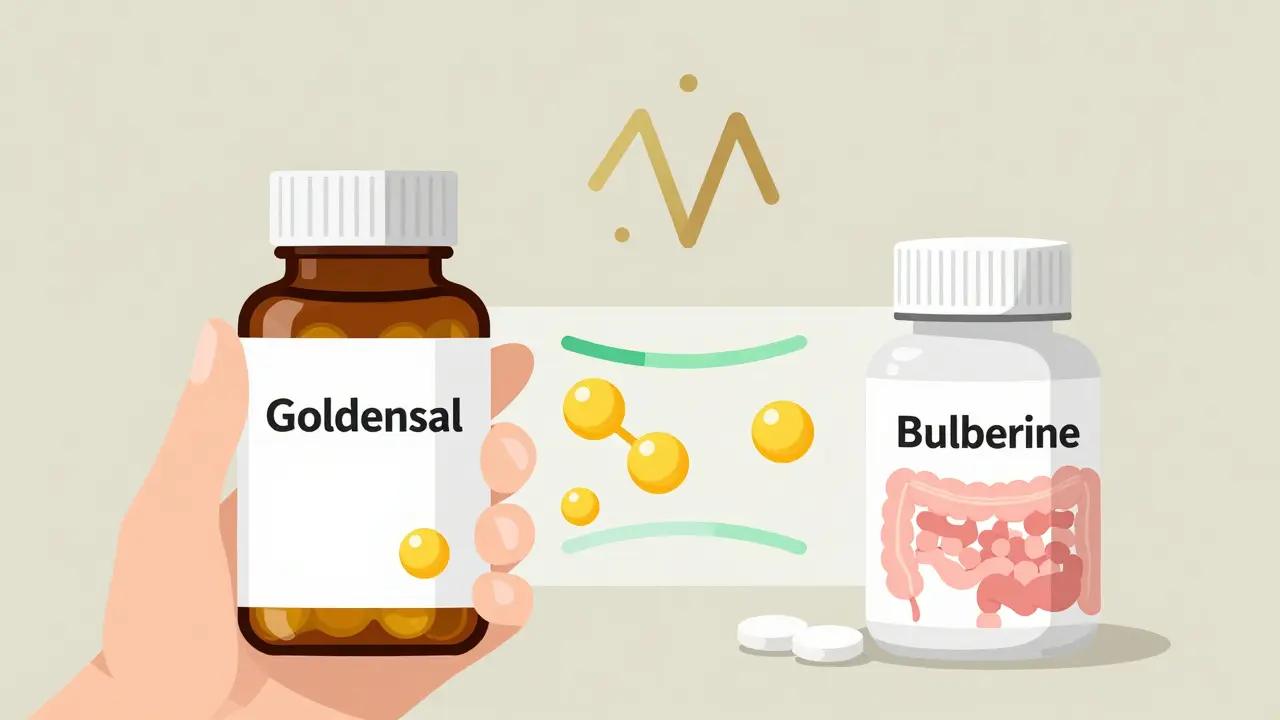
Many people with type 2 diabetes turn to herbal supplements like goldenseal hoping to improve their blood sugar control. But what they don’t realize is that mixing goldenseal with metformin - one of the most common diabetes medications - can actually make their condition harder to manage. This isn’t just a theoretical concern. Real studies show this combination can reduce how well metformin works, leading to unpredictable blood sugar levels - even when HbA1c numbers look okay on paper.
What’s in Goldenseal That Matters for Blood Sugar?
Goldenseal (Hydrastis canadensis) is a plant native to North America, often sold as a tea, capsule, or tincture. Its main active ingredient is berberine, a compound that has been studied for its ability to lower blood sugar. In fact, a 2023 meta-analysis of 27 clinical trials involving over 2,300 people found that berberine reduced fasting glucose, post-meal glucose, and HbA1c levels - sometimes as effectively as metformin itself.
That sounds promising, right? But here’s the catch: berberine doesn’t just act on its own. It interferes with how your body absorbs and uses other drugs, especially metformin. And since most people with type 2 diabetes rely on metformin to keep their blood sugar stable, this interference can be dangerous.
How Goldenseal Disrupts Metformin
Metformin doesn’t get absorbed like a typical pill. It travels through your gut using special transporters - specifically, a protein called organic cation transporter 1 (OCT1). Berberine in goldenseal competes for the same transporters. Think of it like two people trying to squeeze through a narrow doorway at the same time. One blocks the other.
A 2025 clinical trial published in Clinical and Translational Science tracked how goldenseal affected metformin levels in people with type 2 diabetes. The results were clear: when goldenseal was taken daily for six days, metformin absorption dropped by 20-25% in people taking lower doses (500-750 mg per day). That means less metformin reaches the bloodstream, making it less effective at lowering blood sugar.
Here’s the twist: at higher metformin doses (2,000-2,550 mg), the interaction disappeared. Why? Because the transporters became saturated - there was no more room for berberine to compete. So the effect isn’t the same for everyone. It depends on your dose.
The Dangerous Paradox: Lower Metformin, Same HbA1c
One of the most confusing parts of this interaction is what happened to HbA1c levels in the study. Even though metformin levels dropped, HbA1c went from 6.8% to 6.5% - an improvement. At first glance, that sounds like goldenseal helped. But that’s misleading.
Berberine itself lowers blood sugar. So while metformin was being blocked, berberine was stepping in to pick up the slack. That’s why HbA1c didn’t rise. But here’s the problem: you can’t count on that balance. If you stop taking goldenseal, your metformin levels will suddenly jump back up - but your berberine support will vanish. That can cause your blood sugar to spike.
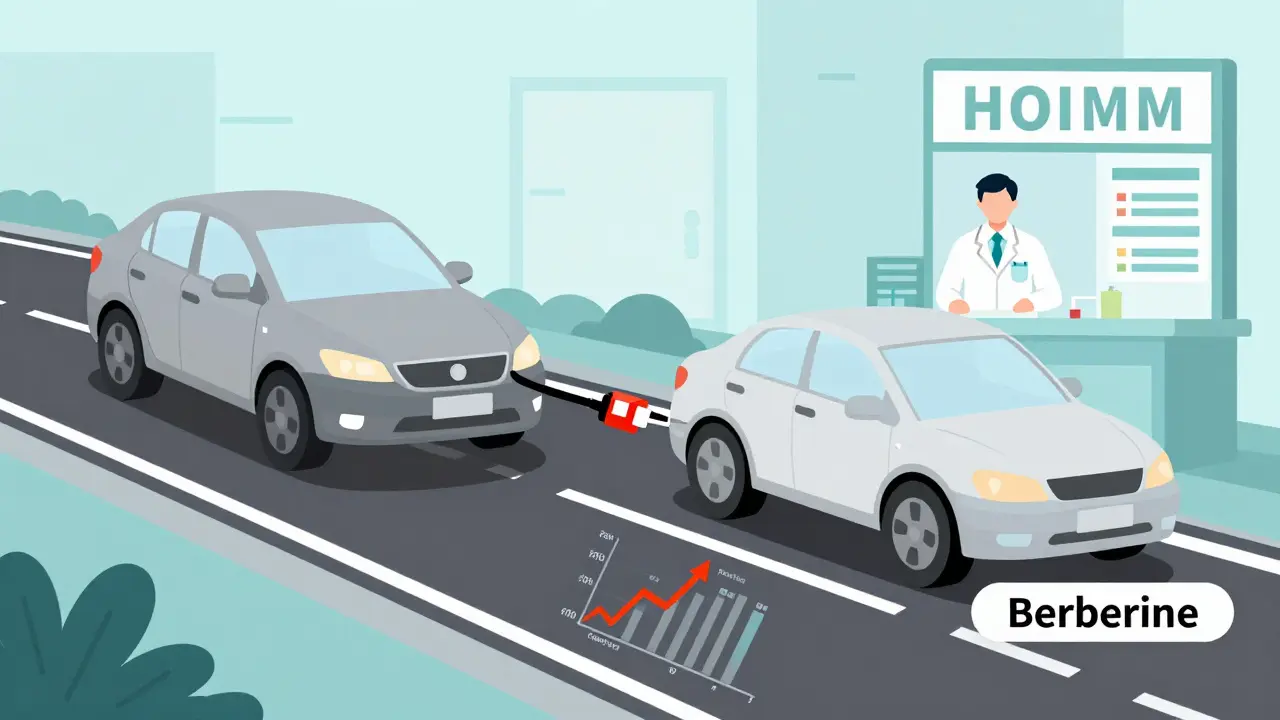
It’s like having two different brakes on your car. One is your factory brake (metformin). The other is an aftermarket mod (berberine). If you turn off the mod, you’re left with only the factory brake - and if it’s been weakened by the mod, you might not stop in time.
Why This Isn’t Just About Dose
Some people think, “I take a high dose of metformin, so I’m safe.” But that’s not the full story. First, not everyone can tolerate high doses. Many people stop at 1,000-1,500 mg because of stomach upset. That’s exactly the range where the interaction is still active - a 14% drop in metformin absorption.
Second, your kidney function matters. Metformin is cleared by your kidneys. If you’re older or have reduced kidney function, even small changes in absorption can tip you into dangerous territory. The 2025 study didn’t exclude older adults, and the results still showed variability - meaning the risk isn’t just theoretical for seniors.
Third, goldenseal isn’t standardized. One capsule might have 50 mg of berberine. Another might have 200 mg. You have no way of knowing how much you’re really taking. That makes it impossible to predict how much it will interfere with your metformin.
What the Experts Say
The MSD Manual Professional Edition (2024 update) warns: “Goldenseal may decrease the blood levels of metformin, potentially hindering glucose control.” But it also says berberine may increase hypoglycemic effects. That’s a double-edged sword - it can lower blood sugar too much or too little, depending on timing and dose.
The Merck Manual Consumer Version (2024) echoes this, adding that berberine’s glucose-lowering effects fade after 90 days - especially in people over 60. So even if you feel fine now, the benefit may not last.
The American Diabetes Association doesn’t list goldenseal specifically in its 2024 guidelines, but it does say: “Routine assessment of all medications and supplements is essential.” That means your doctor should be asking you about every herb, tea, or capsule you take - not just prescription drugs.
Real-World Consequences
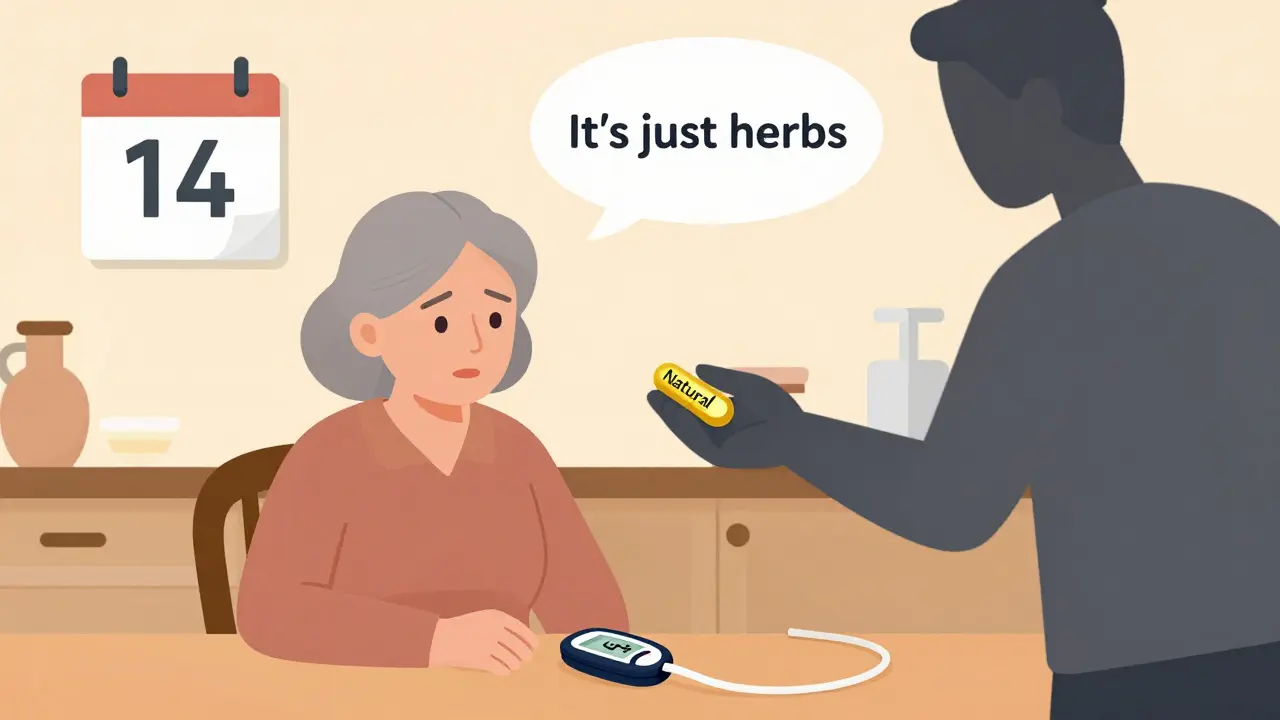
Imagine a 68-year-old woman with type 2 diabetes. She’s been on 1,000 mg of metformin daily for three years. Her blood sugar is steady. Then she starts taking goldenseal capsules because her friend said it “cleanses the liver” and helps with sugar cravings. After two weeks, she starts feeling more tired after meals. Her fasting glucose climbs from 110 to 145 mg/dL. Her doctor increases her metformin to 1,500 mg. Still no improvement. She’s frustrated. She thinks the medication isn’t working.
But the real issue? The goldenseal. She didn’t tell her doctor because she thought it was “just a natural supplement.”
This isn’t rare. About 35-40% of people with diabetes use herbal supplements, according to a 2022 study in Diabetes Care. Goldenseal is in the top 20 most used botanicals in the U.S. - even though it’s an endangered plant and its wild harvest is unsustainable.
What Should You Do?
If you’re on metformin and taking goldenseal:
- Stop immediately. Don’t wait for symptoms. The interaction is real and measurable.
- Tell your doctor. Even if you think it’s harmless. Write down the brand, dose, and how long you’ve been taking it.
- Get your blood sugar checked. Ask for a fasting glucose and HbA1c test. Don’t assume your home monitor tells the whole story.
- Don’t switch to berberine supplements. They’re not safer. They’re just purer - and they still interact the same way.
If you’re not taking goldenseal but considering it:
- Don’t. There’s no proven benefit that outweighs the risk.
- Ask your pharmacist. They can check for interactions with any supplement you’re thinking about.
- Use evidence-based alternatives. If you want to support blood sugar naturally, focus on diet, movement, sleep, and stress management. Those have proven results - without the risk.
The Bigger Picture
This isn’t just about goldenseal and metformin. It’s about how we think about “natural” and “safe.” Just because something comes from a plant doesn’t mean it’s harmless. Willow bark contains salicin - the original source of aspirin. But you wouldn’t chew on bark instead of taking a pill if you had a heart condition.
The same logic applies here. Herbal supplements aren’t regulated like drugs. They don’t have to prove safety or consistency. And when they interact with life-sustaining medications like metformin, the consequences can be serious - including hospitalization for hyperglycemia or diabetic ketoacidosis.
As research continues, we may one day have a safe, standardized berberine product that can be used alongside metformin. But we’re not there yet. Until then, the safest choice is clear: keep them separate.
Can I take goldenseal if I’m not on metformin?
Even if you’re not on metformin, goldenseal isn’t risk-free. It can interact with blood thinners, blood pressure meds, and liver-metabolized drugs. It’s also not safe during pregnancy, and long-term use may harm the liver. There’s no proven health benefit that justifies the risks.
How long does it take for goldenseal to affect metformin?
The interaction becomes measurable after about six days of daily goldenseal use, according to the 2025 clinical trial. But some people may notice changes in blood sugar levels sooner - especially if they’re on a lower dose of metformin. The effect builds up over time, not all at once.
Is berberine the same as goldenseal?
Berberine is the main active compound in goldenseal, but they’re not the same. Goldenseal contains other plant chemicals that may affect absorption and side effects. Berberine supplements are purified and contain much higher doses - sometimes 500 mg per capsule. Both can interfere with metformin, and both carry the same risks.
What should I do if I accidentally took goldenseal with metformin?
If you took them together once, don’t panic. A single dose is unlikely to cause immediate harm. But don’t repeat it. Monitor your blood sugar closely over the next few days. If your levels start rising or you feel unusually thirsty, fatigued, or confused, contact your doctor. Avoid combining them again.
Are there safer herbal options for blood sugar control?
There’s no herbal supplement proven to be both safe and effective as a replacement for metformin. Instead, focus on lifestyle changes: eating fewer refined carbs, walking after meals, getting enough sleep, and managing stress. These are backed by decades of research and have no drug interaction risks. If you want something herbal, cinnamon in small amounts (1-2 grams per day) has mild, safe effects - but it’s not a substitute for medication.
 Medications
anggit marga
December 31, 2025 AT 01:09So you're telling me natural doesn't mean safe? Wow mind blown like I just learned water can drown people
Joy Nickles
January 1, 2026 AT 21:15ok but like... i took goldenseal for 3 weeks last year and my sugar went from 150 to 110?? and my doc was like 'wow ur doing great'?? so is this study just trying to scare people?? i mean i'm still alive??
Emma Hooper
January 2, 2026 AT 04:22Let me paint you a picture: your body is a bustling city. Metformin is the subway system. Berberine? That’s the guy who shows up with a giant inflatable dinosaur and blocks the tunnel. The trains still run… but now they’re late, confused, and half the passengers miss their stops. And you? You’re the one stuck on the platform wondering why you’re late to work again. 🤦♀️
It’s not about ‘natural vs synthetic.’ It’s about your body’s chemistry being a delicate orchestra - and someone just dropped a tuba into the violin section.
And yes, HbA1c looked good? That’s because berberine was playing backup vocals while metformin was muted. But when you stop the herbal soloist? The whole song collapses.
Don’t confuse temporary harmony with long-term safety. You’re not ‘healing’ - you’re jury-rigging a bridge made of chewing gum.
And before you say ‘but my cousin’s yoga instructor swears by it’ - your cousin’s yoga instructor also thinks essential oils cure cancer. We’ve seen this movie. It ends in the ER.
There’s a reason pharmaceuticals have dosing guidelines and clinical trials. Herbs? They come in a bag labeled ‘magic dust.’ No expiration date. No batch number. No accountability.
And yes, I’m aware you think I’m overreacting. But I’ve seen diabetic ketoacidosis. It doesn’t come with a warning label. It comes with a ventilator.
Stop romanticizing plants. Respect your pancreas.
Marilyn Ferrera
January 3, 2026 AT 06:14This is why you talk to your pharmacist.
Robb Rice
January 4, 2026 AT 09:12Interesting how the interaction disappears at higher doses - makes me wonder if we're missing a bigger pattern in drug metabolism. Maybe the saturation effect isn't just about transporters but also about enzyme kinetics. Worth exploring further.
Harriet Hollingsworth
January 4, 2026 AT 22:39People are dying because they think ‘natural’ means ‘no consequences.’ This is why we can’t have nice things.
Deepika D
January 5, 2026 AT 18:46Hi everyone, I'm Deepika from India and I want to share something beautiful - in Ayurveda, we’ve used herbs like neem and fenugreek for centuries to support blood sugar, and they don’t interfere with metformin the way goldenseal does. I’ve seen so many elders in my village manage diabetes with diet, turmeric milk, and morning walks - no supplements needed. The key isn’t finding another herb to replace metformin - it’s returning to rhythm. Your body remembers balance. It’s not about adding more, it’s about removing the noise. Try eating your meals without screens. Walk after dinner. Sleep like your life depends on it - because it does. You don’t need a capsule to heal. You need stillness. And community. And a little patience. I’ve seen it work. You can too.
Bennett Ryynanen
January 7, 2026 AT 16:10Bro I took goldenseal for a week because my TikTok buddy said it ‘detoxed my liver’ and my sugar spiked so bad I passed out in the grocery store. My mom had to drag me to the hospital. I’m not joking. I’m 32. I don’t wanna be a statistic. Stop messing with your meds. Just stop.
Aaron Bales
January 8, 2026 AT 14:07Metformin absorption drop = real. Berberine = real. HbA1c misleads = real. Don’t gamble with your health.
Lawver Stanton
January 9, 2026 AT 23:08So let me get this straight - you’re telling me that a plant that’s going extinct because people are harvesting it like it’s candy… is somehow safer than a drug that’s been studied for 60 years? And we’re supposed to trust the guy selling it at the farmer’s market who says ‘it’s ancestral wisdom’? Bro. I’ve seen ancestral wisdom. It’s called ‘don’t eat the mushrooms if you don’t know what they are.’
And now we’ve got people on Reddit calling berberine ‘nature’s metformin’ like it’s some kind of spiritual upgrade. It’s not. It’s a biochemical landmine wrapped in a marketing brochure.
Also, goldenseal is endangered. You’re not healing your body. You’re killing a forest. And your doctor’s gonna have to clean up your diabetic emergency while you’re off meditating with your crystals.
Just stop.
Sara Stinnett
January 11, 2026 AT 17:41Oh great. Another ‘natural’ supplement that’s just a stealth drug with no FDA oversight. And people call this ‘holistic health’? No. This is reckless. This is the same logic that got us ephedra, aristolochic acid, and those ‘weight loss teas’ that caused liver failure. You don’t get to bypass science because you like the packaging.
And let’s be real - if berberine worked so well, why isn’t it a first-line drug? Because it’s not clean. It’s not predictable. It’s not safe. And you’re not a guinea pig.
Stop idolizing plants like they’re angels. They’re chemicals. And some of them will kill you quietly.
linda permata sari
January 13, 2026 AT 02:02From Jakarta - I’ve seen grandmas here chew neem leaves and drink bitter tea for sugar control. No pills. No panic. Just tradition, patience, and rice that’s not white. We don’t need American supplements to be healthy. We need to remember: food is medicine, not a supplement.
Brandon Boyd
January 14, 2026 AT 20:28You got this. If you’re on metformin, keep taking it. If you’re thinking about goldenseal - pause. Breathe. Talk to your doc. You’re not alone. Small steps > perfect plans.
Branden Temew
January 15, 2026 AT 21:52So… we’re supposed to trust the same people who sold us ‘detox tea’ and ‘quantum healing crystals’ to now be our medical advisors? Brilliant. Next they’ll be selling berberine as a ‘spiritual blood sugar cleanser.’ I’ll take my metformin, thanks.