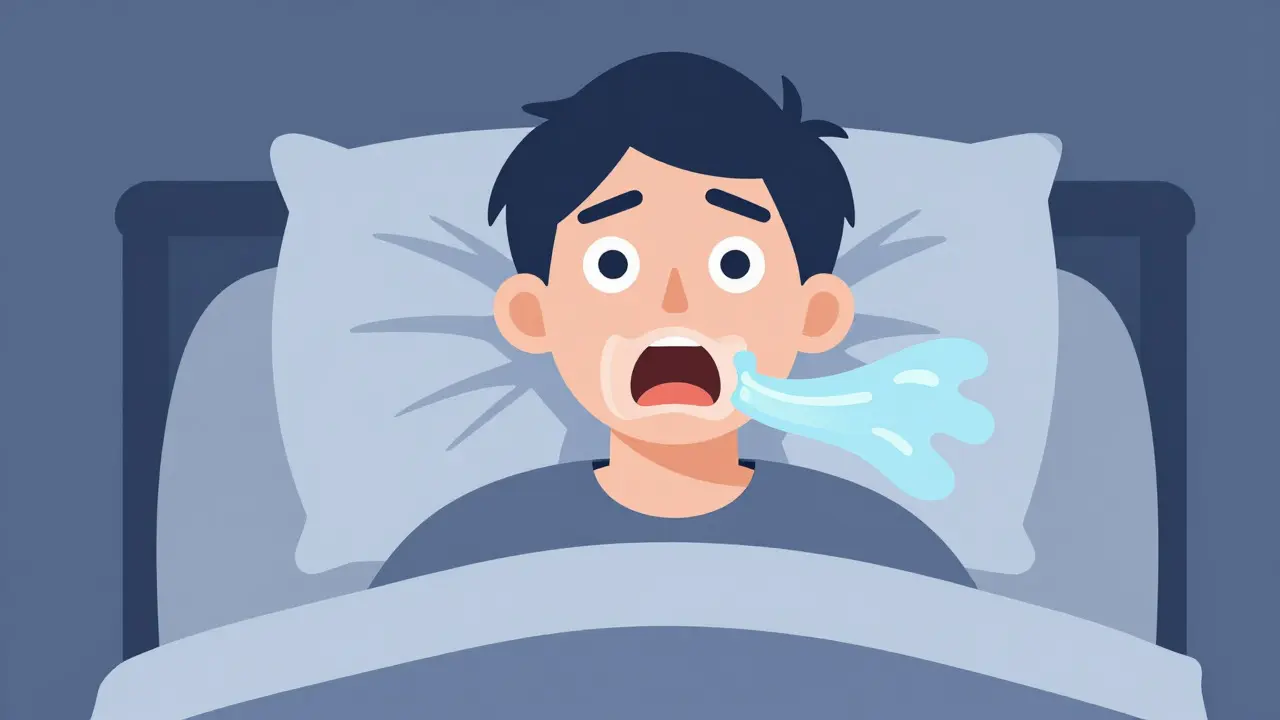
Imagine waking up gasping for air, your heart pounding, yet feeling more exhausted than when you went to bed. For millions of people living with Sleep Apnea, this is a nightly reality. While often associated with loud snoring, the condition can escalate into serious Respiratory Failure, where the body struggles to maintain adequate oxygen levels or clear carbon dioxide. The two primary tools in the fight against these issues are Continuous Positive Airway Pressure (CPAP) and supplemental oxygen therapy. But which one do you need? Or do you need both? Understanding the distinct roles of these treatments is critical for effective management.
Key Takeaways
- CPAP is the gold standard for treating Obstructive Sleep Apnea (OSA) by keeping airways open mechanically.
- Oxygen therapy fixes low blood oxygen but does not stop airway collapse in OSA.
- In acute respiratory failure, Non-Invasive Ventilation (NIV) like BiPAP is often preferred over standard CPAP.
- Adherence remains the biggest challenge; using devices for at least 4 hours a night is the clinical benchmark.
- Combining therapies may be necessary for patients with both severe hypoxemia and obstructive events.
Understanding the Mechanics: Why One Isn't Enough
To grasp why treatment varies, we have to look at what’s actually happening inside the body. Obstructive Sleep Apnea (OSA) is a chronic disorder where the upper airway repeatedly collapses during sleep, causing intermittent hypoxia. This collapse blocks airflow, leading to drops in blood oxygen and spikes in carbon dioxide. When this happens frequently enough, it can contribute to systemic strain, increasing the risk of cardiovascular disease and metabolic disorders.
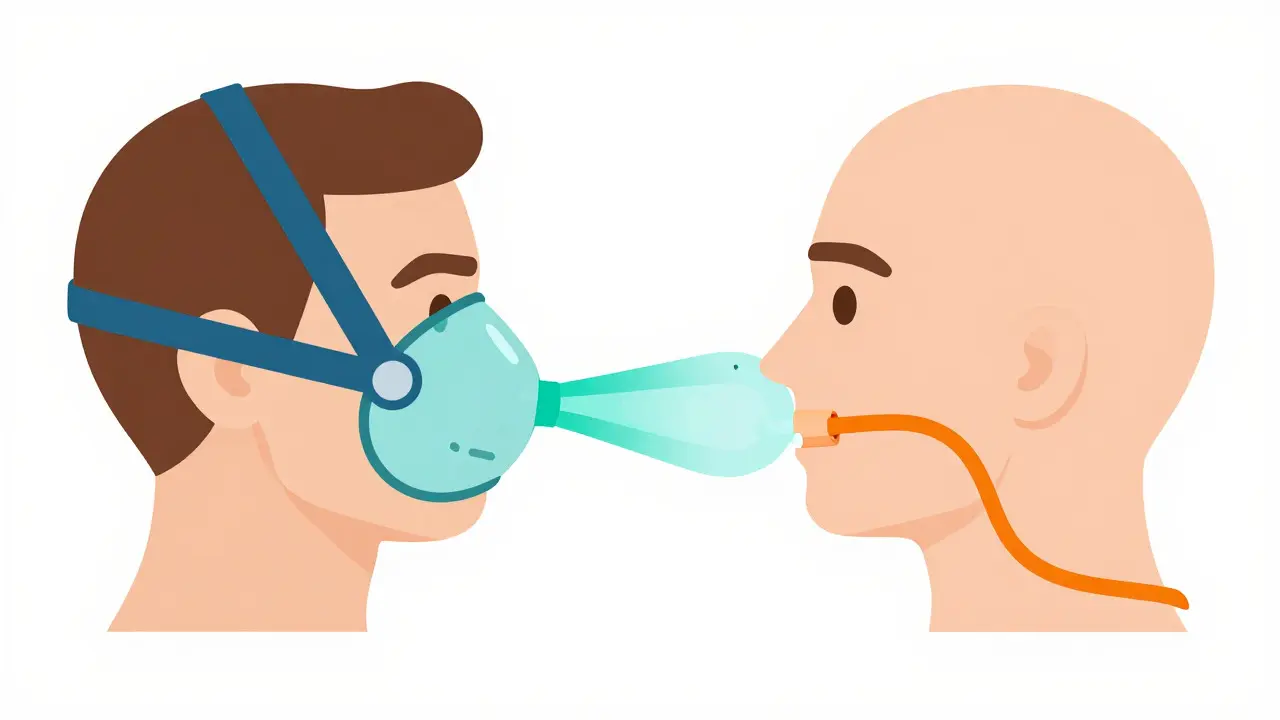
CPAP works like a pneumatic splint. It delivers continuous pressurized air through a mask, physically holding the throat open so you can breathe normally. Introduced in 1981, this technology revolutionized sleep medicine because it addresses the root cause of OSA: mechanical obstruction. In contrast, Oxygen Therapy simply increases the concentration of oxygen in the air you breathe. If your airway is blocked, extra oxygen doesn’t help much because it can’t reach your lungs effectively. Therefore, for pure OSA, CPAP is the first-line treatment recommended by major bodies like the American Academy of Sleep Medicine (AASM).
CPAP: The First-Line Defense
For most patients diagnosed with moderate-to-severe OSA, CPAP is the go-to solution. The device typically operates between 4 and 20 cm H2O of pressure. Modern systems offer various interfaces, including nasal masks, full-face masks, and nasal pillows. Data suggests that about 73% of patients prefer nasal masks due to comfort and ease of use.
The effectiveness of CPAP is well-documented. In compliant users, it reduces the Apnea-Hypopnea Index (AHI)-a measure of how many times you stop breathing per hour-from an average of 30-40 events down to fewer than 5. This significant reduction correlates with improved daytime alertness and lower systolic blood pressure, dropping by approximately 2.5 to 5.0 mmHg in many cases.
| Feature | CPAP Therapy | Oxygen Therapy |
|---|---|---|
| Primary Mechanism | Mechanical splinting of airway | Increases inspired oxygen fraction |
| Effective For | Obstructive Sleep Apnea (OSA) | Hypoxemia without obstruction |
| Impact on AHI | Reduces to <5 events/hour | No direct reduction in events |
| Typical Use Case | Chronic OSA management | COPD exacerbations, acute failure |
| Adherence Challenge | Mask discomfort, claustrophobia | Nasal irritation, dependency |
When CPAP Isn't Enough: The Role of Oxygen
So, when do we add oxygen? Usually, it’s not for simple OSA. If a patient has OSA combined with another condition that causes low oxygen-such as Chronic Obstructive Pulmonary Disease (COPD) or heart failure-they might need supplemental oxygen alongside CPAP. In these complex cases, the CPAP keeps the airway open, while the oxygen ensures that once air reaches the lungs, there’s enough of it to saturate the blood.
However, doctors are cautious. Adding oxygen to a patient with only OSA can sometimes worsen carbon dioxide retention if the underlying obstruction isn’t managed properly. Therefore, oxygen is generally reserved for patients who remain hypoxic despite adequate CPAP use, or those with concurrent lung diseases that impair gas exchange independent of airway patency.
Acute Respiratory Failure and NIV
Things get more urgent when sleep apnea contributes to acute respiratory failure. This is a medical emergency where the lungs fail to move enough air in or out to keep oxygen levels high and carbon dioxide levels low. In hypercapnic respiratory failure (high CO2), standard CPAP might not be sufficient because it provides constant pressure, making it hard for some patients to exhale fully.
This is where Non-Invasive Ventilation (NIV), specifically Bilevel PAP (BiPAP), comes in. BiPAP uses two pressures: a higher inspiratory pressure (IPAP) to help pull air in, and a lower expiratory pressure (EPAP) to make it easier to breathe out. Clinical guidelines suggest that if a patient doesn’t show improvement in pH and PaCO2 within 1-4 hours of starting NIV, they may need intubation. Studies indicate that successful NIV trials can reduce intubation rates by 20-30% in COPD exacerbations, highlighting its critical role in preventing invasive procedures.
Adherence: The Real Battle
The best technology in the world is useless if you don’t use it. Adherence is the single biggest hurdle in sleep medicine. The standard definition of good adherence is using the device for more than 4 hours per night on at least 70% of nights. Yet, real-world data shows variability, with adherence rates ranging from 17% to 85% depending on the population studied.
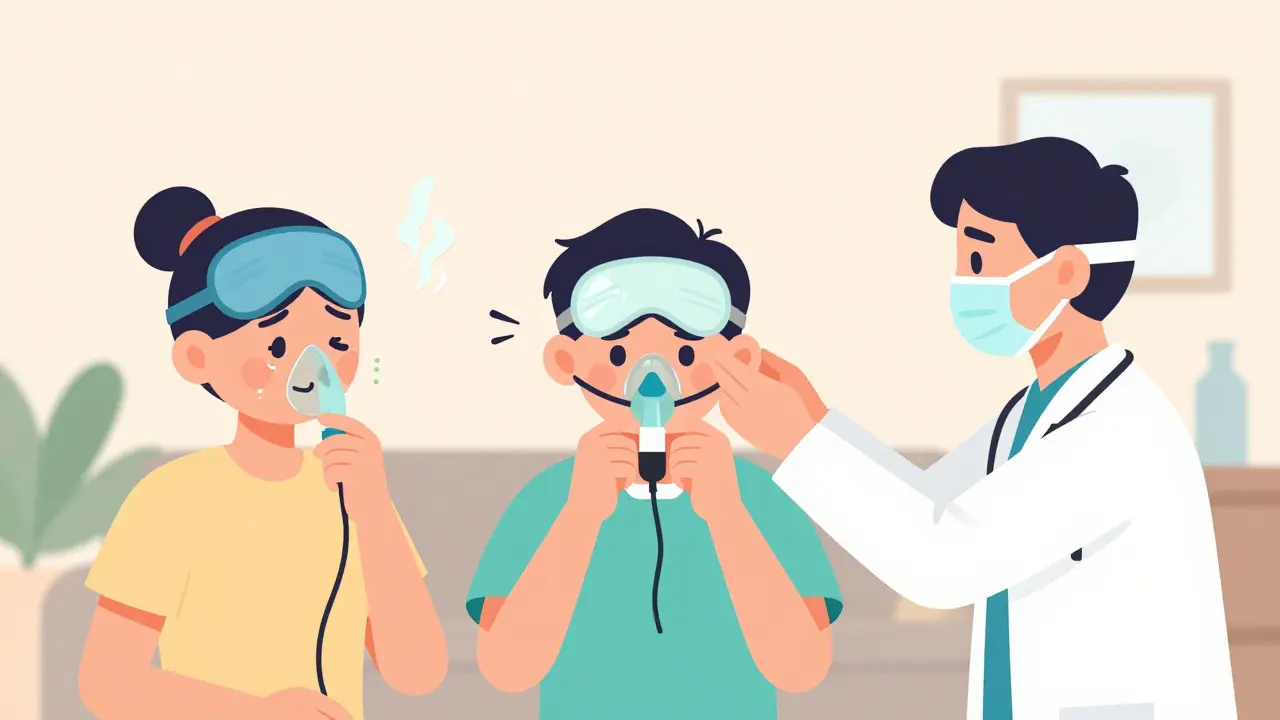
Why do people quit? Common complaints include mask leaks, skin irritation, and the feeling of claustrophobia. A survey of over 12,000 patients found that 42% cited mask discomfort as their primary reason for stopping treatment. To combat this, modern devices now feature heated humidification, which significantly improves comfort by reducing dry mouth and nasal congestion. Additionally, remote monitoring platforms allow doctors to track usage and adjust pressures remotely, improving long-term compliance. Patients who receive in-person setup support are far more likely to stick with the therapy, with 6-month adherence rates reaching 78% compared to 46% for those initiated via telemedicine alone.
Future Directions and Alternatives
The landscape of sleep medicine is evolving. For patients who cannot tolerate CPAP, new alternatives are emerging. The FDA recently approved the hypoglossal nerve stimulator, a surgical option that stimulates the tongue muscle to prevent airway collapse. Early trials show promising adherence rates, with 79% of patients still using the device after 12 months, compared to 46% for CPAP. While this is a major step forward, it is currently reserved for specific candidates who have failed CPAP therapy.
As we look toward 2026 and beyond, the focus is shifting toward personalized care. Guidelines are moving away from a one-size-fits-all "4-hour rule" toward individualized goals based on symptom response and cardiovascular risk. The integration of AI-driven pressure adjustments and better mask materials continues to refine the user experience, aiming to make these life-saving therapies less intrusive and more effective.
Frequently Asked Questions
Can I use oxygen instead of CPAP for sleep apnea?
Generally, no. Oxygen helps with low blood oxygen levels but does not keep the airway open. If you have Obstructive Sleep Apnea, the airway collapses regardless of how much oxygen you inhale. CPAP is required to mechanically hold the airway open. Oxygen is usually added only if you have another condition causing persistent low oxygen despite CPAP use.
What is the difference between CPAP and BiPAP?
CPAP delivers a single, constant pressure throughout the breathing cycle. BiPAP (Bilevel PAP) delivers two different pressures: a higher pressure when you breathe in and a lower pressure when you breathe out. BiPAP is often used for patients who find it difficult to exhale against the fixed pressure of CPAP or those with acute respiratory failure involving high carbon dioxide levels.
How long should I wear my CPAP machine each night?
The clinical standard for therapeutic benefit is wearing the device for at least 4 hours per night on more than 70% of nights. However, for optimal health outcomes, especially regarding cardiovascular risk, consistent use throughout the entire sleep period is ideal. Your doctor may set personalized goals based on your specific symptoms and health profile.
Does CPAP cure sleep apnea?
CPAP manages the symptoms and prevents complications but does not permanently cure the anatomical tendency for airway collapse. It is a chronic therapy, similar to glasses for vision correction or insulin for diabetes. Long-term consistency is key to maintaining benefits and preventing the return of daytime fatigue and cardiovascular strain.
What if I can't tolerate the CPAP mask?
Don't give up immediately. Mask intolerance is common but solvable. Try different mask styles (nasal pillows vs. full face), adjust the headgear fit, use heated humidification to reduce dryness, or consider desensitization techniques like wearing the mask while awake during the day. If all else fails, consult your specialist about alternative therapies like mandibular advancement devices or hypoglossal nerve stimulation.
 Medications