

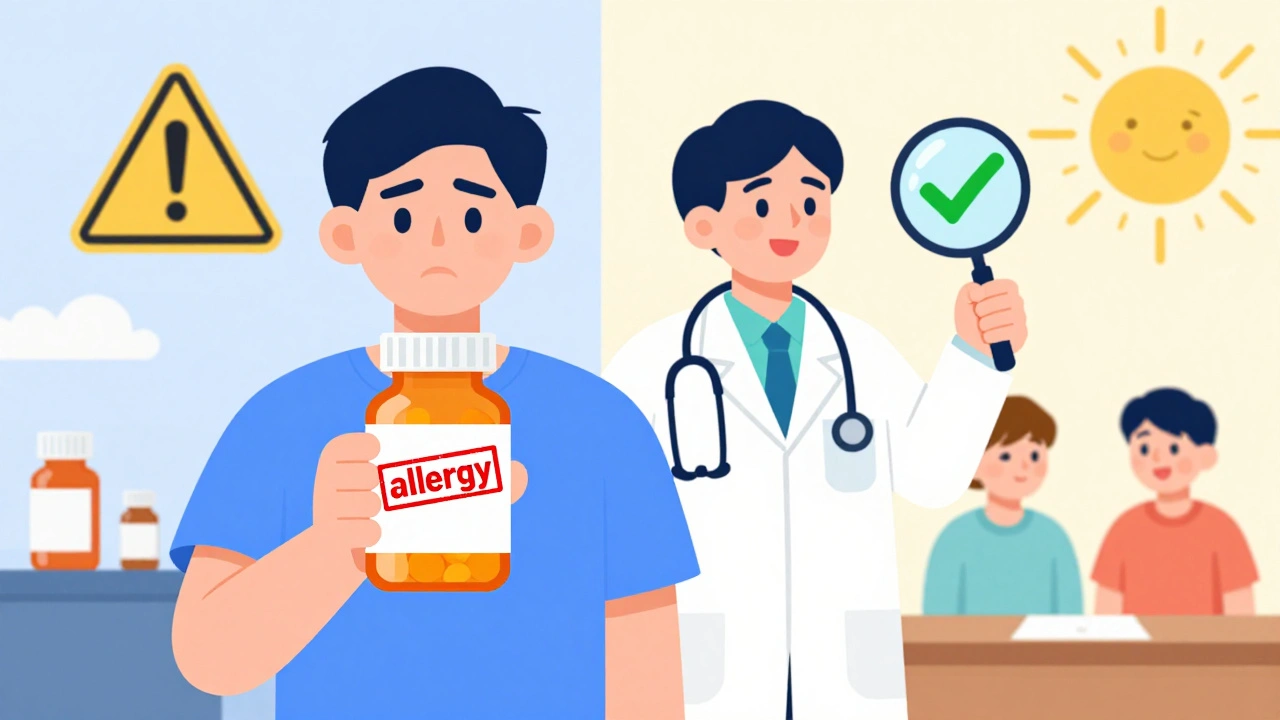
More than 1 in 10 people say they’re allergic to penicillin. But here’s the truth: most of them aren’t. A rash from childhood, a stomach ache after a pill, or a vague family history often gets labeled as an allergy - even when it’s not. And that mislabeling can cost you more than just a headache. It can mean getting weaker, more expensive, or riskier drugs just because the system thinks you’re allergic to something you might not be.
What’s a Real Drug Allergy?
A true medication allergy isn’t just a side effect. It’s your immune system reacting like you’re under attack. That means symptoms like hives, swelling of the face or throat, trouble breathing, or a sudden drop in blood pressure. These aren’t just unpleasant - they’re dangerous. Anaphylaxis, the most severe form, can kill if not treated fast. But here’s where things get messy. Most reactions people call allergies are actually side effects. Nausea? That’s not an allergy. Diarrhea? Not an allergy. A mild rash that fades in a few days? Often not an allergy either. Only about 10% of people who say they’re allergic to penicillin actually have a true IgE-mediated reaction. The rest? They’re misclassified. And that’s a big problem.Why Mislabeling Matters
If your chart says "penicillin allergy," doctors avoid it - even if it’s the best, cheapest, and safest option. Instead, they reach for broader-spectrum antibiotics like clindamycin, vancomycin, or fluoroquinolones. These drugs are more expensive. They’re harder on your gut. And they increase your risk of dangerous infections like C. diff - a type of diarrhea that can land you in the hospital for weeks. Studies show people with a mislabeled penicillin allergy are 69% more likely to get these broad-spectrum drugs. And that leads to 26% higher chances of C. diff infection. In the U.S. alone, this mistake adds $1.2 billion to healthcare costs every year. You’re not just getting a worse drug - you’re getting a riskier one.Penicillin Allergy: The Most Common Mislabel
Penicillin is the most common drug allergy people report. But it’s also the most often wrongly labeled. Here’s why:- Many childhood rashes from viruses get blamed on penicillin - even if you took it days before.
- People outgrow penicillin allergies. Up to 80% lose sensitivity after 10 years.
- Doctors used to assume cross-reactivity with cephalosporins was high. Now we know it’s under 5% for most third-generation ones like ceftriaxone.
How to Find Out If You’re Really Allergic
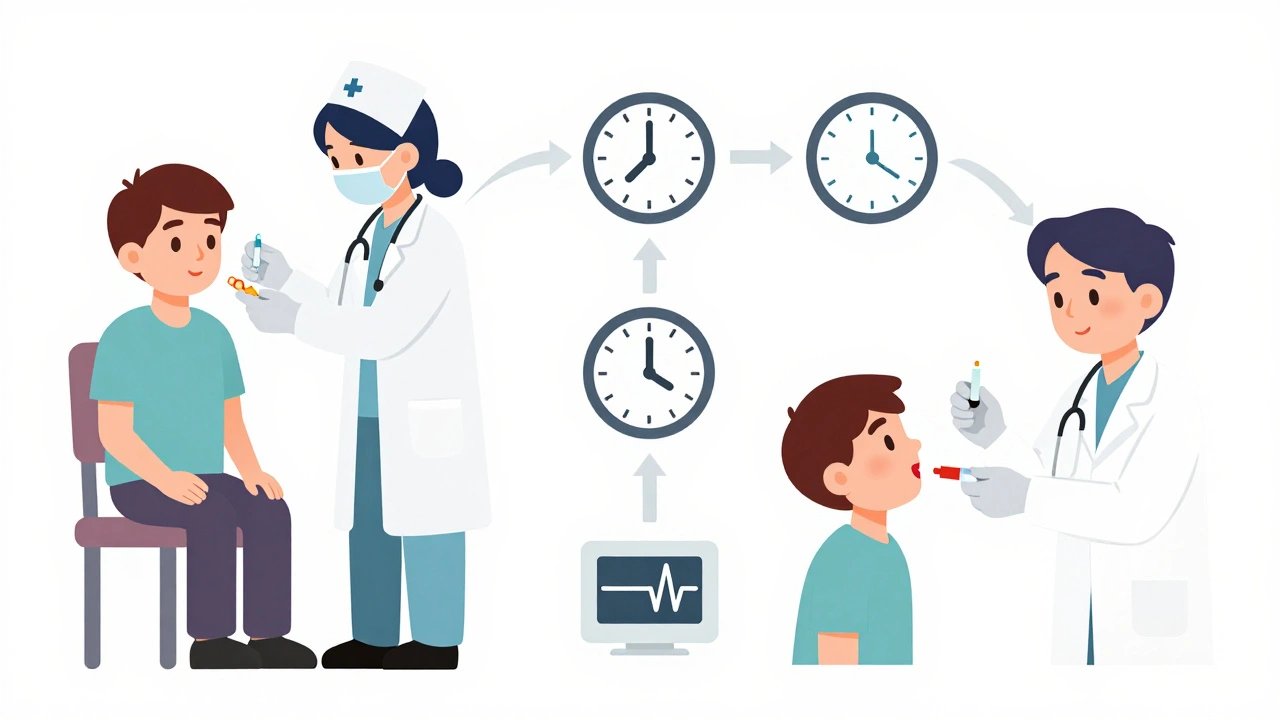
If you’ve been told you’re allergic to penicillin - or any drug - and you’ve never had a severe reaction, you should consider getting tested. It’s not complicated. Here’s how it works:- Skin testing: A small amount of penicillin (and its breakdown products) is placed under your skin with a tiny needle. If you’re allergic, you’ll get a raised bump within 15-20 minutes.
- Oral challenge: If skin testing is negative, you’ll be given a small dose of penicillin under medical supervision. You’ll be monitored for an hour or two. If nothing happens, you’re cleared.
What If You’re Truly Allergic?
If you’ve had anaphylaxis, swelling of the tongue, or trouble breathing after a drug - then yes, you’re allergic. And you need to avoid that drug and others like it. But even then, you’re not stuck with bad options. For penicillin-allergic patients who need antibiotics, here are the safest alternatives:- Macrolides: Azithromycin or clarithromycin. Good for respiratory infections. But they’re more expensive - around $25 for a 5-day course vs. $4 for penicillin.
- Tetracyclines: Doxycycline. Works well for skin, Lyme disease, and some STIs. Avoid if you’re pregnant or under 8.
- Fluoroquinolones: Levofloxacin or moxifloxacin. Powerful, but linked to tendon damage and nerve issues. Used only when needed.
How to Protect Yourself
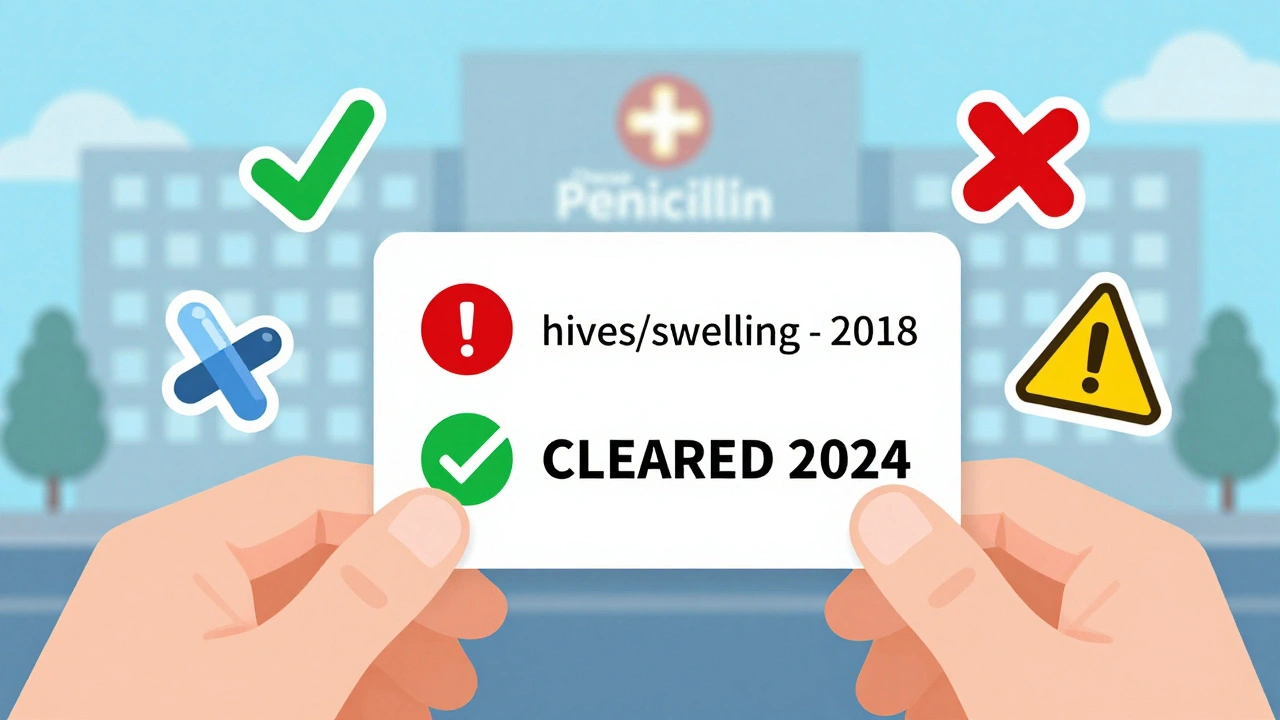
You can’t control every hospital system. But you can control what you carry with you:- Carry a wallet card: Write down the drug, the reaction, and the date. Example: "Penicillin - hives and swelling, 2018." Don’t just write "allergic to penicillin."
- Update your records: After testing, ask your allergist to send your results to your primary doctor and pharmacy. If you’re still getting flagged, bring printed copies to every appointment.
- Know the difference: A rash? Maybe not an allergy. Trouble breathing? That’s an emergency. Tell your provider exactly what happened - not what you think it means.
What’s Changing in 2025
The tide is turning. The CDC’s 2022 guidelines pushed for more outpatient testing. The American Academy of Allergy, Asthma & Immunology launched "Choose Penicillin" - a campaign to fix mislabeling. Twelve pilot hospitals cut unnecessary alternative antibiotics by 65% in just one year. By 2027, half of all penicillin allergy evaluations will happen in primary care - not just allergy clinics. Electronic health records are starting to require detailed reaction notes, not just "allergic to penicillin." And the best part? Hospitals that do this right save money. Studies show a 3.5:1 return on investment within 18 months - because patients get better faster, stay in the hospital less, and don’t get C. diff.When to See an Allergist
You don’t need to wait for a crisis. If you’ve ever had:- A rash after taking a new drug
- Swelling or trouble breathing after medication
- A family member with a drug allergy
- Been told you’re allergic but never tested
Final Thought: Your Health Isn’t a Label
A drug allergy isn’t something you’re born with. It’s something that happens - and sometimes, it goes away. Labels stick, but facts don’t. If you’ve been avoiding penicillin because of a childhood rash or a vague story, you might be missing out on the best treatment - and paying more for worse ones. Don’t let an outdated note in a chart decide your care. Ask for testing. Know your history. Speak up. You don’t have to live with a label that doesn’t fit.Can you outgrow a penicillin allergy?
Yes. Up to 80% of people who had a penicillin allergy in childhood lose their sensitivity after 10 years. Many adults who think they’re allergic have outgrown it without realizing. The only way to know for sure is through proper testing - skin tests and/or an oral challenge under medical supervision.
Is a rash always a sign of a drug allergy?
No. A mild, non-itchy rash that appears days after taking a drug - especially if you had a virus at the same time - is often not an allergy. True allergic rashes are usually itchy, raised, and appear within hours. Only about 10% of reported penicillin "allergies" are true IgE-mediated reactions. Most are side effects or coincidental.
Are cephalosporins safe if I’m allergic to penicillin?
For most people, yes. The risk of cross-reactivity between penicillin and third-generation cephalosporins like ceftriaxone is less than 5%. Older guidelines warned against it, but current evidence shows it’s safe for the vast majority. Skin testing can confirm safety if you’re unsure.
What should I do if I have a severe reaction to a drug?
Stop the drug immediately. Call emergency services if you have trouble breathing, swelling of the throat, dizziness, or a rapid drop in blood pressure. Epinephrine is the first-line treatment for anaphylaxis. Afterward, see an allergist to confirm the cause and get a plan to avoid it in the future. Never ignore a severe reaction - even if it was a one-time event.
Can I be desensitized to a drug I’m allergic to?
Yes, if it’s medically necessary. Desensitization involves slowly increasing doses of the drug under strict medical supervision. It’s commonly used for penicillin in pregnant women with syphilis or patients with serious infections where no alternatives exist. Success rates exceed 80%, but it must be done in a hospital or clinic equipped for emergencies.
Why do hospitals keep my old allergy info even after I’m cleared?
Electronic health records often don’t automatically update. Even after you’re tested and cleared, the old label may still appear unless you actively provide documentation. Always bring your test results to every appointment and ask your doctor to update your chart. If you’re turned away for treatment, show your proof - you have the right to safe, accurate care.
How do I know if an alternative antibiotic is right for me?
Ask your doctor: Is this the most targeted drug for my infection? Is there a cheaper, safer option? Why am I getting this instead of penicillin? Broad-spectrum antibiotics like clindamycin or fluoroquinolones aren’t always better - they’re often more expensive and carry higher risks of side effects and resistance. Make sure the choice is based on your condition, not just your allergy label.
 Medications


Ariel Nichole
December 12, 2025 AT 06:22Wow, this is such a needed post. I thought I was allergic to penicillin because I got a rash at 7, but turns out it was just a virus. Got tested at 28 and now I take amoxicillin like it’s candy. Saved me so much money and stress.
matthew dendle
December 13, 2025 AT 19:52so like… people are still dying because docs dont wanna type 3 letters? lol. penicillin allergy my ass. my grandma had a rash in 1952 and now the whole family is labeled. we’re all just walking antibiotic resistance timebombs. 🤦♂️
Jean Claude de La Ronde
December 13, 2025 AT 22:25It’s funny how we treat medical labels like ancient runes carved in stone. We’re so quick to believe a diagnosis from a kid’s rash, but if you say you saw a ghost, they hand you a therapist. The body isn’t a database-it’s a living, changing thing. And yet, we treat it like a spreadsheet that never updates.
Outgrowing an allergy isn’t magic. It’s biology. But the system? It’s stuck in 1987 with a typewriter and a prayer.
Mia Kingsley
December 14, 2025 AT 02:13Okay but what if you’re allergic to ALL the alternatives? Like I tried azithromycin and my throat swelled up like a balloon? So now I’m stuck with vancomycin which makes me feel like a zombie? And now my insurance says I’m ‘non-compliant’ because I won’t take the ‘cheap’ option? This whole system is rigged.
Aman deep
December 14, 2025 AT 21:08Man, this hit home. I’m from India, and here, antibiotics are sold over the counter like candy. People self-medicate, get a rash, and boom-‘penicillin allergy’ stamped on their file forever. No testing, no follow-up. I’ve seen friends avoid life-saving meds because of a 10-year-old rash. This post? It’s not just info-it’s a lifeline. Thank you for writing this. I’m sharing it with my whole family.
Also, if you’re reading this and you’ve been told you’re allergic-please, get tested. It’s not scary. It’s empowering. Your body deserves better than a label from a doctor who didn’t even ask what the rash looked like.
Sylvia Frenzel
December 16, 2025 AT 13:30Why are we even talking about this? In America, we don’t need penicillin. We have the best drugs in the world. If you can’t afford the alternatives, maybe you shouldn’t be sick. This is just another liberal health myth.
Regan Mears
December 16, 2025 AT 14:11I’m so glad someone finally broke this down clearly. I’m a nurse, and I’ve seen this happen over and over-patients getting clindamycin when they could’ve had penicillin. It’s not just about cost-it’s about safety. I’ve had patients come in with C. diff after being mislabeled. One woman was 72, had a mild rash at 12, and spent 10 years on broad-spectrum antibiotics. She got tested last year. Now she’s healthy, off IVs, and back to gardening. This isn’t theoretical-it’s real life. Please, if you’ve been told you’re allergic, get tested. It’s simple. It’s safe. And it’s your right.
Also, if your doctor says ‘we don’t do that here,’ ask for a referral. There are allergists everywhere. Even telehealth options now. Don’t let inertia keep you stuck.
Vivian Amadi
December 18, 2025 AT 02:08Ugh. This is why I hate medicine. Everyone’s so scared to say ‘I don’t know.’ If you’re not 100% sure, just don’t give the drug. Why risk it? My cousin died from anaphylaxis. You think I’m gonna risk my life on some ‘80% outgrew it’ statistic? No thanks. I’ll take the zombie drug.