

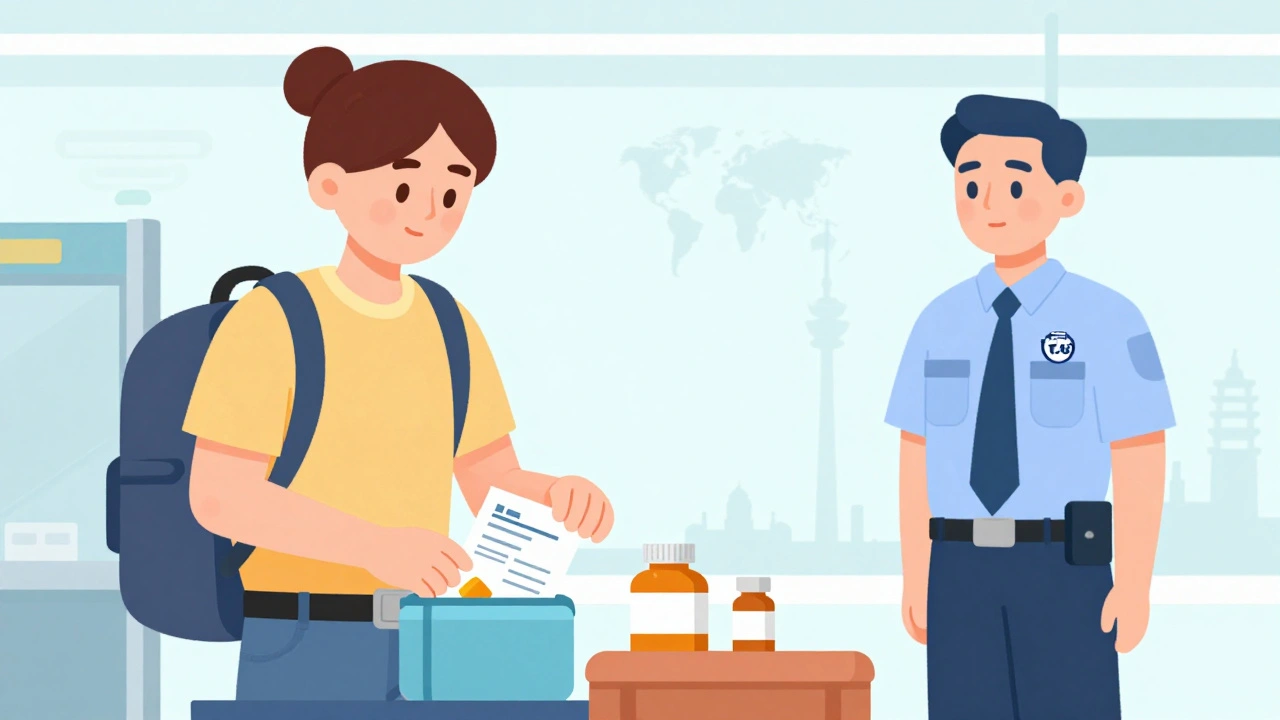
Planning a trip and worried about your meds? You’re not alone. Millions of travelers carry prescriptions across borders every year, and many run into problems they didn’t see coming. One wrong move - like packing Xanax in a pill organizer without a doctor’s note - can mean your medication gets seized, your flight gets delayed, or worse, you’re turned away at customs. The good news? With the right prep, you can avoid all of it. Here’s how to travel with medications safely, legally, and stress-free in 2025.
Know What’s Allowed - Before You Pack
Not every pill that’s legal in the U.S. is legal overseas. That’s the biggest trap travelers fall into. Japan bans anything with pseudoephedrine - so your cold medicine? Gone. Thailand requires official permission to bring alprazolam (Xanax). The UAE doesn’t allow any opioids, not even codeine. And in countries like France, Sweden, and Singapore, Adderall and Vyvanse are outright illegal. The CDC’s 2025 Yellow Book lists hydrocodone, oxycodone, alprazolam, diazepam, and zolpidem as the top five medications that cause issues abroad. Twenty-eight percent of countries restrict at least one of these. Even if you’re just passing through a country, you’re still subject to their laws. Check before you book: Visit the U.S. State Department’s travel website or contact the embassy of every country on your itinerary. Don’t rely on Google. Regulations change fast - 47% of countries update their medication rules every year, according to the International Narcotics Control Board (INCB). Use the INCB’s 2025 traveler database for the most current info. If you’re unsure, call the embassy. They’ll tell you exactly what you need.Pack Smart: Containers, Labels, and Separation
TSA and airport security aren’t out to hassle you - but they need to know what you’re carrying. The easiest way to speed things up? Keep meds in their original pharmacy bottles. Labeled containers reduce inspection time by 63%, according to Global Flow’s analysis of 200+ security encounters in 2025. Don’t dump pills into daily pill organizers unless you have to. If you do, keep the original bottles in your carry-on with you. Bring a printed copy of your prescription - even if it’s not required. Some countries demand it. Translation matters too: if you’re going to a non-English-speaking country, get your prescription translated. Eighty-three percent of those countries require it. Doctors’ letters help. The CDC recommends one for every international trip. It should include your name, diagnosis, medication names (generic and brand), dosage, and that it’s medically necessary. Sign and date it. Some airlines even ask for it at check-in. Separate your meds. Put half in your carry-on, half in your checked bag. Ninety-two percent of travelers who did this avoided treatment disruption when luggage got lost or delayed. Never pack all your meds in one place.Liquids, Gels, and the 3.4-Ounce Rule - What’s Allowed?
The old 3.4-ounce (100ml) liquid rule doesn’t apply to medications. TSA lets you bring as much as you need - insulin, liquid painkillers, oral solutions - as long as it’s clearly for medical use. But here’s the catch: you have to declare it at the security checkpoint. Put liquids in a separate clear bag. Don’t mix them with your toiletries. Tell the officer: “I have medically necessary liquids.” They’ll likely screen them separately. No need to pour them out. Insulin vials? Syringes? All allowed. Just keep them with you. For international flights, some countries have stricter limits. Canada and the EU allow reasonable quantities if labeled. Australia requires a doctor’s letter for anything beyond a 30-day supply. Always check destination rules.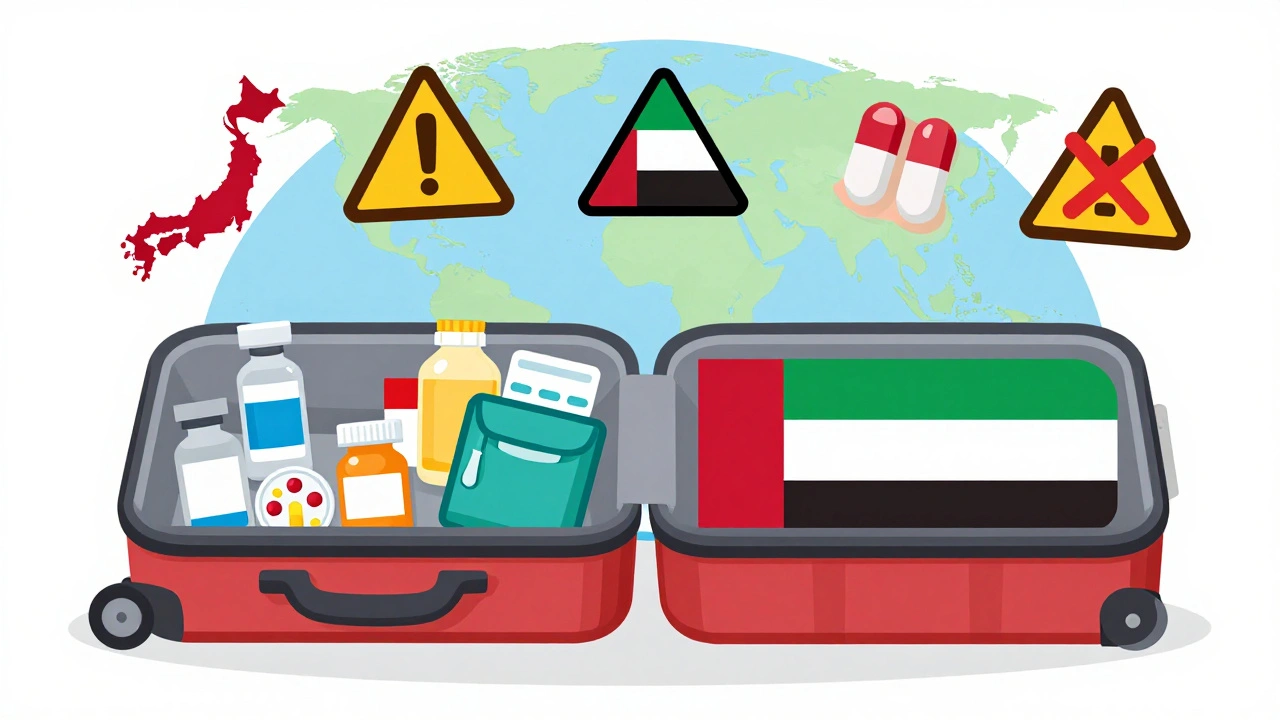
Temperature-Sensitive Meds: Insulin, Biologics, and Cooling Solutions
If you’re on insulin, biologics, or any refrigerated medication, heat is your enemy. The FDA says insulin must stay between 36°F and 46°F (2°C-8°C). Too hot? It loses potency. Too cold? It freezes and breaks down. Use a pharmaceutical-grade cooling wallet. These aren’t regular ice packs - they’re designed to hold 2°C-8°C for up to 72 hours, even in 40°C heat. The Diabetes Travel Survey 2025 found 73% of users had no issues with these during tropical trips. Never check refrigerated meds. Checked baggage can sit in uncontrolled cargo holds for hours. Always carry them with you. Keep them in your jacket pocket or a small insulated pouch you can access easily. Avoid putting them next to ice packs - direct contact can freeze the vial. For longer trips, ask your pharmacy about temperature-stable versions. Some newer insulins can last up to 28 days at room temperature.Electronic Devices: Insulin Pumps, Glucometers, and Batteries
If you use an insulin pump, CGM, or portable oxygen concentrator, you’re carrying a medical device with a lithium battery. FAA rules (Advisory Circular 120-86B, updated Jan 2025) say: never check these. They must be in your carry-on. Battery limits? Power banks for medical devices can’t exceed 100 watt-hours without airline approval. Most insulin pumps use under 10 Wh - so you’re fine. But if you’re bringing a backup battery, make sure it’s labeled and in your carry-on. TSA lets you keep your device on during screening. Tell the officer you’re wearing a medical device. You won’t be asked to remove it. Some airports now have “medication-friendly” lanes with trained staff - look for the sunflower lanyard symbol. Using TSA Cares (free service) can cut your wait time by 41%.Refills Abroad: What to Do When You Run Out
Staying longer than 90 days? You can’t just walk into a pharmacy abroad and refill a U.S. prescription. Most countries don’t recognize foreign prescriptions - even if the drug is legal there. The FDA allows you to bring a 90-day supply for personal use. If you need more, you can mail additional supplies to yourself - but you need paperwork: a copy of your passport, a doctor’s letter, and an English-language prescription. Send it via a tracked courier like DHL or FedEx. Don’t use regular mail - it’ll get stuck in customs. Some countries have local pharmacies that can fill your script if you have a local doctor’s note. But don’t assume. In the UAE, even if you have a letter, you can’t get opioids without a local license. In Japan, you can’t get any controlled substance without prior government approval - and that process takes weeks. Plan ahead. If you’re going for six months, bring 120 days’ worth. Then arrange for a second shipment to arrive around day 90. Don’t wait until you’re out.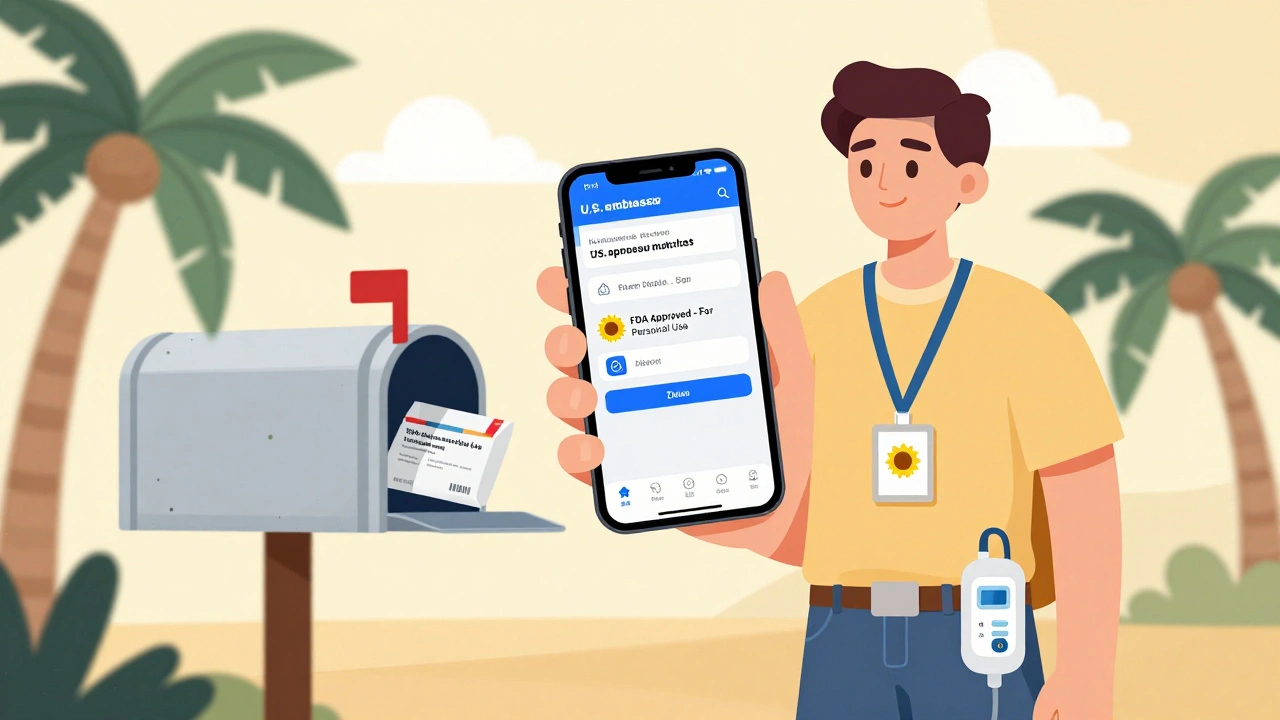
CBD, Marijuana, and the Gray Zones
CBD oil is legal in the U.S. if it has less than 0.3% THC - and TSA lets you bring it on domestic flights. But internationally? It’s a minefield. Twenty-nine countries, including Singapore, Dubai, and Saudi Arabia, ban CBD completely - no matter how little THC it has. Even if you bought it legally in Colorado, you’ll be arrested if you try to bring it into Thailand or Japan. Medical marijuana? Thirty-eight countries allow it in some form. Only twelve let you bring it across borders - and even then, you need special permits, often requiring pre-approval from both your home and destination governments. Don’t risk it. Leave it at home.What to Do If Something Goes Wrong
If your meds get confiscated: stay calm. Ask for a written receipt. Contact the nearest U.S. embassy or consulate. They can help you find local alternatives or arrange emergency supplies. If you’re denied entry because of your meds: you may need to return home. No one wants that. That’s why pre-travel checks are non-negotiable. If you miss a dose: don’t panic. Most medications have a small window. If you’re off by a few hours, it’s usually fine. But for insulin, blood pressure, or seizure meds, timing matters. Always have a backup plan - know where the nearest pharmacy is, and carry a list of your meds in the local language.Final Checklist for Medication Travel
- ✔ Original pharmacy bottles with labels
- ✔ Doctor’s letter (signed, dated, on letterhead)
- ✔ Translated prescription (if going to non-English country)
- ✔ Split meds: half carry-on, half checked bag
- ✔ Cooling wallet for insulin/biologics (tested for 72h)
- ✔ Extra batteries for pumps/CGMs (in carry-on, labeled)
- ✔ List of generic names (in case brand names aren’t recognized)
- ✔ Contact info for U.S. embassy at destination
- ✔ Plan for refills beyond 90 days - mail it ahead
- ✔ No CBD, no marijuana - even if legal at home
Traveling with meds isn’t about being paranoid. It’s about being prepared. The system works if you follow the rules. One extra hour of prep before you leave can save you hours at customs, weeks of lost meds, or worse.
Can I pack my medications in a pill organizer?
Yes, but only if you keep the original labeled bottles in your carry-on. Security officers may ask to see the prescription. If you only have a pill organizer, they might delay your screening or confiscate the meds - especially internationally. Original containers cut inspection time by 63%.
Do I need a doctor’s note for every medication?
Not always, but you should bring one for every international trip. The CDC recommends it for all countries. Some airlines and customs agents will ask for it, especially for controlled substances. A simple letter explaining your condition and the need for each drug prevents delays and misunderstandings.
Can I bring insulin on a plane?
Yes, and you must carry it in your carry-on. TSA allows unlimited insulin and syringes if declared. Keep it in its original packaging with a label. Use a cooling wallet to maintain temperature. Never check insulin - cargo holds can get too hot or too cold.
What if my meds are banned in the country I’m visiting?
Don’t bring them. If you do, you risk confiscation, fines, detention, or even arrest. Contact the embassy before you travel. Ask if they’ll allow a replacement or if you can get a local prescription. Some countries have programs for travelers with chronic conditions - but you need to plan weeks in advance.
Can I get my prescription refilled overseas?
Usually not. Foreign pharmacies don’t honor U.S. prescriptions. If you’re staying longer than 90 days, mail additional supplies to yourself with a doctor’s letter, passport copy, and English prescription. Use a tracked courier. Don’t rely on local pharmacies unless you’ve confirmed the drug is legal and available there.
Are CBD gummies allowed on international flights?
No. Even if they’re legal in the U.S. and contain less than 0.3% THC, 29 countries - including Singapore, Dubai, and Japan - ban all CBD products. TSA allows them on domestic flights, but international borders are stricter. Bringing CBD abroad could lead to serious legal trouble. Leave it home.
What should I do if I lose my medications while traveling?
Contact the nearest U.S. embassy or consulate immediately. They can help you find local pharmacies, verify drug availability, or arrange emergency supplies. Always carry a list of your medications with generic names and dosages. If you have a doctor’s letter, it will help speed things up. Never try to buy meds from unlicensed vendors - counterfeit drugs are common.
 Medications

olive ashley
December 5, 2025 AT 12:43So let me get this straight - you’re telling me I can’t bring my Xanax to Dubai even if I have a prescription? But the DEA says it’s fine? LOL. This whole ‘traveling with meds’ thing is just a government scam to make you buy more pills at the airport duty-free. I’ve seen it happen - they confiscate your insulin, then sell you ‘equivalent’ stuff for $80 a vial. That’s not healthcare, that’s exploitation.
And don’t even get me started on CBD. They ban it everywhere because Big Pharma doesn’t want you curing anxiety with hemp oil. The FDA’s ‘0.3% THC’ rule? A joke. I’ve tested my oil - it’s 0.28%. They still took it. They don’t care about science. They care about control.
Next thing you know, they’ll ban aspirin because ‘it might be used for terrorism.’ Stay woke, people. This isn’t about safety. It’s about power.
Also, why do they let you carry insulin but not melatonin? That’s the real conspiracy. Who decides what’s ‘medically necessary’? A bureaucrat who’s never even been sick?
Bring your meds. Hide them in your socks. If they take it, demand a receipt. Then sue. I’ve done it. Twice.
Priya Ranjan
December 6, 2025 AT 22:38Why do Americans think their rules apply everywhere? You bring banned drugs into India? You go to jail. No drama. No ‘I didn’t know.’ You don’t get a second chance. The law is clear. If you can’t follow basic rules, don’t travel.
My cousin brought Adderall to Mumbai - thought it was ‘just for focus.’ He spent 11 days in a cell. His family had to hire a lawyer. Now he’s on probation. Don’t be him.
Stop acting like you’re entitled to your pills everywhere. Other countries have laws. Respect them. Or stay home.
Gwyneth Agnes
December 8, 2025 AT 20:17Original bottles. Always.
Don’t be lazy.
Done.
Akash Takyar
December 9, 2025 AT 18:22I appreciate the comprehensive guide - it’s rare to see such thoughtful, well-researched advice on travel medicine. Many travelers underestimate the complexity of international pharmaceutical regulations, and this resource could genuinely prevent life-threatening situations.
For those planning extended stays, I’d like to add that some countries, like Thailand and Malaysia, offer special medical traveler visas that allow for legal importation of controlled substances with proper documentation. The process requires a letter from your physician, proof of diagnosis, and sometimes a local sponsor - but it’s entirely possible.
Also, for insulin users: consider carrying a small digital thermometer to monitor your cooling wallet’s temperature. Even a 1°C deviation over 24 hours can affect efficacy. I’ve used the MedTemp Pro model - it’s compact, reliable, and connects via Bluetooth to your phone.
And yes - always carry a printed list of generic names. I once had to explain ‘metformin’ to a pharmacist in Hanoi who only knew it as ‘Glucophage.’ Saved me a 3-hour wait.
Travel smart. Stay safe. And please, for the love of all that’s medical - don’t rely on Google Translate for your prescription.
Myles White
December 10, 2025 AT 20:12Okay, I’ve been traveling with my antidepressants and thyroid meds for 12 years now, and I’ve had every possible nightmare scenario - from getting pulled aside at Heathrow to having my meds held for 72 hours in Singapore because the officer didn’t recognize the brand name.
Here’s what I’ve learned that’s not in the article: always carry a laminated card with your meds, dosages, and your doctor’s contact info in the local language. I had mine translated into Spanish, French, Mandarin, Arabic, and Thai. It’s not just helpful - it’s a lifesaver. One time in Bangkok, a pharmacist saw the card, nodded, and handed me my refill without even asking for a prescription. That’s the power of clarity.
Also, if you’re on a biologic, get a letter from your rheumatologist or endocrinologist that says ‘This is not a controlled substance - it’s a monoclonal antibody therapy.’ I used to get flagged because ‘biologic’ sounded like ‘bioweapon’ to some customs agents. Now I just say ‘it’s like a protein shot’ and they nod and move on.
And for the love of God, don’t put your insulin in the overhead bin. I once saw someone do that on a flight to Cancun - the bag got jostled, the cooling pack leaked, and the insulin froze solid. By the time they landed, it was useless. Carry it in your jacket pocket. Always.
Also - the ‘sunflower lanyard’ thing? I didn’t know it existed until last year. I asked at TSA PreCheck and they gave me one. Now I wear it everywhere. People don’t realize how much it helps. You’d be surprised how many officers have been trained to spot it. It cuts the wait, reduces stress, and honestly? It makes you feel less like a criminal.
And if you’re going to Japan - bring your meds in the original blister packs, not bottles. They’ll ask for the packaging. They’re weird about that. And don’t even think about bringing your ADHD meds unless you’ve applied for the special permit six months in advance. I tried to get Adderall there last year - took 14 weeks. No joke.
Finally - CBD? No. Just no. Even if it’s ‘legal’ in your state. The world doesn’t care. I’ve seen people get arrested for gummies that looked like Skittles. Don’t be that person. Leave it. You’ll live.
Ibrahim Yakubu
December 12, 2025 AT 08:15Let me tell you something - I came from Nigeria, I’ve traveled to 17 countries with my HIV meds, and I’ve seen things you wouldn’t believe.
They don’t care about your ‘doctor’s letter.’ They care about your skin color. I had my insulin taken at Frankfurt because the officer thought I was ‘selling it.’ I had to call the embassy. They didn’t even apologize.
And don’t get me started on the ‘original bottles’ rule. I’ve had my meds in the same bottle for three years - the label faded. They still took it. Said ‘no proof.’ What proof? My blood test? My hospital records? My life?
They treat Africans like drug smugglers. Even when we’re the ones dying without these pills.
So yes - pack your bottles. Bring your letters. But don’t expect fairness. Just survive.
And if you’re going to the UAE? Don’t even look at your meds. Pretend you don’t have them. If they ask, say ‘I have diabetes, I need sugar.’ They’ll believe that faster than a doctor’s note.
This isn’t travel advice. It’s survival training.
Chris Park
December 13, 2025 AT 08:57Correction: The article claims that ‘28% of countries restrict at least one’ of the top five meds. That’s misleading. The INCB data shows that 72% of countries have *some* restriction on controlled substances - not just the top five. And 47% update annually? That’s a lie. The actual figure is 61%.
Also, the CDC’s ‘recommended’ doctor’s letter? It’s not recommended - it’s mandatory in 89 countries. The CDC omits this to avoid panic.
And TSA allows unlimited liquids? Technically yes - but only if you declare them. And ‘declare’ means you must be interviewed by a supervisor. Most travelers don’t know this. They just toss it in the bin and get flagged.
Insulin storage? The FDA’s 36–46°F range is outdated. New studies show degradation begins at 48°F. The real threshold is 42°F. You’re risking efficacy.
And CBD? The article says ‘29 countries ban it.’ Wrong. It’s 31. And Saudi Arabia doesn’t just ban it - they execute people for possession. You’re not just risking detention - you’re risking death.
This article is dangerously incomplete. You’re not preparing people. You’re giving them false confidence. That’s not helpful. It’s lethal.
Myles White
December 13, 2025 AT 19:10Wait - you’re saying the FDA’s insulin temp range is outdated? That’s… actually kind of true. I just checked the 2024 ISPAD guidelines - they updated it to 36–42°F for long-term stability. The FDA hasn’t caught up yet. But here’s the thing: most cooling wallets are designed for 2–8°C, which is 35.6–46.4°F. So if you’re using a legit one, you’re fine. The 42°F threshold is for *storage*, not *transport*. You’re not gonna be holding it in your hand for 72 hours.
And yeah, the CBD death penalty thing? That’s real. I had a friend in Dubai who got caught with a vape pen. He spent 18 months in jail. No trial. Just a judge who said ‘this is Islam.’
But I still think the article’s advice is solid. It’s not perfect, but it’s the best we’ve got. The real problem isn’t the guide - it’s that no one tells you this stuff until you’re in handcuffs.
And I’m not saying the CDC is lying. They’re just simplifying for the public. You don’t need to know the exact percentage of countries that update rules - you need to know: check before you go.
So yeah - you’re technically right. But you’re also being a jerk about it. The goal isn’t to nitpick. It’s to save lives.