

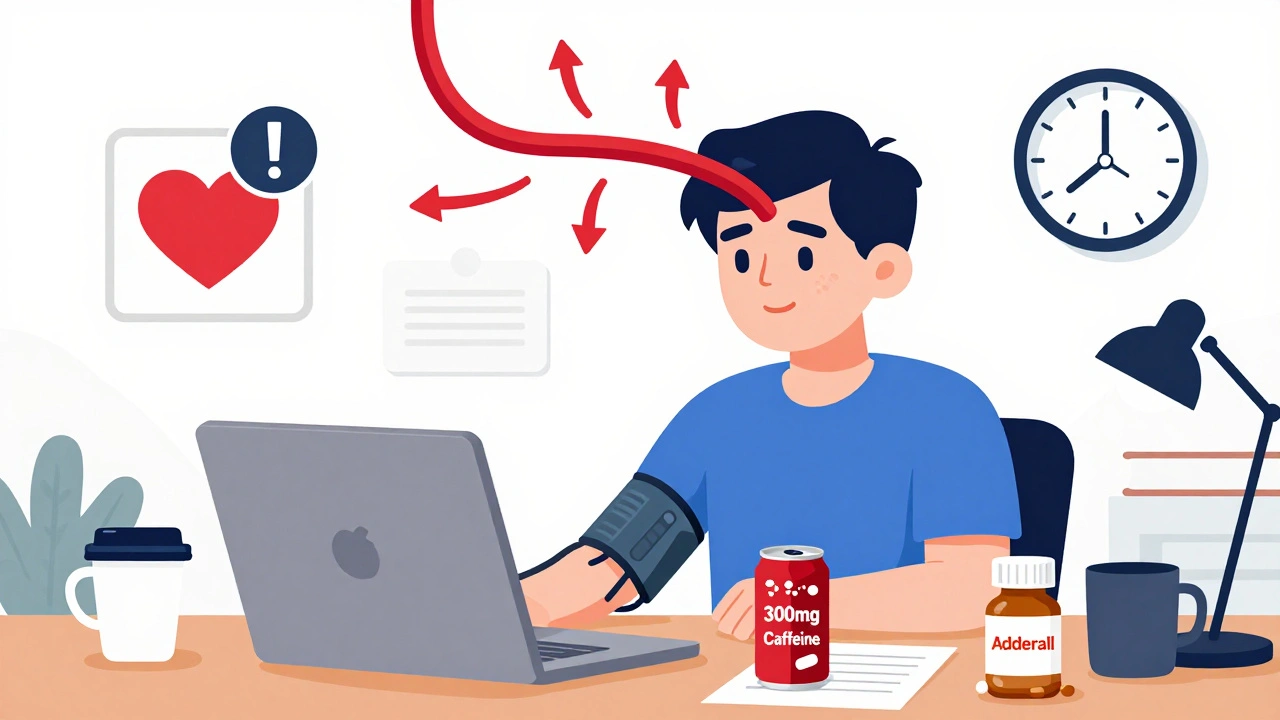
Blood Pressure Risk Calculator
Based on research showing energy drinks can increase systolic blood pressure by 6.2% per 240mg caffeine and additional risks when combined with stimulant medications like Adderall or Ritalin. Enter your current blood pressure and caffeine intake to see potential effects.
When you down a can of energy drink before a late-night study session or pop a pill for ADHD while sipping on a sugar-laden boost, you might think you’re just staying alert. But what you’re really doing is stacking two powerful stimulants on top of each other-and your heart is paying the price.
What’s Actually in Energy Drinks?
Energy drinks aren’t just coffee with extra sugar. A typical 16-ounce can like Monster or Bang contains between 160 and 300 milligrams of caffeine-more than two cups of strong coffee. But caffeine isn’t the only player. These drinks also pack in guarana (which is basically concentrated caffeine), taurine, B-vitamins, and bitter orange extract (synephrine), all of which stimulate your nervous system. Some brands even hide extra caffeine under vague labels like ‘natural energy blend,’ making it hard to know exactly how much you’re consuming.
And here’s the kicker: many of these drinks contain more caffeine than labeled. In 2023, testing by independent labs found some products had up to 20% more caffeine than what’s printed on the can. That means if you think you’re staying under the 400 mg daily limit for adults, you might already be over it-without even realizing.
How Stimulant Medications Work (and Why They’re Dangerous Together)
Medications like Adderall, Ritalin, and Concerta are prescribed to treat ADHD. They work by increasing dopamine and norepinephrine in the brain, which improves focus. But these same chemicals also speed up your heart and tighten your blood vessels. That’s why FDA labeling for these drugs lists increased heart rate and elevated blood pressure as common side effects-even when taken alone.
Now imagine combining that with an energy drink. The caffeine in the drink does the same thing: it triggers adrenaline release, raises your heart rate, and squeezes your arteries. When you layer them, your body gets hit with double the stimulation. Studies show this combo can spike blood pressure by 20-30 mmHg in some people-enough to trigger chest pain, irregular heartbeat, or even a heart attack in someone with undiagnosed heart issues.
Real Numbers: How Much Do Blood Pressure and Heart Rate Really Go Up?
Let’s look at what science actually measured:
- A single 240 mg caffeine energy drink raised systolic blood pressure by an average of 6.2% in healthy young adults (Mayo Clinic, 2015).
- Adolescents who consumed energy drinks saw systolic pressure jump by up to 15 points within 30 minutes.
- When combined with stimulant medications, one 2024 NIH-funded study found cardiovascular event risk increased by 3 to 5 times compared to using either alone.
- Heart rate climbed by 3-13 beats per minute with stimulant meds alone. Add energy drinks, and it can spike over 20 bpm.
These aren’t theoretical numbers. Emergency rooms see the results every day. Between 2017 and 2023, ER visits for caffeine overdose in middle schoolers more than doubled. In 2011, nearly 1,500 teens under 17 visited ERs after energy drink-related emergencies-symptoms included palpitations, anxiety, and dehydration.
Who’s Most at Risk?
You might think only older people or those with known heart problems are in danger. But that’s not true. The biggest danger zone is young adults and teens who don’t know they have an underlying condition.
Here’s who should avoid this combo entirely:
- Anyone diagnosed with high blood pressure, arrhythmia, or heart disease
- Teens and children under 18 (the American Academy of Pediatrics says they should avoid energy drinks completely)
- People taking stimulant medications for ADHD, narcolepsy, or weight loss
- Anyone who exercises hard after drinking an energy drink-this combination increases risk of sudden cardiac arrest
- Those who mix energy drinks with alcohol or other stimulants
Even if you feel fine, your heart might not be. A 2024 UC Davis Health study found that regular energy drink use leads to endothelial dysfunction-a condition where your blood vessels lose their ability to expand properly. This is an early warning sign of atherosclerosis, the hardening of arteries that leads to heart attacks and strokes.
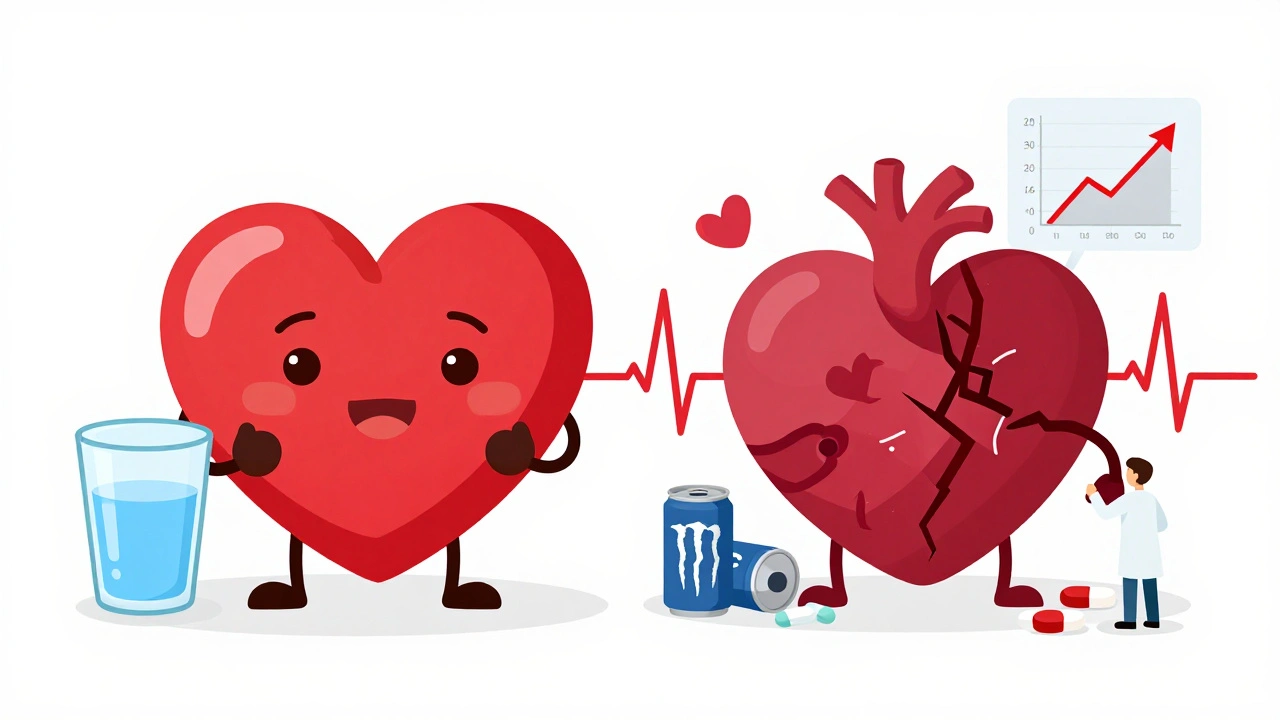
What Does This Look Like in Real Life?
Reddit threads and medical forums are full of stories from people who didn’t realize they were putting their heart at risk.
One user, u/BloodPressureWatcher, tracked his numbers: 120/80 before an energy drink, 145/95 after just one can. Another, u/HeartPalpitations, described three hours of pounding heartbeats after two Monster Energy drinks. Doctors on Student Doctor Network report seeing 19-year-olds with new-onset hypertension-all because they drank a 300 mg energy drink every morning with their Adderall.
In 2022, a 19-year-old in California suffered a heart attack after drinking three Monster Energy drinks in two hours. His family sued Monster Beverage Corp., claiming the company failed to warn about cardiovascular risks. That case was one of 147 lawsuits filed against energy drink makers between 2018 and 2023.
How Much Is Too Much?
The FDA says 400 mg of caffeine per day is safe for most healthy adults. But that’s not a target-it’s a maximum. And it doesn’t include caffeine from other sources: coffee, tea, chocolate, or medications.
For teens, the recommended limit is 100 mg per day. That’s less than half a can of Monster. The European Food Safety Authority says 200 mg in one sitting is safe-but again, that’s if you’re not taking any stimulant meds.
Here’s the reality: if you’re on Adderall or Ritalin, you should treat energy drinks like a red flag. Even one can could push you past your body’s limit. There’s no safe threshold when these two are mixed.
Warning Signs You Can’t Ignore
If you’ve had an energy drink and are on stimulant medication, pay attention to these symptoms:
- Chest pain or tightness
- Heart palpitations lasting more than a few minutes
- Dizziness or lightheadedness
- Difficulty breathing
- Sudden severe headache
- Blurred vision or vision loss
These aren’t normal side effects. They’re red flags. If you experience any of these, stop what you’re doing and get medical help immediately. Delaying care could mean the difference between a hospital visit and cardiac arrest.
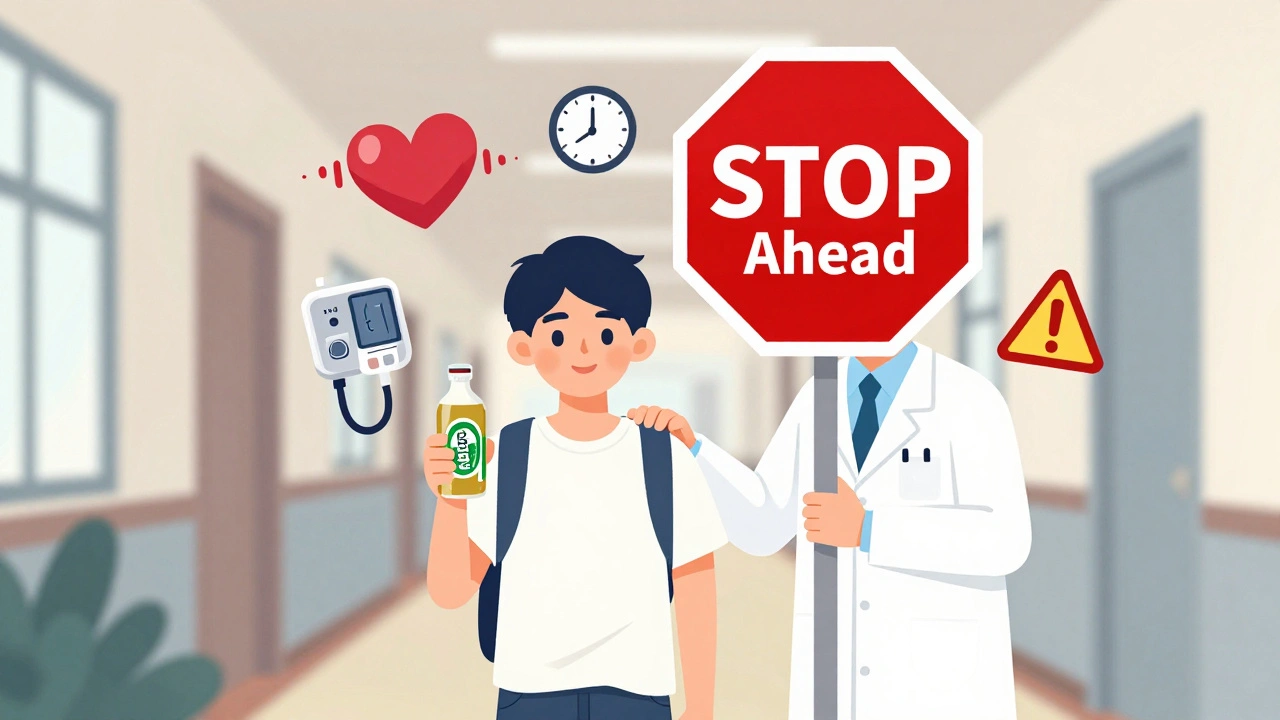
What Should You Do Instead?
If you’re using energy drinks to stay awake or focused because of ADHD medication side effects like fatigue, there are safer ways to manage it:
- Drink water consistently-dehydration makes stimulant side effects worse
- Get 7-8 hours of sleep, even on busy days
- Take short walks or stretch every hour to boost circulation and alertness
- Use small amounts of natural caffeine (like black tea or a single espresso) if you need a boost
- Talk to your doctor about adjusting your medication timing or dosage
If you’re a regular energy drink user and want to cut back, don’t quit cold turkey. Withdrawal can cause headaches, fatigue, and irritability for up to nine days. Slowly reduce your intake by one can per week until you’re off them completely.
The Bigger Picture
Energy drink sales hit $77.6 billion globally in 2023. The industry is growing fast, pushing new products labeled as ‘sugar-free,’ ‘vitamin-enhanced,’ or ‘functional’-all designed to make you think they’re healthy. But none of that changes the fact that they’re still loaded with stimulants.
The American Heart Association now says people with heart disease should avoid energy drinks entirely. The CDC warns they can raise blood pressure, heart rate, and breathing. And Harvard Medical School researchers say these effects are especially dangerous for older adults and those with hidden heart conditions.
It’s not about fear. It’s about awareness. You don’t need energy drinks to get through the day. But if you’re combining them with stimulant meds, you’re playing Russian roulette with your heart.
Can energy drinks cause a heart attack?
Yes. While rare, there are documented cases of heart attacks linked to energy drink consumption, especially when combined with stimulant medications, physical exertion, or alcohol. In 2022, a 19-year-old in California suffered a heart attack after drinking three Monster Energy drinks in two hours. The American Heart Association now warns that energy drinks can trigger dangerous arrhythmias and even sudden cardiac arrest in susceptible individuals.
Is it safe to drink energy drinks while taking Adderall?
No. Combining energy drinks with Adderall or other stimulant medications significantly increases the risk of dangerously high blood pressure, rapid heart rate, and heart rhythm problems. Both substances stimulate the same nervous system pathways, and together they can overwhelm your cardiovascular system. Even one energy drink can push your body past its limit. Doctors strongly advise avoiding this combination entirely.
How long does it take for energy drinks to raise blood pressure?
Blood pressure can rise within 15 to 30 minutes after consuming an energy drink. Studies show peak effects occur around 45 to 60 minutes after ingestion. In healthy adults, systolic pressure may increase by 4-7 mmHg on average-but in sensitive individuals, spikes of 20-30 mmHg have been documented. The effect lasts several hours, especially if combined with stimulant medications.
Do energy drinks affect people with high blood pressure differently?
Yes. People with existing hypertension are far more vulnerable. Their blood vessels are already under stress, and the added pressure from caffeine and stimulants can cause dangerous spikes that increase the risk of stroke, heart attack, or aortic dissection. The FDA and CDC both warn that individuals with heart conditions should avoid energy drinks completely. Even small amounts can trigger serious complications.
Are sugar-free energy drinks safer for your heart?
No. Sugar-free energy drinks still contain the same high levels of caffeine and stimulants like guarana, synephrine, and taurine. Removing sugar doesn’t reduce the cardiovascular risk-it just makes the drink seem healthier. The real danger comes from the stimulants, not the sugar. Many cases of heart palpitations and high blood pressure involve sugar-free brands like Bang or Reign.
What’s Next?
The science is clear: energy drinks and stimulant medications are a dangerous mix. The market is growing, the labels are misleading, and the warnings are being ignored-especially by young people.
If you’re taking ADHD medication, talk to your doctor about alternatives to energy drinks. If you’re a parent, know that 30% to 50% of teens consume these drinks despite medical advice. And if you’ve been drinking them daily, consider cutting back-not because you’re being overly cautious, but because your heart deserves better.
 Medications

Chris Marel
December 9, 2025 AT 10:47I used to drink Monster with my Adderall during finals, thinking I was just being productive. Turns out my heart was screaming for help. I started getting dizzy after 2 PM and didn’t connect it until my dad had a scare. Now I just drink green tea and nap between study blocks. Your body isn’t a machine you can overclock.
Arun Kumar Raut
December 9, 2025 AT 17:03bro i get it you need to stay up but why not just sleep 6 hours and wake up early? energy drinks are like putting diesel in a gasoline engine. it runs for a bit then breaks. i saw my cousin collapse in class last year. he was 16. no one told him it was dangerous.
Carina M
December 9, 2025 AT 20:55It is profoundly irresponsible to normalize the conflation of pharmacological intervention with recreational stimulant consumption. The conflation of medical necessity with performance enhancement represents a grotesque erosion of bioethical boundaries. One does not simply ‘pop a pill’ and then ‘chug a can’-this is not a lifestyle choice; it is a public health catastrophe waiting to be documented in medical journals for decades.
Ajit Kumar Singh
December 11, 2025 AT 03:06USA thinks it can regulate everything but still sells these drinks like candy to teens and then acts shocked when someone has a heart attack. In India we dont have this problem because no one drinks this junk unless they are desperate or dumb. Also why is everyone so surprised? Caffeine + amphetamines = heart bomb. DUH
Lisa Whitesel
December 12, 2025 AT 20:16People who drink energy drinks with Adderall are just lazy. If you need a stimulant to function, you should be on a controlled prescription, not self-medicating with sugar water and synthetic adrenaline. This isn’t a ‘warning’-it’s a consequence of poor life choices. Stop blaming the drink. Blame the person who can’t manage their own biology.
Raja Herbal
December 14, 2025 AT 16:51So let me get this straight… you’re telling me the same people who drink 3 energy drinks before a workout and then take Adderall to ‘crush’ their 8am lecture are surprised they’re having heart palpitations? Bro. You’re not a superhero. You’re a walking FDA violation with a hoodie.
Sarah Gray
December 15, 2025 AT 12:41There is no such thing as a ‘safe’ amount of caffeine when combined with stimulant medications. The notion that moderation applies here is dangerously misleading. Endothelial dysfunction is not a ‘side effect’-it is the beginning of irreversible vascular damage. If you are consuming these substances, you are not ‘just staying awake.’ You are accelerating the aging of your cardiovascular system.
Kathy Haverly
December 15, 2025 AT 17:45Oh wow. A long article about how energy drinks are bad. Shocking. Next you’ll tell me smoking kills or sugar causes diabetes. I’ve been drinking 2 cans a day with my Ritalin for 5 years. I’m fine. My heart is a tank. Your fearmongering is just corporate propaganda to sell you ‘wellness’ products. Wake up.
Steve Sullivan
December 16, 2025 AT 03:19yea i get it… energy drinks = bad. but like… what if you’re just tired? not lazy. not addicted. just exhausted from working 2 jobs and going to school? i switched to black tea and it helped. but honestly? sometimes you just need to survive the day. i don’t wanna be a ‘perfect’ human. i wanna be alive. 🫠❤️