

When you pick up a prescription, do you ever wonder if the generic version is truly as safe as the brand-name drug you used to take? It’s a question that comes up more often than you’d think-especially if you’ve been on medication for years. For many people, switching from a brand to a generic isn’t just about saving money. It’s about whether that switch could quietly affect how well the drug works over time, or even put their health at risk.
The truth is, the science isn’t as simple as "generics are just as good." There are studies that say they’re better. Others point to real cases where people got worse after switching. And then there’s the messy middle: most people don’t notice any difference at all. So what’s really going on when you swap a brand-name pill for its generic twin?
What does "bioequivalent" actually mean?
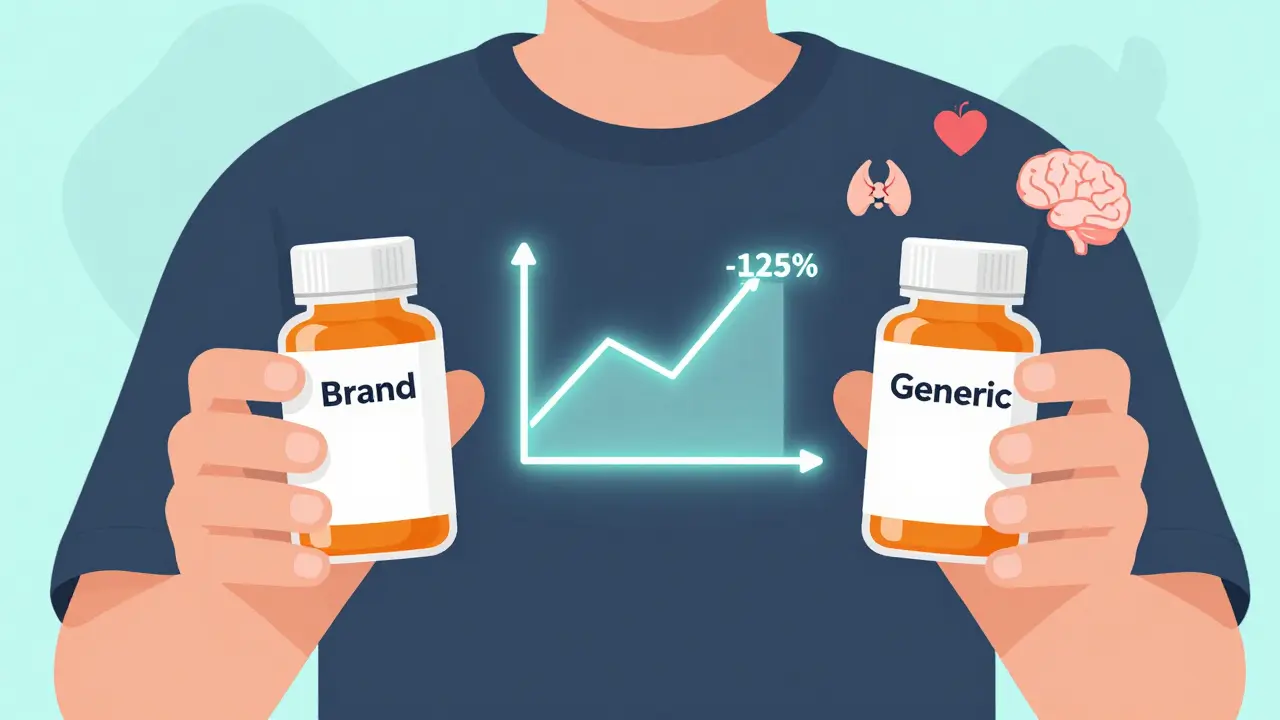
The FDA says a generic drug must be bioequivalent to the brand. That sounds official, but what does it mean in practice? Simply put, the generic must deliver the same active ingredient into your bloodstream at roughly the same speed and amount. The legal standard? The amount of drug absorbed (measured as AUC) and the peak concentration (Cmax) must fall within 80% to 125% of the brand’s numbers. That’s a 45% range. For most drugs, that’s fine. But for some, even a 5% difference can matter.
Take levothyroxine, the drug used for hypothyroidism. A 2017 study found that generic versions caused 12.3% more fluctuations in thyroid-stimulating hormone (TSH) levels compared to Synthroid. That might not sound like much, but for someone who needs rock-steady hormone levels, those tiny shifts can mean fatigue, weight gain, or even heart rhythm problems over time. The FDA allows this variation because it’s statistically acceptable-but for patients on narrow therapeutic index drugs, "acceptable" doesn’t always mean "safe."
The Austrian study that shook the industry
In 2020, researchers in Austria looked at over 1.5 million people on chronic medications between 2007 and 2012. They didn’t just check lab results. They tracked deaths, heart attacks, strokes, and hospitalizations. The results were startling.
For people taking blood pressure meds, those on brand-name versions had 53.8 deaths per 1,000 patient-years. Those on generics? Just 30.2 deaths per 1,000 patient-years. That’s more than half the mortality rate. Major adverse events like heart attacks or strokes were also nearly half as common with generics. Even after adjusting for age, sex, and prior health conditions, the advantage for generics held up.
Why? One theory: brand-name drugs are often more expensive, so patients on them may be wealthier, better insured, or more likely to follow up with doctors. But the researchers accounted for those factors. Another possibility? The generic versions used in Austria were manufactured under stricter quality controls than what’s common elsewhere. It’s not that generics are dangerous-it’s that some brand-name drugs might carry hidden risks from long-term use, or the generics used in this study were simply better made.
When switching back helps
Not all stories are about big data. Sometimes, it’s one patient, one drug, one sudden change.
A 2013 case study in the PMC journal described two patients who switched from brand-name ciprofloxacin and levofloxacin to generics-and got sicker. One kept running a fever. The other couldn’t shake off infection symptoms. Both improved within days after switching back. This isn’t rare. Pharmacists report similar cases regularly. The problem? These aren’t always caught in large studies. If a patient’s symptoms are mild, they might not go to the ER. If they don’t connect the dots, the issue stays hidden.
One Reddit user, u/MedicalMystery123, posted in April 2023 about switching from brand Lamictal to generic lamotrigine. Their seizure frequency jumped from 1-2 per month to 8-10. They switched back-and it went back to normal. That’s not anecdotal noise. That’s a real clinical signal. And it’s why some neurologists still prescribe brand-name anticonvulsants, even when generics are available.
Who’s really making the drugs?
Here’s the twist: the problem might not be "generic vs. brand." It might be "made in India vs. made in the U.S." A 2018 study from Ohio State University analyzed FDA adverse event reports and found something shocking: generic drugs made in India had a 54% higher rate of severe adverse events-including hospitalizations and deaths-than identical drugs made in the U.S. The difference was especially clear with older, well-established drugs like ciprofloxacin. Indian-made versions showed a 62% higher rate of hospitalizations due to adverse reactions.
That doesn’t mean all Indian-made generics are unsafe. But it does mean quality control varies wildly by manufacturer, not just by brand or generic label. Some "authorized generics"-drugs made by the original brand company but sold under a generic label-performed nearly identically to the brand. In fact, for amlodipine, the authorized generic had far fewer adverse events than the generic made by a third-party manufacturer.
So when you ask if generics are safe, the real question is: Which generic? Is it made by a company with a history of FDA warnings? Has it been flagged for contamination or inconsistent potency? Those details aren’t on the pill bottle.
What the data says about long-term use
Not all long-term studies agree. A Harvard-led study in 2021 looked at 136,000 older adults on three blood pressure drugs-losartan, valsartan, and candesartan. They tracked ER visits and hospitalizations for a year after generics hit the market. No spike in adverse events. None. The researchers concluded that for these common drugs, the switch was safe.
But here’s the catch: they only looked at hospitalizations. They didn’t track fatigue, dizziness, or subtle changes in blood pressure control. If a patient feels a little off but doesn’t go to the hospital, the system misses it. That’s a big blind spot. Especially for older adults on multiple meds, where small changes can cascade into bigger problems.
Meanwhile, the FDA’s own database, FAERS, shows 1,247 reports between 2018 and 2022 where people said the generic drug was "ineffective." Only 289 said the same about the brand. But here’s the catch: generics make up 92% of all prescriptions. So if 1,247 people report ineffectiveness, that’s actually a tiny fraction of users. Still, when you’re one of them, it’s not a statistic-it’s your life.
The drugs that need extra caution
Some drugs are more sensitive than others. The FDA itself warns that narrow therapeutic index (NTI) drugs need special attention. These are medications where the difference between a dose that works and one that’s toxic is very small. Think:
- Warfarin (blood thinner)
- Levothyroxine (thyroid hormone)
- Phenytoin (anti-seizure)
- Cyclosporine (organ transplant)
For these, even a 5% difference in absorption can lead to clots, rejection, seizures, or thyroid storms. Many doctors still prescribe brand versions for these drugs-especially for elderly patients or those with complex conditions. The savings aren’t worth the risk.
What should you do?
Here’s the bottom line: for most people, generics are perfectly safe. But not all generics are created equal. And for some people, the difference matters.
If you’re on a common drug like atorvastatin, metformin, or lisinopril, switching to a generic is almost always fine. But if you’re on one of the high-risk drugs listed above-or if you’ve ever felt worse after switching-talk to your doctor. Don’t assume it’s "all in your head."
Ask your pharmacist: "Who makes this generic?" If it’s made by a company with a history of FDA warnings (like Ranbaxy, Teva, or Sun Pharma), ask if there’s another option. Some pharmacies can order a different generic. Some insurance plans allow exceptions for NTI drugs.
And if you notice changes-mood swings, unexplained fatigue, worsening symptoms-don’t wait. Keep a log. Note when you switched. Note what changed. Bring it to your doctor. That’s the best way to protect yourself.
Generics saved billions in healthcare costs. They’re not the enemy. But blind trust isn’t safety. Smart questions are.
Are generic drugs as safe as brand-name drugs over the long term?
For most people and most medications, yes. Large studies show generics are just as safe and effective. But for drugs with a narrow therapeutic index-like warfarin, levothyroxine, or anti-seizure meds-small differences in absorption can matter. Some patients experience worse outcomes after switching, and in rare cases, switching back to the brand reverses the problem. The key is knowing your drug and monitoring how you feel.
Why do some people feel worse after switching to a generic?
It’s not always the generic itself. The issue often lies in the manufacturer. A generic made in India might have different inactive ingredients, fillers, or manufacturing tolerances than one made in the U.S. Even small differences in how the drug dissolves can affect absorption, especially for people with sensitive systems or chronic conditions. In some cases, patients respond better to one generic manufacturer over another-even if both are "bioequivalent."
Can I ask my pharmacist for a specific generic manufacturer?
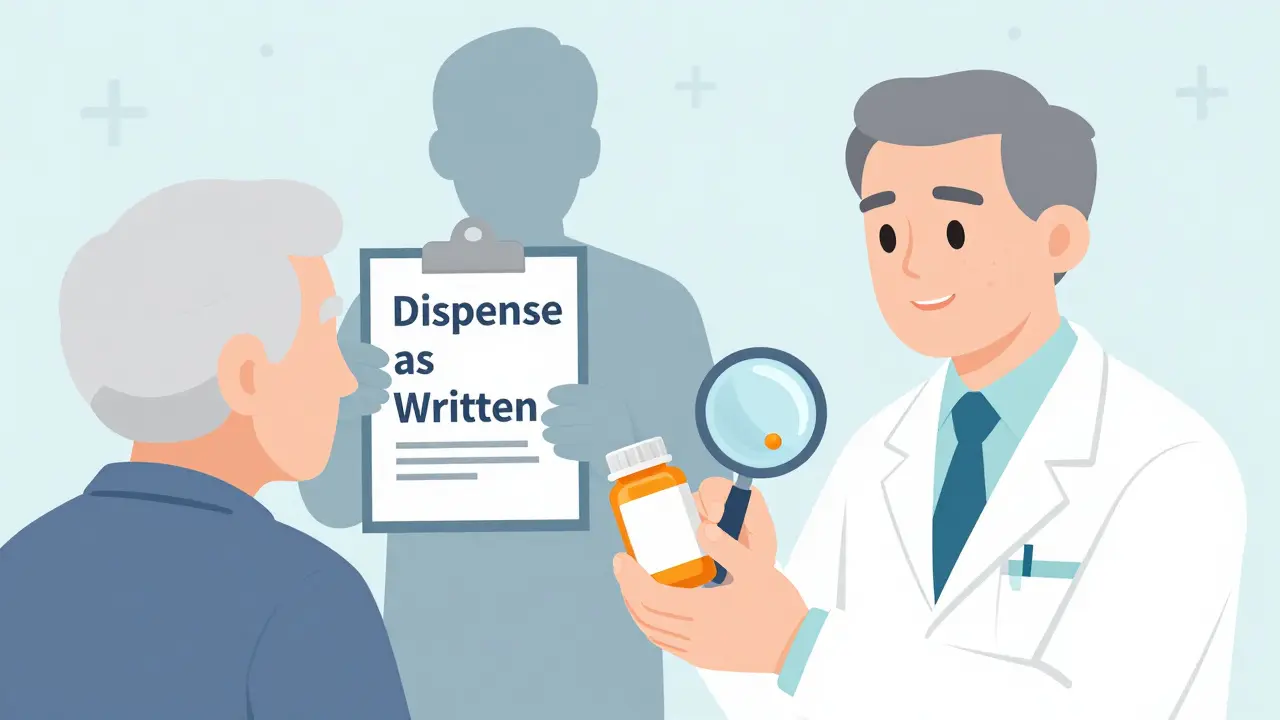
Yes. While pharmacies often choose the cheapest option, many can order a specific generic if you request it. Insurance may require prior authorization, especially for high-risk drugs. If you’ve had a bad experience before, ask your doctor to write "dispense as written" or "brand necessary" on the prescription. You have the right to ask.
Do generics have the same side effects as brand-name drugs?
The active ingredient is the same, so expected side effects should be too. But inactive ingredients-like dyes, preservatives, or binders-can vary. These can trigger allergies, digestive upset, or even affect how the drug is absorbed. That’s why some people report different side effects with different generics. If you notice new or worsening side effects after switching, it’s worth investigating.
How can I check where my generic drug is made?
The label usually doesn’t say. But you can ask your pharmacist for the manufacturer’s name. Then search the FDA’s website for that company’s inspection history. Companies like Teva, Mylan, and Sun Pharma have had warnings in the past. If you’re concerned, ask if there’s a U.S.-made alternative. Some insurers will approve it if you provide a valid medical reason.
If you’ve been on a medication for years and never noticed a problem, chances are, you’re fine. But if you’ve ever felt off after a switch, or if you’re on a high-risk drug, don’t ignore it. Your body knows when something’s off-even if the data says you shouldn’t.
 Medications


Oliver Calvert
February 17, 2026 AT 16:03Kancharla Pavan
February 19, 2026 AT 10:34PRITAM BIJAPUR
February 21, 2026 AT 00:42Dennis Santarinala
February 21, 2026 AT 04:43Haley DeWitt
February 22, 2026 AT 01:54John Haberstroh
February 23, 2026 AT 08:46Digital Raju Yadav
February 24, 2026 AT 21:46Sam Pearlman
February 26, 2026 AT 14:52Steph Carr
February 27, 2026 AT 08:26Brenda K. Wolfgram Moore
February 28, 2026 AT 14:20Prateek Nalwaya
March 1, 2026 AT 23:41