

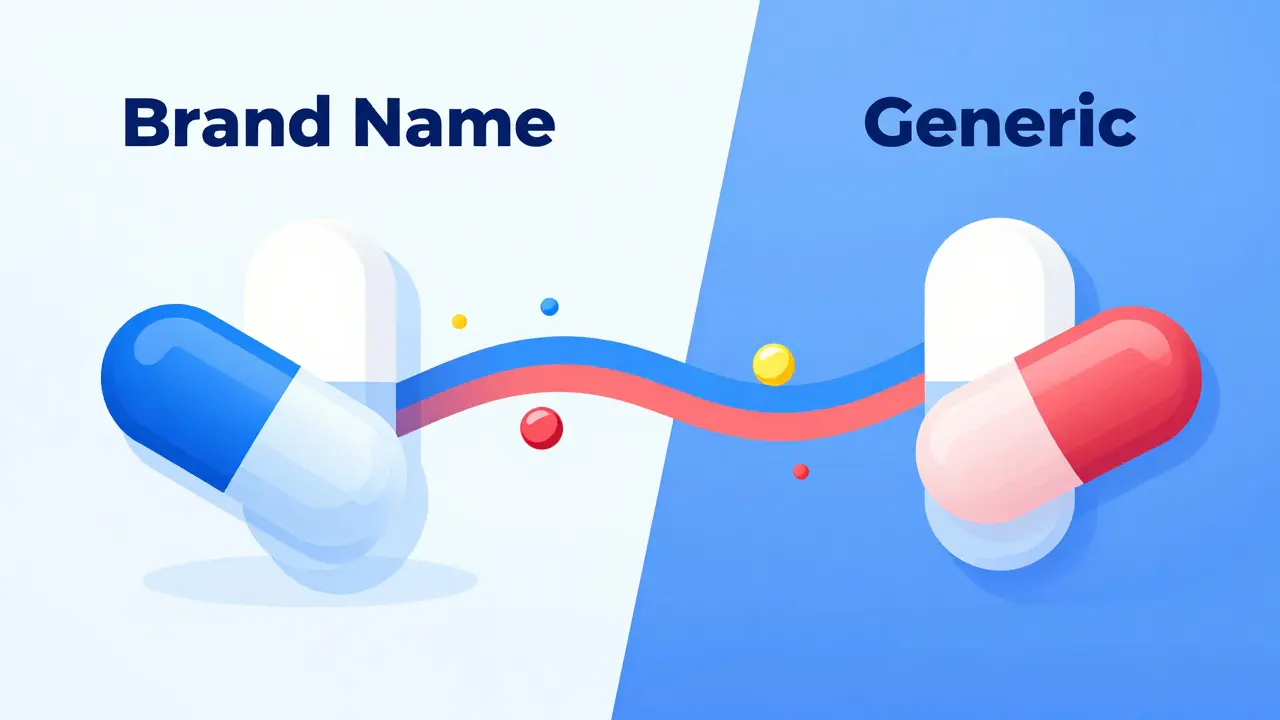
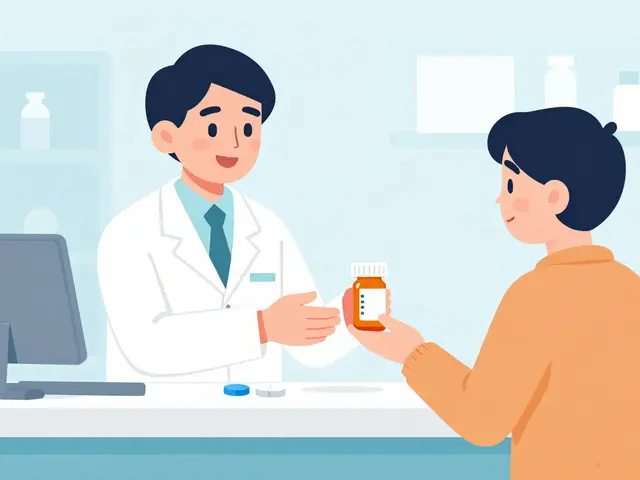
You might have noticed that your pharmacist often asks if you want the generic version of a medication. It's usually cheaper, but a common question lingers: is it actually as safe as the brand-name version? The short answer is yes, but that doesn't happen by accident. Ensuring a generic drug works exactly like the original requires a massive amount of oversight from the U.S. Food and Drug Administration is the federal agency responsible for protecting public health by ensuring the safety, efficacy, and security of human drugs, biological products, and medical devices.
The goal of FDA generic drug safety protocols is simple: a generic drug must be identical to the brand-name counterpart in dose, safety, strength, quality, and performance. It isn't enough for the drug to just "feel" similar; it has to be scientifically equivalent. If the brand-name drug is the gold standard, the generic is the mirrored image.
The Shortcut That Isn't a Shortcut: The ANDA Pathway
When a company creates a brand-new drug, they have to spend billions of dollars and a decade of time on clinical trials. Generic manufacturers don't have to do that. Instead, they use a process called the Abbreviated New Drug Application (or ANDA), which is a streamlined regulatory pathway that allows generic drugs to be approved by demonstrating they are bioequivalent to a reference-listed drug without repeating full clinical trials.
Does "abbreviated" mean easier? Not exactly. While they skip the initial safety trials (because the FDA already knows the molecule is safe from the original drug), they must prove Bioequivalence. This means the generic drug must deliver the same amount of active ingredient into a patient's bloodstream in the same amount of time as the original. Specifically, they usually need to fall within a 90-110% range of the brand-name drug's performance. If it's too fast or too slow, the FDA rejects it.
Strict Rules for the Factory Floor: cGMP
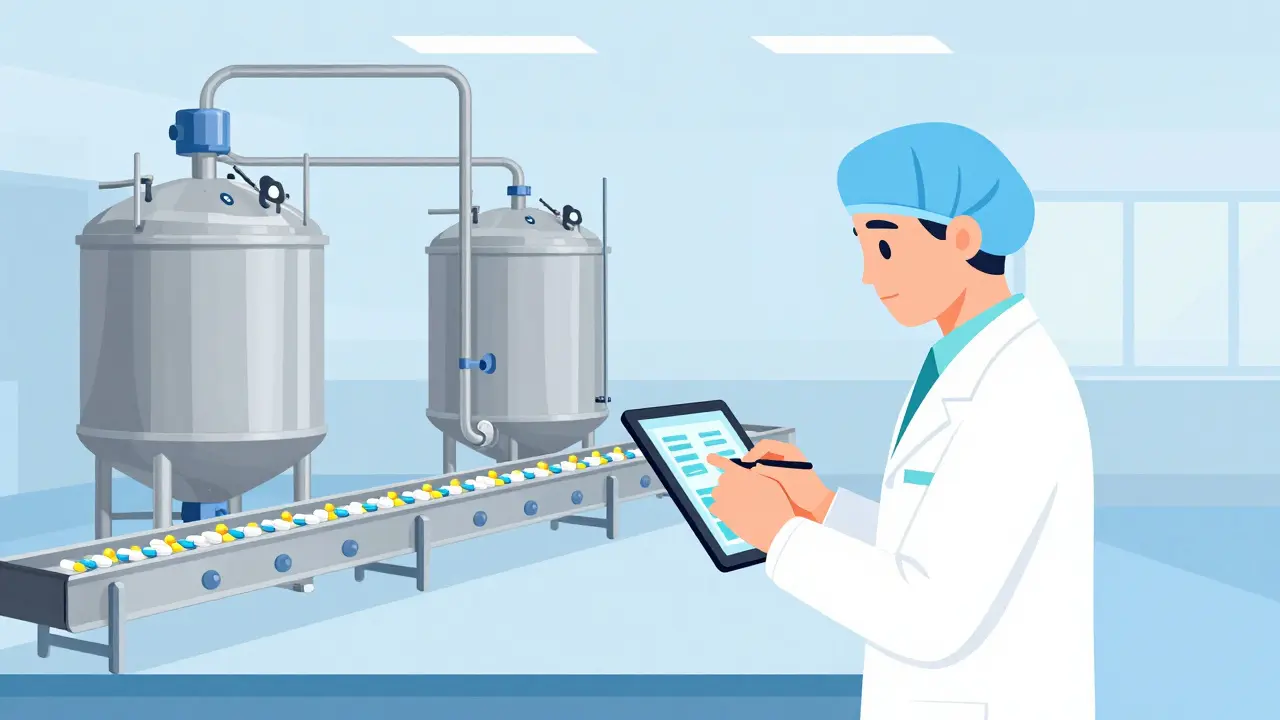
Even if the formula is perfect, a drug is only as safe as the place where it's made. This is where current Good Manufacturing Practices (or cGMP) come in. These aren't just "suggestions"; they are mandatory regulations that govern how drugs are produced. To stay compliant, manufacturers have to manage three critical systems:
- Material Control: Every single raw ingredient must be tracked from the moment it arrives at the warehouse until it ends up in a pill. This prevents contamination and ensures no "mystery ingredients" sneak into the batch.
- Production Controls: Every step of the manufacturing process must be written down in a detailed procedure. If a technician changes the temperature of a mixing vat, it has to be recorded.
- Laboratory Testing: Every batch is tested using validated methods. They check the raw materials, the product while it's being made, and the finished pill before it ever leaves the building.
If an inspector finds that a company is cutting corners-like skipping a cleaning cycle on a machine-the FDA can issue warnings or stop production entirely. This ensures that the pill you take on Monday is exactly the same as the one you take on Friday.
Inspections and the Global Challenge
The FDA doesn't just take a company's word for it; they send inspectors to the factories. This is a huge logistical challenge because many generic ingredients are made overseas. In the past, this was a weak point in the system. For example, data from 2019 showed that 15% of foreign facilities had quality issues, compared to only 8% of domestic ones.
To fix this, the FDA implemented the Generic Drug User Fee Amendments (or GDUFA), which is a program where industry fees fund the FDA's ability to hire more reviewers and inspectors to speed up approvals and increase overseas surveillance.
| Metric | Before GDUFA (Approx.) | After GDUFA (Recent Trends) |
|---|---|---|
| Average ANDA Review Time | ~30 Months | ~10 Months (for 95% of standard ANDAs) |
| Review Capacity | Baseline | Increased by 75% |
| Inspection Focus | General | Risk-based scheduling (prioritizing high-risk sites) |
Watching the Drug After it Hits the Shelf
The oversight doesn't end once the drug is approved. The FDA uses a system of continuous surveillance to catch problems that might not show up in a controlled test. One of the most important tools here is MedWatch, a FDA safety monitoring system that allows healthcare professionals and consumers to report adverse reactions or medication errors.
Every year, MedWatch processes over a million reports. If the Division of Clinical Safety and Surveillance notices a spike in complaints about a specific generic drug, they can act quickly. This might involve a voluntary product recall, changing the warning label, or sending "Dear Healthcare Provider" letters to alert doctors about a potential issue. It's a proactive loop: the more data they get from the real world, the safer the drugs become.
Handling the Hard Stuff: Complex Generics
Not all drugs are simple pills. Some are "complex generics," like inhalers for asthma or topical creams. These are much harder to copy because the delivery mechanism (like the spray in an inhaler) is just as important as the drug itself. To handle this, the FDA started the Complex Generic Drug Products Initiative in 2018.
This initiative provides specific scientific guidance for these tricky products. By 2023, the FDA had expanded its bioequivalence recommendations to cover over 2,800 different drug products. This removes the guesswork for manufacturers and ensures that even a complex nasal spray works exactly as it should.
The Bottom Line on Cost and Access
Why go through all this trouble? Because it works. Generic drugs make up about 90% of the prescriptions filled in the U.S., yet they only account for about 23% of the total spending. That’s a saving of roughly $313 billion annually for the healthcare system. By streamlining the approval process through ANDAs while keeping the manufacturing standards (cGMP) incredibly high, the FDA balances affordability with safety.
Is a generic drug exactly the same as a brand-name drug?
Yes, in terms of the active ingredient. The FDA requires generic drugs to have the same active ingredient, strength, dosage form, and route of administration. While the inactive ingredients (like fillers or dyes) might differ, they cannot interfere with the drug's performance.
What happens if a generic drug manufacturer fails an inspection?
The FDA can issue a Form 483 (notice of inspectional observations) or a Warning Letter. If the issues are severe, the FDA can refuse to approve new drug applications from that facility or, in extreme cases, request a product recall to protect public health.
What is bioequivalence and why does it matter?
Bioequivalence is the scientific proof that a generic drug releases its active ingredient into the blood at the same rate and to the same extent as the brand-name drug. This ensures that the patient receives the same therapeutic effect.
Does the FDA inspect factories outside the United States?
Yes. The FDA conducts thousands of inspections globally. Under GDUFA III, they have increased funding and resources specifically to enhance the frequency and rigor of foreign inspections to ensure global compliance with cGMP.
How can I report a problem with a generic medication?
You can report adverse events or quality issues through the FDA's MedWatch program. This system allows the agency to detect safety signals and take regulatory action if a pattern of problems emerges.
 Medications


Joel Bonstell
May 1, 2026 AT 05:35I've worked in pharma for years and the bioequivalence stuff is legit. Most peopel just dont realize how tight those margins actually are... it's not just some rough guess, it's actual science.
Mikaela -anonymous 😏
May 2, 2026 AT 23:23Oh wow... because the government is just SO aaaaaand reliable!!! 🙄 I'm sure those overseas inspections are just totally flawless!!!!
Andrew Hanssen
May 3, 2026 AT 11:21The assertion that bioequivalence guarantees therapeutic identity is a convenient simplification. While the bloodstream concentrations may align, the pharmacodynamic response can vary based on the specific excipients used by the generic manufacturer.
Jimmy Crocker
May 3, 2026 AT 16:08It is quite obviously a matter of systemic efficiency, although one must admit the regulatory framework is often laggard in its execusion of oversight, especially when dealing with the complexities of global supply chains that simply transcend the simplistic metrics provided here.
Christina Lancey
May 4, 2026 AT 01:58It is heartening to see more transparency about how these costs are lowered for everyone.
Prudence Wesson
May 4, 2026 AT 21:56The lack of transparency in these "abbreviated" pathways is simply appalling... the sheer arrogance of assuming the gold standard is always met is a joke!!!! Totally unacceptable standards for the public!!!!
bharat films
May 5, 2026 AT 01:40Typical FDA failure to actually stop bad factories until after a disaster happens 🤡🤡🤡 just reading the stats on foreign sites makes me laugh 🤣
Alexa Mack
May 5, 2026 AT 19:20I wonder if other countries have a similar system to the ANDA or if they do it completely differently. It's interesting how different regions balance cost and quality.
Kartik Agarwal
May 6, 2026 AT 17:44From a CMC perspective, maintaining the critical quality attributes (CQAs) during the scale-up of complex generics is where the real challenge lies. The pharmacokinetic profile must be robust across all batches to ensure therapeutic equivalence despite the variance in inactive excipients.
Spencer Farrell
May 6, 2026 AT 18:07One must acknowledge that the mere existence of a regulatory framework does not imply its flawless execution. The propensity for corporate interests to influence the speed of the ANDA review process is a systemic vulnerability that is frequently overlooked by the layperson who assumes a linear relationship between oversight and safety.
Mark Koepsell
May 7, 2026 AT 01:43The 90-110% range for bioequivalence is the industry standard. It is designed to account for the natural biological variability between different patients. If a drug fell outside this range, it would likely cause either a lack of efficacy or an increase in toxicity.
Divya Patel
May 7, 2026 AT 14:37This balance between accessibility and quality is a reflection of our shared human need for healing... and the struggle to make it affordable for the many, not just the few!!!! It is a complex dance of ethics and science!!!!
kelvin villa saab
May 8, 2026 AT 22:48I just can't with the way they handle the overseas stuff... like seriously??? 15% quality issues is basically a nightmare scenario!!!! I'm honestly shook that people just trust this blindly lol.