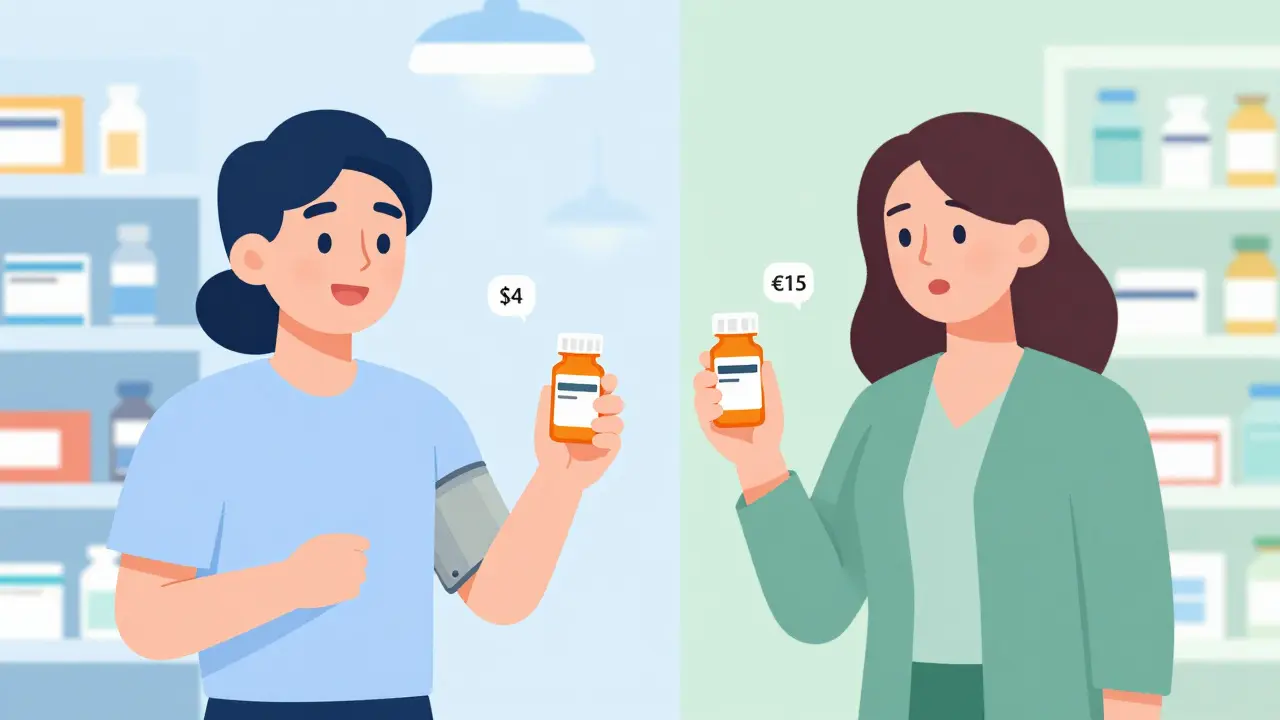
You walk into a pharmacy in Berlin or Paris to pick up a month’s supply of generic blood pressure medication, and the cashier hands you a receipt for €15. You walk into a Walmart pharmacy in Ohio for the exact same drug, and it costs $4. It sounds like a glitch in the matrix, right? We are taught that American healthcare is the most expensive in the world. So why do Americans often pay *less* for generic drugs than their European counterparts?
The answer lies in a paradox that confuses even policy experts. While the United States pays a premium for brand-name, patented medications-often three to four times more than other wealthy nations-the US market for off-patent generics is fiercely competitive. This competition drives prices down significantly. In contrast, many European countries have less aggressive competition in the generic sector, resulting in higher shelf prices for these common medicines.
Why are generic drugs cheaper in the US than in Europe?
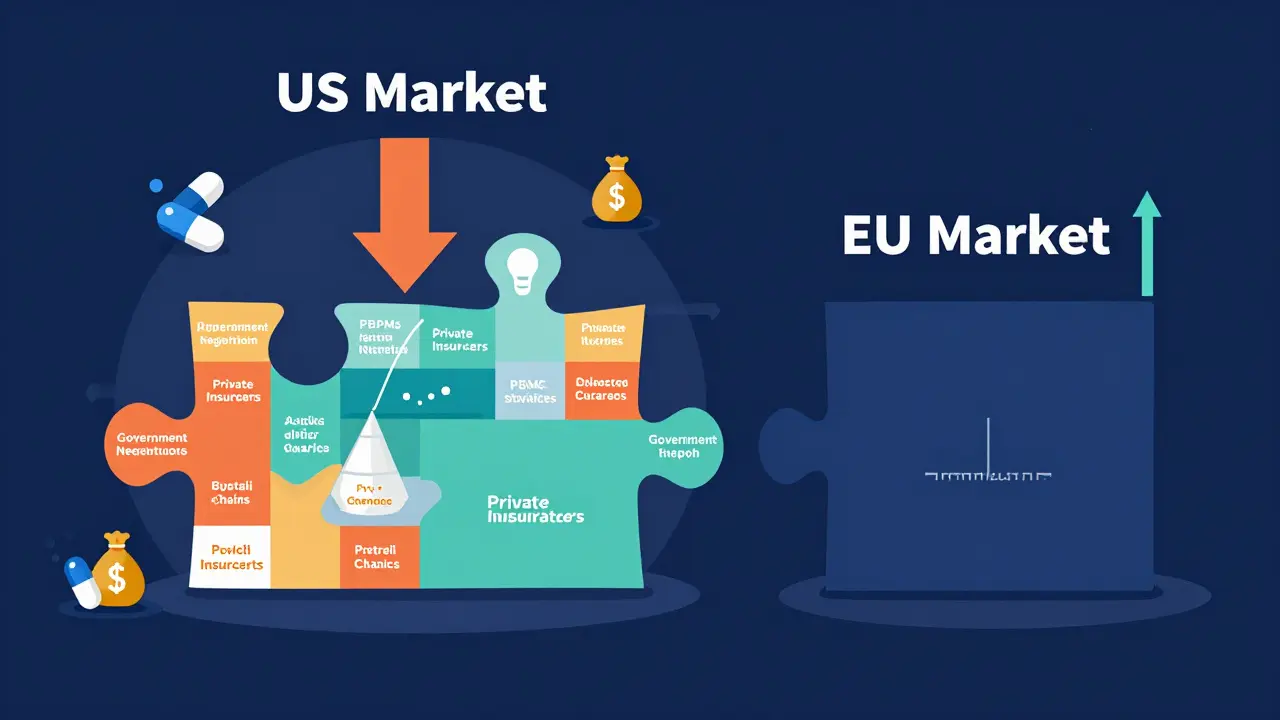
The US has a highly fragmented payer system with Pharmacy Benefit Managers (PBMs) and large retail chains that negotiate aggressively on volume. This creates intense price competition among generic manufacturers. In Europe, centralized government negotiations and fewer competing pharmacies often result in less downward pressure on generic prices.
The Paradox of American Drug Pricing
To understand this dynamic, we have to look at the data from the U.S. Department of Health and Human Services' Office of the Assistant Secretary for Planning and Evaluation (ASPE). Their 2022 analysis compared drug prices across 33 OECD countries. The findings were starkly divided based on whether a drug was branded or generic.
For unbranded generics-which make up about 90% of all prescriptions filled in the US-Americans paid roughly 67% of the prices seen in those comparison countries. In plain English, if a generic pill cost €10 in Europe, it might cost around €6.70 in the US. That is a significant savings for the consumer.
However, flip the coin to brand-name drugs, and the story changes completely. US prices for originator drugs were 422% of the prices in those same comparison countries. Even when you adjust for rebates that US insurers get behind the scenes, US prices remain roughly 322% higher. This means while you save money on your cholesterol med, you will likely pay a fortune for a new cancer treatment or a specialized biologic.
Dana Goldman, a professor at the University of Southern California and member of the National Academy of Medicine, puts it bluntly: "Americans do quite well in the generic market." He notes that because generics represent such a huge volume of prescriptions, the competitive mechanisms in the US work effectively to keep those specific prices low.
How Market Structures Drive Price Differences
The root cause of this disparity isn't just about greed or charity; it's about how the markets are structured. The US pharmaceutical market is fragmented. You have dozens of private insurance companies, multiple Pharmacy Benefit Managers (PBMs), Medicare, Medicaid, and cash-paying customers. This fragmentation forces manufacturers and distributors to compete on price to win contracts.
Pharmacy Benefit Managers (PBMs) are intermediaries that manage prescription drug benefit programs on behalf of health plans. They negotiate rebates and discounts with drug manufacturers. In the US, PBMs play a massive role in driving down the net cost of drugs, particularly through volume purchasing power.In Europe, the model is different. Most countries use centralized price negotiation or reference pricing. A single government agency negotiates with pharmaceutical companies on behalf of the entire population. For brand-name drugs, this works incredibly well to cap prices. But for generics, the lack of fierce competition between multiple payers can lead to stagnation in price reductions.
Consider the volume of generics prescribed. In the US, 90% of prescriptions are for unbranded generics. In Europe, that number drops to around 41%. When nearly every patient gets a generic, the market scale allows for thinner profit margins and lower prices. In Europe, where a larger portion of patients still take brand-name drugs due to slower substitution rates or physician preference, the generic market is smaller and less competitive.
| Feature | United States | Europe (Avg.) |
|---|---|---|
| Generic Prescription Volume | ~90% | ~41% |
| Pricing Mechanism | Market Competition & PBM Rebates | Centralized Negotiation & Reference Pricing |
| Price Level (Generics) | Lower (67% of OECD avg) | Higher |
| Substitution Policy | Automatic in 49 states | Varies (e.g., France requires doctor approval) |
The Role of PBMs and Rebates
If you are an American with insurance, you rarely see the "list price" of a drug. You see your copay. Behind the scenes, PBMs negotiate rebates that can average 35-40% off the list price for brand-name drugs. While these rebates are hidden from consumers, they influence the overall economics of the market.
For generics, the competition is even more direct. Large retail chains like CVS, Walgreens, and Walmart buy in massive volumes. They leverage this power to squeeze margins from generic manufacturers like Teva and Mylan. This consolidation drives prices down so far that some generic drugs sell for less than it costs to manufacture them. This leads to shortages when producers exit the market because it’s no longer profitable-a cycle Dana Goldman describes as "prices going too low, all the suppliers exited the market, and then someone got a monopoly and raised the prices."
In Europe, the absence of this hyper-competitive retail environment means prices stay stable but higher. There is less risk of sudden shortages due to margin collapse, but patients pay more out of pocket or through their national health systems.
Brand-Name Drugs: Who Pays for Innovation?
This brings us to the elephant in the room: brand-name drugs. If Americans are saving money on generics, who is paying for the billions of dollars in research and development (R&D) required to create new medicines? The answer is the US market itself.
A 2024 RAND Corporation study found that the average price of non-generic prescription medicines was 4.22 times higher in the US than in most OECD countries. Dr. Joseph Antos, writing in the Milbank Quarterly, noted that the higher revenues generated in the US fund approximately two-thirds of global pharmaceutical R&D. Essentially, the US subsidizes global innovation.
European countries practice what critics call "free riding." As Dana Goldman explains, "Europe will negotiate prices as low as they can without regard to the cost of innovation." Because European governments cap prices strictly based on therapeutic value and budget impact, they don't contribute proportionally to the high-risk costs of drug discovery. The US market, with its higher prices, absorbs this cost.
This dynamic is evident in recent policy debates. Former President Trump proposed a "most favored nation" pricing policy, which would align US drug prices with the lowest prices paid by other developed countries. Alexander Natz, Secretary General of EUCOPE, warned that such policies would have global consequences, potentially forcing companies to raise prices overseas to maintain R&D funding.
Real-World Impact on Patients
What does this mean for you, the patient? If you are taking common conditions like hypertension, diabetes, or depression, you likely benefit from the US generic market. With Medicare Part D or private insurance, your copay for a generic might be $0-$10 per month. In Europe, while co-pays exist, the base price is higher, and access can sometimes be restricted by stricter reimbursement criteria.
However, if you need a new, patented drug-for example, a novel oncology treatment or a weight-loss GLP-1 agonist like Wegovy-you will face a much steeper bill in the US. The IQVIA Institute reported that sales of Semaglutide increased 21-fold in the US between 2021 and 2023, reaching levels 15 times higher than in the EU. The high demand and high prices reflect both the willingness to pay and the lack of price caps.
Travelers often notice this discrepancy firsthand. Americans visiting Europe frequently express surprise at the high cost of over-the-counter or generic prescriptions. Conversely, Europeans traveling to the US are shocked by the sticker shock of brand-name medications. A 2024 European Patients' Forum survey found that 78% of respondents considered US drug pricing "unjustifiably high" for patented meds.
Future Trends and Policy Shifts
The landscape is changing. The Inflation Reduction Act introduced Medicare drug price negotiations, allowing the government to negotiate prices for certain high-cost brand-name drugs. Early results show negotiated prices are still higher than international averages but lower than previous US list prices. For instance, Medicare’s negotiated price for Jardiance was $204 versus an average of $52 in comparable OECD countries, showing a gap remains but is narrowing.
As the US continues to exert pressure on drug pricing, there is a risk that pharmaceutical companies may shift strategies. They might delay launching new drugs in the US or increase prices in Europe to compensate. The European Medicines Agency acknowledged in 2025 that European pricing policies may need adjustment to maintain access to innovative therapies.
Despite these shifts, the fundamental structure suggests that the US advantage in generic pricing will persist. The high volume, automatic substitution laws, and competitive retail environment in the US create a unique ecosystem that keeps generic costs low. Until Europe increases its generic prescription volume and intensifies competition, Americans will likely continue to pay less for off-patent medicines, even as they debate the fairness of brand-name pricing.
Are generic drugs the same quality in the US and Europe?
Yes. Generic drugs must meet strict bioequivalence standards in both the US (FDA) and Europe (EMA). They contain the same active ingredients and work the same way in the body. The difference is purely economic, not medical.
Why do Europeans pay more for generics if their healthcare is public?
Public healthcare systems in Europe often use centralized procurement with less competitive pressure on generic manufacturers. Additionally, lower prescription volumes for generics mean less economies of scale. Some countries also have co-pay structures that keep list prices higher to discourage unnecessary prescribing.
Will US drug prices drop in the future?
Prices for brand-name drugs may decrease due to Medicare negotiations under the Inflation Reduction Act. However, generic prices are already low due to market competition. Significant drops in brand-name prices could impact global R&D funding, potentially affecting future drug availability.
Can I buy cheaper generic drugs in Europe and bring them to the US?
It is generally illegal to import prescription drugs into the US for personal use without FDA approval. While some travelers bring small quantities for personal use, bulk importing is prohibited. Always consult a pharmacist or legal expert before attempting to import medications.
What is the role of PBMs in keeping generic prices low?
PBMs negotiate rebates and discounts with manufacturers. While their role is more prominent in brand-name drug pricing, their ability to steer patients toward preferred generic alternatives through formulary design helps drive volume and competition, indirectly supporting lower generic prices.
 Medications