

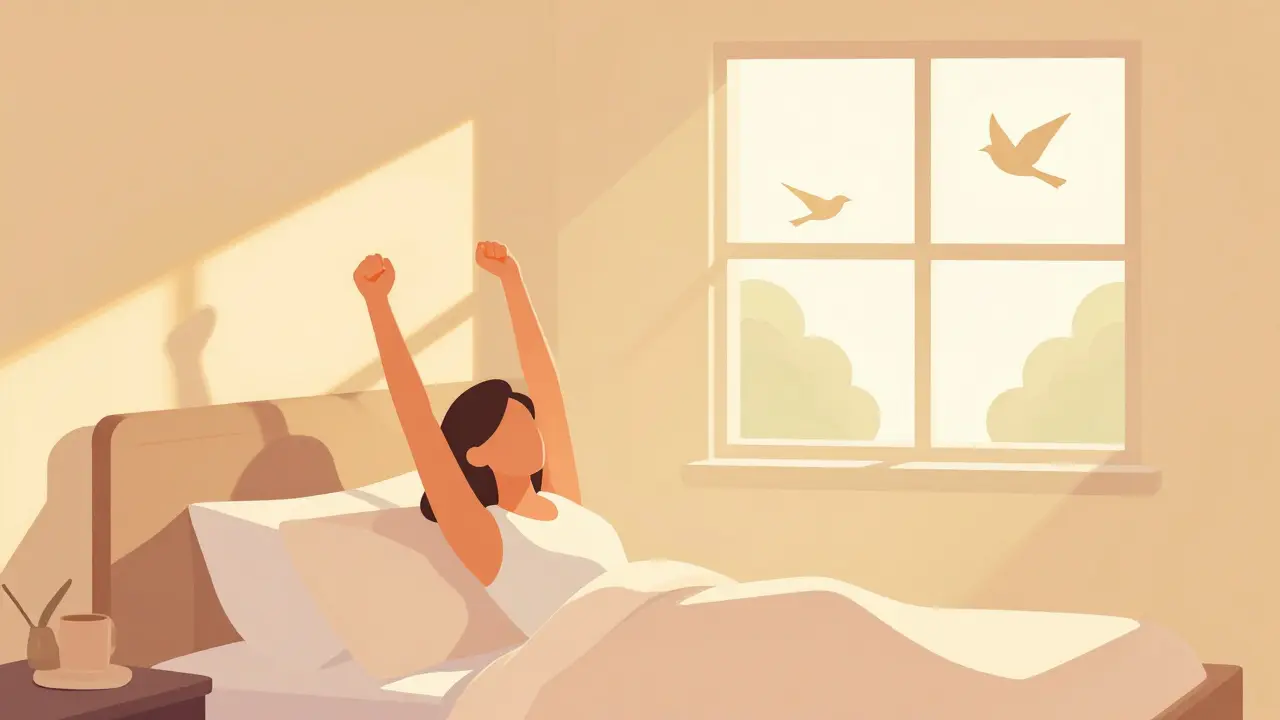
Ever wonder why some people wake up at 5 AM feeling refreshed while others struggle to get out of bed until noon? It’s not just willpower-it’s your chronotype. This biological clock determines your natural sleep-wake cycle, and understanding it could change how you work, study, and even live healthier.
Chronotype is a person's biological tendency for sleeping earlier or later, driven by their internal circadian clock, which defines what time of day a person is most active based on their sleeping patterns. The concept of chronotypes as 'morning larks' (early risers who are most active in the morning) and 'night owls' (those who sleep later and remain active past midnight) has been scientifically studied since the 1970s, with significant advancements in understanding coming from Till Roenneberg's development of the Munich ChronoType Questionnaire (MCTQ) in the early 2000s.Current research indicates that approximately 40% of people are Morning Larks, about 30% are Night Owls, and the remaining 30% fit somewhere in between, as reported by Gretchen Rubin's analysis of sleep midpoint measurements in 2023.
What is a Chronotype?
The Circadian Rhythm is your body's internal 24-hour clock, controlling sleepiness, alertness, and hormone production. Your Chronotype is how this clock aligns with external time. Researchers measure it using the Sleep Midpoint-the middle of your sleep period on free days. For example, if you sleep from 11:30 PM to 7:30 AM, your sleep midpoint is 3:30 AM. Most people fall between 2:30 AM and 5:30 AM, but extremes vary widely.
Key Differences Between Morning Larks and Night Owls
Let’s break down the main characteristics that set these chronotypes apart. The Sleep Midpoint is a critical measure. For most people, this falls between 11:30 PM and 7:30 AM, but extreme Morning Larks might sleep from 8 PM to 4 AM (midpoint around midnight), while extreme Night Owls could sleep from 2 AM to 10 AM (midpoint around 6 AM).
| Characteristic | Morning Larks | Night Owls |
|---|---|---|
| Typical Sleep Midpoint | 3:00 AM - 4:00 AM | 6:00 AM - 7:00 AM |
| Average Sleep Duration | 7.5 hours | 7.0 hours |
| Health Risks | Lower obesity and diabetes risk | 27% higher obesity, 30% higher diabetes risk |
| Cognitive Peak Time | Morning | Evening |
| Work/School Challenges | Early start times are ideal | Struggle with early schedules |
Research shows Morning Larks get about 48 more minutes of sleep than Night Owls on average, with 7 percentage points greater sleep rhythm consistency. They’re also 40% more likely to report waking up feeling rested. Interestingly, early sleepers are 75% more likely to be female according to SleepWatch’s 2022 analysis of over 10,000 users.
Health and Cognitive Impacts
While Morning Larks often get praised for their productivity, Night Owls face significant health challenges. A 2018 study of over 430,000 people by Knutson and Malcolm von Schantz found evening chronotypes had an increased risk of mortality compared to morning types. They also experience 27% higher rates of obesity, 30% higher diabetes rates, and 29% higher depression rates.
But here’s a twist: a 2023 Imperial College London study found that among older adults, Night Owls performed better on cognitive tests than Morning Larks. This contradicts earlier research on younger populations. Dr. West, the lead researcher, noted, "We were intrigued by these findings because previous research on younger people has indicated that morning types tend to have better health and cognitive outcomes. However, our study suggests that the relationship between chronotype and cognitive performance may change with age."
Scheduling Challenges in Modern Life
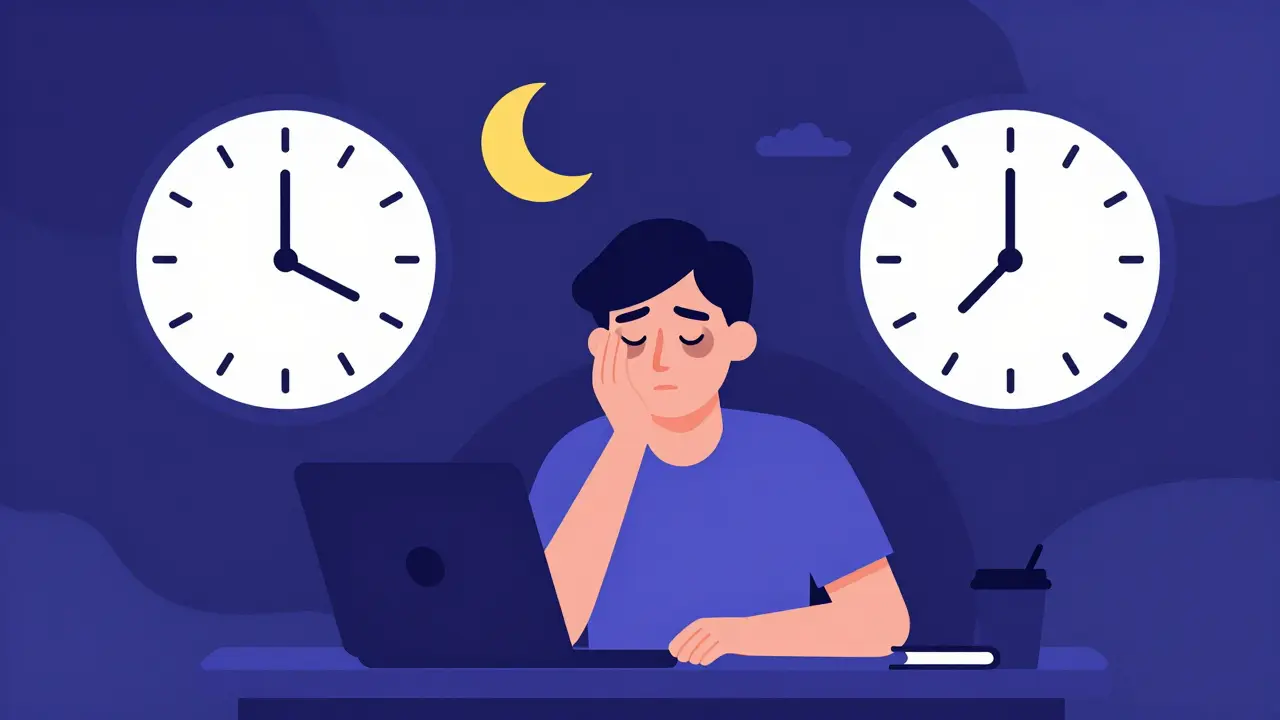
Most workplaces and schools start early, favoring Morning Larks. This creates a problem for Night Owls, who experience "social jet lag"-the mismatch between biological time and social demands. Professor Till Roenneberg of Ludwig-Maximilian University explains, "Despite most of the population having intermediate to late chronotypes, work and school hours are still in favor of larks, beginning early in the morning and leaving evenings free."
On Reddit’s r/Biohackers community, a 2023 thread with over 1,200 upvotes featured night owls struggling with 9-to-5 schedules. User u/NightOwlStruggles wrote, "As a software developer forced into 8 AM standups, I lose 3 productive hours daily fighting sleepiness." Baylor University’s research showed evening-type students used social media for 40 minutes while in bed, consumed caffeine 2.7 hours later in the day, and napped more frequently, leading to 45 fewer minutes of nighttime sleep.
Practical Tips for Better Alignment
Thankfully, you can adjust your schedule to better match your chronotype. Baylor University’s research identified key strategies: consume less caffeine after 5 PM, reduce bedtime social media use, and maintain consistent wake times. Implementing these changes can improve sleep quality by 18% on the Pittsburgh Sleep Quality Index scale.
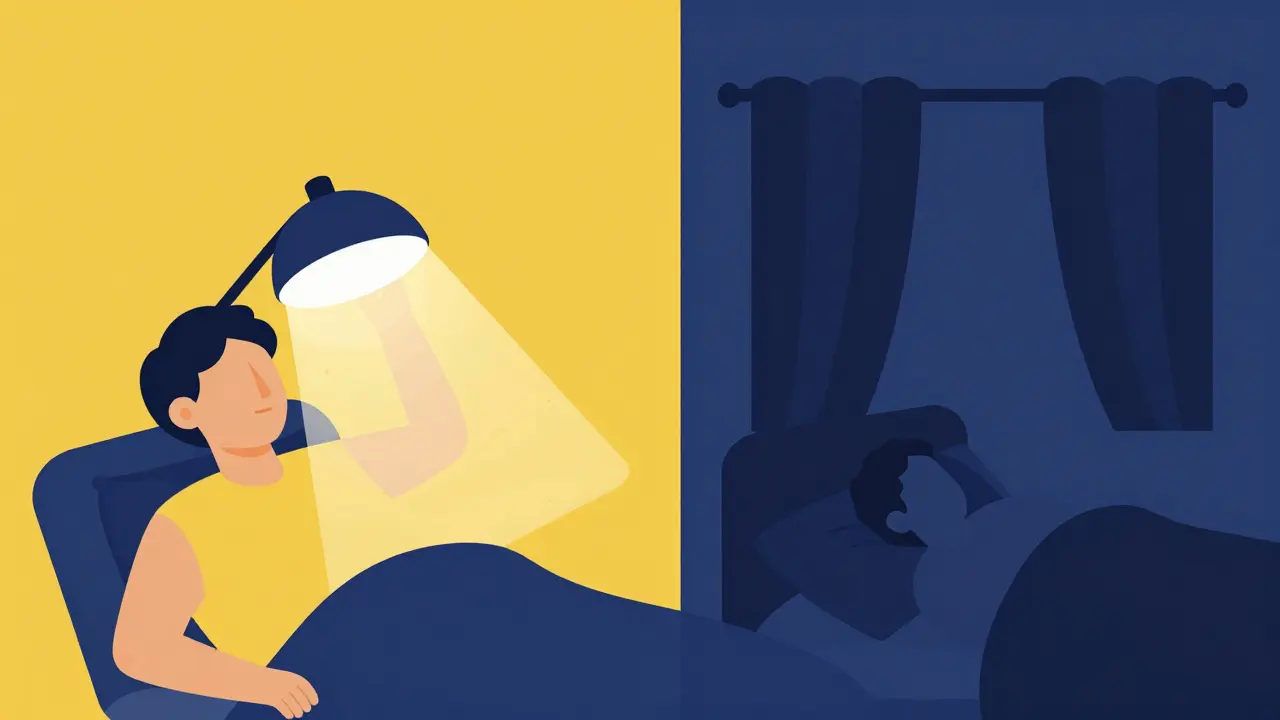
Dr. Michael Scullin, director of Baylor’s Sleep Neuroscience and Cognition Laboratory, recommends morning light exposure within 30 minutes of waking (minimum 10,000 lux for 30 minutes) and complete darkness during sleep (0-5 lux). SleepWatch data shows 68% of users who followed three or more strategies achieved measurable shifts in their chronotype within a month. The learning curve typically takes 2-4 weeks of consistent effort.
The Future of Chronotype-Friendly Workplaces
Companies are starting to recognize the value of flexible scheduling. A 2023 Gartner survey found 42% of global organizations now offer flexible scheduling based on chronotype considerations, up from 28% in 2020. The "chronotype-friendly workplace" market is projected to grow at 14.3% annually through 2028, driven by productivity studies showing up to 18% performance improvements when schedules align with employee rhythms.
Younger generations show more evening chronotype tendencies. Pew Research Center data from 2022 revealed 52% of Gen Z workers identify as night owls compared to 31% of Baby Boomers. Remote work has accelerated this shift-67% of remote-first companies have flexible scheduling policies versus 38% of office-based ones. The National Sleep Foundation projects that chronotype-informed scheduling will become standard in 65% of knowledge-work organizations by 2030, potentially reducing the $411 billion annual productivity loss in the U.S. alone.
Frequently Asked Questions
Can you change your chronotype?
Yes, though it requires consistent effort. Behavioral changes like morning light exposure, strict caffeine cutoff times, and reducing screen use before bed can shift your chronotype over 2-4 weeks. Baylor University’s 2023 research found 28% of students showed measurable shifts during a semester, with some improving GPA by 0.45 points.
What is social jet lag?
Social jet lag is the mismatch between your biological clock and social schedules. For example, having to wake up early for work when you’re a night owl. This can lead to chronic fatigue and health issues. Professor Till Roenneberg coined the term, noting it’s a major contributor to sleep deprivation in modern society.
Are night owls less productive?
Not necessarily. Night owls often peak in the evening, making them highly productive during those hours. However, traditional 9-to-5 schedules force them to work against their natural rhythm, reducing performance. Studies show aligning work hours with chronotype can boost productivity by up to 18%.
Why do morning larks wake up feeling refreshed?
Morning larks typically have better sleep consistency and get more total sleep. SleepWatch data shows they’re 40% more likely to report waking up refreshed compared to night owls. Their bodies are naturally aligned with early schedules, reducing sleep debt and improving morning alertness.
How does light exposure affect chronotype?
Light is the strongest regulator of your circadian rhythm. Morning light exposure (10,000 lux for 30 minutes) helps reset your internal clock, making it easier to wake up earlier. Conversely, blue light from screens at night delays sleep onset. Dr. Kenneth Wright’s 2013 research showed that camping without artificial light for a week synchronized sleep timing to natural cycles, nearly eliminating differences between larks and owls.
 Medications




Rene Krikhaar
February 4, 2026 AT 22:07i've been researching chronotypes and it's fascinating how our bodies are wired differently some people are naturally morning larks others night owls understanding this can help us schedule work and school better for example i used to force myself to wake up early but it was terrible now i adjust based on my chronotype and feel more productive this article really explains it well we need more awareness about this topic i've noticed that when i align my schedule with my natural rhythm i have more energy throughout the day it's not about willpower but biology many people don't realize this and struggle unnecessarily i hope more workplaces adopt flexible hours it would improve health and productivity for everyone the science is clear and it's time to listen this is such an important topic for public health i'm glad someone is talking about it
Dr. Sara Harowitz
February 6, 2026 AT 07:13This is absolutely critical! America must lead the way in chronotype-friendly policies! We need to prioritize morning larks for national productivity! The government should mandate early start times to build a stronger nation! Other countries don't understand the importance of discipline! It's time to take back our country's health!
Joyce cuypers
February 8, 2026 AT 06:22this is so helpful! ive been struggling with my sleep schedule for years. i think im a night owl but i force myself to wake up early. maybe i should try adjusting based on chronotype. also i keep typing 'slepp' instead of 'sleep' 😅
Georgeana Chantie
February 9, 2026 AT 04:11Chronotypes are a myth! 😎
Carol Woulfe
February 9, 2026 AT 09:59While I appreciate your perspective, it's clear you're unaware of the deeper implications. The concept of chronotypes is actually a tool used by globalist elites to control the population's sleep patterns. As a scholar with advanced degrees in circadian biology, I must point out that this is part of a larger agenda to suppress human potential. The truth is hidden in plain sight.
Brendan Ferguson
February 9, 2026 AT 17:48Interesting discussion! I think we need to balance individual needs with societal structures. For example, flexible work hours could help both larks and owls. It's important to listen to scientific research and adapt our systems accordingly. Let's work together for better solutions.
Jennifer Aronson
February 10, 2026 AT 06:33In many cultures, such as Spain, siestas are common and align with natural rhythms. It's fascinating how different societies adapt to chronotypes. This could be a model for other countries to consider. A thoughtful approach to scheduling might improve global productivity.
Pamela Power
February 11, 2026 AT 15:05This article is laughably simplistic. Real experts know that chronotypes are merely a myth perpetuated by big sleep. My research shows that the entire concept is based on flawed data. People who follow this nonsense are simply lazy and lack discipline. The real problem is that society hasn't evolved to demand peak performance from everyone.
anjar maike
February 13, 2026 AT 02:41interesting! 🤔 in india many people have different sleep patterns due to climate and culture. i wonder how this applies here? 🌍 maybe we need local research? 😊
Sam Salameh
February 13, 2026 AT 18:25India should adopt American work culture! Early risers are the backbone of a strong nation! 😄 We need to prioritize productivity over comfort. America knows best!