

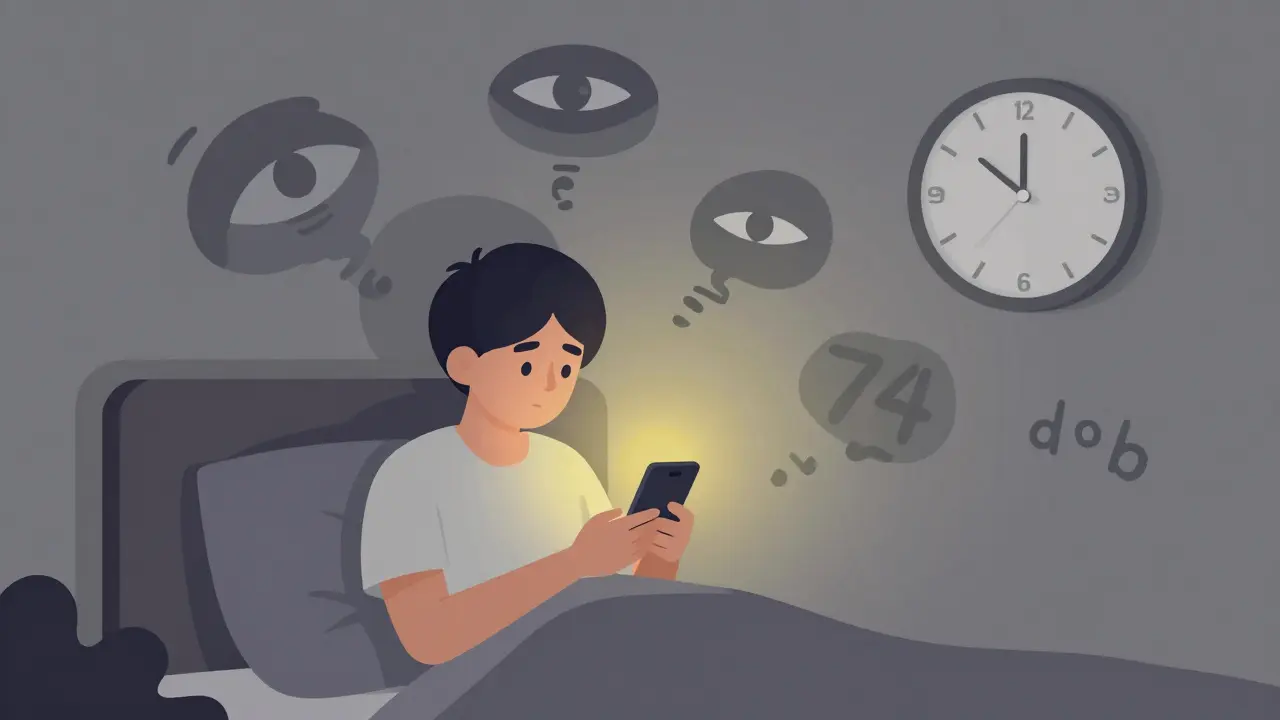
When someone starts hearing voices that aren’t there, or becomes convinced that strangers are watching them, it’s not just paranoia-it could be the early stages of psychosis. Many people don’t recognize these signs until it’s too late. But the truth is, psychosis doesn’t come out of nowhere. It creeps in slowly, often masked as stress, laziness, or teenage moodiness. The good news? If caught early, recovery isn’t just possible-it’s likely.
What psychosis really looks like in the beginning
Psychosis isn’t a diagnosis. It’s a signal. A red flag that the brain is struggling to process reality. You might think of it as a glitch-where thoughts, senses, and emotions stop lining up with what’s actually happening around you.
In the early stages, it’s subtle. A student who used to get A’s starts failing classes-not because they’re lazy, but because they can’t focus. A teenager stops hanging out with friends, not because they’re shy, but because they feel like people are talking about them-even when no one is. Someone starts sleeping all day, then stays awake all night. They might say odd things: ‘The TV is sending me messages’ or ‘My thoughts aren’t mine anymore.’
These aren’t signs of weakness or rebellion. They’re symptoms. And they show up in four main ways:
- Thoughts and speech: Jumping from topic to topic mid-sentence, repeating phrases, or suddenly going quiet because the words disappeared.
- Perception: Hearing whispers when no one’s around, seeing shadows move when the room is empty, or feeling like insects are crawling under the skin.
- Emotions: Laughing at sad things, crying for no reason, or showing no emotion at all-even during big events.
- Behavior: Stopping showering, ignoring bills, hiding in rooms for days, or acting paranoid about family members.
According to NAMI, 78% of people experiencing their first episode of psychosis show a noticeable drop in school or work performance. Eighty-five percent struggle to concentrate. More than two-thirds feel uneasy around others-even close friends. These aren’t random quirks. They’re patterns. And they’re measurable.
One critical thing to understand: people in the early stages often know something’s off. They might say, ‘I know this isn’t real, but I can’t make it stop.’ That awareness fades over time. The sooner help arrives, the more likely that clarity stays intact.
Why timing matters more than you think
The clock starts ticking the moment psychosis begins. Not when someone gets diagnosed. Not when they see a psychiatrist. When the first whisper of change shows up.
Studies show the average person in the U.S. goes 74 weeks-nearly two years-without treatment after symptoms start. That’s not just a delay. It’s damage. Each extra month without care increases recovery time by 5-7%. It lowers the chance of returning to school, work, or normal relationships by 3.2% per month.
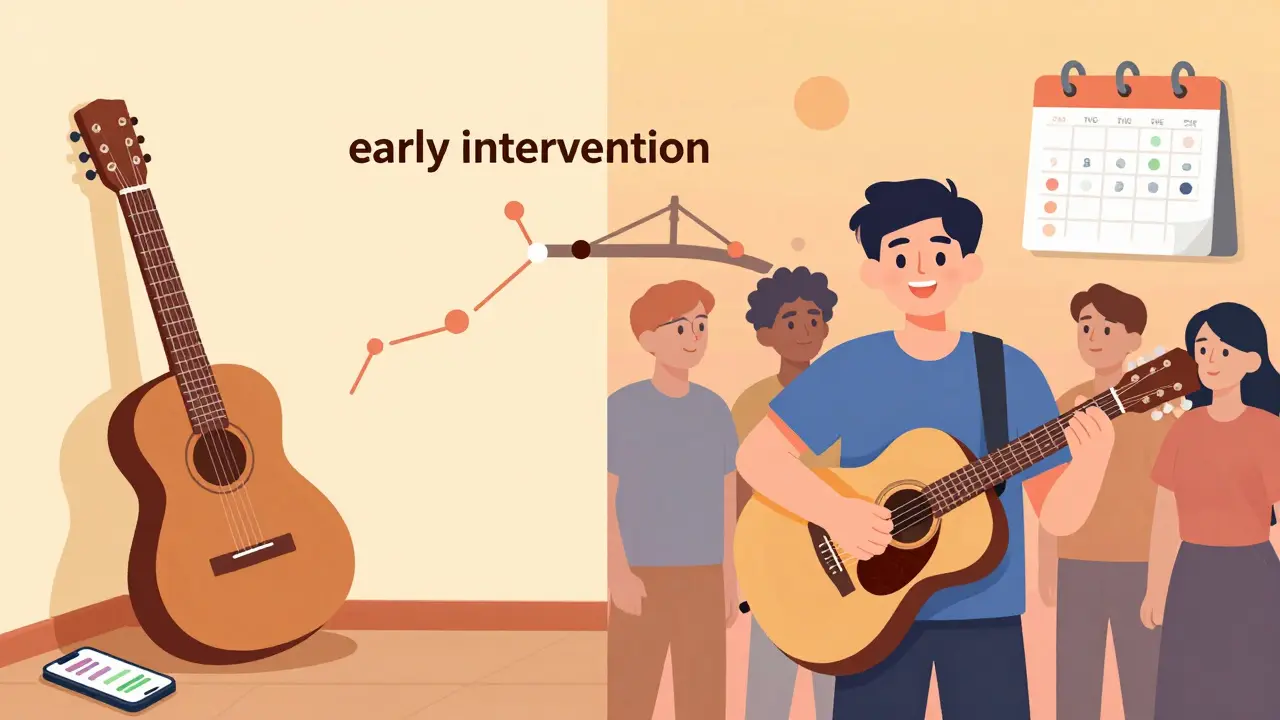
Imagine someone who loved playing guitar. They used to practice every day. Now they haven’t touched it in six months. They’ve quit their part-time job. They’ve stopped answering texts. They’re convinced their phone is recording their thoughts. If they get help now, they might pick up the guitar again in a few months. If they wait another year? That guitar might never get played again.
That’s why experts call the first 72 hours after noticing signs the ‘golden hour.’ Not because it’s a miracle cure-but because it’s the last window where the brain still has the flexibility to heal without long-term scarring.

What coordinated specialty care actually does
Coordinated Specialty Care (CSC) isn’t just another therapy option. It’s the only treatment model proven to change the course of first-episode psychosis. Developed after the NIMH’s RAISE study in 2008, CSC brings together a team of specialists who work as one unit-no referrals, no waiting, no falling through cracks.
Here’s what a real CSC program includes:
- Case management: A case manager visits you at home, not just in an office. They help with housing, transportation, food, and daily tasks. Staff-to-client ratios are kept at 1:10 so no one gets lost in the system.
- Family support: Families don’t get handed a pamphlet. They get 12-20 weekly 90-minute sessions teaching them how to respond without panic, how to set boundaries without rejection, and how to recognize warning signs before they escalate.
- Therapy tailored to psychosis: Cognitive Behavioral Therapy for psychosis (CBTp) isn’t about ‘thinking positive.’ It’s about learning to question strange beliefs without fighting them. ‘Why do you think the neighbor is spying?’ becomes ‘What evidence supports that idea?’
- Work and school support: 80% of CSC participants return to education or employment within three months. Case managers work with teachers and employers to adjust schedules, reduce pressure, and create realistic goals.
- Medication done right: Antipsychotics aren’t given at full adult doses right away. They start at 25-50% and are slowly increased based on response. Side effects like weight gain or drowsiness are monitored closely-not ignored.
The results? People in CSC programs are 58% more likely to see their hallucinations and delusions fade. They’re 42% more likely to hold down a job or finish school. And they’re 35% more likely to stick with treatment past the first year.
Who gets help-and who doesn’t
There are 347 certified CSC programs in the U.S. right now. They serve about 28,500 people a year. Sounds like progress? It is. But only 42% of people experiencing first-episode psychosis actually get into one of these programs within two years of symptoms starting.
Why? Because most doctors don’t know what to look for. Teachers aren’t trained to spot the warning signs. Parents think it’s just a phase. Emergency rooms send people home with a prescription and a referral they never follow up on.
And then there’s access. In urban areas, 84% of counties have CSC programs. In rural areas? Only 28%. If you live in a small town, you might need to drive three hours for your first appointment. Telehealth helps-but only if you have reliable internet and a private space to talk. Many teens don’t.
Disparities are real. Black Americans wait 2.4 times longer than white Americans to get treatment. That’s not because they’re less likely to seek help. It’s because systems aren’t designed for them.
What you can do right now
If you’re worried about yourself or someone you care about:
- Use the Prodromal Questionnaire (PQ-16). It’s free, takes 10 minutes, and scores above 8 mean you need professional evaluation.
- Don’t wait for a crisis. If someone’s withdrawing, sleeping oddly, or saying things that don’t make sense, call a mental health clinic today. Say: ‘I think this might be early psychosis.’
- Find a CSC program near you. The NAMI website has a directory. So does the SAMHSA site.
- Keep a journal. Write down changes in sleep, mood, speech, or behavior. Dates matter. Patterns matter. This helps doctors see what’s happening.
There’s no shame in asking for help. There’s no magic pill. But there is a proven path. And it starts with recognizing the signs before they become a storm.
What’s next for psychosis care
The field is moving fast. In 2023, the Early Psychosis Intervention Network (EPINET) launched to track outcomes across 200+ programs. Early results show 63% of participants reach symptom remission within a year.
Researchers are now testing blood tests that can predict psychosis with 82% accuracy-before symptoms even appear. Mobile apps are being used to track mood and sleep patterns daily. And by 2025, Medicaid will be required to cover CSC in every state.
But the biggest change isn’t technological. It’s cultural. More schools are training staff to spot early signs. More employers are learning how to support employees with psychosis. More families are speaking up instead of staying silent.
Recovery isn’t about going back to who you were. It’s about building a new life-one that doesn’t have to be defined by psychosis.
Can psychosis be cured?
Psychosis isn’t something you ‘cure’ like an infection. It’s a condition that can be managed effectively. With early treatment through Coordinated Specialty Care, most people see their symptoms fade significantly. Many return to school, work, and relationships. Some never have another episode. The goal isn’t perfection-it’s function. And with the right support, full recovery is common.
Is medication always necessary?
Not always-but it’s often part of the plan. Medication helps reduce hallucinations and delusions so therapy can work better. Second-generation antipsychotics are used at low doses at first, then adjusted carefully. Some people stop meds after a year. Others need them longer. The key is personalizing treatment, not forcing a one-size-fits-all approach.
Can stress cause psychosis?
Stress doesn’t cause psychosis on its own, but it can trigger it in people who are already vulnerable-due to genetics, brain chemistry, or past trauma. A major loss, abuse, or prolonged burnout can push someone over the edge. That’s why reducing stress is part of every CSC program.
How do I know if it’s psychosis or just anxiety?
Anxiety makes you fear things that might happen. Psychosis makes you believe things that aren’t happening. If someone is convinced their thoughts are being broadcast on the radio, or they’re seeing people who aren’t there, that’s psychosis-not anxiety. Anxiety causes worry. Psychosis changes reality. A professional assessment is the only way to tell for sure.
What if I’m scared to talk to someone about it?
That fear is normal. Many people worry they’ll be labeled ‘crazy’ or that their family will panic. But early intervention teams are trained to respond with calm, not judgment. You don’t need to say ‘I think I have psychosis.’ Just say, ‘I’ve been feeling off lately-my thoughts aren’t clear, and I’m hearing things. Can you help me figure this out?’ That’s enough to start the process.
Are there alternatives to CSC?
Standard care-like seeing a psychiatrist once a month and getting a prescription-is still common. But studies show it’s far less effective. People in standard care are twice as likely to be hospitalized, less likely to return to work, and more likely to stop treatment. CSC isn’t an ‘alternative.’ It’s the gold standard. If it’s available, it’s the best choice.
If you or someone you care about is showing early signs of psychosis, don’t wait. Reach out. Ask for help. The path back to normal life isn’t easy-but it’s possible. And it starts with the first step: recognizing what’s happening before it’s too late.
 Medications





SWAPNIL SIDAM
January 24, 2026 AT 13:00Napoleon Huere
January 25, 2026 AT 19:04Aishah Bango
January 27, 2026 AT 02:57Simran Kaur
January 28, 2026 AT 11:07bella nash
January 28, 2026 AT 18:39Curtis Younker
January 29, 2026 AT 17:01Allie Lehto
January 30, 2026 AT 10:59Henry Jenkins
January 31, 2026 AT 03:32TONY ADAMS
February 2, 2026 AT 00:42Ashley Karanja
February 3, 2026 AT 23:04Josh josh
February 5, 2026 AT 21:51Neil Thorogood
February 6, 2026 AT 21:23