

When a patient switches from a brand-name HIV drug to a generic version, they’re not just saving money-they’re trusting that the medicine will work just as well. But what if the generic doesn’t absorb the same way? What if their body processes it differently? For drugs with a narrow therapeutic index, even small changes can mean the difference between effective treatment and dangerous side effects. That’s where therapeutic drug monitoring (TDM) comes in-not as a routine check, but as a lifesaving tool in specific, high-risk cases.
What Therapeutic Drug Monitoring Really Does
Therapeutic drug monitoring isn’t about checking if a drug is present. It’s about measuring exactly how much of it is in your blood at the lowest point before your next dose-the trough concentration. For some HIV medications, staying above a certain level is critical to stopping the virus. Too low, and the virus rebounds. Too high, and you risk liver damage, nerve pain, or even life-threatening reactions.
This isn’t needed for all HIV drugs. Nucleoside reverse transcriptase inhibitors (NRTIs), like tenofovir or emtricitabine, are prodrugs. They don’t work in the blood-they need to be activated inside cells. Measuring their levels in plasma tells you nothing. But for protease inhibitors (PIs) and non-nucleoside reverse transcriptase inhibitors (NNRTIs), plasma levels directly reflect how well the drug is working. These are the drugs where TDM actually matters.
Why Generic Drugs Raise the Risk
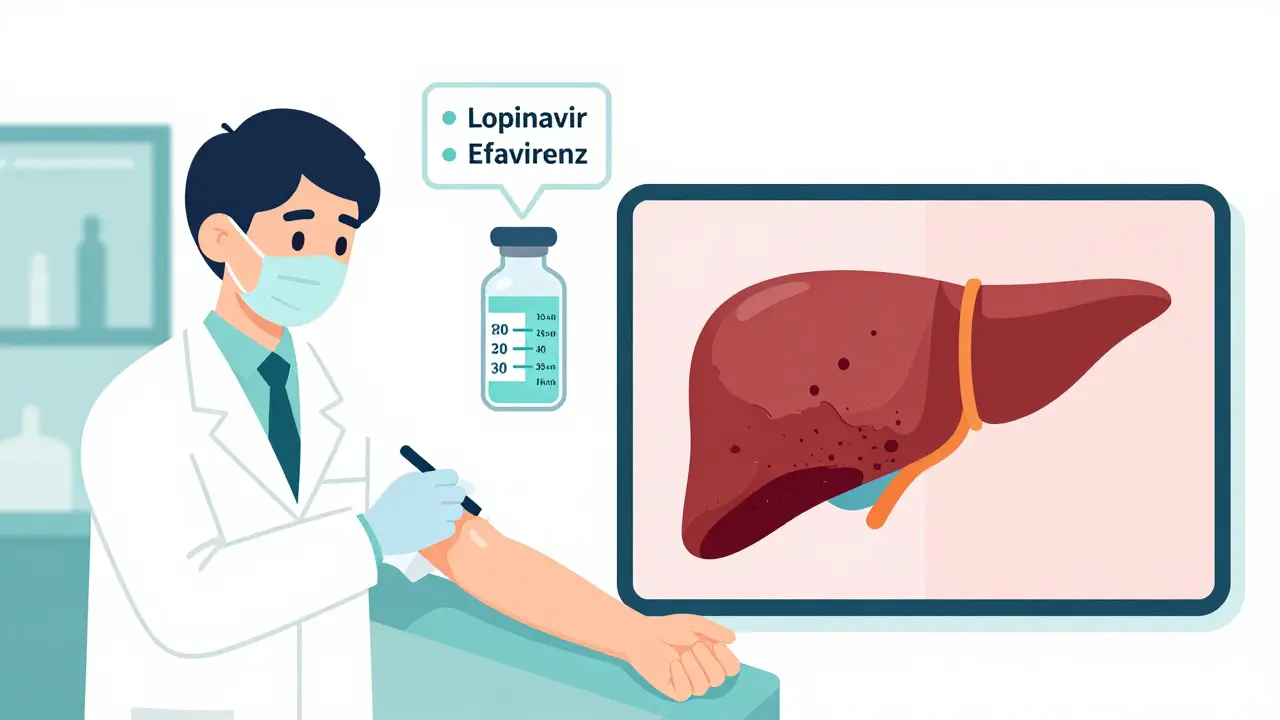
Generics are required to be bioequivalent to the brand name. That means they should deliver the same amount of drug into the bloodstream over time. But bioequivalence doesn’t mean identical. A 10% difference in absorption might be fine for a blood pressure pill. For a drug like lopinavir or efavirenz, that small difference can push levels out of the safe range.
One NHS clinic in London tracked 42 patients who switched to generic lopinavir/ritonavir. Three of them had drug levels more than 50% higher than expected. Two developed severe nausea and liver enzyme spikes. Without TDM, those cases would’ve been blamed on poor adherence or bad luck. With TDM, doctors adjusted the dose before serious damage occurred.
In South Africa, where generic antiretrovirals are the backbone of public health programs, a 2022 pilot study found that patients on TDM-guided therapy had a 22% lower rate of treatment failure compared to those on standard dosing. The difference? TDM caught absorption problems caused by stomach inflammation, diarrhea, or interactions with TB meds.
When TDM Saves Lives
TDM isn’t useful for everyone. It’s a precision tool for specific scenarios:
- Patients on protease inhibitors who also take tuberculosis drugs like rifapentine (which cuts dolutegravir levels by 26%)
- People with chronic kidney or liver disease who may not clear drugs normally
- Those with unexplained treatment failure despite good adherence
- Pediatric patients, where weight-based dosing often misses the mark
- Patients switching to generic versions of NNRTIs or PIs
A 2023 study in JAMA Network showed that even with a 26% drop in dolutegravir exposure due to TB treatment, 92.6% of patients still maintained levels above the threshold needed to kill the virus. But that left 7.4% at risk. TDM caught them. Without it, those patients might’ve been told to "try harder" with adherence-when the real issue was pharmacokinetics.
The Hidden Costs and Delays
TDM sounds simple: draw blood, send it to a lab, get a number. But it’s not. In the UK NHS, a single TDM test costs between £250 and £350. Turnaround time? Usually 10 to 14 days. In the U.S., private labs offer rush results in 2-3 days-but at $450 to $650 per test.
One Reddit user shared their experience: "My clinic wanted to do TDM. It took six weeks. By then, my viral load had jumped to 8,000 copies. I had to restart treatment from scratch." That’s the risk. TDM isn’t a real-time monitor. It’s a snapshot. If you’re already failing, the window to fix it may have closed.
And not every lab can do it. Only three to five labs in the UK offer validated TDM for HIV drugs. In Australia, it’s available through a handful of university hospitals in Perth, Melbourne, and Sydney-but only for patients referred by infectious disease specialists.
Who Shouldn’t Get TDM
Don’t waste time or money on TDM if you’re on an NRTI-only regimen. It won’t help. Tenofovir, emtricitabine, abacavir-these drugs don’t respond to plasma level checks. Their effectiveness depends on what happens inside your cells, not in your bloodstream.
Also avoid TDM if:
- You’re not adherent. TDM can’t fix missed doses.
- You haven’t tried standard dose adjustments first.
- Your viral load is already undetectable and you’re stable.
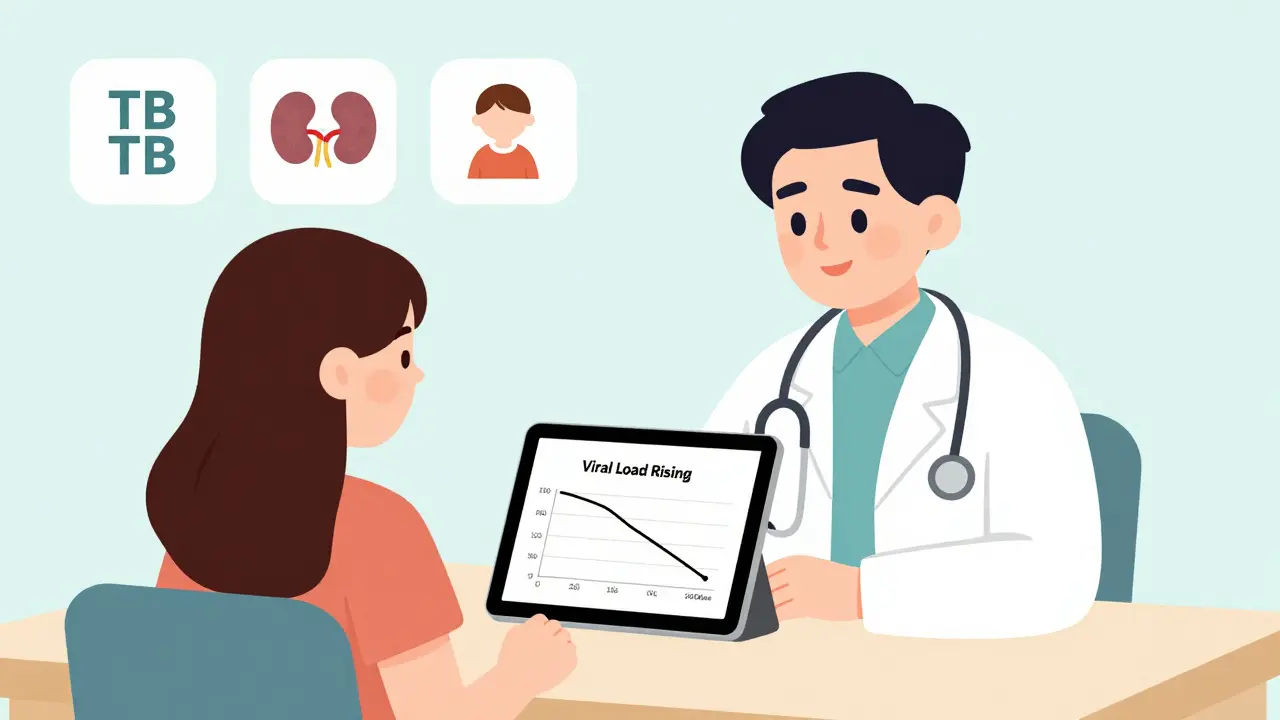
TDM isn’t a replacement for viral load testing. It’s a complement. If your viral load is rising and your adherence is good, then TDM helps you figure out why. If your viral load is high because you missed pills, no amount of blood testing will fix that.
The Future of TDM in HIV Care
Guidelines are shifting. The European AIDS Clinical Society (EACS) no longer recommends TDM for routine use. But they do say: "Use it when drug interactions, organ dysfunction, or generic switches create uncertainty." The U.S. Department of Health and Human Services still doesn’t endorse it broadly-but they’ve added new indications for newer drugs like bictegravir when used with rifampin.
What’s changing? More data. More labs. More awareness. The global TDM market is projected to hit $3.12 billion by 2029. HIV drugs make up less than 5% of that-but that 5% is growing. In places like South Africa, India, and Brazil, TDM is being rolled out as a safety net for generic drug programs.
And the technology is improving. Newer assays can now measure multiple drugs in one sample. Some hospitals are testing for intracellular metabolites of NRTIs-not in plasma, but in white blood cells. That’s still experimental, but it could one day make TDM useful for more drugs.
What Patients Should Know
If you’re on a generic antiretroviral and you’ve had unexplained side effects, or your viral load has started creeping up, ask your doctor: "Could TDM help here?" Don’t assume it’s not available. In Perth, the Royal Perth Hospital offers TDM for patients with complex cases. In Melbourne, it’s available through the Alfred Hospital HIV clinic.
But understand this: TDM won’t help if you’re not taking your pills. It won’t replace viral load tests. And it won’t be covered by insurance unless there’s a clear clinical reason.
It’s not magic. It’s science. And for some patients, it’s the only thing that stands between them and treatment failure.
Is therapeutic drug monitoring used for all HIV drugs?
No. TDM is only useful for drugs where blood levels directly affect how well they work-mainly protease inhibitors (PIs) and non-nucleoside reverse transcriptase inhibitors (NNRTIs). It does not work for nucleoside reverse transcriptase inhibitors (NRTIs) like tenofovir or emtricitabine because these drugs are activated inside cells, not in the bloodstream. Measuring their plasma concentration gives no useful information.
Why is TDM more important for generic drugs?
Generic drugs are required to be bioequivalent, meaning they deliver similar amounts of drug to the bloodstream. But small differences in absorption-due to fillers, coatings, or manufacturing-can cause significant changes in drug levels for medications with a narrow therapeutic index. For drugs like lopinavir or efavirenz, even a 10% drop or rise can lead to treatment failure or toxicity. TDM catches these changes before they cause harm.
How long does it take to get TDM results?
In public health systems like the NHS or Australia’s Medicare-funded labs, results typically take 10 to 14 days. Private labs in the U.S. and some specialist centers offer expedited results in 2-3 days, but at a higher cost-$450 to $650 per test. This delay is one of the biggest drawbacks of TDM, as it can’t respond quickly to sudden treatment changes.
Can TDM prevent drug toxicity?
Yes. In patients on generic lopinavir/ritonavir, TDM has prevented liver toxicity by identifying unexpectedly high drug levels. One NHS clinic reported preventing multiple cases of severe nausea and elevated liver enzymes by lowering doses based on TDM results. It’s especially helpful in patients with kidney or liver impairment, or those taking interacting drugs like rifampin for tuberculosis.
Is TDM covered by insurance?
Coverage varies. In the UK, the NHS covers TDM for specific clinical indications like drug interactions or organ dysfunction. In Australia, Medicare may subsidize it if ordered by a specialist HIV clinic. In the U.S., private insurers often cover it only for documented treatment failure or complex drug interactions. Routine use is rarely approved.
Does TDM replace viral load testing?
No. Viral load testing tells you if the virus is under control. TDM tells you why it might not be. They work together. If your viral load rises and you’re taking your pills, TDM helps determine if it’s due to low drug levels. If your levels are high and you’re still sick, it might point to toxicity. Neither test works alone.
 Medications



bill cook
February 27, 2026 AT 00:58Byron Duvall
February 28, 2026 AT 20:09Katherine Farmer
March 2, 2026 AT 16:42Brandie Bradshaw
March 2, 2026 AT 22:51Angel Wolfe
March 4, 2026 AT 04:48Sophia Rafiq
March 5, 2026 AT 08:43Noah Cline
March 6, 2026 AT 19:18Justin Ransburg
March 8, 2026 AT 03:03