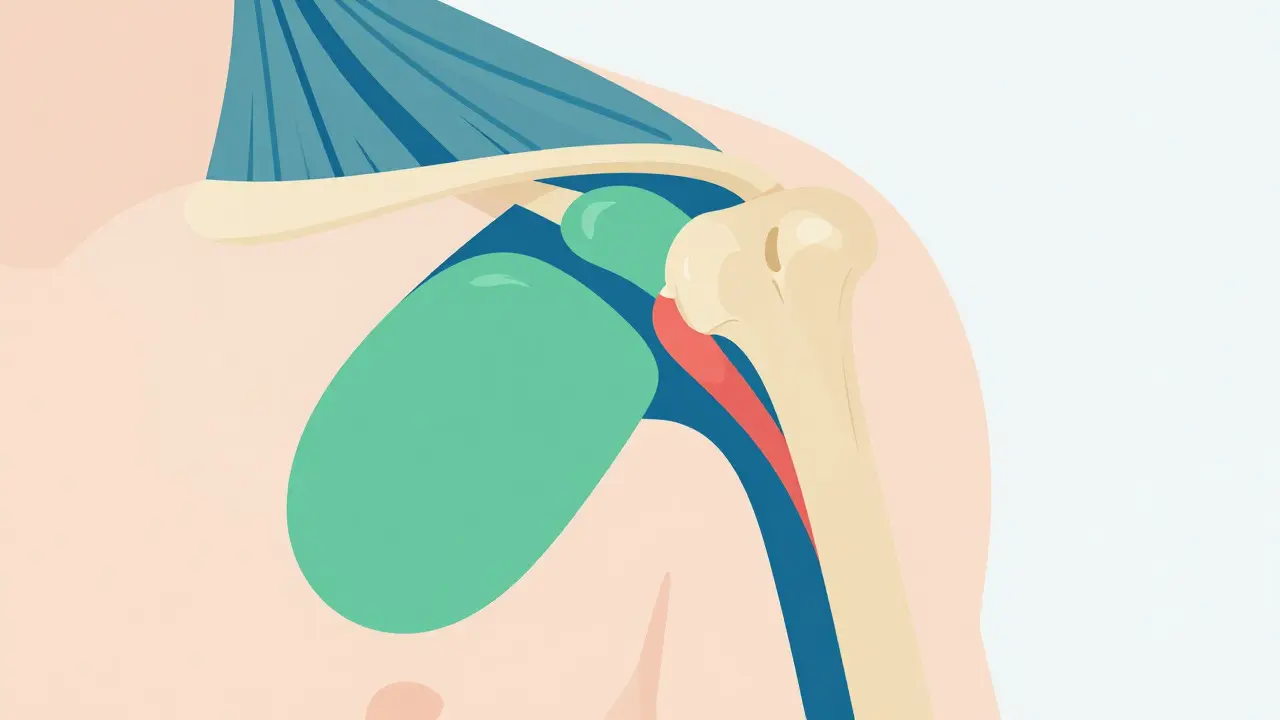
Shoulder pain is tricky. It doesn't just hurt; it stops you from reaching for a coffee mug, sleeping on your side, or lifting a grocery bag. For millions of people, that nagging ache turns into a diagnosis that sounds like a mechanic's report: a rotator cuff tear. This injury affects the group of four muscles and tendons-the supraspinatus, infraspinatus, teres minor, and subscapularis-that stabilize the shoulder joint. But here is the good news: modern medicine has moved far beyond the "rest and wait" approach of the past. Today, we have precise imaging tools, targeted rehab protocols, and minimally invasive surgical options that can get you back to normal life faster than ever before.
If you are dealing with shoulder pain, you probably have questions. Is it a tear? Do you need surgery? Will physical therapy actually work? This guide breaks down exactly how doctors diagnose these injuries, what your rehab looks like, and when surgical repair becomes necessary. We will look at the facts, not the fluff, so you can make informed decisions about your health.
Understanding the Diagnosis: Physical Exam and Initial Steps
Before any machine scans your shoulder, a doctor needs to understand what is happening inside. The diagnostic process starts with a comprehensive physical examination. Physicians assess your range of motion, strength, and specific pain indicators. They use standardized tests to pinpoint the issue. You might recognize names like the Neer impingement test, the Hawkins-Kennedy test, or the Empty Can test. These aren't random moves; they are designed to stress specific parts of the rotator cuff to see where the pain triggers.
Once the physical exam suggests a problem, the next step is usually an X-ray. While X-rays cannot show soft tissue tears directly, they are used in nearly every initial diagnostic workup. Why? Because they rule out other issues. An X-ray checks bone structure, detects arthritis, and identifies bone spurs that might be irritating the tendon. It’s like checking the foundation of a house before looking at the wiring.
Imaging Options: MRI vs. Ultrasound
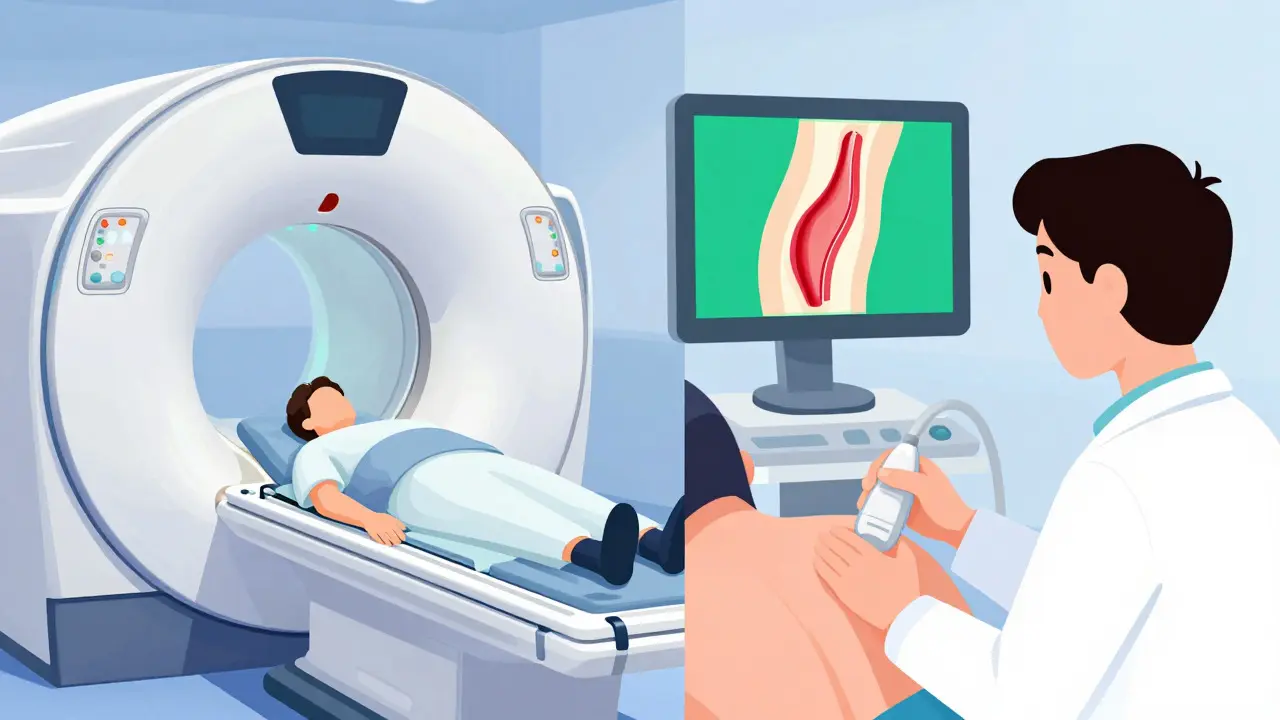
This is where things get interesting. To see the actual tear, you need advanced imaging. The two main contenders are Magnetic Resonance Imaging (MRI) and Ultrasound. Both have strengths, but they serve different purposes.
| Feature | MRI (Magnetic Resonance Imaging) | Ultrasound |
|---|---|---|
| Accuracy (Full-Thickness Tears) | 91-95% sensitivity | 87-91% sensitivity |
| Cost | $500-$1,200 (approx.) | $200-$400 (approx.) |
| Patient Comfort | Confined space, loud noises | Open, quiet, real-time interaction |
| Best For | Complex cases, surgical planning | Initial screening, dynamic assessment |
| Limitations | Contraindicated with metal implants | Operator dependent, limited in obesity (BMI >35) |
MRI is often considered the gold standard for detailed visualization. It uses proton density-weighted sequences to reveal tendon abnormalities. If you have a complex case or are planning surgery, an MRI provides a detailed "road map" of your shoulder anatomy. It shows not just the tear, but the quality of the muscle tissue itself. However, it is expensive and can be uncomfortable for claustrophobic patients.
Ultrasound, on the other hand, is gaining ground. Expert ultrasonography is now seen by many as the most efficient and cost-effective approach. It allows for bilateral examinations (checking both shoulders at once) and real-time dynamic assessment. The doctor can watch your tendon move while you lift your arm. Plus, there are no contraindications like metal implants. According to recent data, patient preference for ultrasound over MRI is high, largely due to comfort and speed. The catch? It requires a highly skilled operator. If the technician isn't experienced, the results can be misleading.
Rehabilitation: The First Line of Defense
Here is a surprising fact: not all rotator cuff tears require surgery. In fact, current guidelines from the American Academy of Orthopaedic Surgeons recommend against routine pre-operative imaging for patients with clear clinical findings. Instead, they advocate for an initial trial of physical therapy for 6-8 weeks. Why? Because up to 54% of asymptomatic individuals over 60 have rotator cuff tears detected on imaging. Just because you have a tear doesn't mean it's causing your pain, and just because it's torn doesn't mean it needs fixing surgically.
Structured rehabilitation is powerful. Evidence shows that 85% of patients with partial-thickness tears achieve functional recovery through rehab alone. The protocol typically follows a phased approach:
- Weeks 1-6: Passive range of motion exercises. A therapist moves your arm for you to prevent stiffness without stressing the healing tendon.
- Weeks 6-12: Active-assisted exercises. You start helping your arm move, using tools like pulleys or your other hand.
- After Week 12: Strengthening exercises. Once mobility returns, you build up the supporting muscles to stabilize the joint.
This conservative approach works well for many people, especially older adults or those with low-demand jobs. It avoids the risks of surgery and anesthesia entirely.

Surgical Repair: When Conservative Care Fails
If physical therapy doesn't resolve the pain, or if you have a large, acute tear in an active individual, surgery becomes the option. Today, approximately 250,000 rotator cuff repairs are performed annually in the United States. The landscape of surgery has changed dramatically. Traditional open surgery, which required cutting through muscles, is rarely used anymore.
The dominant technique is arthroscopic repair. This minimally invasive procedure uses small incisions and a camera. It accounts for about 90% of repairs today. The benefits are clear: arthroscopic repairs demonstrate equivalent functional outcomes to open repair but with 30% lower complication rates and a 25% faster return to daily activities. Recovery time has dropped from 6-12 months with traditional methods to 4-6 months with contemporary arthroscopic approaches.
For massive tears, surgeons may use patch augmentation to reinforce the repair. Emerging techniques also include platelet-rich plasma (PRP) injections as adjunctive therapy, though evidence for its efficacy remains mixed. The key is timing. Current trends show a shift toward earlier surgical intervention for full-thickness tears in active patients under 65. Waiting too long can lead to muscle atrophy and fatty infiltration, making repair much harder.
Post-Operative Rehabilitation and Long-Term Outlook
Surgery is only half the battle. Post-operative rehabilitation is critical. Protocols have evolved to allow earlier motion. Most surgeons now permit passive range of motion exercises immediately after surgery, rather than the strict immobilization periods common in the 1990s. Early movement helps prevent adhesions and stiffness.
What can you expect long-term? Satisfaction rates are generally high, with 82% of patients reporting satisfaction at 5 years post-arthroscopic repair. However, retear rates are a reality. Small tears (<1cm) have a retear rate of around 12%, while large tears (>3cm) face a 27% risk of re-tearing. This highlights the importance of adhering to your rehab plan and avoiding heavy lifting too soon.
Machine learning is even entering the picture. Recent studies show deep learning algorithms can distinguish partial from full-thickness tears with 89% accuracy on MRI. This technology promises more precise diagnoses and personalized treatment plans in the near future.
Do all rotator cuff tears require surgery?
No. Many partial-thickness tears and some full-thickness tears can be managed successfully with physical therapy and anti-inflammatory medications. Surgery is typically reserved for acute tears in young, active patients or chronic tears that fail to respond to 6-8 weeks of conservative treatment.
Is MRI better than ultrasound for diagnosing rotator cuff tears?
Both are highly accurate. MRI provides a more detailed view of the entire shoulder anatomy and is preferred for surgical planning. Ultrasound is cheaper, faster, and allows for dynamic assessment during movement. It is often recommended as an initial test due to its cost-effectiveness and lack of contraindications.
How long does recovery take after arthroscopic rotator cuff repair?
Most patients return to activities of daily living within 4-6 months. Full strength and complete recovery can take up to 12 months, depending on the size of the tear and adherence to rehabilitation protocols.
What are the risks of rotator cuff surgery?
Risks include infection, nerve damage, stiffness, and retear of the tendon. Arthroscopic surgery has lower complication rates (around 7.2%) compared to open surgery (10.3%). Proper post-op care significantly reduces these risks.
Can I do anything to prevent a rotator cuff tear?
While age-related degeneration is unavoidable, maintaining strong shoulder muscles, practicing good posture, and avoiding repetitive overhead motions without proper conditioning can reduce risk. Regular exercise focusing on scapular stability is beneficial.
 Medications