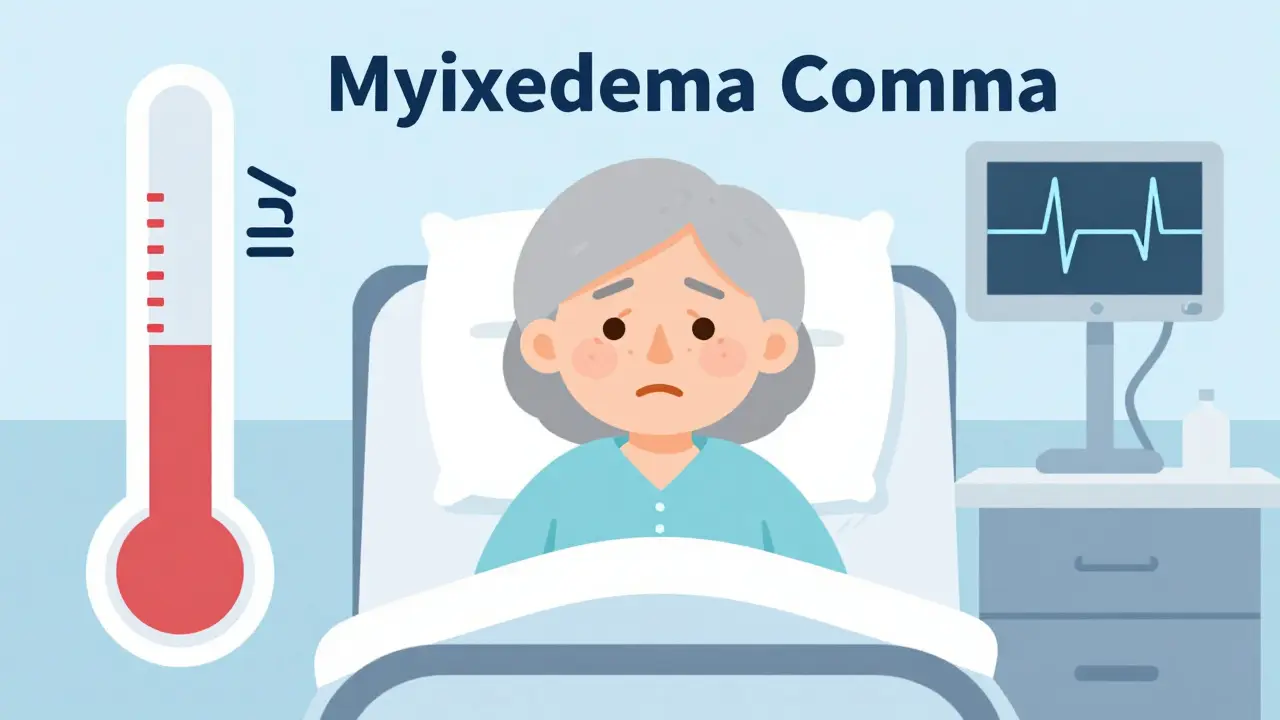
Imagine a patient who is not just tired, but profoundly lethargic. Their skin is pale and puffy, their heart beats dangerously slow, and their body temperature has dropped to levels that should trigger shivering-but they don't shiver. This isn't just a bad flu or a case of depression. This could be myxedema coma, also known as myxedema crisis. It is a rare but life-threatening decompensation of severe, long-standing hypothyroidism.
Despite the word 'coma' in the name, you do not need to be unconscious to have this condition. The medical community increasingly uses the term 'crisis' because altered mental status ranges from confusion to full unresponsiveness. First described by William Ord in 1879, this condition remains one of the most dangerous endocrine emergencies we face today. Mortality rates hover between 25% and 60%, largely because it is often missed until it is too late.
The Diagnostic Triad: What to Look For
You cannot diagnose myxedema coma with a single blood test alone. In fact, waiting for lab results can cost lives. Instead, clinicians rely on a specific triad of symptoms that must be present simultaneously. If you see these three things together, you need to act immediately.
- Altered Mental Status: This is the hallmark sign. Patients may appear confused, drowsy, or completely unresponsive. Profound lethargy is reported in nearly 98% of cases. Many patients describe feeling like they are 'moving through molasses.'
- Hypothermia: Core body temperature typically drops below 35°C (95°F). Unlike normal cold exposure, these patients often do not shiver because their metabolism has slowed so drastically that muscle movement is minimal.
- A Precipitating Event: Myxedema coma rarely happens out of nowhere. It is usually triggered by an external stressor. Common triggers include infections (like pneumonia or UTIs), cold exposure, stroke, myocardial infarction, or the use of certain drugs like sedatives or beta-blockers.
Beyond this triad, look for physical signs. Non-pitting edema-swelling that doesn't leave an indent when pressed-is common on the face, eyelids, lips, and lower extremities. You will also likely find bradycardia (heart rate under 60 bpm) and hypoventilation (breathing less than 12 times per minute).
Why It Happens: The Physiology Behind the Crisis
To understand why this is so dangerous, you need to understand what thyroid hormones do. Thyroxine (T4) and triiodothyronine (T3) regulate your basal metabolic rate. They control how your body generates heat, how fast your heart beats, and how efficiently your organs function. When levels of T3 and T4 become critically low, every system in the body slows down.
This slowdown leads to respiratory failure. The brain's drive to breathe diminishes, causing carbon dioxide retention (PaCO2 >45 mmHg) and low oxygen levels. The heart struggles to pump, leading to low blood pressure and potential shock. The kidneys fail to filter properly, resulting in fluid retention and hyponatremia (low sodium), which affects 70-80% of patients. This electrolyte imbalance further worsens the confusion and lethargy.
It predominantly affects women over 60 years old, with a female-to-male ratio of 3:1. However, men are more likely to experience diagnostic delays. In elderly patients, classic symptoms might be absent, presenting instead as 'apathetic hypothyroidism,' where the only sign is general decline or confusion, mimicking dementia.
Differentiating from Other Emergencies
Myxedema coma is often mistaken for other conditions, which contributes to its high mortality rate. Here is how it compares to similar crises:
| Condition | Key Symptom | Mental Status | Treatment Approach |
|---|---|---|---|
| Myxedema Coma | Hypothermia, Bradycardia | Lethargy to Coma | IV Thyroid Hormone + Steroids |
| Thyroid Storm | Hyperthermia, Tachycardia | Agitation, Delirium | Antithyroid Drugs + Beta-Blockers |
| Diabetic Ketoacidosis | High Blood Sugar, Fruity Breath | Confusion | Insulin + Fluids |
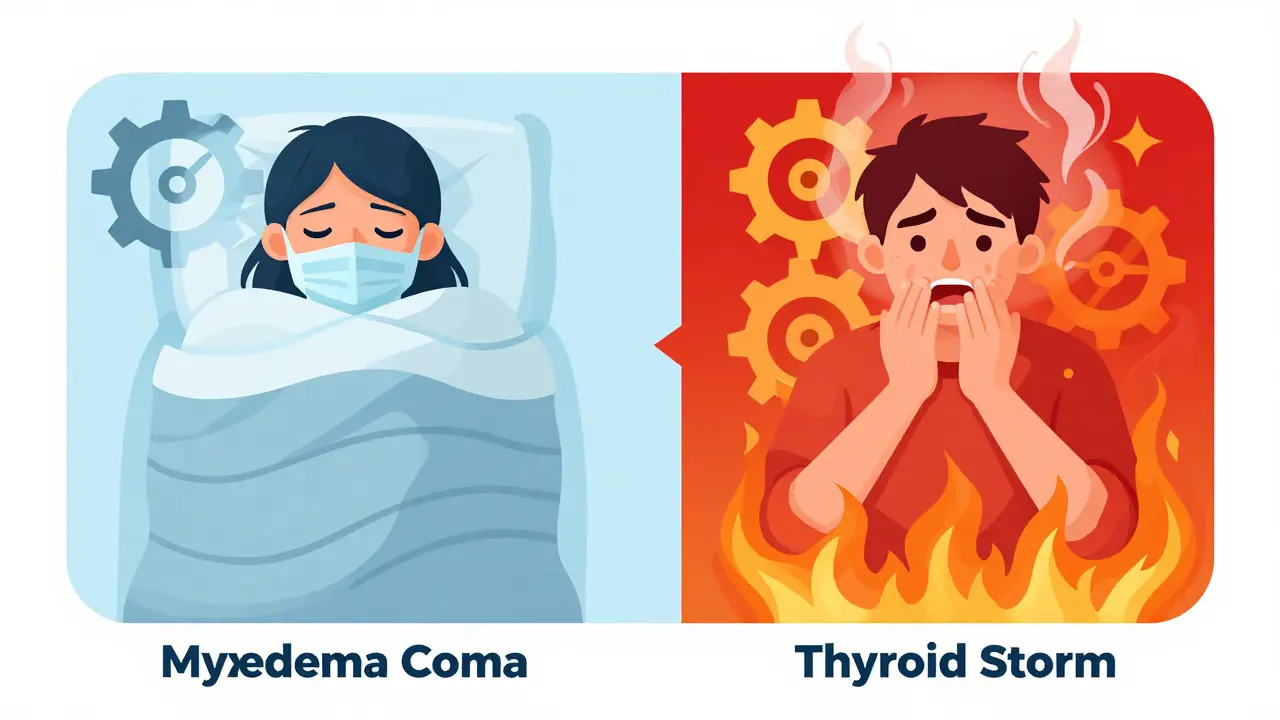
Note the critical difference: Thyroid storm is the opposite extreme-too much hormone-and requires slowing the body down. Myxedema coma requires jump-starting the metabolism. Confusing the two can be fatal. Unlike diabetic ketoacidosis, which has clear lab criteria (high glucose, low pH), myxedema coma relies heavily on clinical judgment because lab tests take time.
Emergency Protocols: The DIMES Mnemonic
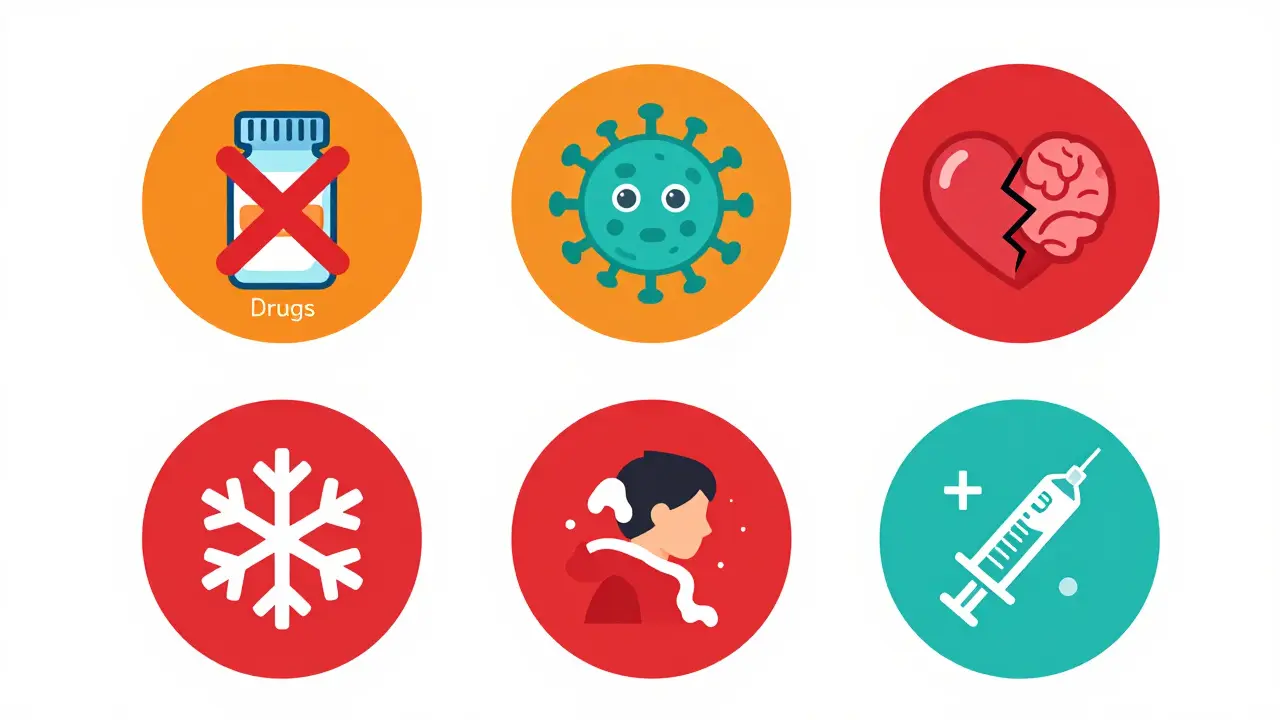
When you suspect myxedema coma, time is tissue. For every hour treatment is delayed, mortality increases by approximately 10%. The goal is to restore thyroid hormone levels while supporting failing organs. Clinicians often use the DIMES mnemonic to identify triggers and guide treatment:
- D - Drugs: Check if the patient took sedatives, opioids, or antipsychotics. These suppress breathing and metabolism further. Stop them immediately if possible.
- I - Infection: Infections account for 30-50% of cases. Even without a fever (because the patient is hypothermic), start broad-spectrum antibiotics immediately if infection is suspected.
- M - Myocardial Infarction/CVA: Heart attacks and strokes can precipitate the crisis. Monitor cardiac enzymes and consider imaging if neurological deficits are present.
- E - Exposure to Cold: Did the patient fall outside? Was their heating off? Passive rewarming is essential. Do not use active external warming (like heating blankets) as this can cause vasodilation and cardiovascular collapse.
- S - Stroke/Sedation: Re-evaluate neurological status frequently.
Step-by-Step Treatment Protocol
Treatment must begin before lab confirmation. Dr. Robert H. Eckel, past president of the American Heart Association, emphasized that 'treatment must not wait for laboratory confirmation.' Here is the standard protocol based on current guidelines:
- Airway Management: Intubation is required in 50-70% of cases due to respiratory depression. Secure the airway first. Do not delay this for other treatments.
- Thyroid Hormone Replacement: Administer intravenous levothyroxine (T4) immediately. A typical loading dose is 300-500 mcg, followed by 50-100 mcg daily. In severe cases with cardiac compromise, liothyronine (T3) may be added at 10-20 mcg every 8 hours. Recent 2022 guidelines suggest T3 may be preferred in some severe cardiac cases due to faster action.
- Corticosteroids: Always administer IV hydrocortisone (100 mg every 8 hours) alongside thyroid hormone. Why? Because untreated adrenal insufficiency can coexist with hypothyroidism (Schmidt's syndrome). Giving thyroid hormone without steroids can precipitate an adrenal crisis, which is fatal.
- Fluid and Electrolyte Correction: Correct hyponatremia cautiously. Rapid correction can lead to osmotic demyelination syndrome, a devastating neurological condition. Limit sodium correction to 4-6 mmol/L in the first 24 hours. Use isotonic saline for volume resuscitation.
- Passive Rewarming: Cover the patient with blankets. Warm the room. Avoid forced-air warming devices until the patient’s cardiovascular system is stable and thyroid levels begin to rise.
Risk Factors and Prevention
Who is most at risk? The data shows that myxedema coma affects about 0.2-0.6 cases per million people annually, but this jumps to 4-6 cases per million in those over 60. The highest risk group includes elderly women with undiagnosed or poorly managed hypothyroidism.
Prevention hinges on adherence. A 2022 survey found that 18% of hypothyroid patients had experienced a near-miss event due to medication non-adherence. Common triggers for stopping meds include hospitalizations, infections, or simply forgetting. Patient education is vital. Patients must understand that thyroid medication is not optional-it is life-sustaining. During winter months, extra caution is needed. Cold exposure exacerbates symptoms, making early recognition crucial.
Also, watch out for 'medical gaslighting.' Younger patients and men often have their symptoms dismissed as depression or laziness. If you feel constantly cold, fatigued, and mentally foggy despite adequate sleep, demand thyroid testing. Early detection of hypothyroidism prevents the progression to crisis.
Prognosis and Long-Term Outlook
If treated promptly, many patients recover fully. Improvement is often seen within 24-48 hours of proper therapy. However, the road to recovery is long. ICU stays average 11 days. Cognitive deficits may persist for weeks or months. Some patients require lifelong adjustments to their thyroid dosage.
The future of managing this condition looks promising. New point-of-care thyroid function tests are in phase 3 trials, offering 92% accuracy within 15 minutes. This could drastically reduce the time from suspicion to treatment. Additionally, biomarkers like elevated serum thyrotropin receptor antibodies are being studied to predict decompensation earlier. With an aging global population, cases are projected to increase by 20% by 2030. Awareness among primary care physicians and emergency staff is the best defense against this silent killer.
Can myxedema coma happen if I am taking thyroid medication?
Yes. Even if you are compliant, sudden stressors like severe infection, trauma, or extreme cold can overwhelm your system. Additionally, malabsorption issues or drug interactions (like iron or calcium supplements taken too close to thyroid meds) can lower effective hormone levels, triggering a crisis.
Why is passive rewarming preferred over active warming?
Active warming (heating blankets, warm baths) causes peripheral blood vessels to dilate rapidly. In a patient with a weak heart and low blood pressure, this can cause blood to pool in the extremities, leading to a sudden drop in central blood pressure and cardiovascular collapse. Passive rewarming allows the body to gradually generate heat as metabolism improves.
What is the role of corticosteroids in treating myxedema coma?
Corticosteroids (like hydrocortisone) are given empirically because up to 30% of patients with autoimmune hypothyroidism may also have adrenal insufficiency. Thyroid hormone increases the metabolism of cortisol. If adrenal reserves are low, giving thyroid hormone without steroid support can precipitate a fatal adrenal crisis.
How does myxedema coma differ from simple hypothermia?
Simple hypothermia is caused by environmental exposure and resolves with warming. Myxedema coma is a metabolic failure where the body cannot generate heat due to lack of thyroid hormone. Warming alone will not fix myxedema coma; it requires hormone replacement. Also, myxedema coma presents with specific signs like non-pitting edema and bradycardia that are not typical of simple cold exposure.
Are there any warning signs before a full crisis occurs?
Yes. Increased sensitivity to cold, worsening fatigue, constipation, dry skin, and mental fog are early signs. If you have hypothyroidism and notice these symptoms worsening during an illness or cold weather, seek medical attention immediately. Do not wait for confusion or coma to set in.
 Medications