

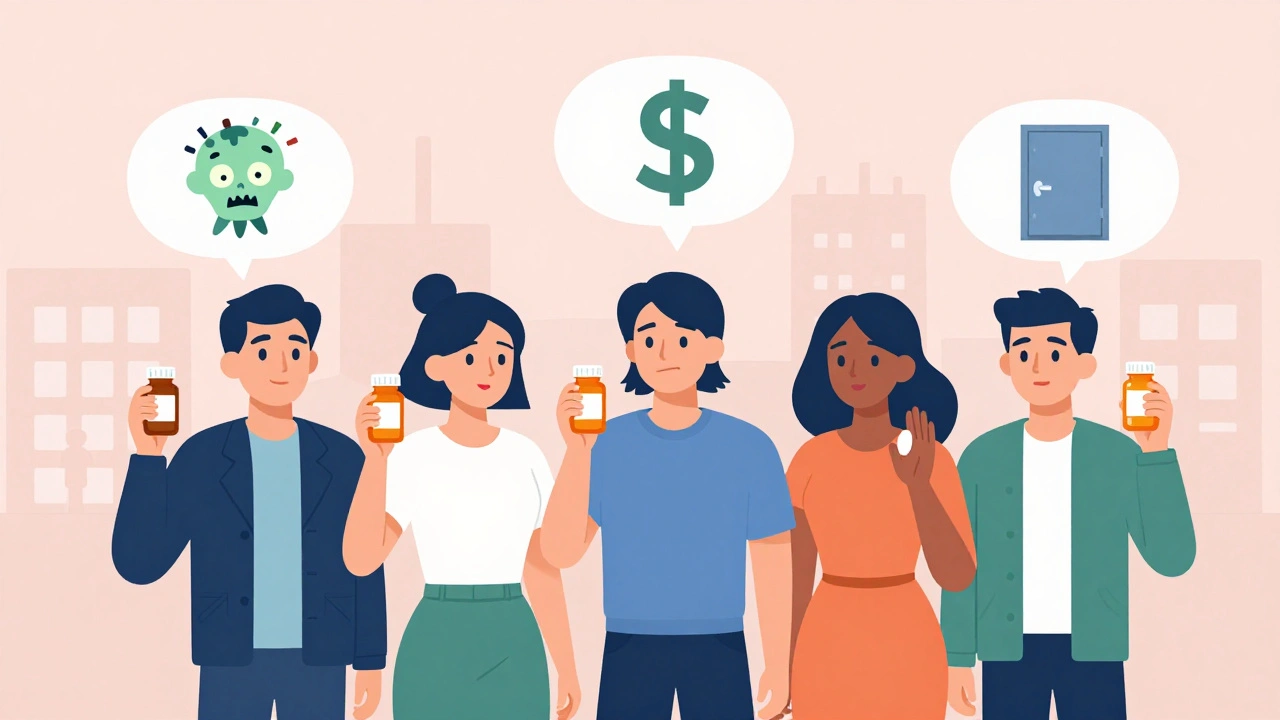
More than half of people taking medication for mental health conditions stop taking them as prescribed. It’s not laziness. It’s not weakness. It’s a complex mix of side effects, stigma, cost, and the illness itself making it hard to see the need for treatment. For someone with schizophrenia, that means a 50% chance they’ll miss doses. For someone with bipolar disorder, nearly one in three won’t stick with their meds at all. And for those without stable housing? The number drops to as low as 26%. This isn’t just about missed pills - it’s about hospital beds, emergency rooms, and lives lost. The CDC calls it an invisible epidemic, and it’s costing the U.S. healthcare system up to $300 billion a year.
Why People Stop Taking Their Mental Health Meds
It’s easy to assume people stop because they feel better. But that’s only part of the story. Many stop because they don’t feel better - they feel worse. Side effects like weight gain, drowsiness, or emotional numbness can be unbearable. One woman on Reddit shared that her antidepressant made her feel like a "zombie," so she quit. Within weeks, she was back in the ER.
Then there’s the cost. A single antipsychotic pill can cost $10 to $20 without insurance. For someone living paycheck to paycheck, that’s lunch money or bus fare. Even with insurance, prior authorizations and copay spikes make refills feel like a battle.
And then there’s the illness. Depression tells you nothing matters. Psychosis makes you believe the pills are poison. Bipolar mania convinces you you don’t need them. Schizophrenia can rob you of insight - the very ability to know you’re sick. When your brain is lying to you, taking a pill feels like surrendering control.
Simple things make it worse, too. Three pills a day? Too hard to remember. A bottle that runs out on a weekend? No pharmacy open. A provider who never asks if you’re taking them? You stop telling them.
What Actually Moves the Needle: Evidence-Based Fixes
Not all interventions work. Text reminders? They help a little - maybe 2% better adherence. But real change comes from human connection and systemic support.
The most effective solution? Pharmacist-led care. Not just handing out pills. Not just answering questions. Real collaboration between pharmacists and psychiatrists, working together with the patient. In one 2025 study, patients in a pharmacist-psychiatrist team saw a 142% greater improvement in adherence than those getting standard care. That’s not a small win. That’s life-changing.
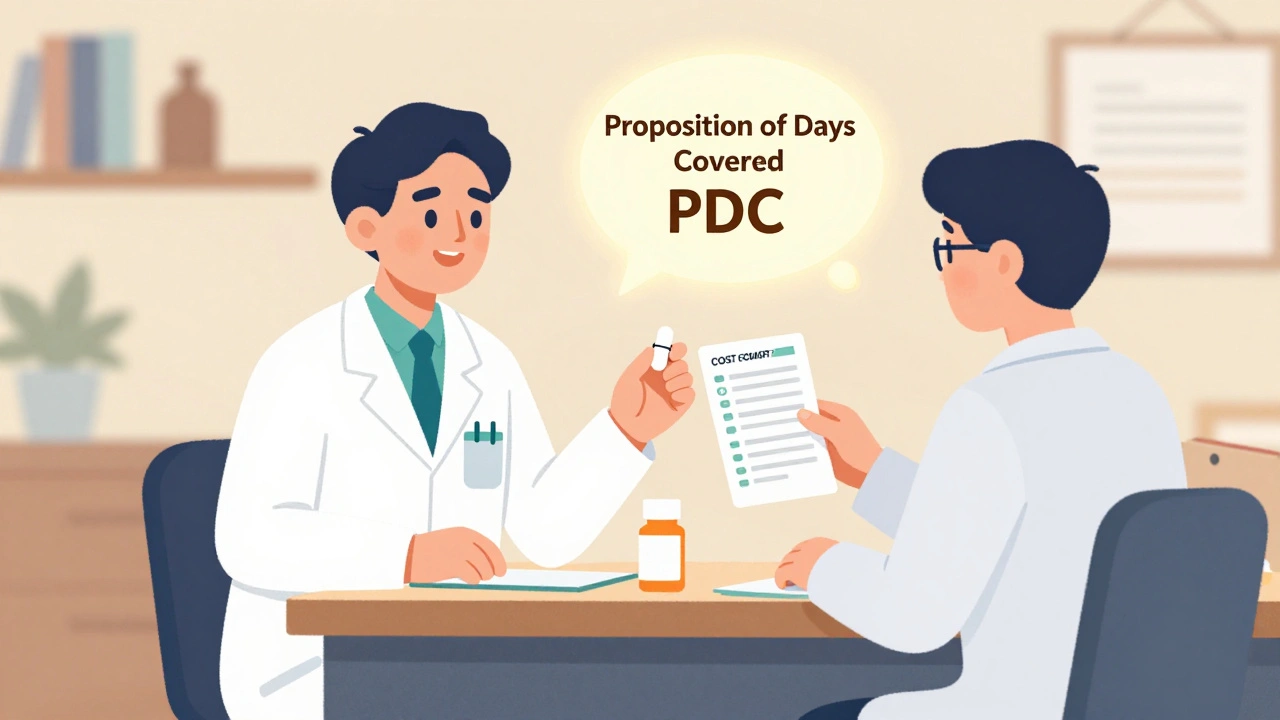
How? Pharmacists sit down with patients. They ask: "What’s making it hard to take your meds?" They check for side effects. They simplify regimens. They find cheaper alternatives. They call when refills are due. They track adherence using the Proportion of Days Covered (PDC) metric - the same one Medicare uses to judge quality. And they don’t stop when the patient walks out the door.
Kaiser Permanente in Northern California saw a 32.7% jump in adherence after launching their pharmacist-led program. Hospitalizations dropped by 18.3%. Star ratings went up. It wasn’t magic. It was consistency.
Simplifying the Regimen: One Pill a Day Changes Everything
Think about your own routine. How many things do you forget? Now imagine you have to remember five pills, at different times, with different food rules. It’s overwhelming.
Research shows that patients on once-daily regimens are 87% more likely to stay on track than those on multiple daily doses. That’s not a small difference. That’s a game-changer. Yet, 73% of patients say their doctor never even asked if they could switch to a simpler schedule.
Switching from three pills a day to one isn’t just convenient - it’s therapeutic. It reduces pill burden, cuts down on confusion, and makes adherence feel possible. For antipsychotics, long-acting injectables (shots every 2-4 weeks) now show 87% adherence - nearly double the rate of daily pills. They’re not perfect. They have side effects. But for many, they’re the only thing that keeps them stable.
Technology Alone Won’t Save You
There are apps. Smart pill bottles. Wearables that track when you take your meds. They sound great. But the data says otherwise. Digital tools improve adherence by less than 2% for mental health meds. Why? Because they don’t fix the root problem.
If you’re terrified of side effects, an app won’t calm you. If you can’t afford your meds, an alert won’t pay for them. If you believe the pills are making you crazy, a notification won’t change your mind.
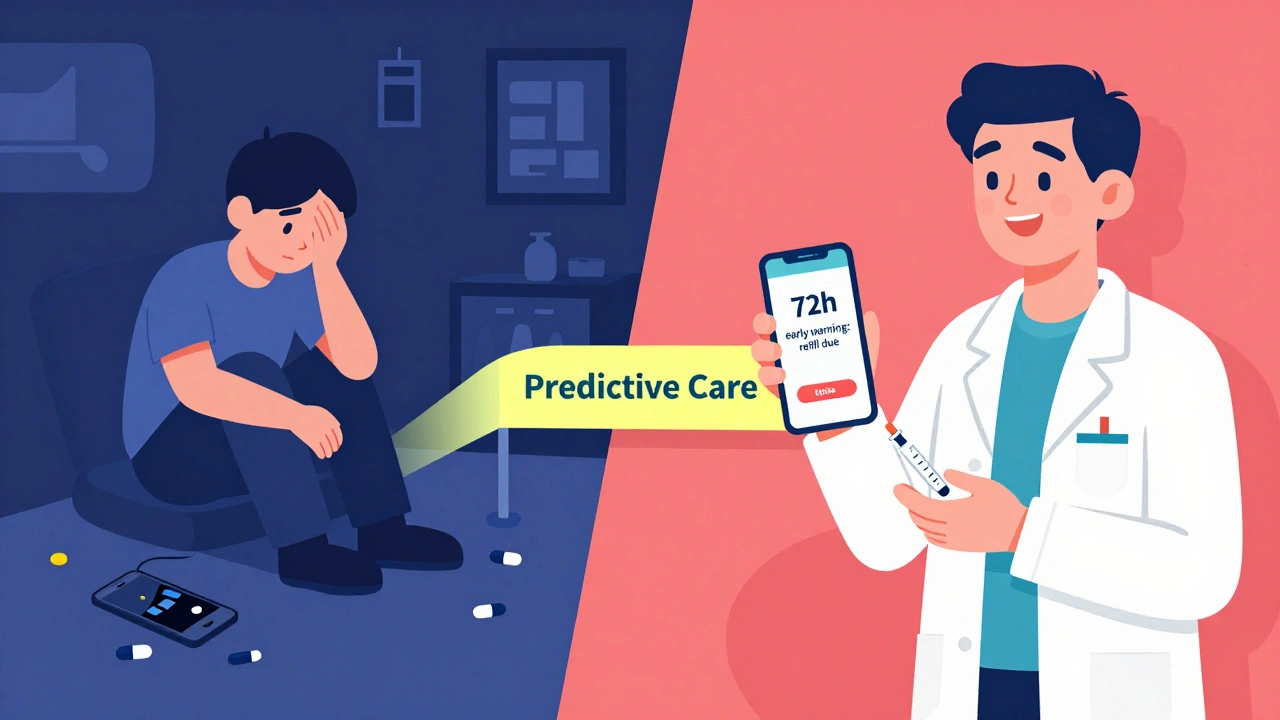
But here’s where tech helps: predictive analytics. Systems that look at your history - missed appointments, ER visits, pharmacy refill gaps - and flag you as high-risk. That’s when a pharmacist calls. That’s when a social worker checks in. That’s when someone intervenes before you crash.
A 2025 study in Nature Mental Health showed AI could predict a lapse in adherence 72 hours in advance - with 82.4% accuracy - just by analyzing smartphone usage patterns. That’s not surveillance. That’s care.
Cost Is the Silent Killer
Let’s be blunt: if you can’t afford your meds, you won’t take them. Period.
One patient in Bristol told me she was choosing between her antipsychotic and her rent. She picked rent. She ended up in the hospital. The cost of that one hospital stay? $12,000. Her monthly medication? $180. The math doesn’t add up - unless you’re trapped in a system that doesn’t care.
Programs that offer cost-transparency tools - showing patients exactly what their meds cost, and where to get them cheaper - work. So do patient assistance programs. So does switching to generics. But most providers never talk about it. They assume insurance covers it. They assume the patient can afford it.
UnitedHealthcare now ties 12% of mental health providers’ pay to adherence targets. That’s a start. But until every insurer and provider treats cost as a clinical issue - not a billing issue - people will keep skipping doses.
What You Can Do - Even If You’re Not a Doctor
If you’re taking meds for depression, anxiety, bipolar disorder, or psychosis:
- Ask your doctor: "Can we simplify this? One pill a day?"
- Ask your pharmacist: "Is there a cheaper version? A generic? A shot?"
- Track your mood and side effects - not just whether you took the pill. Write it down. Bring it to your next appointment.
- If you’ve stopped taking your meds, don’t hide it. Say it. Your provider can’t help if they don’t know.
If you’re supporting someone:
- Don’t nag. Ask: "What’s making it hard?" Then listen.
- Help them set up a pill organizer - or a phone reminder.
- Offer to go with them to the pharmacy. Sometimes, just having someone there makes a difference.
- Know that relapse isn’t failure. It’s a signal. Something needs to change.
The Bigger Picture: Systemic Change Is Coming - Slowly
The healthcare system is waking up. CMS now counts medication adherence in 7 of 13 Medicare quality measures. Hospitals get paid more if patients stay on their meds. The FDA now promotes long-acting injectables as a way to improve outcomes. Epic’s EHR system will soon flag non-adherence in real time.
But progress is uneven. Only 41% of community mental health centers that tried to add pharmacists kept the program past a year. Why? Staff burnout. Lack of funding. No reimbursement. The system still treats mental health as an afterthought.
What’s needed? More funding. More training. More integration. More respect.
Until then, the most powerful tool we have is simple: showing up. For yourself. For someone else. Asking the hard questions. Pushing for better options. And refusing to accept that this is just how it is.
Why do so many people stop taking their mental health medication?
People stop for many reasons: side effects like weight gain or drowsiness, cost, stigma, lack of insight into their illness, or simply because the regimen is too complicated. Depression and psychosis can make it hard to believe treatment is needed. For homeless individuals, adherence drops to as low as 26%. It’s rarely about willpower - it’s about barriers.
What’s the most effective way to improve medication adherence?
Pharmacist-led collaborative care is the most proven method. When pharmacists work directly with psychiatrists and patients - simplifying regimens, checking side effects, finding affordable options, and tracking adherence - adherence rates jump by up to 40%. Studies show this approach leads to 142% greater improvement than standard care.
Can switching to a once-daily pill help?
Yes. Patients on once-daily regimens are 87% more likely to stay adherent than those taking multiple pills a day. Simplifying the schedule reduces confusion and pill burden. Long-acting injectables (shots every few weeks) have even higher adherence - around 87% - compared to 56% for daily oral pills.
Do apps and reminders work for mental health meds?
They help a little - about 1-2% improvement - but they don’t fix the real problems. If you can’t afford your meds or fear side effects, a text reminder won’t help. The most useful tech is predictive analytics - systems that flag high-risk patients based on missed appointments or refill gaps, so someone can reach out before a crisis.
How much do mental health meds cost, and can I get them cheaper?
Antipsychotics can cost $10-$20 per pill without insurance. Many are available as generics for under $5. Pharmacists can help find patient assistance programs, coupons, or alternative formulations like long-acting injectables that may reduce overall cost. Always ask: "Is there a cheaper option?" - most providers don’t bring it up unless you do.
Is medication non-adherence a bigger problem in mental health than in other conditions?
Yes. While adherence for diabetes is around 72%, it’s only 59% for antipsychotics - the lowest of any chronic condition. Mental illness often impairs insight, increases stigma, and creates complex side effects. Plus, care is fragmented. Patients see psychiatrists, therapists, and primary doctors - none of whom always talk to each other. That’s why adherence rates lag behind.
What’s being done to fix this on a national level?
Medicare now ties payments to adherence metrics like the Proportion of Days Covered (PDC). CMS requires providers to track adherence for schizophrenia patients. The FDA promotes long-acting injectables. Private insurers like UnitedHealthcare now link 12% of provider pay to adherence targets. But progress is slow - only 41% of clinics keep pharmacist programs past a year. Systemic change is needed in funding, training, and integration.
What Comes Next
Improving adherence isn’t about shaming people. It’s about redesigning care. It’s about asking, "What’s getting in your way?" instead of, "Why aren’t you taking your pills?"
The tools exist. The data is clear. Pharmacist-led care works. Simplified regimens work. Cost transparency works. But they’re not being used at scale.
If you’re a patient, speak up. If you’re a provider, ask the hard questions. If you’re a policymaker, fund the programs that work. Because every missed dose isn’t just a statistic - it’s a person struggling to stay alive.
 Medications

Scott van Haastrecht
December 5, 2025 AT 21:36Bill Wolfe
December 7, 2025 AT 10:16Ollie Newland
December 9, 2025 AT 08:09Rebecca Braatz
December 10, 2025 AT 07:55Heidi Thomas
December 11, 2025 AT 11:16Alex Piddington
December 12, 2025 AT 16:37Dematteo Lasonya
December 14, 2025 AT 07:16Jake Deeds
December 14, 2025 AT 18:53Isabelle Bujold
December 16, 2025 AT 10:21George Graham
December 18, 2025 AT 05:00John Filby
December 18, 2025 AT 21:36Elizabeth Crutchfield
December 19, 2025 AT 14:29Ben Choy
December 20, 2025 AT 21:49