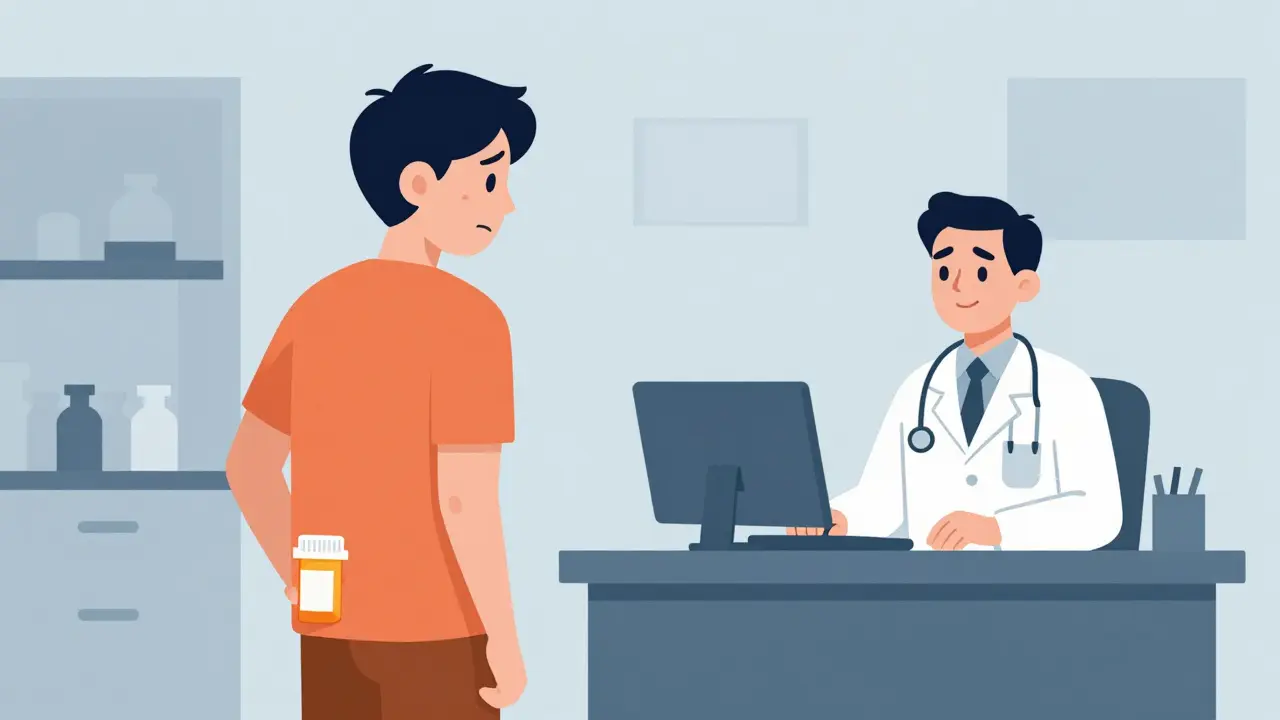
You walk out of the doctor’s office with a new prescription. You nod along as they explain the dosage, feeling polite and compliant. But three weeks later, you realize you’ve missed half your doses. Maybe it was the cost, maybe it was the side effects, or maybe you just forgot. Now comes the hard part: going back to that same doctor and admitting you haven’t been taking the pills.
Most people freeze in this moment. We lie. We say we’re taking them when we aren’t. We hope the doctor won’t notice. But here is the uncomfortable truth: medication compliance is the extent to which a patient's behavior matches medical advice, and when it breaks down, health outcomes suffer. According to the World Health Organization, improving medication adherence would have a greater impact on population health than any single medical intervention. Yet, nearly 50% of patients with chronic conditions fail to take their medications correctly.
The good news? This isn’t just your fault. Research shows that physician communication is significantly linked to whether you actually take your meds. A 2009 meta-analysis found that patients whose doctors communicate poorly face a 19% higher risk of nonadherence. Conversely, when doctors receive training in communication skills, patient adherence odds jump by 62%. The barrier isn’t just willpower; it’s how we talk about medicine.
Why We Lie to Our Doctors (And Why It Happens)
Let’s be honest: talking to a doctor can feel like standing before a judge. If you admit you skipped doses, you fear they’ll scold you, dismiss your concerns, or label you a "difficult" patient. This fear is real and well-documented. A 2021 study in NEJM Catalyst found that 41.7% of non-adherent patients reported physicians reacting defensively when they disclosed nonadherence.
Consider this scenario from an AMA patient forum: A transplant patient stopped taking life-saving immunosuppressants because their physician scolded them for missing one dose. The patient felt so ashamed they lied about taking them for months until their body began rejecting the organ. That is not an outlier; it is a systemic failure of communication.
When we hide our struggles, we lose the chance for solutions. Nonadherence costs the U.S. healthcare system $300 billion annually and leads to 7,000 deaths yearly from medication errors. But beyond the statistics, there is a personal cost: uncontrolled blood pressure, worsening diabetes, or failed surgeries. Breaking the silence starts with understanding that forgetting or struggling with medication is common, not criminal.
The Shift from Blame to Partnership
Effective communication requires a shift from a traditional, physician-centered model to a patient-centered partnership. In the old model, the doctor dictates, and the patient obeys. Adherence rates in these scenarios hover around 43.7%. In contrast, shared decision-making models-where patients and doctors collaborate on treatment plans-boost adherence to 71.4%, according to a 2020 BMJ Quality & Safety meta-analysis.
This shift relies on specific techniques. The American Medical Association identifies seven core components for effective dialogue:
- Developing a routine process for asking about adherence.
- Creating a shame- and blame-free environment.
- Identifying specific reasons for nonadherence (cost, side effects, forgetfulness).
- Responding positively when patients disclose issues.
- Tailoring solutions to individual circumstances.
- Involving patients in treatment planning.
- Using nonjudgmental language.
Notice the difference in phrasing. Instead of asking, "Why aren’t you taking my prescriptions?" (which sounds accusatory), a skilled doctor asks, "Many people have trouble taking medications regularly. Do you find that happens with any of yours?" This simple change increases disclosure rates by 37%, per a 2021 JAMA Internal Medicine study. It normalizes the struggle and invites honesty.

Practical Tools for Better Conversations
If you are the patient, you can actively shape this conversation. You don’t need a degree in medicine; you just need a few strategies to ensure you are heard and understood.
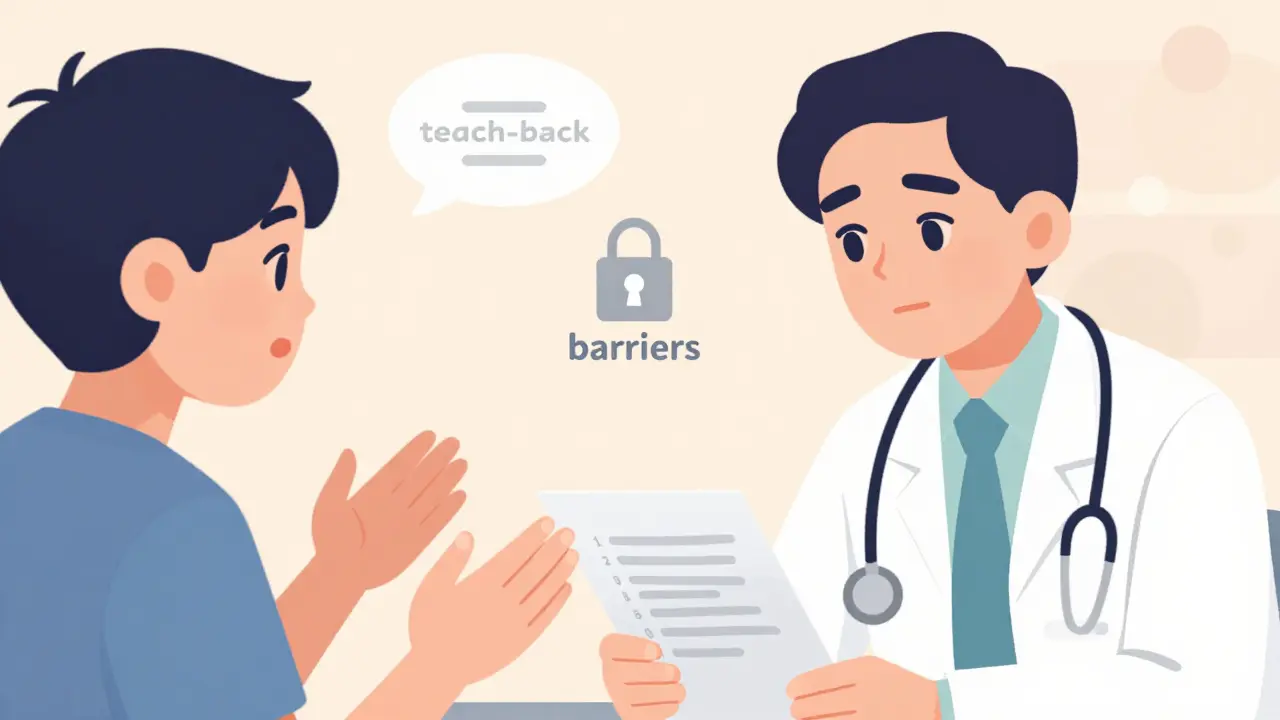
1. Use the Teach-Back Method
The "teach-back" method is a powerful tool where you explain back to your doctor what you understood about your medication instructions in your own words. This isn’t about testing your memory; it’s about checking their clarity. Studies show this technique increases adherence by 17.3% and takes only 45-60 seconds. For example, you might say, "Just to make sure I got this right, I should take this pill with food every morning, correct?" If the doctor confirms, you leave with certainty. If they correct you, you avoid a costly mistake.
2. Identify Your Barriers Early
Before your appointment, write down why you might be struggling. Is it the price? The number of pills? Side effects like nausea or drowsiness? Bringing this list helps the doctor tailor the solution. If cost is the issue, they might prescribe a generic alternative or provide samples. If side effects are the problem, they might adjust the timing or switch medications. Hiding these details prevents them from helping you.
3. Ask for Plain Language
Medical jargon is a major barrier. A 2022 AHRQ survey found that 63.2% of patients struggled with medical terminology. Don’t be afraid to say, "Could you explain that in simpler terms?" or "What does this mean for my daily life?" Effective doctors will respect this request. They want you to understand, not to impress you with vocabulary.
What Doctors Can Do Better
While patients play a role, the burden of clear communication largely falls on providers. Dr. Richard Frankel of Indiana University School of Medicine noted that inadequate communication may account for 55% of medication nonadherence. To fix this, doctors must adopt active listening techniques: reacting to ideas rather than judging the person, reading body language, and acknowledging feelings.
The American College of Obstetricians and Gynecologists advises physicians to verbally legitimize patient feelings and involve family members if appropriate. When a doctor says, "I hear that this schedule is hard for you, let’s figure out a way to make it work," it builds trust. This partnership-building approach has been shown to increase adherence rates by 23.7% compared to traditional methods.
| Approach | Adherence Rate | Key Characteristic |
|---|---|---|
| Traditional (Physician-Centered) | 43.7% | Doctor directs; patient obeys |
| Patient-Centered | 62.1% | Focus on patient needs and barriers |
| Shared Decision-Making | 71.4% | Collaborative planning and goal setting |
Overcoming Common Challenges
Time is often cited as the biggest obstacle. Physicians report that 82.4% feel constrained by visit length. However, efficient communication doesn’t require more time; it requires better structure. Training medical assistants to conduct initial adherence screenings can improve physician efficiency by 18.7%, freeing up the doctor to focus on complex discussions.
Another challenge is health literacy. Patients with low health literacy have adherence rates of only 32.1%, compared to 68.7% for those with high literacy. This gap highlights the need for universal precautions in communication: assuming limited literacy and using clear, visual aids whenever possible.
Technology also plays a growing role. AI-powered chatbots and reminder apps are becoming common, with 37.2% of large healthcare systems implementing such tools in 2023. While helpful, technology cannot replace human empathy. The digital divide remains a risk, particularly for older adults, with 43.7% of patients over 65 lacking digital literacy. Personalized, face-to-face communication remains the gold standard.
Next Steps for Your Next Visit
Preparing for your next appointment doesn’t have to be stressful. Start by writing down your questions and concerns. Bring your medication bottles to verify dosages. Practice the teach-back method. And most importantly, remember that your doctor is on your team. Their goal is your health, not your obedience. By fostering open, honest, and respectful communication, you transform medication compliance from a chore into a collaborative journey toward better health.
What should I say if I haven't been taking my medication?
Be direct but contextual. Say something like, "I’ve been having trouble sticking to the schedule because [reason]." Reasons can include cost, side effects, forgetfulness, or complexity. Avoid apologizing excessively; instead, frame it as a problem to solve together. For example, "I miss doses after work because I’m tired. Could we switch to a once-daily evening dose?" This invites collaboration rather than judgment.
How does the teach-back method work?
The teach-back method involves you repeating the medication instructions in your own words to confirm understanding. After your doctor explains the regimen, say, "To make sure I understand, I should take this twice a day with food." If you get it wrong, the doctor can clarify immediately. This simple step reduces errors and boosts confidence.
Why do doctors sometimes react badly to nonadherence?
Doctors are trained to prioritize patient safety, and nonadherence can lead to severe health risks. Sometimes, frustration stems from concern, not anger. Additionally, some physicians lack training in motivational interviewing or empathetic communication. Recognizing this can help you stay calm and steer the conversation back to solutions.
Can technology replace talking to my doctor about meds?
No. While apps and reminders help with logistics, they cannot address emotional barriers, side effects, or complex lifestyle adjustments. Human communication builds trust and allows for nuanced problem-solving. Technology is a supplement, not a substitute, for the patient-doctor relationship.
What if my doctor doesn't listen to my concerns?
If you feel dismissed, consider seeking a second opinion or switching providers. Effective care requires mutual respect. You can also ask to speak with a nurse practitioner or pharmacist, who may have more time to discuss adherence strategies. Remember, you have the right to advocate for your health.
 Medications