

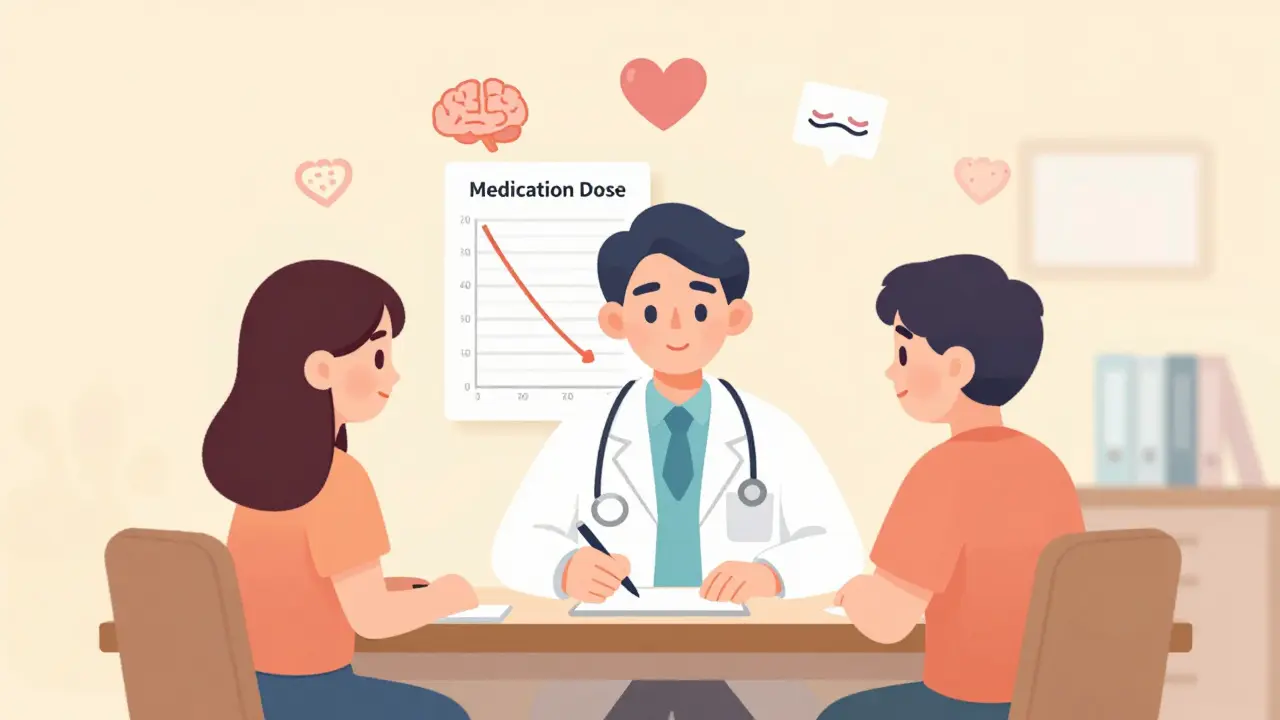
When you’ve been on a medication for months or years, the idea of stopping can feel overwhelming. Maybe your pain has improved. Maybe your anxiety is under control. Or maybe you’re just tired of taking something every day. But if you just quit cold turkey, you could end up with shaking hands, insomnia, nausea, or worse. That’s why medication tapering-gradually lowering your dose-isn’t just a medical suggestion. It’s often the only safe way out.
Why You Can’t Just Quit
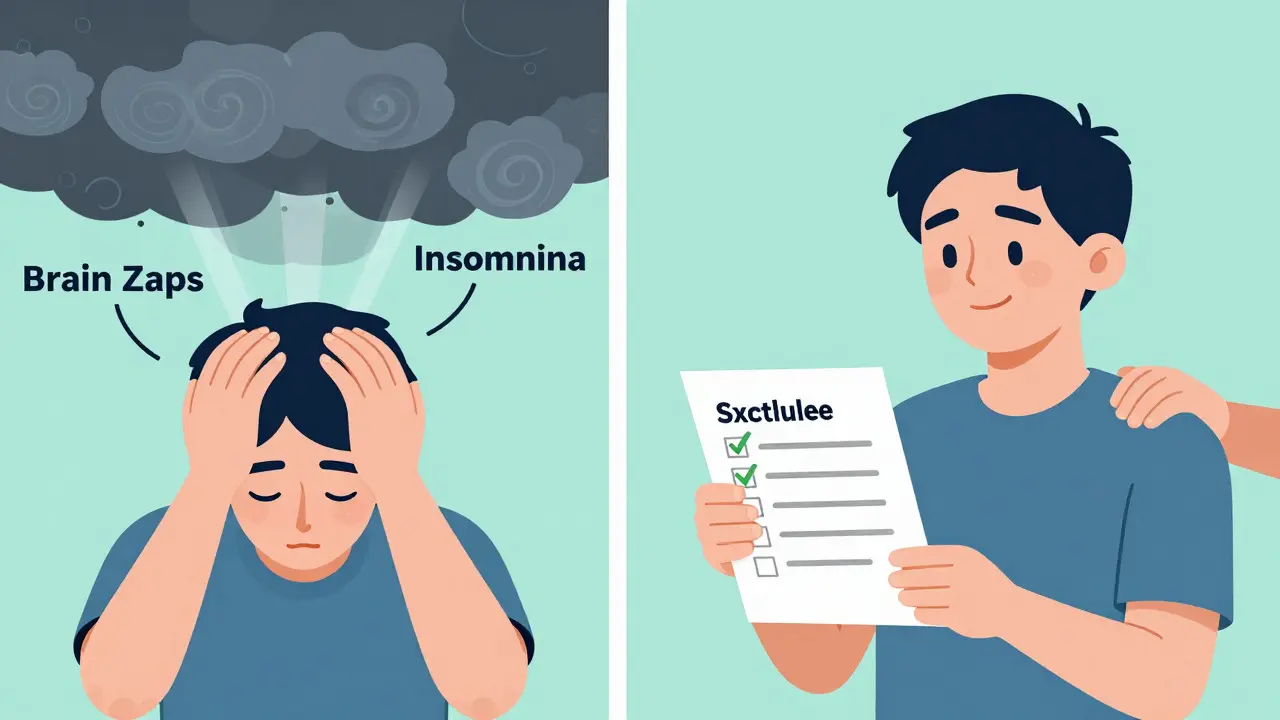
Your body adapts to medications over time. That doesn’t mean you’re addicted. It means your brain and nervous system have adjusted to having that drug in your system. When you suddenly remove it, your body goes into a kind of shock. This isn’t the same as addiction, but it can feel just as scary. For example, if you’ve been taking a benzodiazepine like lorazepam for anxiety for over six months, stopping suddenly can trigger seizures, extreme anxiety, or hallucinations. With opioids, you might face intense muscle aches, vomiting, and diarrhea. Even antidepressants-medications many think are harmless to stop-can cause brain zaps, dizziness, and mood crashes. A 2021 review in the Journal of Clinical Psychiatry found that 8-12% of long-term benzodiazepine users experienced severe withdrawal. That’s not rare. That’s predictable.How Fast Should You Taper?
There’s no one-size-fits-all answer. The speed depends on the drug, how long you’ve been taking it, your age, your other health conditions, and even your genetics. For benzodiazepines, experts like the American Society of Addiction Medicine (ASAM) recommend a minimum 4-week taper for short-term users. For those on it for over a year? Plan for 4 to 26 weeks. The rule of thumb: reduce by 5-10% every 1-2 weeks. Slower is safer. Opioids can be tapered faster, but not always. The CDC and Department of Veterans Affairs suggest cutting by 10% of your original dose every 5-7 days. Some protocols go as fast as 20-50% per week, but that’s risky. A 2022 analysis from Health Plan of Nevada showed that tapers faster than 10% per week led to 40-60% more cases of moderate-to-severe withdrawal. Antidepressants are the trickiest. Some, like fluoxetine (Prozac), have a long half-life and can be stopped in 1-2 weeks. Others, like paroxetine (Paxil), need 4-8 weeks. A 2021 review of 21 clinical guidelines found that 71% recommended gradual tapering. But 43% still said some patients could stop abruptly-if properly prepared. That’s a contradiction. And that’s why your doctor needs to know your full history.What Your Doctor Should Do (and What They Often Don’t)
Too often, patients are handed a note that says “Stop X drug” with no plan. That’s dangerous. A good tapering conversation includes five key steps, as outlined in ASAM’s 2022 Provider Pocket Guide:- Assess readiness. Ask: “On a scale of 1 to 10, how ready are you to reduce this medication?” If it’s below 6, push pause. You need to want this.
- Explain why. Don’t say “It’s better for you.” Say: “Your dose has been stable for 2 years. Your liver function is normal, and your pain score has dropped from 7 to 3. That means you’re a good candidate to try lowering this.”
- Create the plan together. Write it down. Show them the schedule: “Week 1: 10% reduction. Week 3: Another 10%. We’ll check in every 7 days.” Give them a printed copy.
- Set up monitoring. Ask them to track symptoms daily. A simple journal: “Headache? Yes/No. Sleep? Good/Poor. Mood? Stable/Down.”
- Schedule follow-ups. Weekly visits for the first month. No exceptions. Withdrawal symptoms often peak around day 10-14.
What Patients Say About the Process
On Reddit, a user named PainFree2022 wrote: “My doctor never explained withdrawal would last 3 weeks. I felt betrayed and went back to higher doses.” That story isn’t rare. A 2023 analysis found that poor communication was the #1 reason tapering failed. But the good stories? They’re powerful. One patient on Healthgrades said: “My doctor gave me a written schedule and said, ‘Call me anytime, day or night.’ I did. Twice. And he never made me feel stupid.” That kind of support led to 82% of patients reporting high satisfaction. Another common theme: people wanted to know why. 79% of those who had a successful taper said their doctor used their own health data to explain the decision. Not generic advice. Not “everyone should stop.” “Based on your bloodwork, your sleep log, and your pain diary-you’ve done enough.” That’s what sticks.What to Watch For (And When to Call)
Withdrawal symptoms aren’t always obvious. You might think it’s just stress. But here’s what to look out for:- Brain zaps (electric shock sensations in your head)
- Severe dizziness or vertigo
- Insomnia that doesn’t improve
- Heart palpitations or chest tightness
- Intense anxiety or panic attacks
- Depression that feels worse than before you started the med
What You Can Do Right Now
Even if you’re not ready to stop, you can prepare:- Write down why you’re thinking about stopping. Is it side effects? Cost? Fear? Clarity helps your doctor help you.
- Track your symptoms for 2 weeks. Use your phone’s notes app. “Day 3: Felt foggy after 2 p.m. Slept 5 hours.”
- Ask your doctor: “What would a safe taper look like for me?” Don’t wait for them to bring it up.
- Request a written plan. If they say “We’ll figure it out,” ask for a follow-up appointment in 2 weeks.
- Know your drug’s half-life. A quick Google search-“[drug name] half-life”-gives you a starting point.
The Bigger Picture
In 2023, Medicare started requiring individualized taper plans for high-dose opioid users. The CDC estimates 17,000 deaths each year are tied to unsafe discontinuation. That’s not just a statistic. That’s someone’s parent, sibling, or friend. The new FDA rules now require opioid labels to include tapering instructions. ASAM launched an AI-powered tapering toolkit in 2024. These aren’t just policy changes. They’re signals: stopping medication safely is now part of standard care. And the best part? When done right, tapering works. Mayo Clinic’s protocol has an 85% success rate. Patients who co-create their plan have a 78% completion rate-nearly double those who are told what to do.Final Thought
Stopping a medication isn’t a decision you make alone. It’s a conversation. A partnership. A plan built on your history, your symptoms, and your goals. You don’t need to be brave. You just need to be informed. And you deserve a provider who listens-not just tells.Can I stop my medication cold turkey if I’ve only been on it a few weeks?
Even if you’ve been on a medication for a short time, stopping suddenly can still cause withdrawal. For example, antidepressants like sertraline can cause dizziness and brain zaps after just 3-4 weeks of use. The body adapts faster than you think. Always talk to your doctor-even if you think it’s "not a big deal."
What if my doctor refuses to let me taper?
You have the right to ask for a second opinion. If your doctor dismisses your concerns, ask for a referral to a specialist-like a pain management doctor, psychiatrist, or addiction medicine provider. Many clinics now offer tapering clinics specifically for this. Don’t stay stuck. Your health matters more than one provider’s opinion.
Are there medications that can’t be tapered?
Most medications that cause physical dependence can be tapered safely-just not always quickly. Some, like corticosteroids or certain blood pressure drugs, require very slow tapers over months. Others, like insulin or thyroid hormone, aren’t tapered at all because they’re replacement therapies, not dependency-forming. The key is knowing which category your drug falls into. Your pharmacist can help with that.
How do I know if my symptoms are withdrawal or my original condition coming back?
Withdrawal symptoms usually appear within days of a dose reduction and peak around 7-14 days. They often feel different than your original condition. For example, anxiety from withdrawal tends to be more physical-racing heart, trembling, nausea-while anxiety from your original condition is more mental: obsessive thoughts, dread, avoidance. Keeping a daily log helps you spot the pattern. If you’re unsure, call your provider. They’ve seen this before.
Can I taper on my own without seeing a doctor?
It’s risky. Some people do, but without medical oversight, you could miss warning signs like seizures, heart rhythm changes, or severe depression. Tapering isn’t just about reducing pills-it’s about monitoring your body’s response. Even if you feel fine, complications can sneak up. A single check-in every 2 weeks can prevent hospitalization.
What if I feel worse after tapering? Should I go back to my old dose?
Feeling worse doesn’t mean you failed. It means your body is adjusting. If symptoms are mild and temporary, staying on the taper is usually the right move. If they’re severe-like suicidal thoughts, chest pain, or confusion-pause the taper and contact your provider immediately. Going back to your old dose isn’t weakness. It’s a smart reset. You can try again later, with a slower plan.
Is tapering covered by insurance?
Yes. Medicare and most private insurers now cover tapering consultations, follow-up visits, and even telehealth check-ins for medication discontinuation. Some even cover specialized tapering programs. Check your plan’s behavioral health or chronic care benefits. If your provider says it’s not covered, ask them to submit a code for "medication discontinuation counseling"-that’s the billing term.
How long does withdrawal last?
It varies. For most medications, physical symptoms peak within 1-2 weeks and fade over 2-8 weeks. But some people experience lingering symptoms-called post-acute withdrawal-for months. This is rare, but real. It’s not a relapse. It’s your nervous system healing. Support groups, sleep hygiene, and light exercise help. If symptoms last longer than 3 months, ask about a neurology or functional medicine evaluation.
Can I taper more than one medication at once?
It’s possible, but not recommended. Tapering one drug at a time lets you know exactly which one is causing symptoms. If you reduce two at once and feel awful, you won’t know which to adjust. Start with the one that’s most likely to cause withdrawal-usually benzodiazepines or antidepressants. Wait at least 2-4 weeks before starting the next taper.
What if I need to restart the medication later?
You can. Medications don’t become "less effective" just because you stopped them. If your condition returns, restarting at your previous dose is usually safe. But don’t wait until you’re desperate. If you feel symptoms creeping back, contact your provider early. A quick re-taper or small dose adjustment is easier than going back to full strength.
 Medications




Marie Crick
February 20, 2026 AT 02:48Stop being so dramatic. If you’re on meds long enough to need a taper, you already know this stuff. Just do it right or don’t complain later.
Amrit N
February 21, 2026 AT 05:55thx for this!! i was scared to come off my antidepressant but now i feel like i can actually talk to my doc without feelin like a junkie. ugh i hate that word lol
Greg Scott
February 23, 2026 AT 02:17I appreciate how you laid this out. My doctor just said "stop it" and gave me a scrip for a placebo. No plan, no follow-up. This should be standard practice.
Caleb Sciannella
February 24, 2026 AT 14:40The clinical evidence presented here is both compelling and overdue. The normalization of abrupt discontinuation in primary care settings reflects a systemic failure in patient-centered pharmacotherapy. We must recognize that neuroadaptation is not synonymous with addiction, and the ethical imperative to mitigate iatrogenic harm through individualized tapering protocols cannot be overstated. The ASAM guidelines, supported by peer-reviewed data from the Journal of Clinical Psychiatry and Health Plan of Nevada, provide a robust framework that should be codified into routine clinical workflow. Furthermore, the emphasis on patient co-creation of the tapering plan-particularly through documented symptom tracking and scheduled follow-ups-aligns with principles of shared decision-making central to modern healthcare ethics. This is not merely a pharmacological adjustment; it is a paradigm shift in how we conceptualize dependency, autonomy, and therapeutic partnership.
Ashley Paashuis
February 24, 2026 AT 21:20Thank you for including the patient quotes. The one about the doctor saying, "Call me anytime, day or night," really stuck with me. That level of availability doesn’t just improve outcomes-it rebuilds trust. Too often, patients feel like burdens, not partners. This piece reminds us that care is in the details.
Jonathan Rutter
February 26, 2026 AT 21:19Let’s be real-most people who want to taper are just lazy or scared. You think your brain is "adapted"? Nah. You just got used to feeling numb. The real issue is people using meds as emotional crutches instead of facing their problems. I’ve seen 20+ patients quit cold turkey and be fine. They just needed to grow a spine. And don’t even get me started on the "brain zaps"-that’s just anxiety manifesting as physical symptoms. Stop feeding the victim narrative. This whole post is overmedicalized nonsense.
Nina Catherine
February 28, 2026 AT 19:20OMG YES. I tapered off my anxiety med last year and kept a little journal. Day 7: felt like a zombie. Day 12: slept 8 hours. Day 21: went for a walk and didn’t cry. It was rough but SO worth it. My doc gave me a printout too-like an actual map. I framed it lol. You’re not weak for needing help. You’re brave for asking.
Freddy King
March 2, 2026 AT 13:39Interesting how the article cites "85% success rate" from Mayo Clinic without mentioning selection bias. Those patients were likely highly motivated, well-resourced, and had access to frequent follow-ups. Real-world compliance? More like 30-40%. And let’s not forget the placebo effect in symptom tracking-people report "brain zaps" because they were told to expect them. Confirmation bias meets pharmacology. Also, why is the FDA involved in tapering? That’s not their mandate. This feels like mission creep disguised as patient advocacy.
Laura B
March 3, 2026 AT 01:16My mom tried to quit her blood pressure med cold turkey because she "felt fine." Ended up in the ER with a hypertensive crisis. This article saved her life. I’m sharing it with every family member who’s on meds. Knowledge isn’t power-it’s safety.