

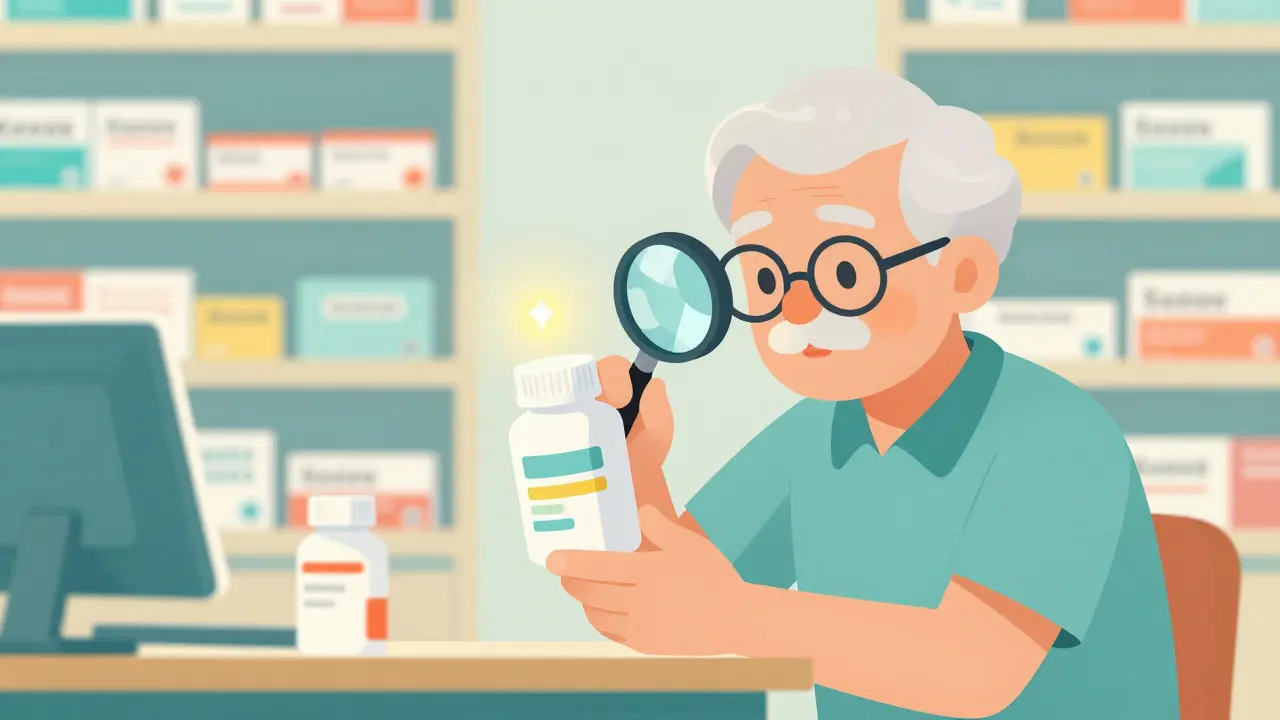
Quick Summary
- Patient verification prevents 67% of medication errors before you leave the pharmacy.
- Federal law requires prescription labels to display your full name, medication strength, and exact directions.
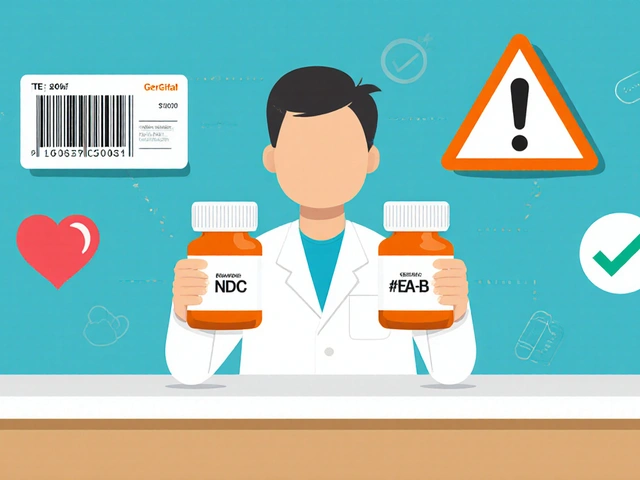
- Always check five key elements: name, drug name, dose, usage instructions, and expiry date.
- Visual aids like magnifiers help overcome age-related vision challenges affecting label readability.
- If you spot an error, refuse to leave until the pharmacist corrects it immediately.
Every year, roughly 1.5 million people in the United States suffer from medication errors. That translates to almost one person every 20 seconds. The most critical barrier to stopping this chain reaction lies right in your hands when you pick up your medicine bottle. While pharmacists work hard to ensure accuracy, the Institute for Safe Medication Practices reports that labeling discrepancies account for 25% of preventable errors. Verifying your prescription label is not just a suggestion; it is the final safety net standing between you and a potentially dangerous mistake. Dr. Beth Kollisch from Johns Hopkins Medicine notes that patient verification could prevent up to 150,000 adverse drug events annually. By taking 30 seconds to read the label, you join a system designed to protect your health.
The Legal Requirements for Your Prescription Label
When you receive a medication bottle, federal regulations dictate exactly what information must appear on it. The Food and Drug Administration outlines these standards in Title 21 of the Code of Federal Regulations. Without these specific details, a label is considered incomplete. You cannot effectively verify safety if the essential data is missing.
Your label must display your full legal name exactly as it appears on your insurance card or ID. It should also list the medication name, showing both the brand and generic versions. Strength is another non-negotiable element, such as "500 mg" versus "50 mg." Dosage form (tablet, liquid, capsule) and the total quantity dispensed must be clear. Directions for use tell you how many pills to take and when. Finally, the prescriber's name, pharmacy contact info, and expiration dates complete the mandatory list.
| Element | Why It Matters |
|---|---|
| Patient Name | Ensures medication was meant for you |
| Drug Name | Prevents confusion between similar drugs |
| Strength | Avoids under or overdosing (e.g., 5mg vs 50mg) |
| Directions | Matches doctor’s verbal instructions |
| NDC Number | Unique identifier for the drug product |
In addition to these basics, the National Drug Code number serves as a unique fingerprint for the medication. Under the Drug Supply Chain Security Act, pharmacies must trace medications using this code. For those on Medicare Part D, specific therapy management information must also appear due to the Medicare Modernization Act. Knowing these requirements helps you spot if a label looks suspiciously bare.
The 30-Second Verification Routine
Checking your medicine doesn't require a degree in pharmacology. The Pharmacy Quality Alliance suggests a quick routine you can master in half a minute. This process works best when you have good lighting and a moment of focus before leaving the counter.
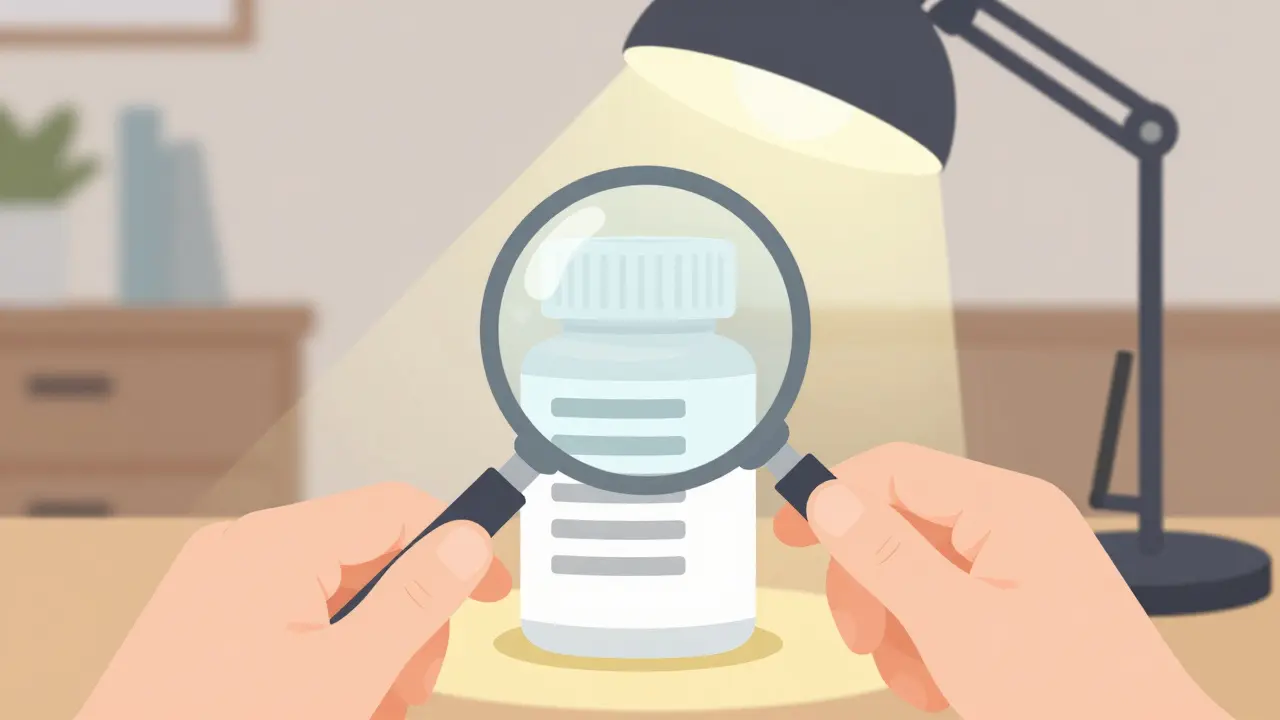
- Position the bottle: Hold it at eye level. Bright light is crucial; dim areas hide typos.
- Confirm your name: Look for spelling errors. Some patients report receiving their roommate's med with their own name printed accidentally.
- Match the drug: Does the written name match what your doctor discussed? Remember that brands change often, so cross-check the generic name too.
- Validate strength: Compare numbers carefully. A missing zero or decimal point changes everything.
- Review instructions: Ensure "twice daily" isn't listed as "three times daily."
- Check contact info: Make sure the pharmacy phone number is readable for urgent calls.
This manual check remains the most accessible method because it requires no technology. Smartphone apps are growing, but 98% of U.S. pharmacies still issue paper labels. Relying solely on digital tools can be risky if you don't have signal or battery power while waiting at the pickup window.
Overcoming Common Reading Challenges
Not everyone has perfect vision or high literacy levels. About 12.7% of adults aged 40 plus face visual impairments that make small print difficult. Many patients find themselves struggling with abbreviations or medical jargon.
If standard reading is hard, bring a pocket magnifier with at least 2x magnification. Most modern smartphones have built-in accessibility features like camera zoom or voice-to-text that can digitize the text for you. The American Foundation for the Blind recommends using these native tools to enhance readability without needing extra hardware.
Literacy barriers affect roughly 36 million American adults. In these cases, asking the pharmacist to explain the brand versus generic distinction is vital. They might use Latin terms that confuse even fluent readers. Don't hesitate to ask them to speak out loud what they think is written. A 2023 survey found that 71% of adults feel more confident when pharmacies include large-print verification instructions on bags. If your local pharmacy uses tiny font sizes, politely request larger packaging or clearer labeling.
Digital Tools Versus Traditional Methods
Technology is changing how we manage meds, but it hasn't replaced the physical label yet. Apps like Medisafe and GoodRx allow you to scan barcodes and store digital records. However, these serve supplements rather than replacements. Pew Research Center data indicates that smartphone adoption for health management remains low among older populations, who comprise 42% of prescription users.
Medisafe is a mobile application designed to track medication schedules and provide safety alerts. With over 5 million downloads, it acts as a backup memory aid. While Amazon Pharmacy plans augmented reality features by 2026, manual verification excels in immediate point-of-service confirmation. You can catch errors instantly before you walk out the door. Digital methods are great for managing complex regimens involving more than five medications, which impacts 22% of Medicare beneficiaries. For single prescriptions, looking at the paper label is faster and safer.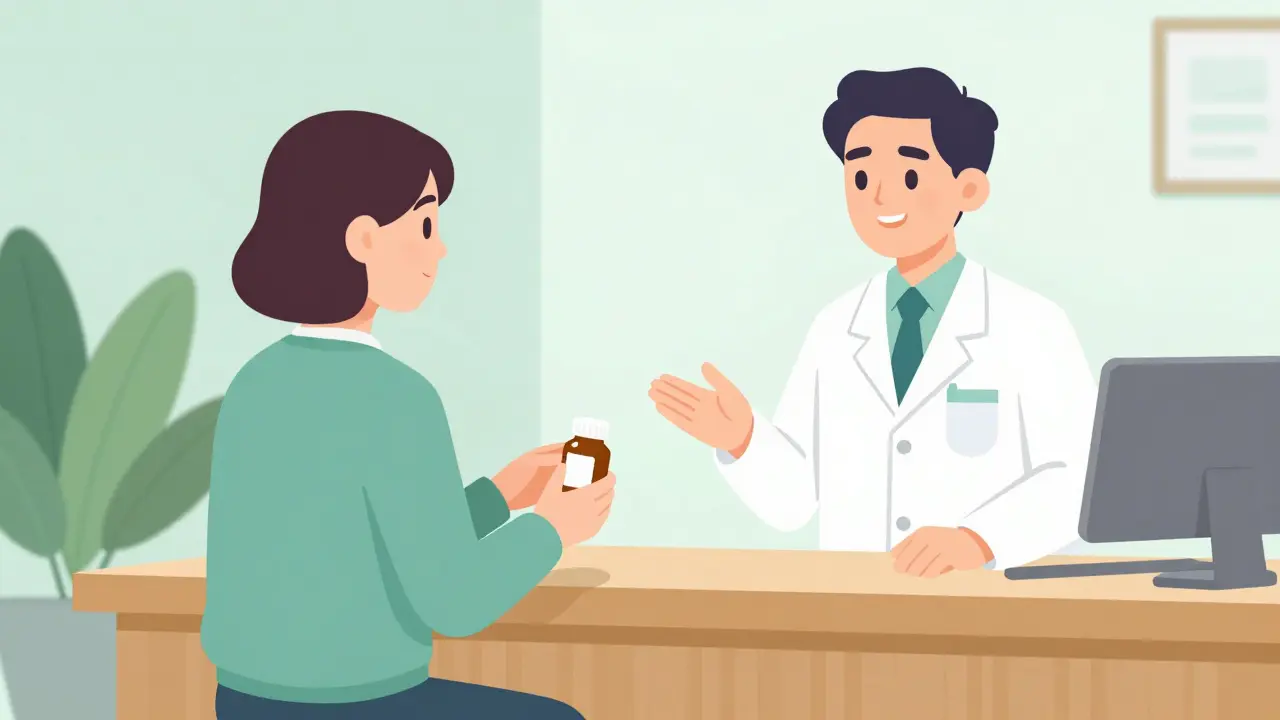
What To Do When You Find an Error
Discovering a mistake feels stressful, but it is much better than discovering one after swallowing a pill. Statistics show that 18% of patients find at least one error per year. Common catches include wrong strength (42%), wrong medication (28%), and wrong patient name (15%).
Do not walk away with the wrong bottle. Hand it back to the pharmacist immediately. Explain clearly that the label does not match your doctor's order. Most chain pharmacies like CVS or Walgreens have protocols to resolve this quickly. Sometimes the computer entry was wrong, sometimes the label printer glitched. Either way, they are legally obligated to fix it. Keep your original script copy from the doctor handy for comparison. If the pharmacy pushes back, call your prescribing physician directly to confirm the dosage. Your safety is the priority here.
Why This Practice Is Gaining Importance
Verification isn't just personal hygiene; it's part of national safety goals. The Joint Commission and CDC now list this as a standard patient safety recommendation. Regulatory bodies are tightening rules. The FDA aims to standardize label formats by December 31, 2025, placing patient names in larger fonts. State laws like California Assembly Bill 1180 mandate bilingual labeling for diverse communities.
Hospitals in the Vizient network have implemented strict verification protocols since 2021. This push ensures that community pharmacies align with clinical safety standards. By participating in this process, you contribute to broader health data tracking that reduces systemic failures. As Dr. Lucian Leape argued, empowering patients creates a safety net that complements institutional measures.
Frequently Asked Questions
Is it legal to ask my pharmacist to explain my label?
Yes, it is completely legal. In fact, the American Medical Association Resolution 207 urges physicians and pharmacists to encourage this interaction. Pharmacists are healthcare providers obligated to clarify usage and safety information for your benefit.
What does NDC stand for on my bottle?
It stands for National Drug Code. It is a unique 10 or 11-digit identifier that links the specific medication, manufacturer, and package size. It ensures supply chain security and accurate tracing.
My name is misspelled on the label. Should I ignore it?
No, never ignore a misspelled name. Insurance claims may get rejected, and it could lead to identity confusion in emergency situations. Ask the pharmacy to reprint the label with the correct spelling immediately.
Can I rely on app scanning instead of reading?
Apps are helpful backups, but do not replace manual checks. Scanning apps may malfunction or fail to update quickly enough during the pickup phase. Always visually confirm the physical label matches your expectations.
Who sets the rules for prescription labeling?
Primary guidelines come from the Food and Drug Administration (FDA) and state boards of pharmacy. The American Pharmacists Association also issues recommendations for readability and counseling standards.
 Medications
![Buy Generic Zovirax (Acyclovir) Online Cheap in the UK [2025]: Safe, Legal, and Fast](/uploads/2025/08/thumbnail-buy-generic-zovirax-acyclovir-online-cheap-in-the-uk-2025-safe-legal-and-fast.webp)


Mark Zhang
April 3, 2026 AT 05:31I totally agree with the routine mentioned. It keeps everyone accountable. Checking your label is such a basic safety step. We need to prioritize our health daily.
Rachelle Z
April 3, 2026 AT 17:41Oh wow! 😂😂 Do we seriously need this! 👀👀 I thought we were all smart enough! 🙄🙄 But sure! Let us check! 👍👍 Every single time! 💯💯 Safety first! 🚨🚨
sophia alex
April 5, 2026 AT 08:15Only people who care about themselves would even read this! :) Most folks just grab their bag and run! :D We need discipline here! :(
HARSH GUSANI
April 6, 2026 AT 18:11People are just stupid! ❌ They ignore simple rules! 😤 Why take the risk?! 🛑 Just look at the paper! 📝
Hope Azzaratta-Rubyhawk
April 7, 2026 AT 22:19It is imperative that you verify all details immediately. Do not compromise on this standard. Your health depends on this action. Strict compliance ensures safety.
Will Baker
April 8, 2026 AT 08:14Why is your life affecting mine right now? Tell me more about your medication habits. Are you taking anything special? I need to know why this matters.
simran kaur
April 8, 2026 AT 09:35The government wants you checking NDC codes so they track your location via scan! They hide the truth about why you need to verify! It is surveillance disguised as safety! Big Pharma controls the labels completely! You think you are protecting yourself but you are feeding data to the algorithm!
Brian Shiroma
April 9, 2026 AT 16:59Yeah, let us pretend we can all read perfectly. Pharmacists hate it when customers double check. It slows down the line. But sure, verify if you want to feel superior.
Hudson Nascimento Santos
April 11, 2026 AT 08:33Verification creates a bond between consumer and provider. It shifts responsibility appropriately. We must accept this burden collectively.
Jenna Carpenter
April 12, 2026 AT 00:08mst ppl dont knw wht thse labels mean but its imp. dont rely on apps cause they glitch. u gotta see it w ur eyes.
Goodwin Colangelo
April 12, 2026 AT 02:20Manual verification beats apps any day. Paper works when signal fails. I recommend keeping a flashlight handy too.
Joseph Rutakangwa
April 12, 2026 AT 23:22read label check name done.
Dee McDonald
April 13, 2026 AT 17:28This safety check is actually vital for everyone. I used to ignore the label back in college. Then I realized how many errors slip through. Pharmacies are busy and rushing happens. We cannot trust everything to technology alone. My grandmother relies on her own eyes now. She uses a magnifier that clips onto the phone. It changes the whole experience of pickup. Reading the name prevents identity theft risks too. Insurance claims fail when names are wrong. That causes billing headaches later down the line. You really save money by catching mistakes early. Plus you prevent bad health outcomes entirely. It takes less time than fixing a mistake later. We should all make this a habit immediately. Everyone deserves peace of mind when grabbing medicine. Trusting the process blindly is dangerous behavior. Stay alert and stay safe during transactions.