

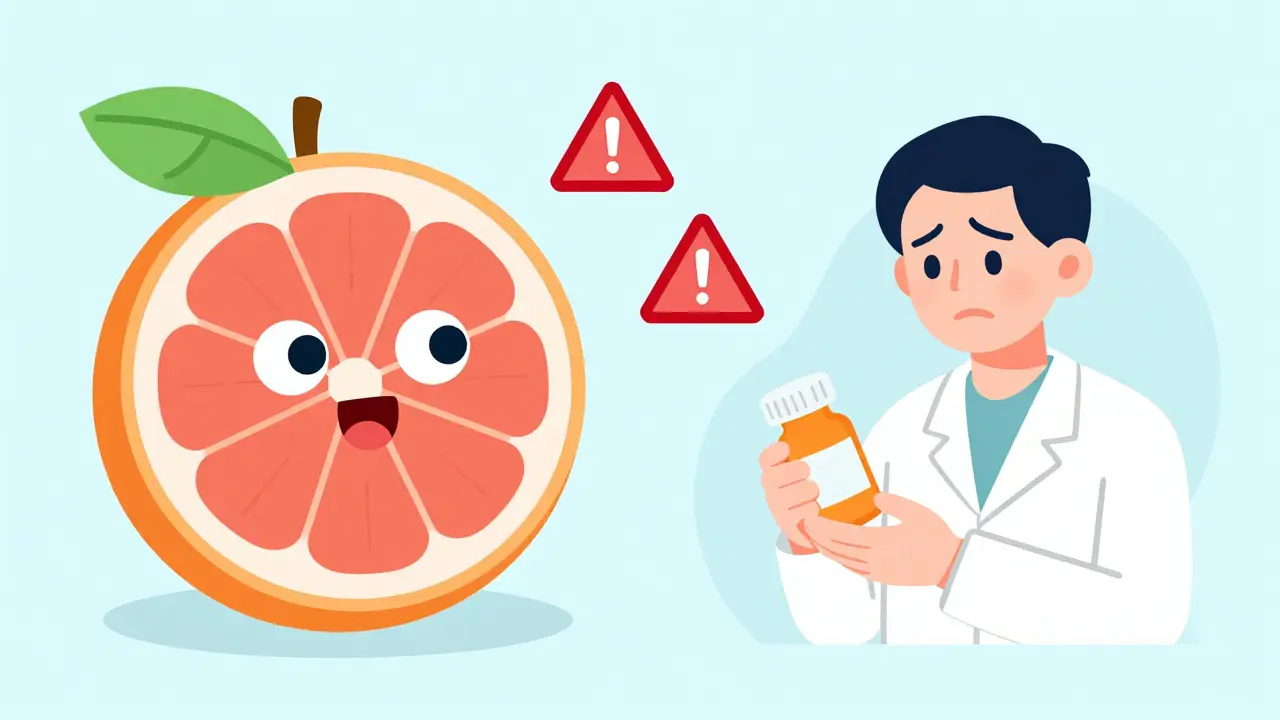
Imagine eating a fresh, juicy grapefruit for breakfast and ending up in the hospital within days. It sounds like an exaggeration, but for people taking immunosuppressant medications is a class of drugs used to prevent organ rejection after transplantation by suppressing the immune system, this scenario is a very real risk. This isn't just about feeling a bit sick; it’s about potentially losing your transplanted organ or suffering severe kidney damage.
You might think grapefruit is just a healthy fruit packed with vitamin C. And you’re right-it is nutritious. But when it meets certain powerful drugs in your gut, chemistry takes over in a way that can be life-threatening. If you are a transplant patient, understanding this interaction isn't optional; it's part of staying alive.
The Science Behind the Danger
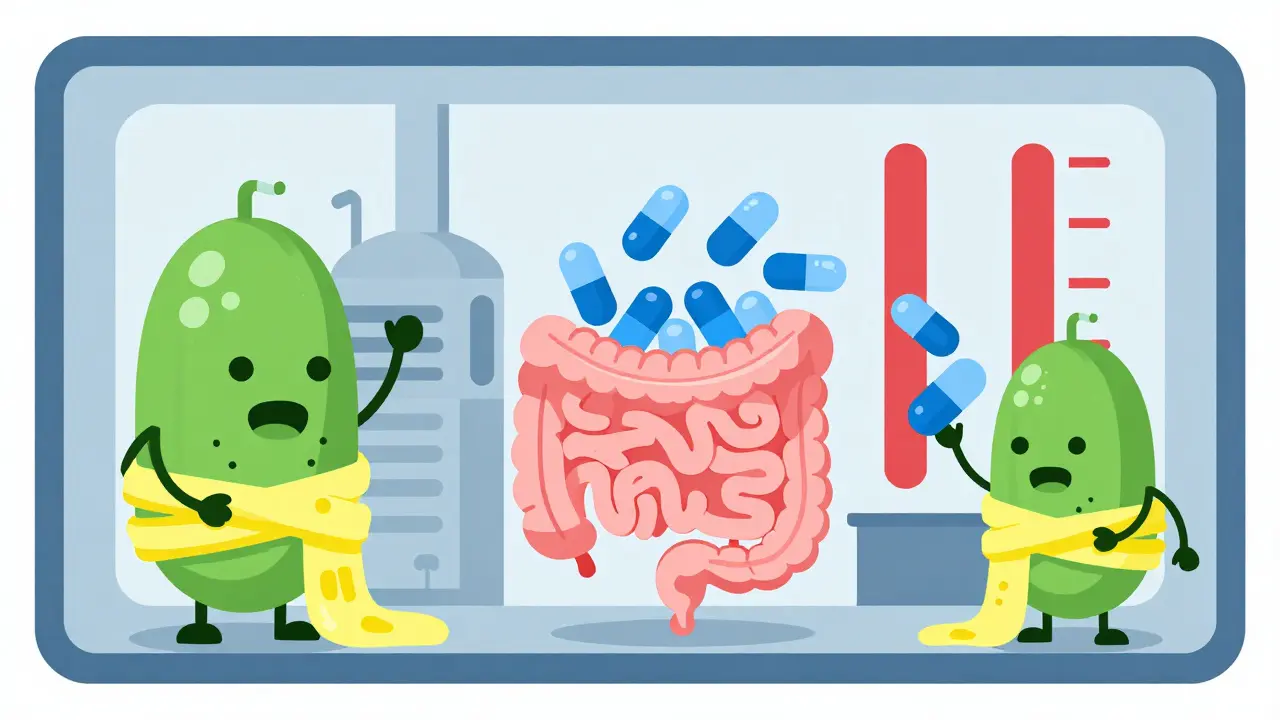
To understand why grapefruit is so dangerous, we need to look at what happens inside your body when you swallow a pill. Your liver and intestines have enzymes that act like gatekeepers. One specific enzyme, known as CYP3A4 is a cytochrome P450 enzyme responsible for metabolizing approximately 50% of all clinically used drugs, does most of the heavy lifting. Its job is to break down drugs during "first-pass metabolism" before they enter your bloodstream. This ensures you get the right dose-not too little, not too much.
Grapefruit contains compounds called furanocoumarins are bioactive chemicals found in citrus fruits that irreversibly inhibit intestinal CYP3A4 enzymes. Specifically, compounds like bergamottin and 6',7'-dihydroxybergamottin (DHB) bind to these enzymes and shut them down. Unlike other interactions where the effect wears off quickly, furanocoumarins cause irreversible inhibition. Think of it like gluing the gatekeeper’s hands behind their back. They can’t do their job until new enzymes grow back, which takes time.
When those enzymes are blocked, the drug doesn’t get broken down. Instead, it passes straight into your bloodstream. Studies show that consuming just one glass of grapefruit juice can increase blood levels of certain drugs by up to 300%. For medications with a narrow therapeutic index-where the difference between a helpful dose and a toxic dose is tiny-this surge is catastrophic.
Which Immunosuppressants Are Affected?
Not every medication reacts this way, but the core drugs used to protect transplanted organs are highly vulnerable. Here are the primary culprits:
- Cyclosporine is an immunosuppressant drug brand named Sandimmune or Neoral, used to prevent organ rejection: Grapefruit can raise blood levels by 50-100%. Toxic levels (>500 ng/mL) can cause kidney failure and high blood pressure.
- Tacrolimus is a potent immunosuppressant brand named Prograf, Envarsus XR, or Astagraf XL, critical for kidney and heart transplants: Levels can spike by 30-50%. A jump from a safe level of 8 ng/mL to a toxic 25 ng/mL has been documented after a single serving of grapefruit.
- Sirolimus is an mTOR inhibitor immunosuppressant brand named Rapamune, often used for kidney transplants: Blood concentrations can skyrocket by 200-300%, leading to severe inflammation and clotting issues.
- Everolimus is a related immunosuppressant brand named Zortress, recently added to high-risk lists by health pharmacists: Similar risks apply due to shared metabolic pathways.
These drugs are monitored closely because their therapeutic ranges are tight. For example, tacrolimus needs to stay between 5-15 ng/mL. Go above 20 ng/mL, and you risk neurotoxicity, tremors, and kidney injury. Grapefruit pushes you out of that safety zone fast.
| Medication | Therapeutic Range | Potential Increase | Key Risks |
|---|---|---|---|
| Cyclosporine | 100-400 ng/mL | 50-100% | Kidney failure, hypertension |
| Tacrolimus | 5-15 ng/mL | 30-50% | Neurotoxicity, tremors, kidney injury |
| Sirolimus | 4-12 ng/mL | 200-300% | Clotting disorders, inflammation |
| Everolimus | Varies | Significant | Infection risk, mouth sores |
How Long Does the Effect Last?
This is where many patients make a fatal mistake. You might think, "I’ll just eat grapefruit at night and take my morning pill." That won’t work. The inhibition of CYP3A4 is not temporary in the short term. Research published in Clinical Pharmacology & Therapeutics showed that drinking 8 ounces of grapefruit juice inhibits enzyme activity by 47% at 24 hours, 35% at 48 hours, and still 24% at 72 hours.
This means the danger window lasts for three full days. The American Academy of Family Physicians recommends discontinuing grapefruit consumption for 72 hours before taking interacting drugs. Since you likely take immunosuppressants daily, the only safe rule is total avoidance. There is no "safe time" to eat it while on these meds.
It’s Not Just Grapefruit
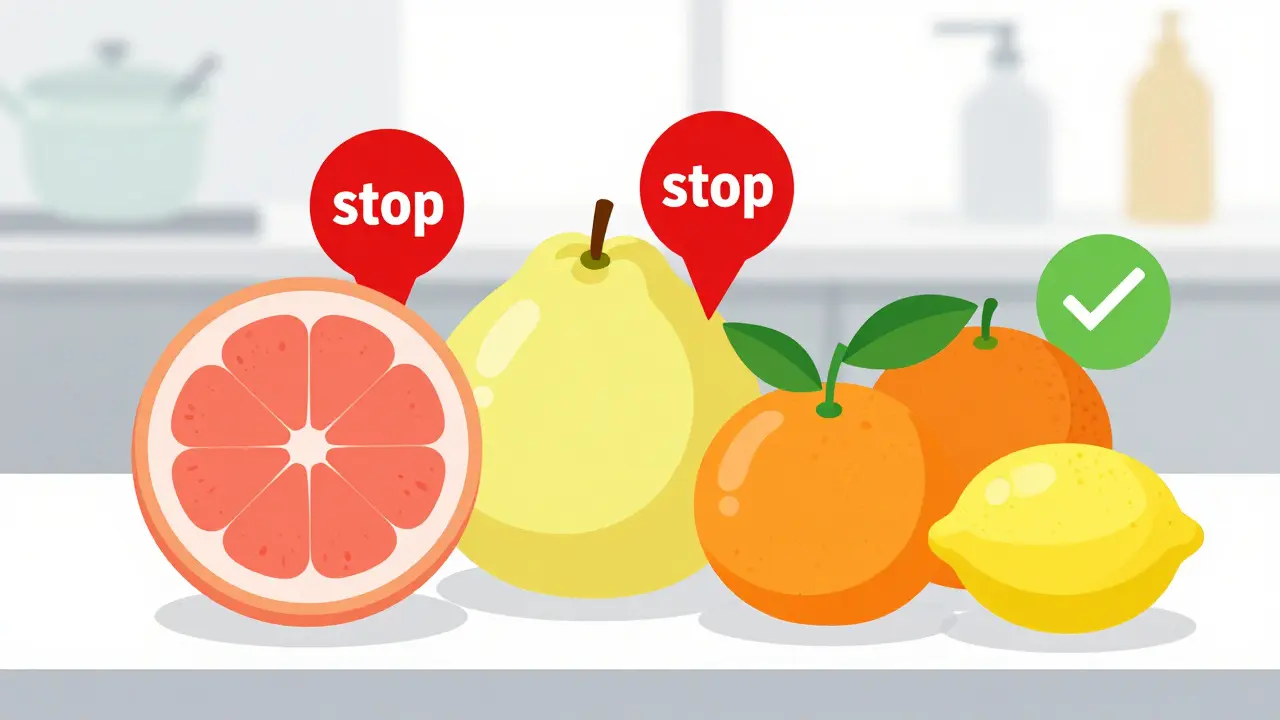
If you avoid grapefruit but love Seville orange marmalade or pomelo, you are still at risk. These fruits contain similar furanocoumarins. Regular sweet oranges (like Navel or Valencia) and lemons are generally safe because they lack these specific compounds. However, Seville oranges (bitter oranges used in traditional marmalades) are chemically similar to grapefruit in this regard. Pomelo, a close relative of the grapefruit, also poses significant risks. Always check labels on juices and extracts, as concentrated forms can deliver even higher doses of furanocoumarins.
Real-World Consequences
Let’s talk about what actually happens when this interaction occurs. In 2022, a kidney transplant recipient was hospitalized with acute kidney injury after eating grapefruit. Their tacrolimus levels jumped from a stable 8.2 ng/mL to a toxic 24.7 ng/mL in just 36 hours. Symptoms included severe nausea, tremors, and confusion. This wasn't an isolated incident. Transplant pharmacists at Mayo Clinic reported that 15-20% of unexpected toxicity cases involved undisclosed grapefruit consumption.
The economic impact is staggering too. An unexpected hospitalization for immunosuppressant toxicity costs an average of $18,500 per incident. Beyond the bill, there’s the physical toll: increased risk of infections, permanent kidney damage, and in worst-case scenarios, loss of the transplanted organ. The FDA explicitly warns that concomitant use with grapefruit is contraindicated for drugs like cyclosporine.
Practical Steps for Patients
So, how do you manage this? First, strict avoidance. Do not eat grapefruit, pomelo, or Seville oranges in any form-fresh, juiced, or dried. Second, educate your household. If family members buy grapefruit, ensure it doesn’t end up in your smoothie or salad. Third, communicate with your healthcare team. Tell your pharmacist and doctor if you accidentally consume it. They may need to check your drug levels immediately and adjust your dose temporarily.
Technology is helping here. Apps launched by institutions like Johns Hopkins allow patients to scan medication barcodes to instantly flag food interactions. Use these tools. Also, keep a list of your medications handy and review the package insert. The warning is usually bolded: "Do not consume grapefruit products."
Remember, 68% of transplant patients remain unaware of the severity of this interaction according to recent surveys. Don’t be part of that statistic. Ask questions. Verify information. Your health depends on knowing exactly what goes into your body.
Frequently Asked Questions
Can I drink grapefruit juice if I take my medication at a different time?
No. The enzyme inhibition caused by grapefruit lasts for up to 72 hours. Timing your medication to avoid grapefruit will not prevent the interaction. You must avoid grapefruit entirely while taking these medications.
Are regular oranges safe to eat with immunosuppressants?
Yes, regular sweet oranges (such as Navel or Valencia varieties) are generally safe. However, you must avoid Seville oranges (often used in marmalade) and pomelo, as they contain similar compounds that interact with CYP3A4 enzymes.
What should I do if I accidentally ate grapefruit?
Contact your transplant coordinator or doctor immediately. They may ask you to come in for blood tests to check your drug levels. Depending on the results, they might temporarily reduce your dose or monitor you for signs of toxicity such as tremors, nausea, or changes in urine output.
Does this interaction affect all immunosuppressants?
No, it primarily affects drugs metabolized by the CYP3A4 enzyme, including cyclosporine, tacrolimus, sirolimus, and everolimus. Other medications like mycophenolate mofetil (CellCept) are not significantly affected by grapefruit. Always check your specific prescription leaflet.
How long after stopping grapefruit is it safe to resume normal medication dosing?
It typically takes 72 hours (3 days) for the CYP3A4 enzyme activity to return to normal levels after consuming grapefruit. However, if your drug levels were elevated, your doctor may need to monitor you longer before returning to your standard dose.
 Medications




Glen Speck
May 15, 2026 AT 20:17the enzyme inhibition lasts for three days so timing is useless you just have to stop eating it entirely its a simple biological fact that many people ignore until they end up in the hospital
Kris Wong
May 16, 2026 AT 14:41Big Pharma wants you scared of fruit so you buy their expensive supplements instead 🍊🚫 this whole CYP3A4 thing is overblown by doctors who get paid by pharma companies trust me the natural world isn't trying to kill you with a grapefruit lol
Emma Olliff
May 17, 2026 AT 06:46Oh, please. Your ignorance is not a virtue. The metabolic pathways are well-documented in peer-reviewed journals, not some conspiracy theory blog you read at 3 AM. If you think avoiding basic pharmacological facts makes you 'awake,' you're simply dangerous to yourself and others. Read the Mayo Clinic study mentioned in the post before you spout off nonsense about Big Pharma.
Dana Ellington
May 19, 2026 AT 01:22OMG thank you for posting this!! I had no idea pomelo was also bad 😱 My sister is on tacrolimus and she loves those smoothies with exotic fruits. I am literally shaking right now because she ate one yesterday! I’m going to call her immediately to make sure she’s okay. This is so scary but super important info!
Justina Ingram
May 21, 2026 AT 00:04haha wow everyone is so dramatic abt fruit :) i mean sure if u eat like 10 pounds of grapefruit maybe u die but a little juice cant hurt anyone right? 😂
victoria catharinaa
May 22, 2026 AT 04:25you are being very rude and dismissive of serious medical risks. my friend lost his kidney transplant because he thought it was a joke too. please do not minimize life threatening interactions with your silly comments. we need to take this seriously to keep our loved ones safe and healthy.
Sam Mackellar
May 23, 2026 AT 02:19It is imperative that patients adhere strictly to these guidelines. The data regarding the irreversible inhibition of intestinal CYP3A4 enzymes by furanocoumarins is unequivocal. One cannot simply choose to disregard established medical science based on anecdotal evidence or casual dismissal. The consequences of such negligence are severe and often permanent.
amit kumar
May 25, 2026 AT 02:14This is really helpful information for all transplant patients out there 🙏 I always tell my friends to check their meds carefully. It's amazing how something as normal as fruit can cause such big problems. Thanks for sharing this clear explanation 👍
Diana Wiechecka
May 26, 2026 AT 11:11I learned something new today 🍊✨ Regular oranges are safe but Seville oranges are not. Good to know!
Javier Arauz
May 26, 2026 AT 19:07Why do Americans rely so much on foreign drugs that interact with basic food? We should be making our own meds here that don't have these stupid side effects. It's pathetic that we can't even eat our own citrus without getting sick from imported pharmaceuticals. Wake up and support domestic manufacturing instead of trusting these global health narratives.
Lori Wildrick
May 27, 2026 AT 21:50I appreciate the detailed breakdown of the different immunosuppressants. It helps to understand exactly which ones are affected. I will definitely share this with my support group so everyone is aware of the specific risks involved with cyclosporine and tacrolimus.