

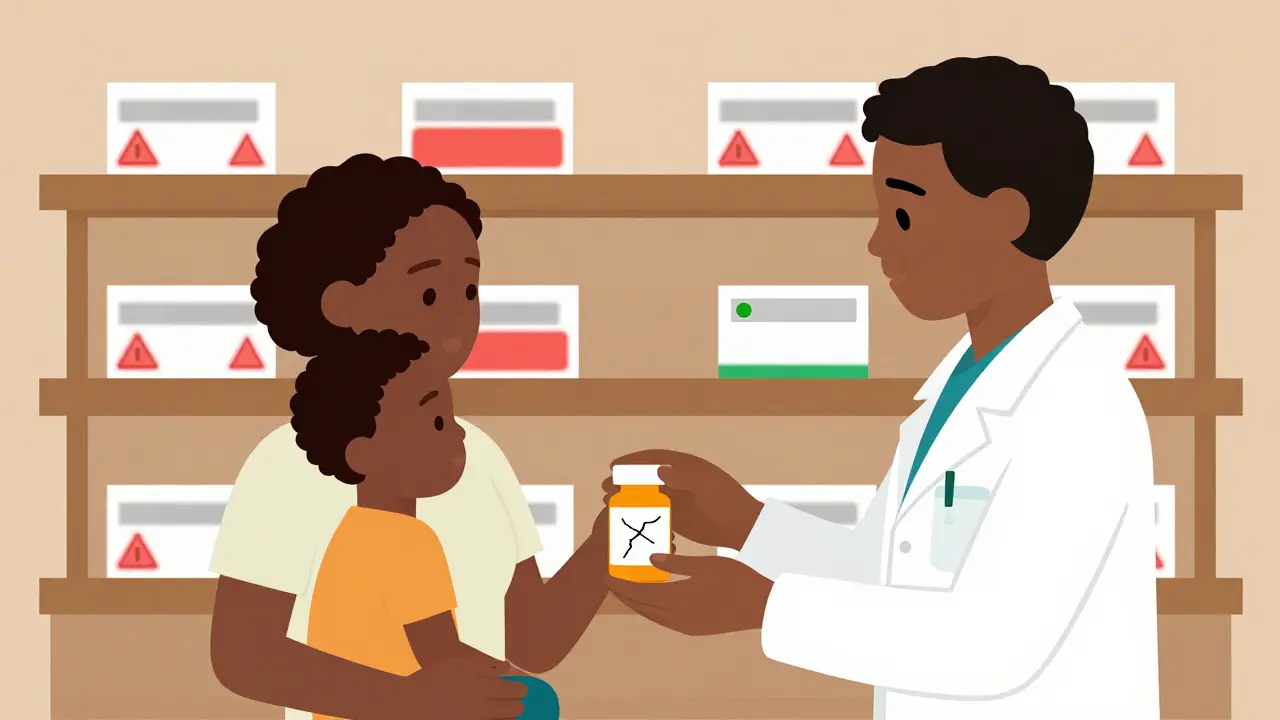
Every year, counterfeit drugs kill more children than malaria alone. In rural clinics across Africa, Southeast Asia, and Latin America, people are dying not because they lack access to medicine-but because the medicine they’re given is fake. These aren’t just poor-quality copies. They’re dangerous frauds: pills with no active ingredient, toxic chemicals, or wrong dosages. And they’re everywhere.
What Exactly Are Counterfeit Drugs?
The World Health Organization (WHO) draws a clear line between two types of fake medicines: substandard and falsified. Substandard drugs are real products that failed quality checks-maybe they expired, were stored wrong, or lost potency. Falsified drugs are outright scams. They’re made to look real, but they’re not. They might have no medicine at all. Or they might have enough to make you feel better temporarily, but not enough to cure you. Worse, they might contain arsenic, rat poison, or industrial solvents.
Here’s how bad it gets: in low-income countries, 1 in 10 medicines is fake. In some regions-like parts of West Africa or border towns in Southeast Asia-that number jumps to 1 in 3. Anti-malarial drugs? Up to 50% counterfeit in certain areas. Cancer treatments? Half of them lack the active ingredient. Antibiotics? 87% of tested fake versions had too little medicine to work.
Why Is This Happening?
It’s not random. It’s business.
Counterfeiters don’t make drugs because they hate people. They make them because they can make 9,000% profit. A single pill that costs $0.02 to produce can be sold for $2. That’s the kind of margin that draws in organized crime. In 2024, Interpol reported over 6,400 incidents of pharmaceutical fraud across 136 countries. The fake drug market is worth $83 billion a year-and growing faster than the real pharmaceutical industry.
Why developing nations? Three reasons:
- Weak regulation: Many countries don’t have the labs, inspectors, or laws to catch fakes. Even when they do, corruption often lets them slip through.
- High prices: A real course of malaria medicine might cost $5. A fake one costs $1. For families living on $2 a day, the choice is clear.
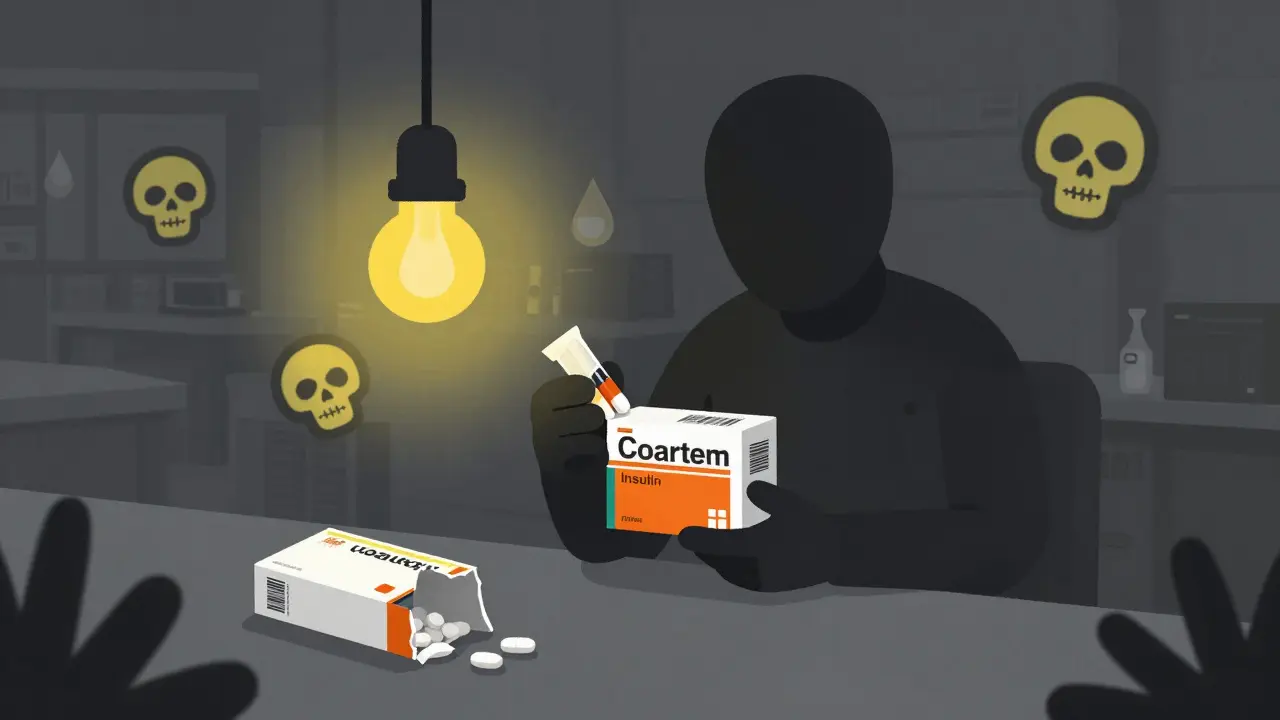
- Online sales: Fake pharmacies on social media and WhatsApp sell pills with no verification. A Nigerian user posted on Reddit in March 2025: “My brother died of malaria after taking counterfeit Coartem. The pharmacy had no way to verify authenticity.”
The supply chain is long and broken. A counterfeit drug might travel through five or more middlemen before reaching a village pharmacy. At each stop, someone swaps real pills for fakes. By the time it gets to you, no one knows what’s inside.
How Do You Tell If a Pill Is Fake?
You can’t. Not really.
Counterfeiters have gotten scary good. They copy packaging with 90% accuracy. They print fake barcodes. They even use 3D printing to replicate blister packs. One 2024 study found that 35% of fake drugs now include security features-like holograms or color-shifting ink-that were originally meant for real medicines.
Visual checks? Useless. A 2024 WHO report said only 30% of healthcare workers could spot fakes by sight alone. Even trained pharmacists in Lagos or Nairobi have been fooled.
There are tools-but they’re rare. Spectroscopy machines can detect fake drugs with 95% accuracy. But they cost $20,000. Only 15% of rural clinics in sub-Saharan Africa have electricity, let alone a machine like that. Chemical test kits? They’re cheaper-$5 to $10 per test-but still too expensive for most clinics. And they require training most workers don’t have.
What’s Being Done?
Some solutions are working.
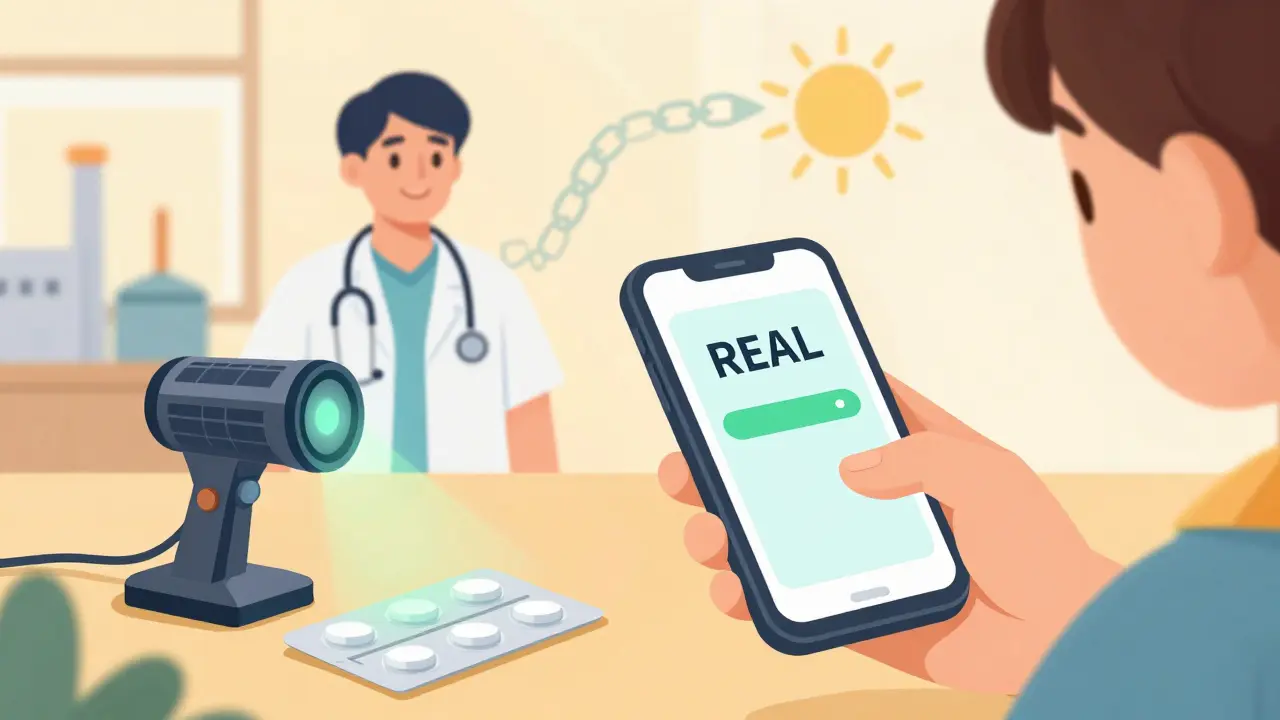
mPedigree is a simple system used in Ghana and Kenya. You text the code on the pill pack to a number. In seconds, you get a reply: “Real” or “Fake.” One Ghanaian mother told WHO: “The SMS verification saved my child’s life.” The system works on basic phones-even without internet. It’s now used by over 15,000 people.
Another innovation? Solar-powered verification devices. In 12 African countries, clinics now use handheld scanners powered by sunlight. They cost less than $100 and work even where the grid is down. Success rate? 85%.
Blockchain is the next frontier. In March 2025, the WHO launched the Global Digital Health Verification Platform. It tracks every medicine from factory to patient. So far, it’s been rolled out in 27 countries. It’s not perfect-but it’s reducing fakes by 40% in pilot zones.
But progress is slow. Only 22% of pharmacies in low-income countries use any verification system. In high-income countries? It’s 98%.
The Human Cost
Numbers don’t tell the whole story.
In 2012, over 200 people died in Lahore, Pakistan, after taking heart pills laced with toxic chemicals. The drugs came from a local manufacturer. No one tested them.
In 2022, cancer patients across multiple countries received fake chemotherapy drugs. Many died because the pills had no active ingredient. Others suffered severe side effects from unknown chemicals.
And then there’s antimicrobial resistance. When you take a fake antibiotic that has just enough medicine to make you feel better-but not enough to kill the infection-you don’t get cured. You train the bacteria to survive. That’s how drug-resistant tuberculosis and malaria spread. WHO estimates this causes 116,000 extra malaria deaths every year in sub-Saharan Africa alone.
Children are the biggest victims. The OECD says counterfeit drugs contribute to 72,000-169,000 child pneumonia deaths annually. That’s more than the entire population of a small country.
What Can Be Done?
There’s no single fix. But here’s what works:
- Train community health workers: In pilot programs, 40 hours of training helped workers spot fakes and use SMS verification. In those areas, fake medicine use dropped by 37%.
- Make verification free and simple: SMS systems work. They’re cheap. They’re accessible. Every country should adopt them.
- Enforce the Medicrime Convention: 76 countries have signed it. Only 45 have made it law. Stronger penalties and cross-border cooperation are critical.
- Lower real drug prices: If real medicine were affordable, people wouldn’t risk fakes. Generic manufacturers and international aid groups must do more.
- Shut down online sellers: In 2025, Interpol shut down 13,000 websites selling fake drugs. That’s progress-but it’s not enough. Social media platforms must act.
The EU’s 2026 Anti-Counterfeiting Pharmaceutical Initiative plans to spend €250 million to help 30 developing nations build better supply chains. That’s a start. But it needs to be bigger.
What You Can Do
If you live in a developed country: support organizations that help strengthen medicine regulation abroad. Donate to groups like WHO’s Access to Medicines program or Médecins Sans Frontières.
If you live in a developing nation: learn how to use SMS verification. Ask your pharmacist if they check their stock. Share what you know. Your voice can save lives.
Counterfeit drugs aren’t just a health issue. They’re a justice issue. People shouldn’t have to risk their lives just to get medicine. And they shouldn’t have to be lucky to find a real pill.
How common are counterfeit drugs in developing countries?
According to the World Health Organization, about 1 in 10 medicines in low- and middle-income countries are substandard or falsified. In some regions-like parts of West Africa or border areas in Southeast Asia-the rate can be as high as 1 in 3. Anti-malarial drugs in certain areas are up to 50% fake.
What are the most common types of counterfeit drugs?
The most commonly counterfeited medicines are anti-infectives (like antibiotics and antimalarials), which make up 35% of cases. Cardiovascular drugs (20%) and central nervous system medications (15%) are also frequent targets. Cancer drugs, insulin, and HIV medications are increasingly being faked because they’re expensive and in high demand.
How do counterfeit drugs cause death?
Counterfeit drugs kill in three main ways: (1) They contain no active ingredient, so the disease goes untreated-like malaria or pneumonia. (2) They contain toxic substances like rat poison or industrial chemicals, causing poisoning. (3) They contain too little medicine, which doesn’t cure the illness but allows bacteria to become resistant, leading to untreatable infections.
Can you tell if a pill is fake just by looking at it?
Almost never. Counterfeiters now replicate packaging with 90% accuracy, including barcodes, holograms, and even color-shifting ink. Even trained pharmacists have been fooled. Visual inspection alone catches less than 30% of fake drugs.
Are there any tools to detect fake drugs?
Yes, but they’re not widely available. Simple SMS verification systems (like mPedigree) work on basic phones and are free. Chemical test kits cost $5-$10 per test and are 70% accurate. Advanced tools like spectroscopy machines are 95% accurate but cost $20,000 and require electricity-rare in rural clinics. Blockchain verification systems are now being rolled out by WHO and offer 99.9% accuracy.
What is being done to stop counterfeit drugs?
Interpol, WHO, and national regulators are cracking down. In 2025, Operation Pangea XVI led to 769 arrests and the seizure of over 50 million fake doses. The WHO launched a blockchain verification platform in March 2025, already active in 27 countries. The EU is funding $250 million in aid for supply chain security in developing nations by 2026. But progress is uneven-most clinics still have no tools to test drugs.
Why are fake drugs so cheap?
Because they’re made with no quality control. Real medicines go through years of testing, clinical trials, and regulatory approval. Fake drugs are made in unlicensed labs with cheap chemicals. A real malaria drug might cost $5. A fake version costs $0.02 to make and sells for $1. The profit margin is often over 9,000%.
Can counterfeit drugs cause antibiotic resistance?
Absolutely. If a fake antibiotic contains just enough medicine to make you feel better-but not enough to kill all the bacteria-the surviving bacteria become resistant. This is a major driver of drug-resistant tuberculosis and malaria. WHO says counterfeit drugs are a key reason why infections are becoming untreatable.
 Medications


Stephen Habegger
March 20, 2026 AT 02:05Amadi Kenneth
March 21, 2026 AT 20:17Srividhya Srinivasan
March 22, 2026 AT 14:40Kal Lambert
March 23, 2026 AT 14:16Melissa Stansbury
March 24, 2026 AT 08:58Shameer Ahammad
March 25, 2026 AT 11:07Lauren Volpi
March 27, 2026 AT 06:57Linda Olsson
March 28, 2026 AT 10:47Melissa Starks
March 29, 2026 AT 23:18Alexander Pitt
March 31, 2026 AT 08:16David Robinson
April 1, 2026 AT 21:24Stephen Habegger
April 3, 2026 AT 14:18