Cholesterol Therapy Strategy Calculator
How it works
This calculator demonstrates the "Rule of Six." Doubling a statin dose only yields an additional 6% reduction in LDL. In contrast, adding Ezetimibe provides a significant ~18-20% reduction without the increased side effects of high-dose statins.
- Strategy A: Maximize Statin Dose (High Risk of Side Effects)
- Strategy B: Moderate Statin + Ezetimibe (Lower Risk, Higher Reduction)
Compare Treatment Outcomes
Strategy A: Double Statin Dose
Approach: Increase medication strength
Projected LDL (mg/dL)
Strategy B: Add Ezetimibe
Approach: Combination Therapy
Projected LDL (mg/dL)
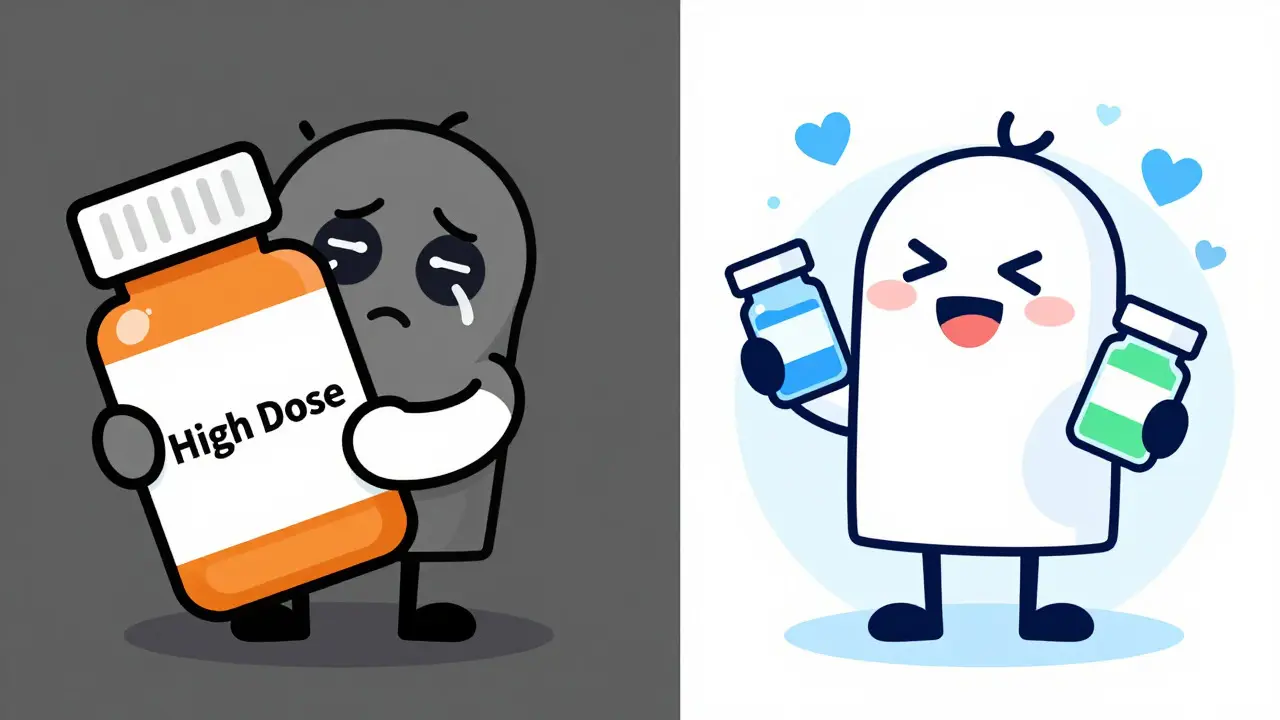
For years, the standard advice for high cholesterol was simple: take a statin, and if your numbers didn't drop enough, take more. But what if taking more isn't just less effective-it’s actually counterproductive? New evidence suggests that combining a lower dose of a statin with other medications is not only safer but significantly more powerful at lowering LDL cholesterol than maxing out on statins alone.
This shift in strategy, known as combination cholesterol therapy, is changing how doctors manage heart disease risk. Instead of pushing patients to tolerate high-dose statins that often cause muscle pain and fatigue, clinicians are now pairing moderate statin doses with agents like ezetimibe or bempedoic acid. The result? Better LDL reduction, fewer side effects, and faster achievement of treatment goals.
Why does doubling the statin dose not double the LDL reduction?
This is due to the 'rule of six' principle. Each time you double the dose of a statin, you only get an additional 6% reduction in LDL cholesterol. For example, increasing atorvastatin from 10mg to 20mg might lower LDL by 39%, but going from 20mg to 40mg only drops it to 45%. The benefit plateaus quickly while side effects increase.
What is combination cholesterol therapy?
It is a treatment strategy that uses a lower or moderate dose of a statin combined with a non-statin medication (like ezetimibe) to achieve target LDL levels. This approach leverages different mechanisms of action to lower cholesterol more effectively than high-dose statins alone.
Who benefits most from this approach?
Patients who are intolerant to high-dose statins, those with familial hypercholesterolemia, and individuals at very high risk for cardiovascular events (such as those with prior heart attacks) benefit most. It allows them to reach aggressive LDL targets without the debilitating side effects of high-dose monotherapy.
Is ezetimibe safe to combine with statins?
Yes, extensive clinical trials like IMPROVE-IT have shown that combining ezetimibe with statins is safe and reduces the risk of major vascular events. It works by blocking cholesterol absorption in the gut, complementing the statin's effect on liver production.
How much does combination therapy cost compared to high-dose statins?
While generic ezetimibe has made costs more manageable, adding a second agent can increase annual medication costs by $300-$400 in the US. However, this is often offset by reduced hospitalizations and cardiovascular events, making it cost-effective for high-risk patients.
 Medications