

When you hear the word chemotherapy, your mind likely jumps to the treatment itself-the hope for healing, the difficult side effects, or the resilience of patients. But there is a hidden layer to this medical process that rarely makes headlines until something goes wrong: the safety of handling these powerful drugs. These agents are designed to kill rapidly dividing cells, which means they do not distinguish between cancer cells and healthy ones if exposed incorrectly. For healthcare workers, caregivers, and even patients at home, understanding how these substances are prepared, transported, and administered is critical. The stakes are high, not just for patient outcomes, but for the long-term health of everyone who touches these medications.
The Evolution of Safety Standards
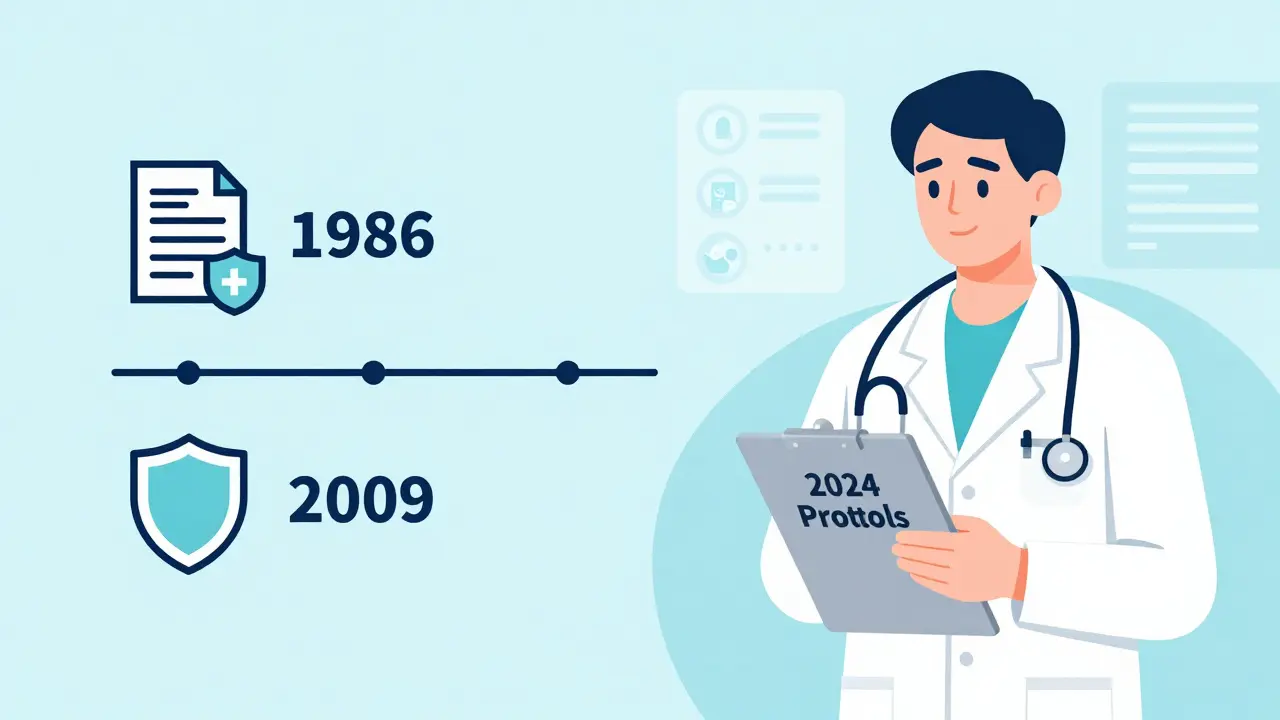
Safety protocols in oncology have not always been as rigorous as they are today. Back in 1986, the Occupational Safety and Health Administration (OSHA) published its first guidelines specifically targeting cancer chemotherapy drug safety. At the time, the focus was narrow, dealing primarily with traditional cytotoxic drugs. By 1995, OSHA expanded these rules to include other hazardous agents, acknowledging that the risk extended beyond just classic chemo. However, the real game-changer came later. In 2009, the American Society of Clinical Oncology (ASCO) and the Oncology Nursing Society (ONS) joined forces to create comprehensive administration safety standards.
These standards were not static. They underwent significant updates in 2016 and, most recently, in February 2024. This latest revision reflects a major shift in terminology and scope. We now talk about "antineoplastic therapy" rather than just chemotherapy. Why? Because modern oncology includes targeted therapies and immunotherapies that behave differently than traditional chemo but carry their own unique risks. The 2024 standards are living documents, reviewed every five to seven years to keep pace with new evidence. This evolution shows that the industry recognizes safety is not a one-time checklist but an ongoing adaptation to new drugs and new challenges.
Core Domains of the 2024 ASCO/ONS Standards
The current framework is built on four pillars. First, it demands a safe environment. This isn't just about cleaning surfaces; it involves specific facility design requirements and engineering controls like negative pressure rooms to prevent airborne contamination. Second, patient consent and education are mandatory. You cannot simply hand a drug to a patient. Documentation must clearly state the diagnosis, medication names, doses, duration, and therapeutic goals. This transparency ensures patients understand what they are receiving and why.
The third domain covers ordering, preparing, dispensing, and administering. This is where the rubber meets the road. The 2024 update introduced a controversial but vital change: a fourth verification step. Previously, three checks were standard. Now, a final verification must happen at the bedside, in the patient's presence, involving at least two licensed clinicians using two patient identifiers. This step aims to catch errors before the drug enters the body. The fourth domain focuses on monitoring during and after administration. Crucially, this now includes specific protocols for managing cytokine release syndrome (CRS). With the rise of immunotherapies, CRS cases have skyrocketed-up 300% between 2018 and 2022. If not managed quickly with accessible antidotes, mortality rates can hit 12-15%. Institutions must now ensure these rescue therapies are immediately available.
Personal Protective Equipment and Engineering Controls
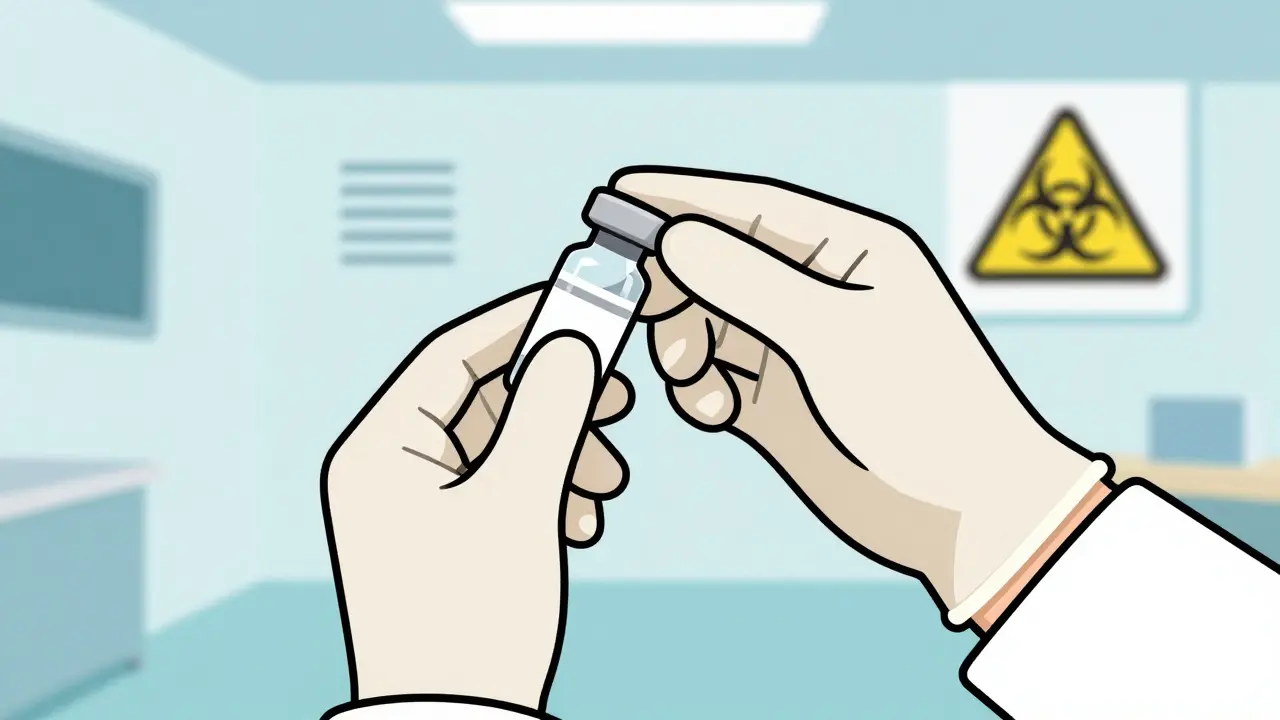
You might think wearing gloves is enough, but the science says otherwise. Studies dating back to 1992 showed that chemotherapy drugs can permeate standard latex or nitrile gloves, transferring contamination to hands and surfaces. That is why the standards require chemotherapy-tested double gloves. Specific testing protocols, outlined by the National Institute for Occupational Safety and Health (NIOSH), determine which gloves block specific drugs. For high-risk agents like carmustine or thiotepa, double gloving is non-negotiable. Impermeable gowns and eye protection are also required when splashing is possible. Respiratory protection becomes necessary if aerosols or spills are anticipated.
Engineering controls play a huge role here. Closed-system transfer devices (CSTDs) are designed to prevent the release of vapors or aerosols during preparation. While European guidelines from the European Society for Medical Oncology (ESMO) emphasize these devices heavily, US implementation has faced hurdles. A critical limitation is equity. Dr. Sarah Temkin noted in 2022 that 43% of rural cancer programs cannot afford full CSTD implementation due to resource constraints. This creates a two-tiered system where urban centers may have better protection than rural ones, raising serious ethical questions about worker safety across different regions.
| Organization | Primary Focus | PPE Requirements | Key Distinction |
|---|---|---|---|
| ASCO/ONS (US) | Administration & Patient Safety | Double gloves, impermeable gowns, eye/respiratory protection as needed | Mandatory 4th bedside verification; CRS management protocols |
| ESMO (Europe) | Engineering Controls | Similar PPE standards | Greater emphasis on Closed-System Transfer Devices (CSTDs) |
| NIOSH (US) | Worker Exposure Categorization | Based on drug risk group | Categorizes drugs into 5 risk groups with specific handling protocols |
The Reality of Implementation Costs and Challenges
Implementing these standards is not cheap. For a medium-sized oncology practice with 10-15 providers, the initial investment ranges from $22,000 to $35,000 for facility modifications alone. Staff training adds another $8,500 to $12,000. Then there are ongoing annual costs of $4,200 to $6,800 for PPE and hazardous waste disposal. The Association of Community Cancer Centers (ACCC) found that facilities implementing all ASCO/ONS standards see a 63% reduction in medication errors and a 78% drop in occupational exposures. Yet, the financial barrier remains high.
Beyond money, there is the human factor. Nurses report that the fourth verification step adds 7-10 minutes per patient. In already overloaded schedules, this feels like a burden rather than a safeguard. Some facilities report no decrease in errors despite the extra step, suggesting that workflow integration is key. If the process disrupts flow without adding clarity, it fails. Additionally, electronic health record (EHR) systems often need custom builds costing $15,000 to $40,000 to support these multiple verification requirements. Without seamless technology support, manual checks become prone to fatigue and oversight.
Home-Based Chemotherapy: The Hidden Risk Zone
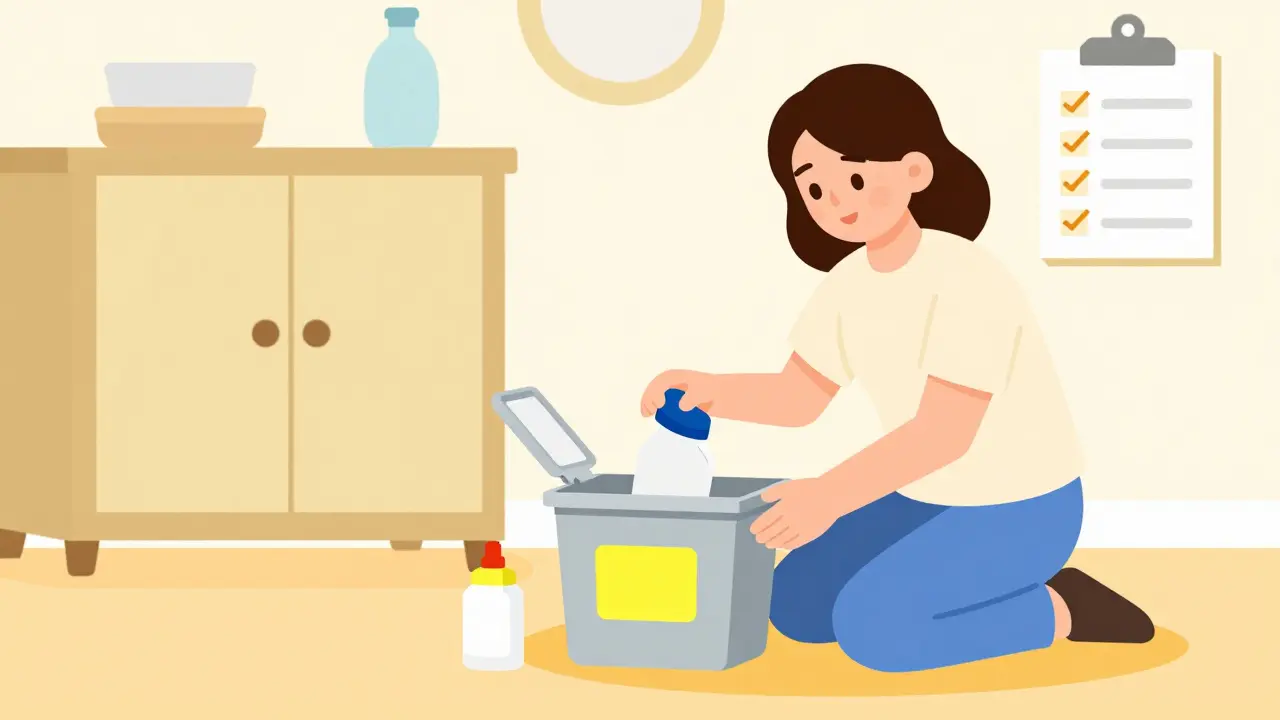
Hospitals are controlled environments. Homes are not. About 22% of home care incidents involve improper disposal of hazardous waste, and 17% involve inadequate spill management. Patients and caregivers are often left with bodily fluids that remain hazardous for 48-72 hours post-treatment. The American Cancer Society highlights that 65% of home caregivers feel inadequately prepared. Their biggest fears? Handling bodily fluids (82%) and disposing of sharps (76%).
To bridge this gap, ASCO developed the Chemotherapy Safety at Home toolkit. Facilities using this toolkit saw a 41% reduction in caregiver-reported safety concerns. Key practices include storing meds in child-proof locations, using dedicated chemotherapy spill kits, and following strict disposal protocols. However, guidelines here are inconsistent compared to hospital settings. There is no universal enforcement mechanism for home safety, leaving much to the discretion of individual providers and the diligence of families. This disparity underscores a critical need for standardized home-care education that matches the rigor of clinical settings.
Future Trends and Regulatory Enforcement
The market for hazardous drug handling equipment is booming, projected to reach $2.34 billion by 2028. This growth is driven largely by regulatory enforcement of USP <800> standards across 48 U.S. states. OSHA issued 142 citations for hazardous drug handling violations in 2022, a 37% increase from the previous year, with average penalties of $14,250. This signals a stricter regulatory environment.
Looking ahead, the National Comprehensive Cancer Network (NCCN) plans to integrate these safety standards into their facility accreditation program starting January 2025. Future developments include potential national certification for chemotherapy personnel by 2026 and pilot programs for AI-powered verification systems at NCI-designated centers. These technologies aim to reduce the manual burden of verification while increasing accuracy. As novel therapies like bispecific antibodies and antibody-drug conjugates emerge, standards will need to adapt again, ensuring that safety keeps pace with innovation.
What is the purpose of the fourth verification step in chemotherapy administration?
The fourth verification step, mandated by the 2024 ASCO/ONS standards, requires a final check at the patient's bedside with two licensed clinicians and two patient identifiers. Its primary goal is to prevent patient identification errors, which accounted for 18% of chemotherapy-related adverse events in recent reports. This step acts as a final safety net before the drug enters the patient's system.
Why are double gloves required for handling certain chemotherapy drugs?
Studies show that many chemotherapy drugs can permeate single layers of standard gloves, contaminating the wearer's skin. Double gloving, specifically with chemotherapy-tested gloves, provides an additional barrier against high-risk agents like carmustine and thiotepa, significantly reducing the risk of occupational exposure and absorption through the skin.
How does cytokine release syndrome (CRS) affect chemotherapy safety protocols?
CRS is a severe reaction associated with some immunotherapies. Due to a 300% increase in cases between 2018 and 2022, the 2024 standards now require institutions to have specific policies for managing CRS. This includes ensuring that antidotes and CRS-directed therapies are readily accessible to treat patients quickly, as delayed treatment can lead to mortality rates of 12-15%.
What are the main challenges for rural cancer programs regarding safety standards?
Rural programs often face resource constraints that make full compliance difficult. Specifically, 43% of rural cancer programs report an inability to implement closed-system transfer devices (CSTDs) due to cost. This creates a disparity in safety levels, potentially exposing workers in rural areas to higher risks compared to those in well-funded urban centers.
How should caregivers handle bodily fluids after a patient receives chemotherapy at home?
Bodily fluids can remain hazardous for 48-72 hours after treatment. Caregivers should use dedicated chemotherapy spill kits, wear gloves when handling soiled laundry or cleaning up accidents, and follow specific disposal protocols. Storing medications in child-proof locations and educating family members on these precautions are essential steps to minimize exposure risks at home.
 Medications

Danny S
May 19, 2026 AT 22:28They want you to believe the gloves are for your safety. :P It is a lie designed to keep the workers docile while the big pharma profits soar. The real danger is not in the spill, but in the long-term exposure they hide from you. They know exactly what these chemicals do to your DNA and they don't care. You are just a number to them. The rural disparity? That is intentional. They want the poor sick too. Wake up sheeple. The system is rigged against anyone who questions the narrative. I see the strings pulling everywhere. They control the air, the water, and now the chemo protocols. It is all part of the grand design to cull the weak. Don't let them fool you with their "safety standards". It is about liability, not life.
Jeremiah Cassandra
May 20, 2026 AT 11:17Oh look, another conspiracy theory about chemotherapy safety protocols. 🙄 As an oncology nurse, I can tell you that double gloving isn't a plot to enslave us; it's because carmustine literally permeates standard nitrile. We aren't being "culled," we're trying to avoid getting cancer ourselves from handling the drugs meant to kill cancer. The 2024 ASCO/ONS update on the fourth verification step is actually brilliant for catching ID errors, even if it does add those annoying extra minutes to my shift. But hey, better safe than sorry when dealing with agents that have a 12-15% mortality rate if CRS isn't managed quickly. Maybe try reading the actual guidelines instead of inventing a shadow government narrative? 😂
charles robert
May 21, 2026 AT 22:31The irony is palpable here. We build these intricate systems of verification, these layers of protection, only to realize that the true void lies within the human element itself. The machine does not err, but the operator does. The fourth check is a testament to our inherent fallibility, a sad admission that we cannot trust our own eyes or minds. It is a philosophical crisis disguised as a safety protocol. We are drowning in procedures while starving for meaning. The rural divide mentioned is merely a symptom of a larger societal decay, where resources flow like water to the lowest point, leaving the highlands parched and forgotten. We are all just waiting for the other shoe to drop, wrapped in impermeable gowns that offer no comfort against the existential dread. 🌑
Mollie Louise
May 22, 2026 AT 12:27I completely agree that the human factor is so important here! 🌟 While the engineering controls like CSTDs are amazing, nothing replaces the vigilance of the staff. I love how the new standards emphasize patient education too. It empowers the patients to be partners in their own safety rather than just passive recipients. The toolkit for home safety is such a wonderful initiative because it bridges that gap between the clinical world and the living room. We need more of this collaborative spirit in healthcare! When everyone feels prepared and supported, the anxiety drops significantly. Let's keep supporting these rigorous standards because they truly save lives and protect our wonderful healthcare heroes! 💖✨
Mark Ronson
May 24, 2026 AT 01:51Great points Mollie! I work in a community center and the cost barrier is real though. The $22k-$35k for facility mods is a huge hit for us. We struggle to afford the full CSTD implementation which puts our staff at higher risk compared to urban centers. It is unfair but we try our best with what we have. The training costs are also steep. We hope the NCCN accreditation helps push more funding towards these safety measures. Safety should not be a luxury item. We need better equity in resource distribution across all regions. It is a tough road but we keep pushing forward for our patients and staff alike. 👍
Warren Brewer
May 26, 2026 AT 00:57It is sad that money gets in the way of safety. Everyone deserves to be safe at work. The rules are good but hard to follow if you do not have the right tools. I hope things get better soon for the small clinics. They help so many people. Simple steps like using spill kits at home can also help families feel safer. We all need to look out for each other.
Desirea Gaona
May 27, 2026 AT 22:06Indeed, the financial disparities highlighted by Dr. Temkin present a significant ethical challenge that demands our collective attention. It is imperative that we advocate for equitable access to Closed-System Transfer Devices (CSTDs) regardless of geographic location. The current two-tiered system undermines the fundamental principle of universal safety in healthcare settings. Furthermore, the integration of AI-powered verification systems could potentially mitigate some of the manual burdens associated with the fourth verification step, thereby enhancing efficiency without compromising accuracy. We must ensure that our pursuit of innovation does not leave behind those in underserved communities. Collaboration between policymakers and healthcare providers is essential to address these systemic inequities. Let us strive for a future where safety is not a privilege, but a right afforded to every healthcare worker and patient alike.
Mikey Mann
May 29, 2026 AT 17:21There is beauty in the evolution of these standards. From OSHA's first guidelines in 1986 to the comprehensive 2024 ASCO/ONS updates, we see humanity's relentless drive to protect one another. The shift from "chemotherapy" to "antineoplastic therapy" reflects a deeper understanding of our complex biology. Yes, the costs are high, and yes, the rural divide is painful, but progress is rarely linear or perfectly fair. The rise of immunotherapies brings new risks like CRS, but also new hopes for cures. We stand on the shoulders of giants who dared to ask "what if we could do better?" Let us embrace this ongoing adaptation with optimism. Every protocol updated is a life preserved, a family kept whole. The future looks bright, even if the path is winding. 🌈