Why Your Biologic Drug Stays Expensive for Years
You’ve probably heard about generic drugs. They’re cheap copies of older medicines that save you money once the original patent expires. But if you take a biologic drug-like insulin, monoclonal antibodies for arthritis, or cancer treatments-you might have noticed something strange. There are no generics. Instead, we have biosimilars. And they don’t show up as quickly.
The reason isn’t just science; it’s law. In the United States, a specific set of rules protects the companies that invented these complex drugs. These rules create a long waiting period before a competitor can even try to get their version approved. This article breaks down exactly how long that wait is, why it exists, and what happens when the clock finally runs out.
The 12-Year Rule: The Core of Biologic Exclusivity
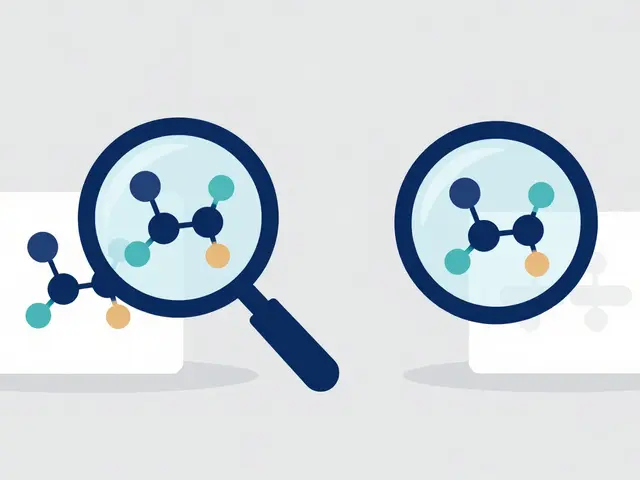
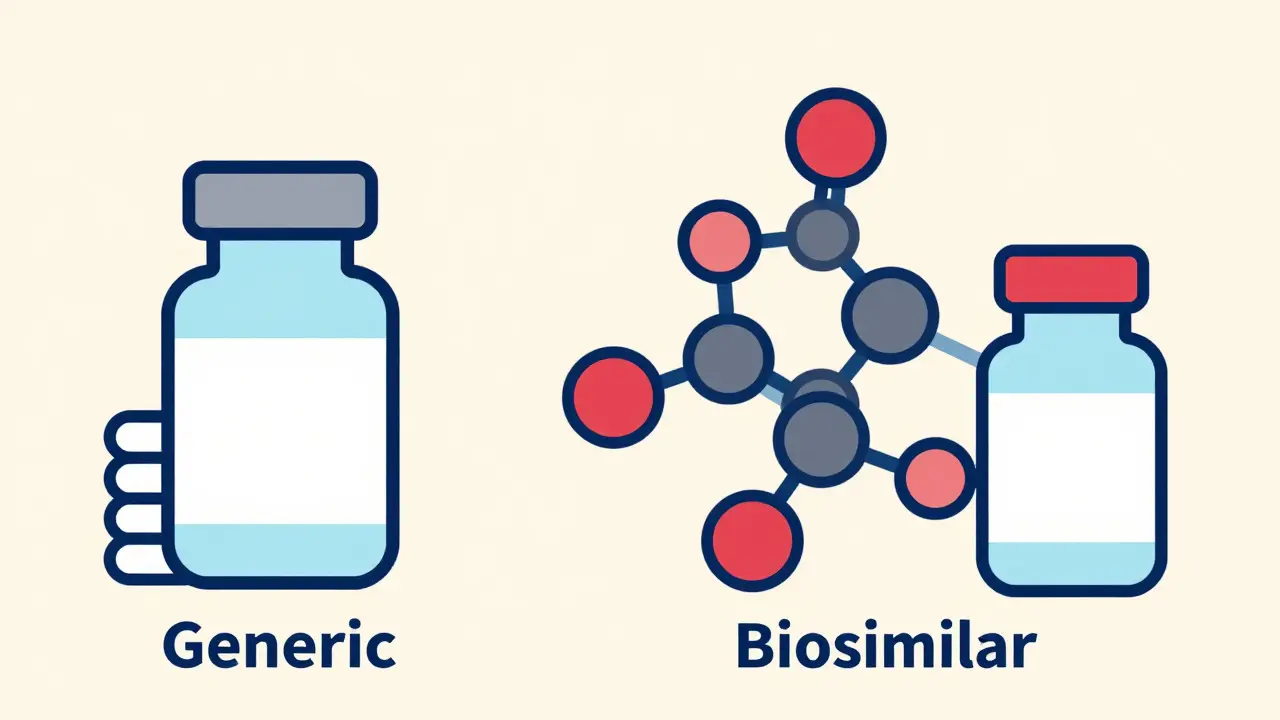
To understand when a biosimilar can enter the market, you first need to know what a biosimilar is. Unlike small-molecule drugs (think aspirin), biologics are made from living cells. They are huge, complex molecules. Because they are so complex, you can’t make an exact copy. You can only make a product that is "highly similar" with no clinically meaningful differences in safety, purity, or potency. That’s a biosimilar.
The U.S. government decided that because developing these drugs is so hard and expensive, the creators deserve extra time to recoup their investment. This was codified in the Biologics Price Competition and Innovation Act (BPCIA), passed in 2009 as part of the Affordable Care Act.
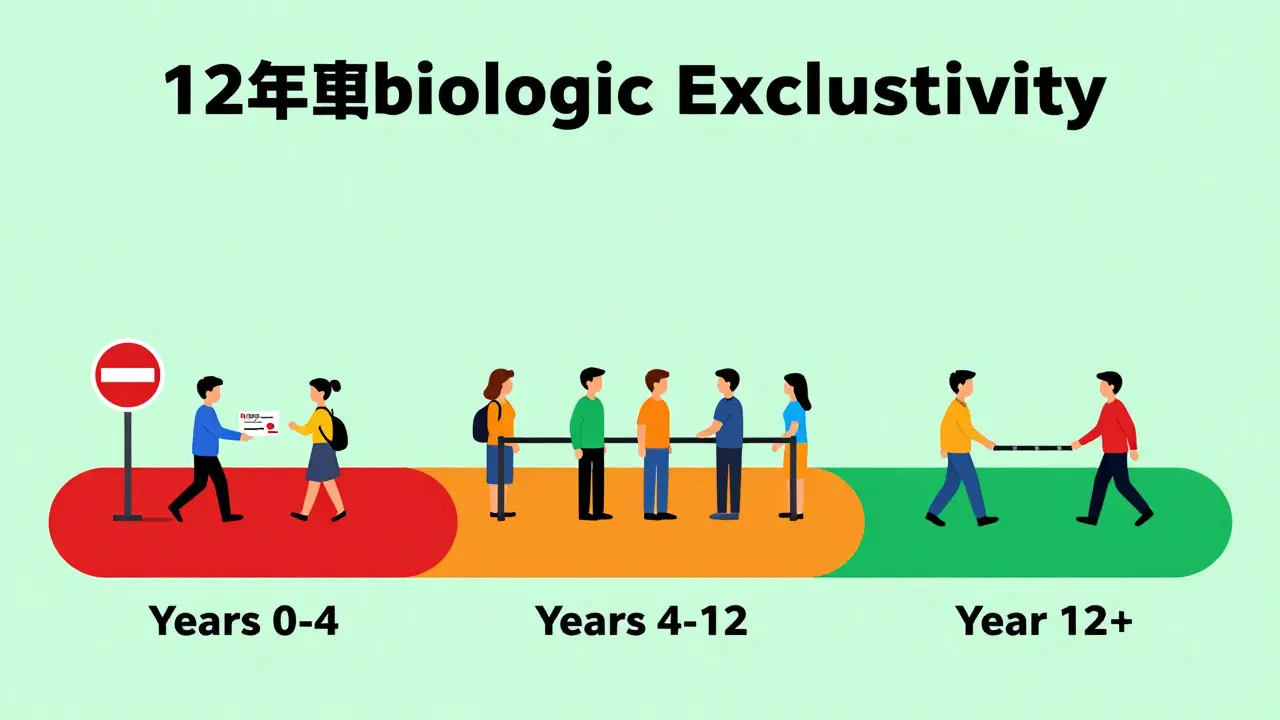
Here is the simple timeline established by the BPCIA:
- Year 0-4: No one can even submit an application for a biosimilar. This is called data exclusivity.
- Year 4-12: Companies can submit applications to the Food and Drug Administration (FDA), but the FDA cannot approve them yet. This is market exclusivity.
- Year 12+: The FDA can approve biosimilars, assuming all other legal hurdles are cleared.
This means that for the first 12 years after a reference biologic is approved, the innovator company has a monopoly protected by federal statute. It doesn’t matter if their patents expire earlier; the FDA is legally barred from approving a competitor during this window. For example, if a new cancer drug is approved in 2026, the earliest a biosimilar could be sold in the U.S. is 2038.
The "Patent Dance": How Lawsuits Delay Entry Further
Even after the 12-year statutory exclusivity ends, biosimilars rarely hit the shelves on day one. Why? Because of patents. While the BPCIA provides a 12-year shield, the original company usually holds dozens, sometimes hundreds, of additional patents covering manufacturing methods, dosage forms, or specific uses.
The BPCIA created a process known as the "patent dance." Here is how it works in practice:
- Submission: Once the 4-year submission bar lifts, the biosimilar applicant sends their full application to the original manufacturer.
- Patent List: The original manufacturer has 60 days to list every patent they think the biosimilar would infringe.
- Counter-Argument: The biosimilar maker has 60 days to argue why those patents are invalid or not infringed.
- Negotiation & Litigation: Both sides negotiate which patents to litigate immediately. If they can’t agree, they go to court.
This process often leads to years of litigation. The Supreme Court case Amgen v. Sandoz (2017) highlighted how contentious this stage can be. Often, the threat of lawsuit alone forces biosimilar makers to settle, delaying their entry by several more years past the 12-year mark. This creates a situation where patients pay premium prices long after the initial innovation incentive should have been satisfied.
| Region | Data Exclusivity | Market Exclusivity | Total Protection |
|---|---|---|---|
| United States | 4 years | 8 years | 12 years |
| European Union | 10 years | 1 year | 11 years |
| Japan | 8 years | 4 years | 12 years |
| South Korea | 10 years | 0 years | 10 years |
The Cost of Waiting: The Humira Example
Let’s look at a real-world example to see what this delay costs patients. Adalimumab, sold as Humira, was the best-selling drug in the world for years. Its primary patent expired in 2016. However, thanks to the 12-year BPCIA exclusivity and aggressive patent litigation strategies, no biosimilar was approved in the U.S. until March 2023.
That is seven years of extra monopoly pricing. During that time, European patients had access to biosimilars starting in 2018. Studies estimate that American patients paid roughly $167 billion more than necessary during this gap because competition was blocked. The list price of Humira increased by 470% between 2012 and 2022, while prices in Europe remained stable due to competition.
This delay isn’t just about corporate profits; it affects patient access. According to surveys by the National Community Pharmacists Association, nearly 80% of pharmacists believe the current system unnecessarily delays availability. More alarmingly, many patients abandon their therapy because they simply cannot afford the high copays associated with single-source biologics.
The Biosimilar Void: A New Problem Emerging
As we move through 2025 and into 2026, a new issue has emerged: the "biosimilar void." Reports from the IQVIA Institute indicate that while 118 biologics will lose patent protection between 2025 and 2034, representing a $234 billion market opportunity, very few biosimilars are actually in development for them.
Why is this happening?
- High Development Costs: Creating a biosimilar can cost over $100 million and take 5-9 years. For smaller drugs, this isn’t profitable.
- Complexity: Newer biologics like antibody-drug conjugates and cell therapies are incredibly hard to replicate. Manufacturing investments can average $250 million.
- Orphan Drugs: Many expiring biologics treat rare diseases. With small patient populations, there is little financial incentive for competitors to enter the market.
For instance, eculizumab, a drug used for rare genetic conditions, has seen limited biosimilar activity despite its importance. This void means that even when patents expire, patients with certain conditions may still face high prices because no competitor bothered to build the factory and run the trials needed to challenge the incumbent.
What Comes Next for Patients?
The landscape is slowly shifting. The FDA released a Biosimilars Action Plan in 2022 aimed at streamlining approvals and improving communication. Legislative efforts like the Biosimilars User Fee Act have attempted to reduce regulatory bottlenecks, though progress has been slow.
For patients, the key takeaway is patience and advocacy. If you are on a biologic that is approaching its 12-year exclusivity end date, ask your doctor about potential biosimilar options. Be aware that "interchangeable" status-a designation that allows pharmacists to substitute the biosimilar without the prescriber’s intervention-is crucial for true cost savings. Not all approved biosimilars are interchangeable.
Understanding these timelines helps set realistic expectations. The era of cheap biologics is coming, but it is governed by a complex mix of statutory clocks, patent thickets, and economic realities. As more products fall off patent in the late 2020s, we expect to see increased competition, lower prices, and hopefully, better access for everyone.
How long does biologic patent protection last in the US?
Under the BPCIA, innovator biologics receive 12 years of market exclusivity. This includes 4 years of data exclusivity (where no application can be submitted) and 8 years of market exclusivity (where applications can be submitted but not approved).
What is the difference between a generic and a biosimilar?
Generics are identical copies of small-molecule drugs. Biosimilars are highly similar versions of complex biologic drugs made from living cells. Because biologics are complex, exact copies are impossible, so biosimilars must demonstrate no clinically meaningful differences in safety and efficacy.
Why are biosimilars delayed even after patents expire?
Delays occur due to the "patent dance," a litigation process where originator companies sue biosimilar makers over secondary patents covering manufacturing or usage. Additionally, the high cost and complexity of developing biosimilars deter some competitors from entering the market.
When can I expect biosimilars for my medication?
Check the approval date of your reference biologic. Add 12 years to find the earliest possible FDA approval for a biosimilar. However, actual market entry may be later due to litigation or lack of developer interest, especially for niche or orphan drugs.
Are biosimilars safe and effective?
Yes. The FDA requires rigorous testing to ensure biosimilars are highly similar to the reference product with no clinically meaningful differences in safety, purity, or potency. They are held to the same high standards as the original biologic.
 Medications