

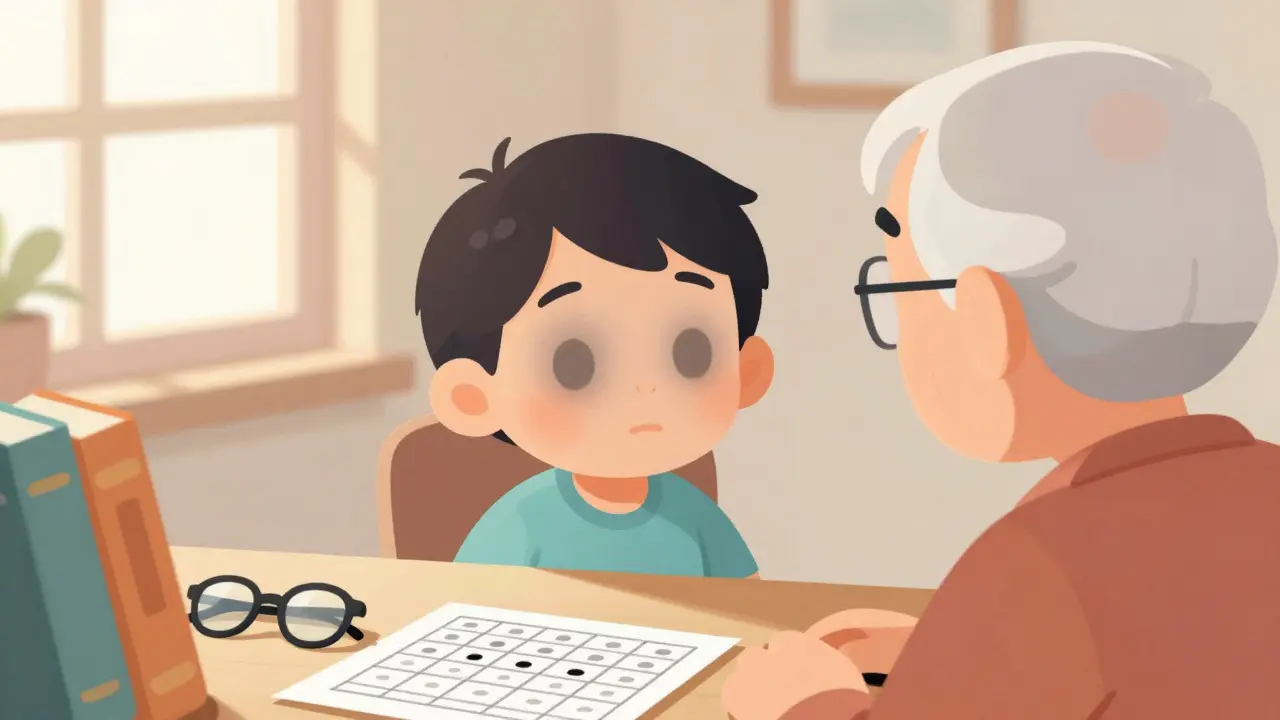
Imagine looking at a face you love - your grandchild, your spouse - and seeing only a blur in the center. The edges are clear, but the middle is gone. That’s what happens with age-related macular degeneration, or AMD. It doesn’t steal all your sight. It steals the part you use to read, drive, recognize faces, or even see the clock. And it’s not rare. More than 10 million Americans have it. By 2040, that number will hit nearly 300 million worldwide. If you’re over 65, you’re at higher risk. But here’s the thing: you don’t have to lose your vision to it.
What Exactly Is AMD?
AMD attacks the macula - a tiny spot in the center of your retina packed with light-sensitive cells. This is your visual command center for sharp, detailed vision. When it breaks down, your central vision fades. Peripheral vision stays intact, so you won’t go totally blind. But you’ll struggle with everyday tasks that need focus. There are two types: dry and wet. About 90% of cases are dry AMD. It starts slowly, with tiny yellow deposits called drusen building up under the retina. Over time, the macula thins out. This is called geographic atrophy. It’s like a slow leak - vision dims gradually over years. Wet AMD is the scary one. It makes up only 10-15% of cases, but it causes 90% of severe vision loss. Here, abnormal blood vessels grow under the macula. They leak fluid and blood, scarring the tissue. Vision can drop fast - sometimes in weeks. The worst part? Dry AMD can turn into wet AMD at any time. No warning. No notice.Why Does This Happen?
Age is the biggest risk factor. If you’re 75 or older, your chance of having AMD jumps to 35%. But it’s not just getting older. Genetics play a huge role. If a parent or sibling has AMD, your risk triples to six times higher. Smoking is the most dangerous thing you can do if you care about your eyes. Smokers are nearly four times more likely to develop AMD than non-smokers. It’s worse than high blood pressure or cholesterol - both of which also raise your risk. Race matters too. White people are 2.5 times more likely to get AMD than African Americans. The reasons aren’t fully clear, but genetics and pigment differences likely play a part. At the cellular level, your retina is under constant stress. Light, oxygen, and aging damage the retinal pigment epithelium - the layer that feeds the light-sensing cells. Waste builds up. The immune system reacts. Inflammation kicks in. That’s when things spiral. The body tries to fix it, but ends up making things worse - like growing leaky blood vessels where they shouldn’t be.How Anti-VEGF Therapy Stops the Damage
This is where anti-VEGF treatment changes everything. VEGF stands for vascular endothelial growth factor. It’s a protein your body makes to grow new blood vessels - useful after injury, dangerous in the eye. In wet AMD, your body overproduces VEGF, triggering those abnormal vessels to sprout under your macula. Anti-VEGF drugs block that signal. They’re injected directly into the eye - a quick, outpatient procedure. No surgery. No hospital stay. Just a tiny needle, numbing drops, and a few seconds of pressure. You’ll feel pressure, maybe a pinch. But not pain. These injections stop the bleeding and leaking. They can even reverse some damage. Studies show 68% of patients stabilize or improve their vision after starting treatment. One patient on Reddit shared: “After 12 injections over nine months, my vision went from 20/200 to 20/40. Worth every uncomfortable moment.” The standard protocol? Monthly shots for three months, then spaced out based on scans. Doctors use OCT - optical coherence tomography - to see fluid levels in your retina. If fluid returns, you get another shot. If it’s gone, you wait.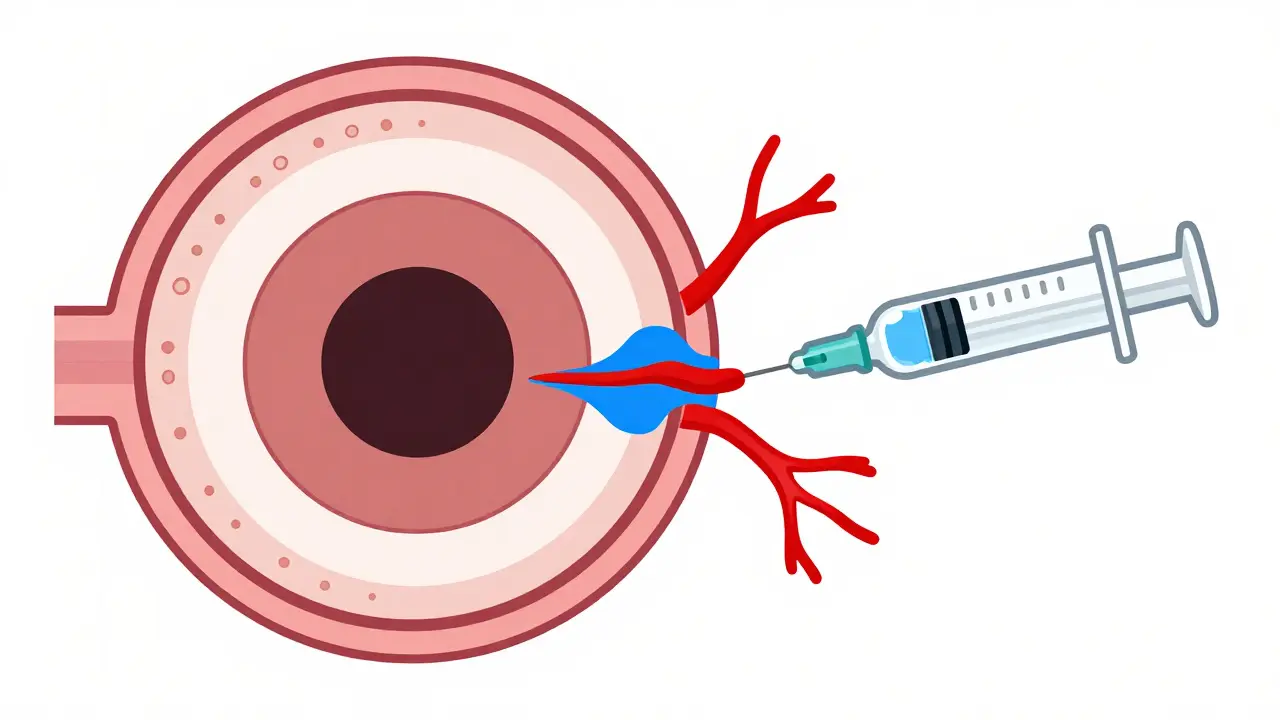
What You Can Do Beyond Injections
Anti-VEGF is powerful, but it’s not a cure. You still need to protect your eyes. The AREDS2 formula - a specific mix of vitamins and minerals - reduces the risk of dry AMD turning into the wet form by 25%. It includes vitamin C, vitamin E, zinc, copper, lutein, and zeaxanthin. Talk to your doctor before starting. Not everyone needs it. Quit smoking. If you’re still smoking, this is your moment. Even cutting back helps, but quitting cuts your AMD risk by half over five years. Eat for your eyes. Leafy greens, fish rich in omega-3s, nuts, and colorful fruits help. Don’t rely on supplements alone. Food works better. Use the Amsler grid at home. It’s a simple checkerboard pattern you look at daily. If the lines warp or disappear in the center, call your eye doctor immediately. That’s often the first sign wet AMD is developing. Forty percent of patients catch it this way before their next appointment.The Burden of Treatment
Let’s be real: getting monthly eye injections is hard. Eighty-two percent of patients say the biggest challenge isn’t the pain - it’s the schedule. Clinic visits every four to eight weeks. Transportation. Time off work. Stress. Many skip doses. And that’s dangerous. Missing more than 25% of injections leads to 30% more vision loss. Newer options are helping. In 2021, the FDA approved Susvimo - a tiny implant that slowly releases medication for up to six months. It’s not for everyone, but it’s a breakthrough. Another new drug, Vabysmo, targets two pathways at once and can extend the time between shots. Ophthalmologists now use anti-VEGF as first-line treatment in 92% of wet AMD cases. That’s up from just 15% in 2005. The change has been dramatic. Ten years ago, many patients lost most of their vision. Today, most keep functional sight.
What’s Next for AMD Treatment?
Science is moving fast. Gene therapy trials are testing ways to turn off the faulty genes that make people prone to AMD. Early results are promising. One study showed gene therapy could reduce inflammation in the eye for over a year with a single treatment. Researchers are also testing pills that deliver anti-VEGF drugs orally - no needles needed. It’s still early, but if it works, it could change everything. The goal isn’t just to slow vision loss. It’s to restore it. Some labs are experimenting with retinal implants and stem cells. They’re not ready yet, but the direction is clear: we’re moving from managing AMD to reversing it.What This Means for You
If you’re over 65, get a comprehensive eye exam every year. If you have dry AMD, get checked every 6 months. Don’t wait for symptoms. By the time you notice blurry faces or distorted lines, damage may already be done. If you’re diagnosed with wet AMD, start treatment immediately. Every week counts. Don’t skip appointments. Use the Amsler grid. Eat well. Quit smoking. Take your vitamins. AMD isn’t a death sentence for your vision. It’s a chronic condition - like high blood pressure. You manage it. You stay on top of it. And with today’s tools, you can keep living the life you love.Can AMD be cured?
No, AMD cannot be cured. But with early detection and treatment - especially for wet AMD - vision loss can be slowed or even reversed. Anti-VEGF injections, nutritional supplements, and lifestyle changes can help many people keep their central vision for years.
How often do you need anti-VEGF injections?
Initially, most patients get injections every 4 weeks for 3 months. After that, doctors use retinal scans to decide if more are needed. Many patients go 6 to 12 weeks between shots over time. Newer treatments like Susvimo can extend this to 6 months.
Are anti-VEGF injections painful?
No, they’re not painful. The eye is numbed with drops, and the needle is very fine. Most people feel pressure or a brief pinch. The whole process takes less than 10 minutes. Anxiety is common, but the discomfort is minimal and short-lived.
Can you drive with AMD?
It depends. Early AMD often doesn’t affect driving. As central vision worsens, reading signs, seeing traffic lights, or judging distances becomes harder. Many patients stop driving when their vision drops below legal limits. Low-vision aids and adaptive technology can help some people continue driving safely.
What’s the difference between dry and wet AMD?
Dry AMD is the most common form - it’s slow, caused by drusen buildup and thinning of the macula. Wet AMD is less common but more aggressive. It happens when abnormal blood vessels grow under the retina and leak fluid or blood, causing rapid vision loss. Dry AMD can turn into wet AMD at any time.
Does smoking really make AMD worse?
Yes. Smokers are nearly four times more likely to develop AMD than non-smokers. Smoking increases inflammation, reduces blood flow to the retina, and speeds up oxidative damage. Quitting at any age lowers your risk - even if you’ve smoked for decades.
Can diet help with AMD?
Yes. Eating leafy greens, fish like salmon, nuts, and colorful fruits helps protect your eyes. The AREDS2 supplement - a specific blend of vitamins and antioxidants - has been shown to reduce the risk of dry AMD progressing to the wet form by 25% in people with intermediate stages.
Is there a home test for AMD?
Yes. The Amsler grid is a simple checkerboard pattern you look at daily. If lines appear wavy, blurry, or missing in the center, it could mean wet AMD is developing. Use it every day - it’s free, easy, and can catch changes before your next eye exam.
 Medications


Randall Little
January 14, 2026 AT 13:00So let me get this straight - we’ve got a $10,000-per-injection therapy that keeps people from going blind, but the real obstacle is getting them to the clinic on time? We’re treating a biological crisis like it’s a missed yoga class. The system’s broken, not the science.
Rosalee Vanness
January 15, 2026 AT 20:45I’ve watched my mother go from reading her Bible every morning to squinting at the words like they’re hiding from her. She’s 78, never smoked, eats kale like it’s going out of style, and still got the wet AMD. The injections? She cries before every one - not from pain, but from the weight of it all. The fear that this month might be the one where the fluid creeps back. I wish there was a pill. I wish the government would cover transportation. I wish we didn’t make people fight so hard just to see their grandchildren’s smiles.
mike swinchoski
January 16, 2026 AT 01:12People need to stop being lazy. If you’re over 65 and you haven’t gotten an eye exam, you deserve to go blind. Smoking? That’s just dumb. No one’s forcing you to light up. It’s not the system’s fault. It’s yours. Get your act together.
Trevor Whipple
January 16, 2026 AT 22:53u/6831 is 100% right. I got the shots, but my doc said I need to come back every 6 weeks. I missed one because my car broke down. Now my vision’s blurry again. Stupid. Shoulda just quit smokin’ like 20 years ago. My bad. But seriously, why do they make it so hard to get these shots? I’m not a doctor but I think they’re just trying to make money off us. I saw a video on TikTok that said you can use turmeric paste on your eyes. I tried it. Felt weird. Didn’t help. But hey, free.
Lethabo Phalafala
January 17, 2026 AT 08:33Let me tell you something - I’m from Johannesburg, and here, most people over 60 don’t even know what an ophthalmologist is. We have one eye clinic for 2 million people. My aunt lost her sight because she waited three years for an appointment. This isn’t just about American healthcare - it’s about global neglect. Anti-VEGF is a miracle, but if you can’t reach it, it’s just a word on a screen. We need mobile clinics. We need community outreach. We need to stop pretending this is just a ‘personal responsibility’ issue.
Damario Brown
January 17, 2026 AT 16:48Let’s be real - this whole AMD narrative is a pharmaceutical marketing ploy. VEGF? That’s just a protein. They invented a disease called ‘wet AMD’ so they could sell injections. The real cause? Sugar. And processed food. And screen time. Nobody talks about that. The eye is a mirror. If your gut is inflamed, your retina bleeds. Injecting drugs into your eyeball is like putting duct tape on a leaking pipe. Fix the root. Eat clean. Stop drinking soda. Done.
John Pope
January 18, 2026 AT 16:26There’s a metaphysical layer here, you know. The macula isn’t just tissue - it’s the window to the soul’s clarity. When we lose central vision, we’re not just losing pixels - we’re losing focus on what matters. The modern world bombards us with peripheral noise - social media, ads, distractions - and the body responds by manifesting that chaos in the eye. Anti-VEGF doesn’t cure the disease - it just lets us keep staring at our phones longer. We need to look inward, not inject outward.
Adam Vella
January 20, 2026 AT 01:35It is imperative to note that the current standard of care for wet AMD, as evidenced by multiple randomized controlled trials including the CATT and IVAN studies, demonstrates statistically significant visual acuity gains with anti-VEGF therapy when administered with strict adherence to the protocol. The notion that lifestyle interventions alone can substitute for intravitreal injections is not supported by peer-reviewed literature. Furthermore, the AREDS2 formulation, while beneficial in reducing progression risk in intermediate dry AMD, does not reverse neovascularization. Any deviation from evidence-based guidelines risks irreversible photoreceptor loss.
Alan Lin
January 20, 2026 AT 05:15As a retired ophthalmologist with 42 years in clinical practice, I have seen patients go from reading fine print to seeing nothing but gray. I’ve also seen them regain the ability to see their grandchildren’s faces - not because of miracles, but because they showed up. Every. Single. Time. If you skip an injection, you are not just risking your vision - you are betraying the decades of research, the scientists who worked on this, the nurses who administer the shots, and the family members who drive you there. Show up. It’s not hard. It’s just necessary.
Robin Williams
January 20, 2026 AT 17:52man. i just read this and i started crying. not because i have it - i’m only 52 - but because my dad lost his sight to this and he never got the shots. he said ‘i’ll do it next week’… and next week never came. now i check my amsler grid every morning. i quit smoking. i eat salmon. i’m not waiting. i’m not hoping. i’m doing. because seeing my daughter’s face? that’s worth every needle.
Kimberly Mitchell
January 21, 2026 AT 07:31Anti-VEGF? Sounds like a fancy way to say ‘pay $5000 to keep your eyes from working’. I’m not buying it. If it were really that effective, why are there still blind people? It’s all profit-driven. The FDA approves these drugs because they’re funded by Big Pharma. Wake up.
Vinaypriy Wane
January 22, 2026 AT 13:07I am from India. In my village, we have no eye specialist. My uncle, 72, could not afford the injections. He used to rub his eyes with cow urine - traditional remedy. He lost vision in one eye. But he still reads the newspaper with a magnifying glass. He says, ‘God gave me eyes, not the doctor.’ I wish we had the same technology here. But we don’t. So we pray. And we wait. And we hope.
Diana Campos Ortiz
January 24, 2026 AT 00:21I used to think AMD was just something old people dealt with. Then my mom got diagnosed. Now I look at every wrinkled face I see on the bus and wonder if they’re holding back tears because they can’t read the bus number. I started carrying Amsler grids in my purse. I give them out to strangers over 60. One lady cried and hugged me. I didn’t even know her. But I saw her face - and I saw the fear. So I gave her the grid. Maybe it’ll help. Maybe it won’t. But I showed up.
Jesse Ibarra
January 24, 2026 AT 19:19Oh, so now we’re supposed to feel guilty because we can’t afford $5000 shots every month? What’s next? A tax on having eyes? This is a scam. They’re selling hope like it’s a subscription. I’ve seen people die waiting for insurance approval. And you’re sitting here talking about ‘adherence’ like it’s a yoga pose? Wake up. This isn’t medicine - it’s a luxury.