Headaches, back pain, and fevers are common during pregnancy, but the fear of harming your baby often stops you from taking any medication. You might have seen alarming headlines about acetaminophen causing autism or ADHD, leading many to suffer in silence. Meanwhile, old advice about ibuprofen being safe until late pregnancy has changed significantly. Navigating these conflicting messages is stressful, but the medical consensus is actually quite clear when you look at the data.
The core issue isn't just about pain; it's about risk management. Untreated high fever can be dangerous for a developing fetus, while certain anti-inflammatory drugs can cause physical harm to fetal kidneys later in pregnancy. Understanding exactly which drug is safe, when, and why helps you make informed decisions without unnecessary anxiety.
Key Takeaways
- Acetaminophen (paracetamol) remains the safest over-the-counter option for pain and fever throughout all three trimesters when used at standard doses.
- NSAIDs (like ibuprofen) must be avoided after 20 weeks of pregnancy due to risks of fetal kidney dysfunction and low amniotic fluid.
- Recent large-scale studies show no significant link between acetaminophen use and neurodevelopmental disorders like autism or ADHD.
- Untreated maternal fever above 100.4°F poses a higher immediate risk to the pregnancy than standard acetaminophen use.
- Always check combination cold/flu medicines, as 30% contain hidden NSAIDs that are unsafe after the first trimester.
Why Acetaminophen Is Still the Gold Standard
For decades, Acetaminophen (also known as paracetamol) has been the go-to pain reliever for pregnant individuals. It works by blocking pain signals in the brain and reducing fever, but unlike other painkillers, it does not reduce inflammation or affect blood clotting.
The confusion around acetaminophen stems from observational studies published around 2021 that suggested a correlation between long-term use and behavioral issues in children. However, correlation is not causation. A massive study published in JAMA Network Open in 2023 analyzed nearly 97,000 mother-child pairs and found no significant association between acetaminophen use during pregnancy and risks of autism spectrum disorder, ADHD, or intellectual disability. The adjusted odds ratios were essentially neutral (aOR 1.03 for autism), meaning the risk was statistically indistinguishable from those who didn't take the drug.
Major medical organizations stand firmly behind its safety. In September 2025, Steven J. Fleischman, MD, president of the American College of Obstetricians and Gynecologists (ACOG), stated clearly that no reputable study has proven acetaminophen causes neurodevelopmental disorders. The FDA also acknowledges that while some theoretical concerns exist regarding chronic use, it remains the "safest over-the-counter alternative" among all analgesics.
| Feature | Acetaminophen (Tylenol) | NSAIDs (Ibuprofen, Naproxen) |
|---|---|---|
| Safety Window | All trimesters (with caution on duration) | Avoid after 20 weeks gestation |
| Primary Risk | Liver toxicity if overdosed (>4g/day) | Fetal renal dysfunction, oligohydramnios |
| Fever Reduction | Effective and Safe | Effective but restricted |
| Inflammation Relief | No effect | Strong effect |
| Neurodevelopmental Link | No causal link found (2023 JAMA study) | Not primary concern compared to physical risks |
The Critical Change in NSAID Guidelines
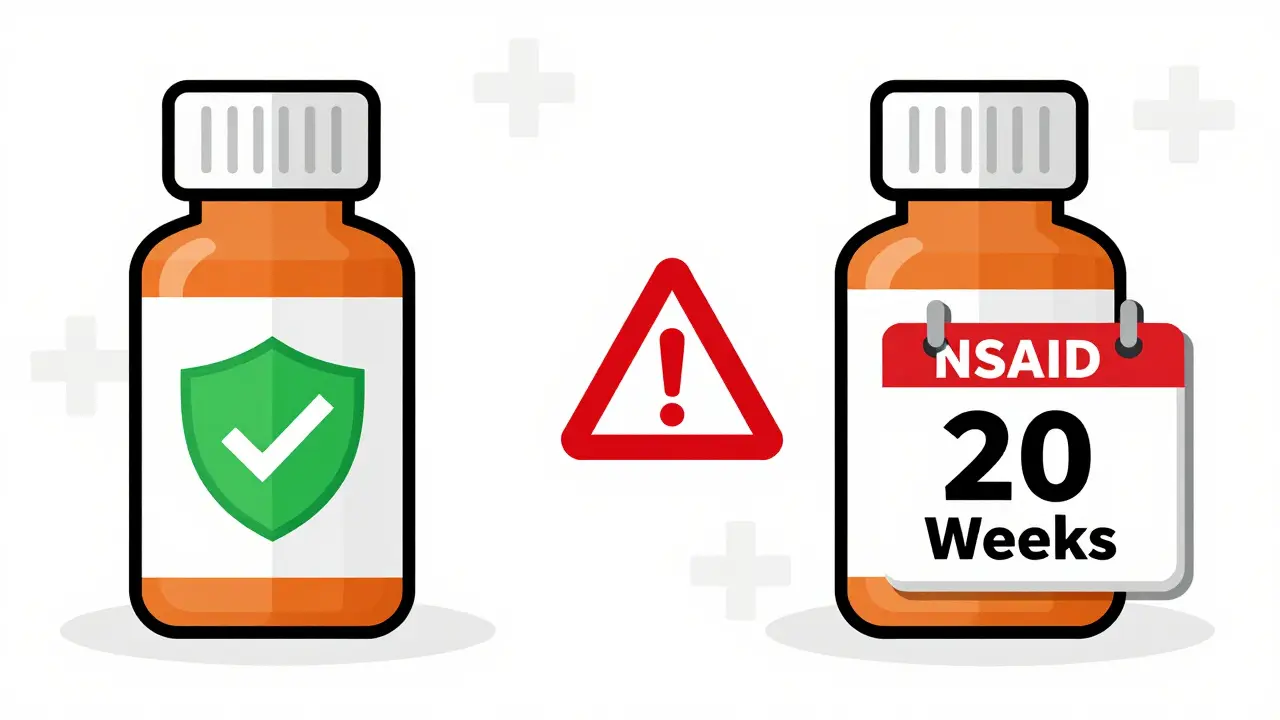
If you’ve been told that ibuprofen is fine until the third trimester, that information is outdated. The FDA updated its guidance in October 2020, mandating that nonsteroidal anti-inflammatory drugs (NSAIDs) be avoided at 20 weeks or later in pregnancy. This was a significant shift from previous advice that only warned against use after 30 weeks.
Why 20 weeks? During this period, the fetus’s kidneys are maturing and beginning to produce urine, which makes up the majority of amniotic fluid. NSAIDs inhibit cyclooxygenase enzymes, which can lead to fetal renal dysfunction. Within 48 to 72 hours of exposure, this can cause oligohydramnios-a condition where there is too little amniotic fluid (amniotic fluid index <5 cm). Low amniotic fluid can restrict lung development and lead to limb contractures.
Data from the FDA MedWatch program shows that fetal renal impairment occurs in 1-2% of fetuses exposed to NSAIDs after 20 weeks. If you do take an NSAID between 20 and 30 weeks, it requires strict physician supervision, the lowest effective dose, and ultrasound monitoring to ensure amniotic fluid levels remain normal. After 30 weeks, the risk increases further to include premature closure of the fetal ductus arteriosus, a vital blood vessel that allows blood to bypass the lungs before birth.
Trimester-by-Trimester Breakdown
Understanding how these medications interact with your body and your baby’s development changes as pregnancy progresses.
First Trimester (Weeks 1-12)
This is the period of organogenesis, where major organs form. High fever is particularly dangerous here. A 2017 study in Birth Defects Research showed that fever above 102°F in the first trimester increases the risk of neural tube defects by up to 2.3 times. Therefore, treating fever is critical. Acetaminophen is the recommended choice. While some older theories suggested NSAIDs might increase miscarriage risk, the data is mixed, so most providers recommend avoiding them entirely to err on the side of caution.
Second Trimester (Weeks 13-26)
You might feel more comfortable now, but the clock is ticking on NSAID safety. Before 20 weeks, short-term use of NSAIDs for severe inflammation (like sciatica) may be permissible under doctor supervision. However, once you hit the 20-week mark, you must switch to acetaminophen. Many women experience round ligament pain or back strain here; acetaminophen helps with pain perception, though it won’t reduce swelling. For swelling, cold compresses and rest are safer alternatives.
Third Trimester (Weeks 27-Birth)
NSAIDs are strictly contraindicated. The risk of ductus arteriosus closure is highest here. Acetaminophen remains safe for headaches, labor pains (if prescribed/approved), and postpartum recovery. Just remember to stay under the daily limit of 4,000 mg (preferably lower, around 3,000 mg) to protect your liver.
Navigating Misinformation and Fear
It’s easy to fall into the trap of internet panic. A 2023 survey by the American Academy of Family Physicians found that 68% of pregnant patients avoid all pain medication due to safety concerns, and 42% specifically avoid acetaminophen because of social media rumors. This avoidance can be harmful. Suffering through severe pain raises stress hormones like cortisol, which aren’t ideal for fetal development either.
Dr. Salena Zanotti, an OB/GYN at Cleveland Clinic, puts it simply: "Acetaminophen is still the safest known drug to take during pregnancy... and it's OK to turn to medication for help when symptoms are making your daily life difficult." The goal is balance. Use the lowest effective dose for the shortest time necessary. Don’t take it preemptively, but don’t hesitate to treat a genuine headache or fever.

Practical Tips for Medication Safety
- Read Labels Carefully: Many cold and flu remedies contain NSAIDs like ibuprofen or aspirin. Check the "Drug Facts" panel. If it says "Advil," "Motrin," "Aleve," or lists "ibuprofen," "naproxen," or "aspirin" (except low-dose 81mg for preeclampsia prevention), avoid it after 20 weeks.
- Dosing Matters: For acetaminophen, stick to 325-1,000 mg per dose. Do not exceed 4,000 mg in 24 hours. Taking 500 mg every 6 hours as needed is a common safe regimen.
- Track Your Usage: Keep a log of when you take medication. If you find yourself needing pain relief more than 3-5 days in a row, talk to your provider. Chronic pain needs investigation, not just masking.
- Non-Drug Alternatives: For back pain, try prenatal yoga, warm baths (not hot tubs), or massage. For heartburn, antacids like calcium carbonate are generally safe and distinct from pain relievers.
When to Call Your Doctor
While OTC meds handle minor ailments, certain symptoms require professional care. Contact your provider if:
- Your fever exceeds 100.4°F and doesn’t respond to acetaminophen.
- You experience persistent abdominal pain or cramping.
- You notice a decrease in fetal movement.
- You need pain relief for more than 5 consecutive days.
Is Tylenol really safe for autism concerns?
Yes. Despite earlier observational studies suggesting a link, a large 2023 study in JAMA Network Open involving nearly 100,000 participants found no significant association between acetaminophen use during pregnancy and autism spectrum disorder, ADHD, or intellectual disability. Major medical bodies like ACOG and the FDA confirm its safety profile outweighs theoretical risks.
Can I take ibuprofen before 20 weeks?
Technically yes, but it is generally discouraged unless specifically advised by your doctor. Because many patients miscalculate their gestational age, providers often recommend avoiding NSAIDs entirely during pregnancy to prevent accidental use after the 20-week cutoff. Acetaminophen is the preferred first-line treatment.
What happens if I accidentally take NSAIDs after 20 weeks?
Don't panic. One-off doses rarely cause harm. However, stop taking the medication immediately and contact your provider. They may recommend an ultrasound to check amniotic fluid levels. The risk of oligohydramnios increases with prolonged use (more than 48 hours).
Is untreated fever dangerous for the baby?
Yes. High maternal fever, especially in the first trimester, is linked to an increased risk of neural tube defects and miscarriage. Reducing fever with acetaminophen is considered medically necessary and protective for the pregnancy.
Are there any natural pain relief options?
For mild pain, non-pharmacological methods like cold/hot compresses, prenatal massage, acupuncture (from a certified practitioner), and gentle stretching can be effective. However, for moderate to severe pain or fever, medication is often required to prevent stress-related complications.
 Medications