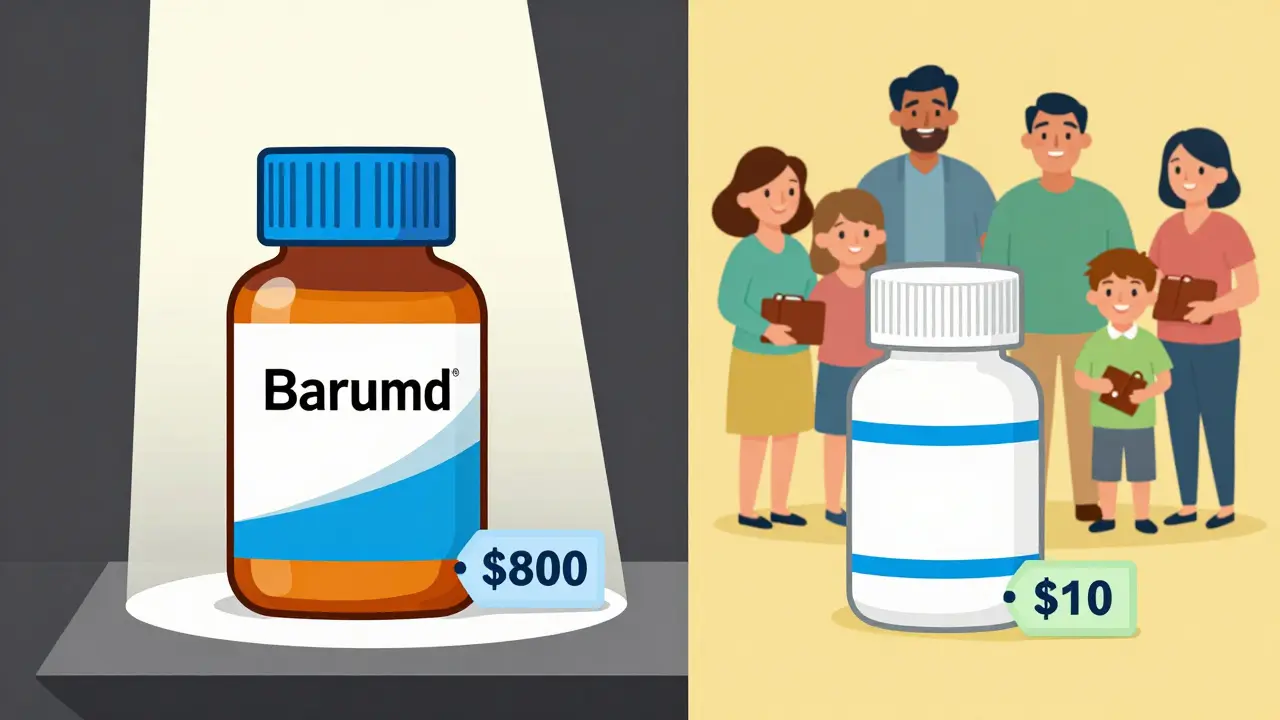
Imagine paying $800 for a medication when an identical version sits on the shelf next to it for $10. This isn't just a hypothetical scenario; it is the daily reality for millions of Americans thanks to generic medications. But the impact goes far beyond individual pharmacy receipts. The widespread use of generic drugs and their more complex cousins, biosimilars, has fundamentally reshaped the financial landscape of American healthcare. In 2024 alone, these affordable alternatives saved the U.S. healthcare system $467 billion. When you look at the decade from 2015 to 2024, the cumulative savings hit a staggering $3.4 trillion.
These numbers aren't just abstract statistics found in a government report. They represent real money that stays in patients' pockets, keeps insurance premiums lower, and reduces the burden on federal programs like Medicare and Medicaid. Yet, despite filling nine out of every ten prescriptions written in the country, generics account for only 12% of total prescription drug spending. How did we get here? What mechanisms drive these massive savings? And why do some patients still struggle with high costs despite this abundance of cheap options?
The Engine Behind the Savings: Hatch-Waxman and Competition
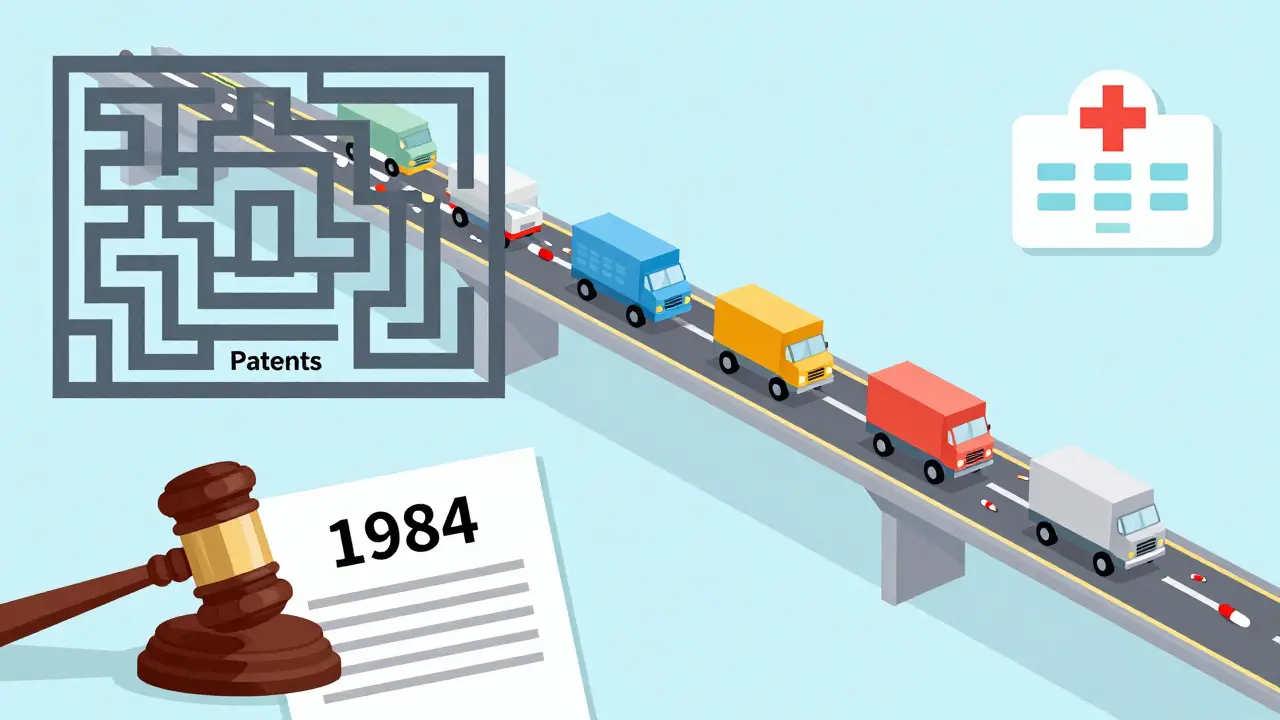
To understand where the money comes from, you have to look back to 1984. Before the Hatch-Waxman Act (officially the Drug Price Competition and Patent Term Restoration Act), bringing a generic drug to market was a legal nightmare. Companies couldn't easily prove their products were safe without repeating expensive clinical trials, while brand-name manufacturers held patents indefinitely. The Hatch-Waxman Act changed everything by creating a streamlined regulatory pathway for generic approval. It allowed generic makers to rely on the original manufacturer's safety and efficacy data, provided they proved their product was bioequivalent-meaning it worked the same way in the body.
This legislative shift triggered a competitive explosion. Once a patent expires, multiple companies can rush to produce the generic version. This competition drives prices down dramatically. In 2024, Americans filled 3.9 billion generic prescriptions compared to just 435 million brand-name prescriptions. Despite being vastly more common, those 3.9 billion generic scripts cost only $98 billion. Meanwhile, the smaller volume of brand-name prescriptions cost $700 billion. That disparity is the core of the trillion-dollar impact.
The savings follow a clear pattern based on market dynamics. When a blockbuster drug loses its patent protection, the price often drops by 80% to 90% within months. For example, in therapeutic categories treating chronic conditions like hypertension and diabetes, the introduction of generics has consistently slashed costs. The top 10 most commonly prescribed generic medicines generated $89.5 billion in savings in 2023 alone. These aren't obscure treatments; they are the everyday pills for heart health, cholesterol, and blood sugar that keep the population stable.
Biosimilars: The Next Wave of Cost Reduction
While small-molecule generics dominate the volume game, a new player is making significant waves in the high-cost biologic sector: biosimilars. Unlike traditional generics, which are exact chemical copies, biosimilars are highly similar versions of complex biological drugs made from living cells. Because these molecules are large and intricate, they cannot be perfectly copied, only closely matched. This complexity makes them harder and more expensive to develop, but the potential for savings is enormous because the original biologics are often priced in the tens of thousands of dollars per year.
| Feature | Generic Drugs | Biosimilars |
|---|---|---|
| Origin | Chemical synthesis (small molecules) | Biological production (living cells) |
| Regulatory Pathway | Abbreviated New Drug Application (ANDA) | Biosimilar License Application (BLA) |
| Cost Difference | Often 80-90% less than brand | Typically 15-30% less than reference biologic |
| 2024 Savings Impact | $446.8 billion | $20.2 billion |
| Adoption Rate | Rapid (90% of prescriptions) | Growing (accelerating since 2015) |
In 2024, biosimilars contributed $20.2 billion in savings. While this number seems small compared to the hundreds of billions saved by traditional generics, it represents a critical frontier. Biologics treat serious conditions like cancer, rheumatoid arthritis, and Crohn's disease. As more biosimilars gain "interchangeability" status-a designation allowing pharmacists to substitute them for the brand without doctor intervention-their adoption will accelerate. Since the first biosimilar entered the market in 2015, they have already generated $56.2 billion in cumulative savings. Experts project this sector could reduce direct spending on biologic drugs by over $54 billion in the coming decade, though current trends suggest even higher figures.
Who Pays the Bill? Federal Programs and State Variations
The benefits of generic drugs don't accrue evenly across all payers. Government programs bear the brunt of pharmaceutical spending, so they also reap the largest rewards from generic substitution. In 2024, Medicare saved $142 billion through the use of generics and biosimilars. Medicaid saw savings of $62.1 billion. These funds are crucial for keeping these entitlements solvent as the population ages.
However, the experience varies significantly depending on where you live. State-level policies play a huge role in how effectively generic savings are realized. California, for instance, mandates generic substitution and runs a robust discount program, resulting in nearly 98% generic utilization and generating close to $38 billion in savings in 2023. In contrast, states with looser regulations or different formulary structures see lower utilization rates. Alaska, with its smaller population, saw about $600 million in savings. On average, each state saves more than $8 billion annually, but the gap between high-performing and low-performing states highlights the importance of local policy design.
Pharmacy Benefit Managers (PBMs) also act as gatekeepers. Large PBMs like Express Scripts leverage their purchasing power to negotiate rebates and encourage generic use through formulary design. In 2023, Express Scripts reported that their strategies generated $18.3 billion in savings through generic substitution. However, this system isn't perfect. Administrative barriers, such as prior authorization requirements, have increased by 47% between 2019 and 2023. Sometimes, the bureaucracy required to get a generic approved outweighs the benefit, frustrating both doctors and patients.
The Hidden Costs: Patent Thickets and Anti-Competitive Tactics
If generics are so effective at saving money, why are drug prices still a hot-button political issue? The answer lies in the tactics used by brand-name manufacturers to delay generic entry. The ideal scenario is a smooth transition from monopoly to competition. In reality, many companies engage in "patent thicketing," filing dozens of secondary patents on minor aspects of a drug (like pill color or dosing schedule) to extend their monopoly long after the main patent expires. A study published in JAMA Health Forum in August 2024 found that lost competition due to patent thickets on just four widely prescribed drugs cost the healthcare system more than $3.5 billion in two years.
Another tactic is "pay-for-delay" settlements, where the brand company pays the generic challenger to stay out of the market. Blue Cross Blue Shield estimated these anti-competitive practices drive up costs by nearly $12 billion annually. Additionally, "product hopping" involves slightly reformulating a drug right before generic launch to force patients onto a new, patented version, leaving the old generic obsolete. The Congressional Budget Office estimates that ending these practices could save billions more.
Despite these hurdles, the overall trajectory remains positive. The FDA approved 1,145 generic drugs in 2024, a 7.3% increase from the previous year. Specialty generics, including complex injectables and inhalers, are becoming a larger part of the mix, representing 28% of new approvals. Legislative efforts like the Affordable Prescriptions for Patients Act aim to crack down on these abuses, potentially unlocking an additional $7.2 billion in annual savings.
Patient Perspectives: Efficacy, Access, and Satisfaction
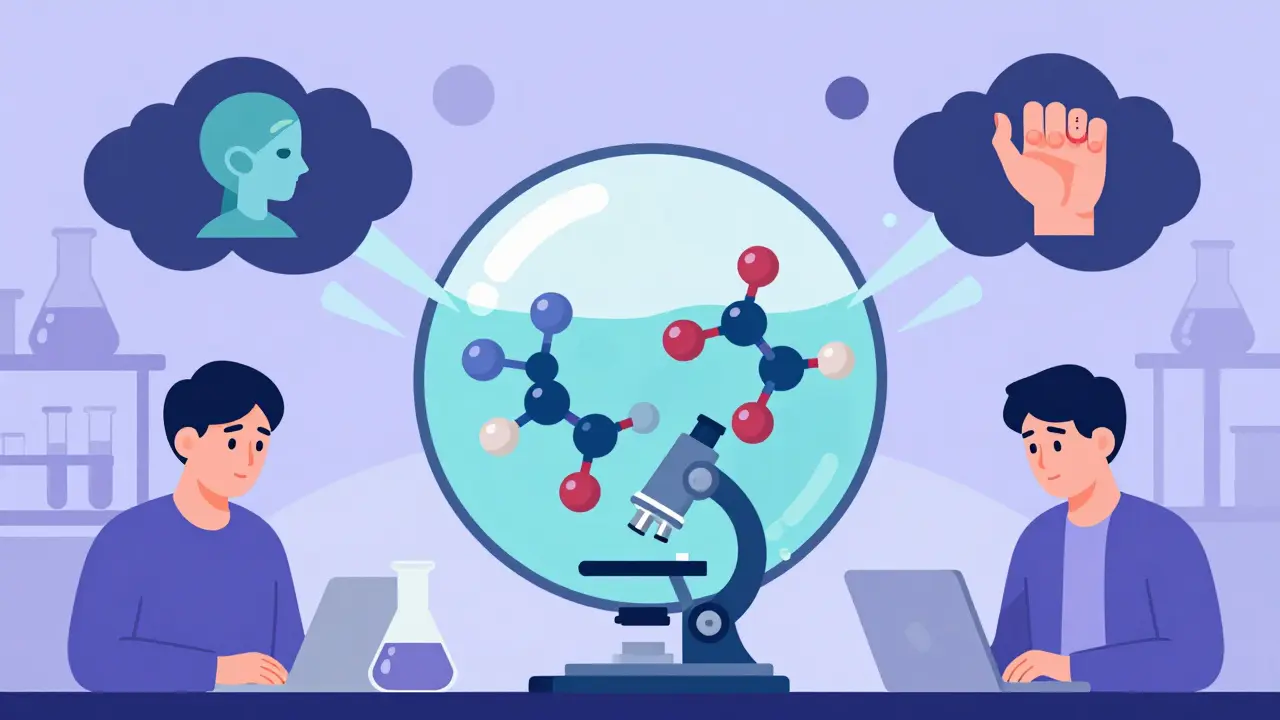
Behind the billions in savings are individual patient experiences. Do generics work as well as brands? Scientifically, yes. The FDA requires strict bioequivalence standards. However, perception matters. An analysis of user reviews on Drugs.com in January 2025 showed that while 87% of users rated the cost of generics as excellent or good, only 63% rated the therapeutic equivalence similarly. Some patients report subtle differences in side effects or efficacy, often due to inactive ingredients (fillers and binders) rather than the active drug itself.
Cost remains the primary driver. A survey by Managed Healthcare Executive found that 42% of patients abandoned prescriptions due to cost. However, 89% of those who switched to generics reported satisfaction with both efficacy and savings, averaging $147 per month per medication. On online forums like Reddit, stories abound of patients switching from an $800 brand-name statin to a $10 generic equivalent with no change in health outcomes. For most people, the generic option is not just cheaper; it is accessible. Without generics, many chronic conditions would be unmanageable for the average household.
Looking Ahead: Sustainability and Future Challenges
The future of generic savings looks strong but faces structural challenges. The generic manufacturing sector is consolidating, with the top 10 manufacturers now controlling 63% of the market, up from 51% in 2015. This concentration can lead to shortages, which affected 287 generic medications as of late 2024. Supply chain resilience is becoming as important as pricing.
Nevertheless, the long-term outlook is optimistic. The IQVIA Institute projects that generics and biosimilars will generate another $5.1 trillion in cumulative savings from 2025 to 2034 if current trends continue. This assumes that policy barriers are addressed and that innovation in biosimilars continues to grow. As the U.S. spends nearly $4.9 trillion on healthcare annually, with prescription drugs accounting for about 10%, generics remain the single most effective tool for bending the cost curve. They allow the system to afford innovative new therapies for rare diseases and emerging threats without bankrupting patients or insurers.
Are generic drugs exactly the same as brand-name drugs?
Generic drugs must contain the same active ingredient, dose, strength, route of administration, and intended use as the brand-name drug. They must meet the same quality standards and demonstrate bioequivalence, meaning they perform identically in the body. However, they may differ in inactive ingredients like colors, flavors, or preservatives, which rarely affect efficacy but can occasionally cause different allergic reactions or tolerances in sensitive individuals.
Why do some doctors still prescribe brand-name drugs?
There are several reasons. Sometimes, a generic version is not yet available or is experiencing a shortage. In other cases, the brand-name manufacturer may have extended its patent protection through legal loopholes. Additionally, some physicians prefer specific brands due to familiarity or perceived consistency, although most states allow pharmacists to automatically substitute generics unless the doctor explicitly marks the prescription "Dispense as Written."
What is a biosimilar, and how is it different from a generic?
A biosimilar is a medical product that is highly similar to an already approved biologic drug. Unlike generics, which are simple chemical copies, biologics are made from living organisms and are complex molecules. Therefore, biosimilars cannot be identical copies but must show no clinically meaningful differences in safety, purity, and potency. They are typically used for serious conditions like cancer or autoimmune diseases and offer significant savings, though usually less dramatic than small-molecule generics.
How much do generic drugs really save the government?
In 2024, generic and biosimilar medications saved Medicare $142 billion and Medicaid $62.1 billion. Across all sectors, the total savings for the U.S. healthcare system reached $467 billion in that single year. Over the decade from 2015 to 2024, cumulative savings totaled $3.4 trillion, helping to sustain federal health programs amid rising overall healthcare costs.
Can I request a generic drug instead of a brand name?
Yes. You can ask your doctor to write a prescription for a generic medication or tell your pharmacist you are willing to accept a generic substitution. Most insurance plans strongly incentivize generic use by offering lower copays. If your current brand-name drug has a generic equivalent, switching can result in immediate out-of-pocket savings, often reducing the monthly cost by 80% or more.
 Medications