

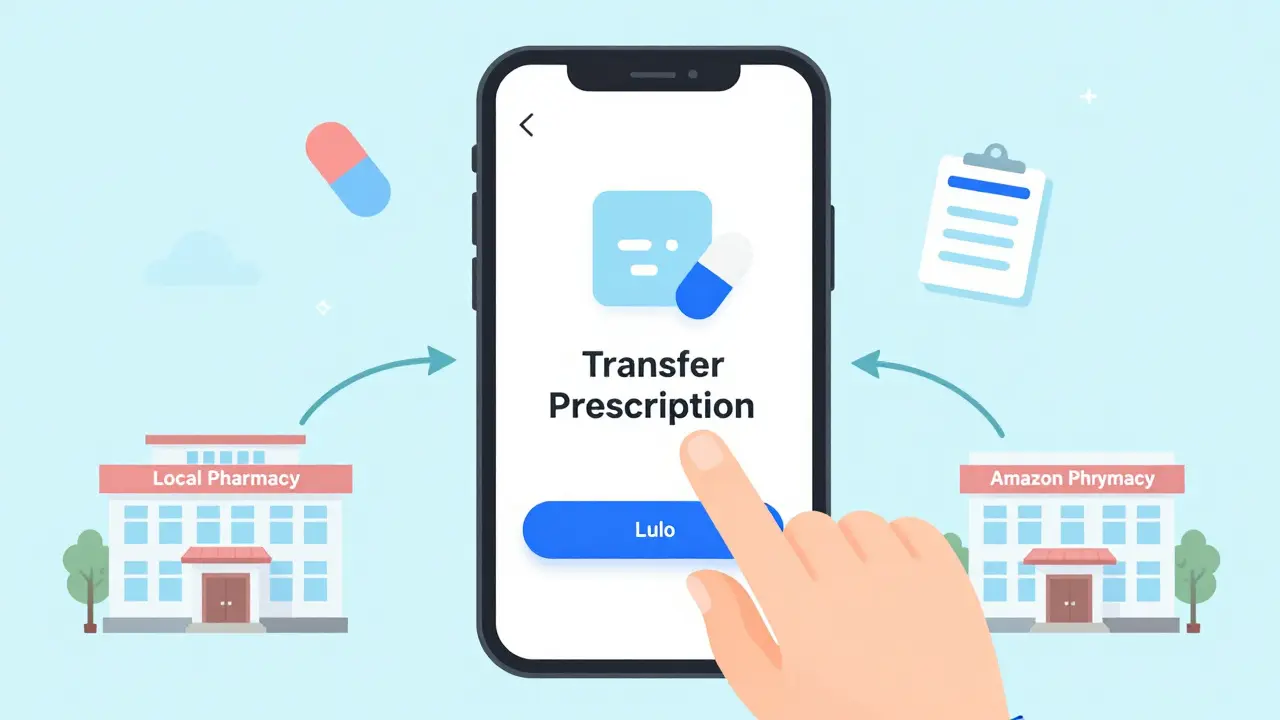
Switching to an online pharmacy used to mean calling your doctor, waiting for a new paper script, and driving to a new location. Now, with digital prescription transfer, you can move your medications from your local pharmacy to an online service in minutes-no new prescription needed. This isn’t just convenience; it’s a system built to keep you on your meds, save time, and cut out the hassle. And since August 2023, even controlled substances like opioids, ADHD meds, and anxiety prescriptions can be transferred electronically, thanks to a major rule change by the DEA.
How Digital Prescription Transfer Actually Works
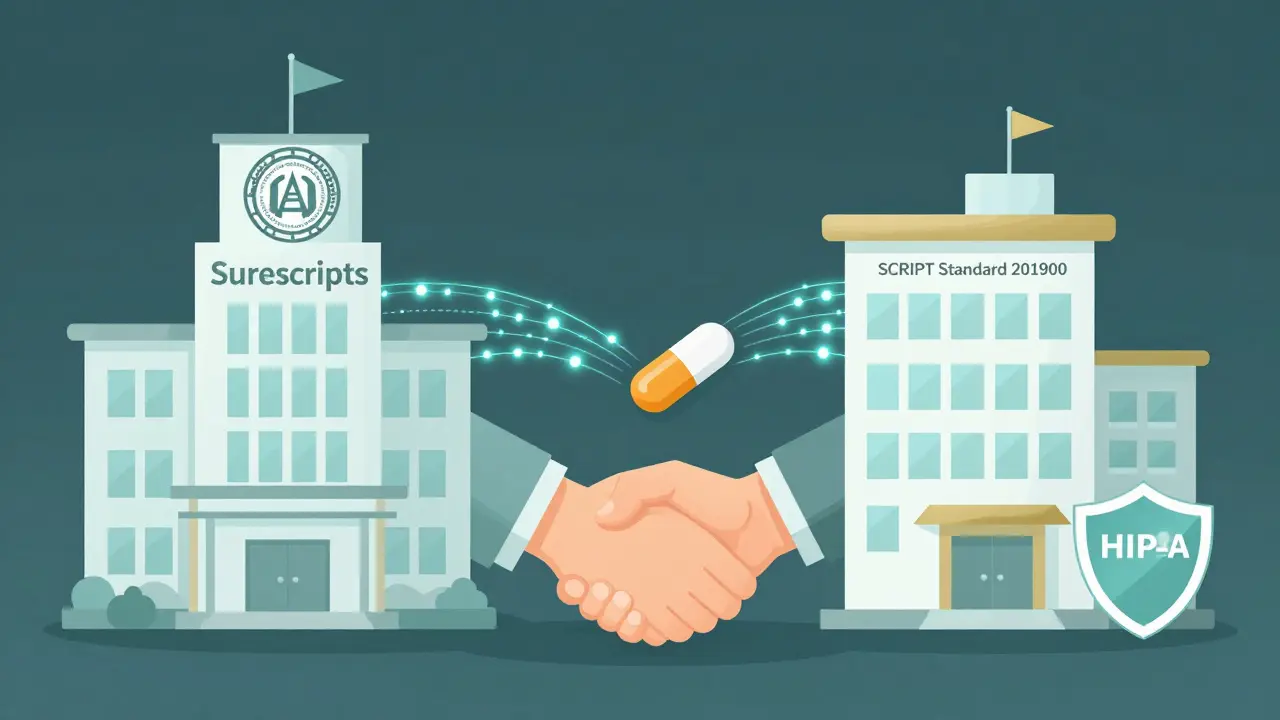
Digital prescription transfer isn’t magic. It’s a secure electronic handshake between pharmacies. When you request a transfer to an online pharmacy like CVS, Walgreens, or Amazon Pharmacy, your current pharmacy sends your prescription data through a national network called Surescripts. This network follows the SCRIPT Standard Version 201900, a HIPAA-compliant protocol that ensures your name, dosage, refill info, and insurance details arrive accurately.
For non-controlled drugs, the system lets pharmacies transfer prescriptions multiple times. But for controlled substances-like oxycodone, Adderall, or Xanax-the DEA’s 2023 rule allows only one electronic transfer. After that, if you want to switch again, you’ll need a new prescription from your doctor. That’s the big catch. But for most people, one transfer is all they need to get settled with an online pharmacy that delivers.
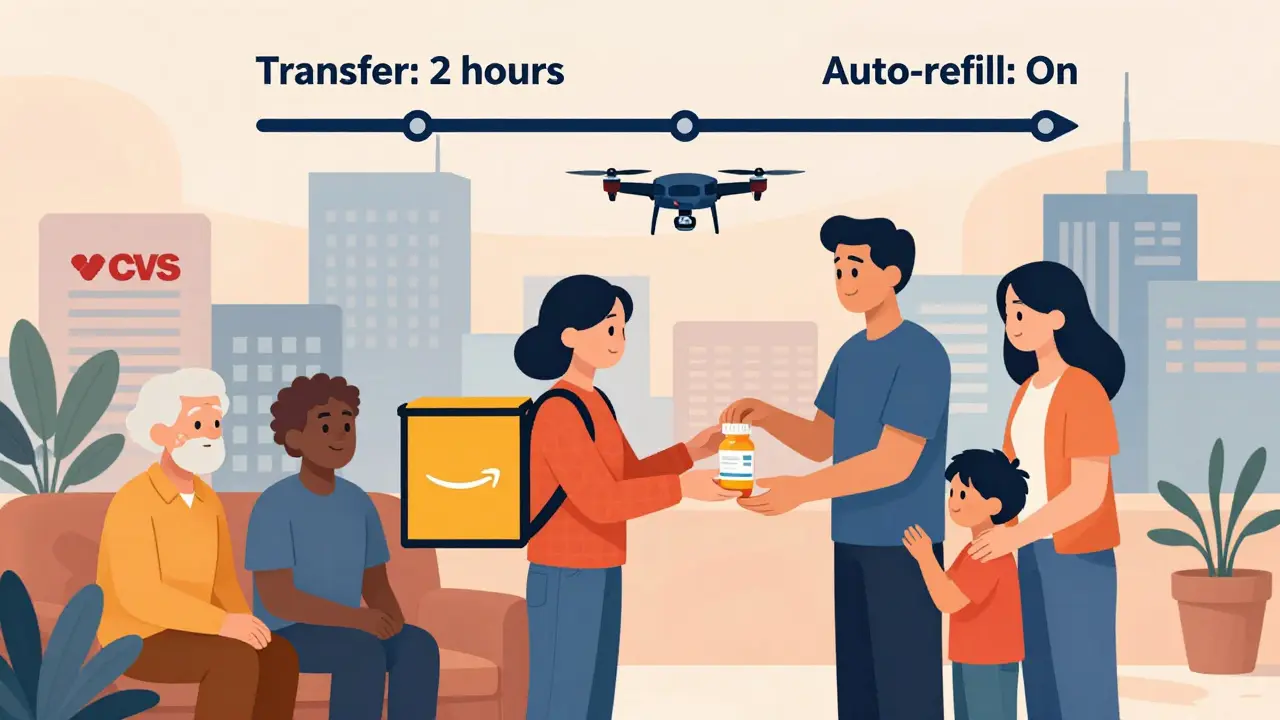
The whole process usually takes 24 to 48 hours for regular meds. For controlled substances, it can stretch to 72 hours because pharmacies must verify your identity and DEA registration more carefully. But many users report faster results. One Reddit user transferred five prescriptions from Walgreens to Amazon Pharmacy in under two hours. Speed depends on how modern the systems are at both ends.
Why This Matters More Than You Think
Most people think digital transfers are about saving a trip to the pharmacy. That’s true-but the real benefit is better health outcomes. A 2023 Government Accountability Office report found that Medicare patients who switched to online pharmacies via digital transfer improved their medication adherence by 12%. That means fewer missed doses, fewer hospital visits, and lower long-term costs.
It’s not just about convenience. Manual transfers-phone calls, faxes, even handwritten notes-cause errors. A 2022 study in the Journal of the American Pharmacists Association showed electronic transfers reduce mistakes by 47%. Only 8% of digital transfers need follow-up clarification, compared to 25% for faxed or called-in requests. That’s a huge safety win.
And let’s talk about refills. Online pharmacies like CVS and Amazon let you set up automatic refills after a transfer. One CVS user on Yelp said setting up auto-refills saved them over three hours a month. No more calling in, no more running out mid-week. That kind of automation is what keeps people on track, especially for chronic conditions.
How to Transfer Your Prescription in 3 Simple Steps
You don’t need to be tech-savvy. Here’s how it works:
- Find your current prescription info. You’ll need the name of the medication, the pharmacy you’re transferring from (and ideally their phone number or NABP number), and your prescription number. If you’re unsure, check your last pickup receipt or log into your pharmacy’s app.
- Go to your chosen online pharmacy. Whether it’s Amazon Pharmacy, CVS Caremark, or Walgreens, they all have a “Transfer Prescription” button on their website or app. Click it.
- Enter your details and confirm. Most platforms now only ask for your name, date of birth, and the medication name. They’ll auto-detect your current pharmacy from the name you type in. You’ll get a confirmation email or text within minutes. Then you wait.
Some apps, like the latest version of the Walgreens app (5.22.0), even let you scan your old prescription label with your phone’s camera. It reads the barcode and auto-fills the details. That’s how simple it’s become.
Which Online Pharmacies Are Best for Transfers?
Not all online pharmacies are built the same. Here’s how the top players stack up:
| Pharmacy | Transfer Success Rate | Controlled Substance Transfer | Special Features |
|---|---|---|---|
| CVS Pharmacy | 92% first-attempt success | Yes, one-time transfer only | 10,000+ physical locations can initiate transfers; integrates with Medicare Part D |
| Amazon Pharmacy | 89% success | Yes, one-time transfer only | Seamless for Prime members; 2-hour delivery on many meds; voice transfer via Alexa (pilot) |
| Walgreens | 87% success | Yes, one-time transfer only | 24-48 hour average completion; strong insurance network |
| Independent Pharmacies | 60-70% success | Often no | Many still use outdated systems; may require fax or phone |
CVS leads in network size and reliability. If you’re transferring from a brick-and-mortar pharmacy, CVS is your safest bet. Amazon Pharmacy is fastest for Prime members and offers the best user experience. Walgreens is solid but slightly slower. Independent pharmacies? They’re often left behind. If your current pharmacy still faxes prescriptions, you might need to call them to initiate the transfer manually.
What Can Go Wrong-and How to Fix It
Most transfers work. But when they don’t, here’s what’s usually happening:
- Mismatched patient info: Your name on file at the old pharmacy doesn’t match your new account. Fix: Double-check your spelling, middle initial, and date of birth. Update your profile on both apps.
- Insurance not recognized: Your new pharmacy doesn’t accept your plan. Fix: Call customer service. Most online pharmacies can manually verify coverage or suggest alternatives.
- Controlled substance already partially filled: If you’ve taken half your oxycodone prescription, 63% of online pharmacies can’t take the rest. The DEA’s one-transfer rule doesn’t allow splitting fills across pharmacies. Fix: Ask your doctor for a new prescription for the remaining amount.
- Compounded medications: Custom-mixed drugs (like hormone creams or pediatric suspensions) often can’t be transferred electronically. Fix: Contact your current pharmacy-they’ll need to mail or hand-deliver the prescription.
And yes, insurance problems are common. About 28% of users on ConsumerAffairs reported coverage issues after transferring specialty meds like biologics or rare disease treatments. Always check your plan’s formulary before switching. Some online pharmacies offer cash prices that are cheaper than your copay-so ask.
What’s Next for Digital Transfers?
The system is still evolving. In early 2024, Surescripts is launching “Transfer 2.0,” which will let you track your prescription’s status in real time-like a package delivery. You’ll see when it’s received, processed, and ready for pickup or shipping.
Amazon is testing voice transfers through Alexa. Say, “Alexa, transfer my blood pressure med to Amazon Pharmacy,” and it happens. It’s in a pilot with 5,000 users, but it’s coming.
The DEA is also reviewing the one-transfer rule. Acting Administrator Anne Milgram said in September 2023 they’re looking at data to see if allowing multiple transfers would improve access without increasing risk. If they change it, this whole system gets even better.
But there’s friction. California’s new law (SB 1056, effective Jan 1, 2024) adds extra steps for controlled substance transfers that clash with federal rules. That means national pharmacies have to build two systems-one for California, one for everywhere else. It’s messy, and it slows things down.
Should You Transfer Your Scripts?
If you’re tired of driving to the pharmacy, running out of meds, or forgetting to refill, yes. Digital transfer is safer, faster, and more reliable than the old way. It’s especially powerful if you take multiple prescriptions, have mobility issues, or live in a rural area.
But if you’re on a controlled substance and think you might switch pharmacies again soon, think twice. The one-time limit means you can’t bounce back and forth. Pick the pharmacy you plan to stick with.
And if you’re unsure where to start, pick CVS or Amazon. Both have high success rates, easy apps, and solid customer support. Amazon’s 4.2-minute average wait time for help beats traditional pharmacies’ 12.7 minutes.
This isn’t the future. It’s here. And if you’re still using fax machines or calling pharmacies to move your scripts, you’re doing it the hard way.
Can I transfer a controlled substance to an online pharmacy?
Yes, since August 28, 2023, the DEA allows one electronic transfer of controlled substances (Schedules II-V) between DEA-registered pharmacies. The prescription must remain unaltered, and the transfer must occur directly between licensed pharmacists. After that single transfer, you’ll need a new prescription from your doctor to move it again.
How long does a digital prescription transfer take?
For non-controlled medications, transfers usually complete in 24-48 hours. For controlled substances, it can take up to 72 hours due to extra verification steps. Many users report faster results-some as quick as 2 hours-especially with CVS or Amazon Pharmacy.
Do I need a new prescription to switch to an online pharmacy?
No. Digital transfer lets you move your existing prescription electronically without a new one from your doctor. This applies to both controlled and non-controlled substances, as long as the prescription is still valid and hasn’t expired or been fully filled.
What if my transfer fails?
Common reasons include mismatched patient info, insurance issues, or outdated systems at your current pharmacy. If your transfer fails, check your details on both apps, call customer support, or ask your current pharmacy to initiate the transfer manually. Most online pharmacies offer 24/7 support.
Can I transfer compounded or specialty medications?
Most compounded medications (custom-mixed drugs) cannot be transferred electronically. About 68% of these requests require manual intervention. You’ll likely need to contact your current pharmacy to mail or deliver the prescription. Specialty medications may also face insurance hurdles-always verify coverage before transferring.
Is digital prescription transfer safe and private?
Yes. Transfers use encrypted, HIPAA-compliant networks like Surescripts. Your data is protected, and only licensed pharmacists can access your prescription. DEA-regulated transfers for controlled substances include two-factor authentication and audit trails. No personal info is shared beyond what’s needed to fill your prescription.
 Medications

suhani mathur
December 22, 2025 AT 22:20Also, Alexa transferring my Adderall? Yes please. I’m already imagining the voice command: 'Alexa, refill my anxiety meds before I forget to breathe.'
Adarsh Dubey
December 24, 2025 AT 08:51Bartholomew Henry Allen
December 25, 2025 AT 05:14bharath vinay
December 27, 2025 AT 03:20Dan Gaytan
December 29, 2025 AT 03:19Usha Sundar
December 30, 2025 AT 12:11Steven Mayer
January 1, 2026 AT 08:12Charles Barry
January 3, 2026 AT 08:02Rosemary O'Shea
January 3, 2026 AT 13:48Joe Jeter
January 5, 2026 AT 05:56Lu Jelonek
January 6, 2026 AT 23:16Ademola Madehin
January 8, 2026 AT 10:31Chris Buchanan
January 9, 2026 AT 02:52Wilton Holliday
January 9, 2026 AT 05:44Ajay Sangani
January 9, 2026 AT 23:07