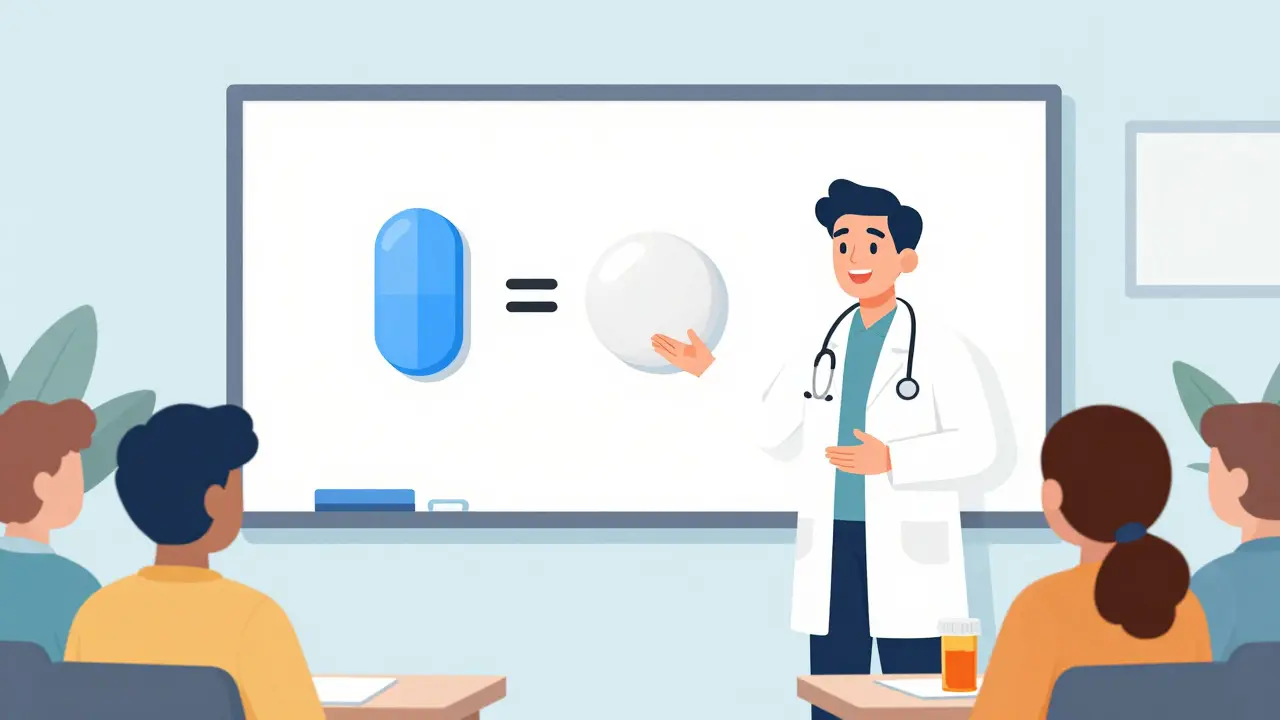
Imagine a patient walking into a pharmacy, looking at two pills that look completely different. One is blue and oval; the other is white and round. They cost vastly different amounts, yet they are supposed to do the exact same thing in the body. This visual mismatch creates doubt. For decades, this simple difference in appearance has fueled a widespread myth: that generic drugs are inferior copies of brand-name medications. The reality is starkly different, but bridging the gap between scientific fact and public perception requires more than just data-it requires effective communication.
Community health presentations have become the frontline defense against these misconceptions. By utilizing targeted public education resources on generics, healthcare providers can transform patient anxiety into confidence. These resources are not just brochures; they are strategic tools designed to explain the rigorous standards behind every generic pill, ensuring patients understand why their medication works, regardless of its color or shape.
The Core Misconception: Why Patients Hesitate
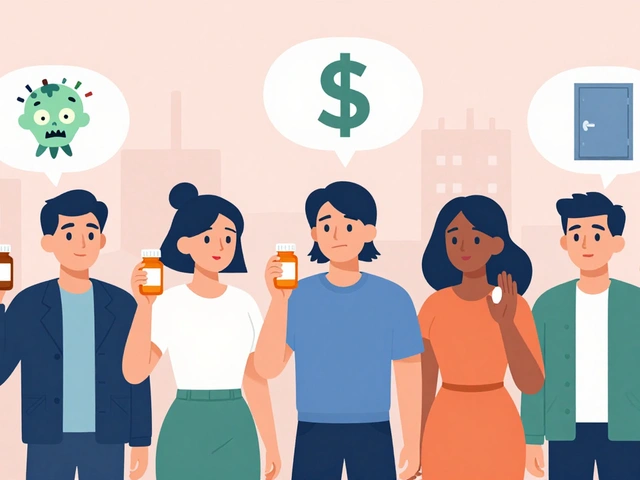
To educate effectively, you first need to understand the root of the fear. In a 2016 study by CVS Health, it was revealed that 87% of patients had experienced some form of misconception regarding generic medications. Nearly half of all Americans incorrectly believe that generic drugs are less effective than their brand-name counterparts. This belief persists despite forty years of scientific evidence proving otherwise.
The primary driver of this hesitation is often the "nocebo effect." A 2021 study published in Annals of Internal Medicine highlighted that when patients were explicitly told they were receiving a generic version of a drug, discontinuation rates due to perceived side effects jumped by 18.7% compared to blinded conditions where patients didn't know what they were taking. Essentially, the expectation of inferiority can manifest as physical symptoms. Community health presentations aim to neutralize this psychological barrier by providing clear, authoritative facts before the patient even takes the first dose.
FDA Standards: The Science Behind the Pill
When delivering a presentation, the most powerful tool you have is the regulatory framework established by the U.S. Food and Drug Administration (FDA). The FDA’s Office of Generic Drugs reviews approximately 1,000 Abbreviated New Drug Applications (ANDAs) annually. The standard for approval is uncompromising.
Bioequivalence is the requirement that a generic drug delivers the same amount of active ingredient into a patient's bloodstream over the same period of time as the brand-name drug. To achieve this, generics must demonstrate that they deliver between 80-125% of the active ingredient concentration compared to the brand-name counterpart. This might sound like a wide range, but statistically, it ensures that there is no clinically significant difference in how the drug performs in the body. The FDA mandates comparative pharmacokinetic studies measuring Cmax (maximum concentration) and AUC (area under the curve) with 90% confidence intervals falling within this specific range.
In your presentations, emphasize that approved generic drugs have:
- Identical active ingredients.
- The same strength and dosage form.
- The same route of administration.
- High quality, purity, and stability equivalent to brand-name drugs.
This isn't just marketing speak; it is a legal and scientific requirement enforced through rigorous clinical testing. As of November 2023, the FDA maintains an active library of 2,147 educational resources to help communicators convey this message accurately.
Economic Impact: More Than Just Savings
While safety is the priority, cost is the catalyst for adoption. Generic drugs cost 80-85% less than brand-name drugs on average. According to the 2022 Association for Accessible Medicines (AAM) report, this price difference translates to $377 billion in annual savings for the U.S. healthcare system. Currently, 90.8% of all prescriptions filled in the United States-representing 6.8 billion prescriptions annually-are for generic drugs.
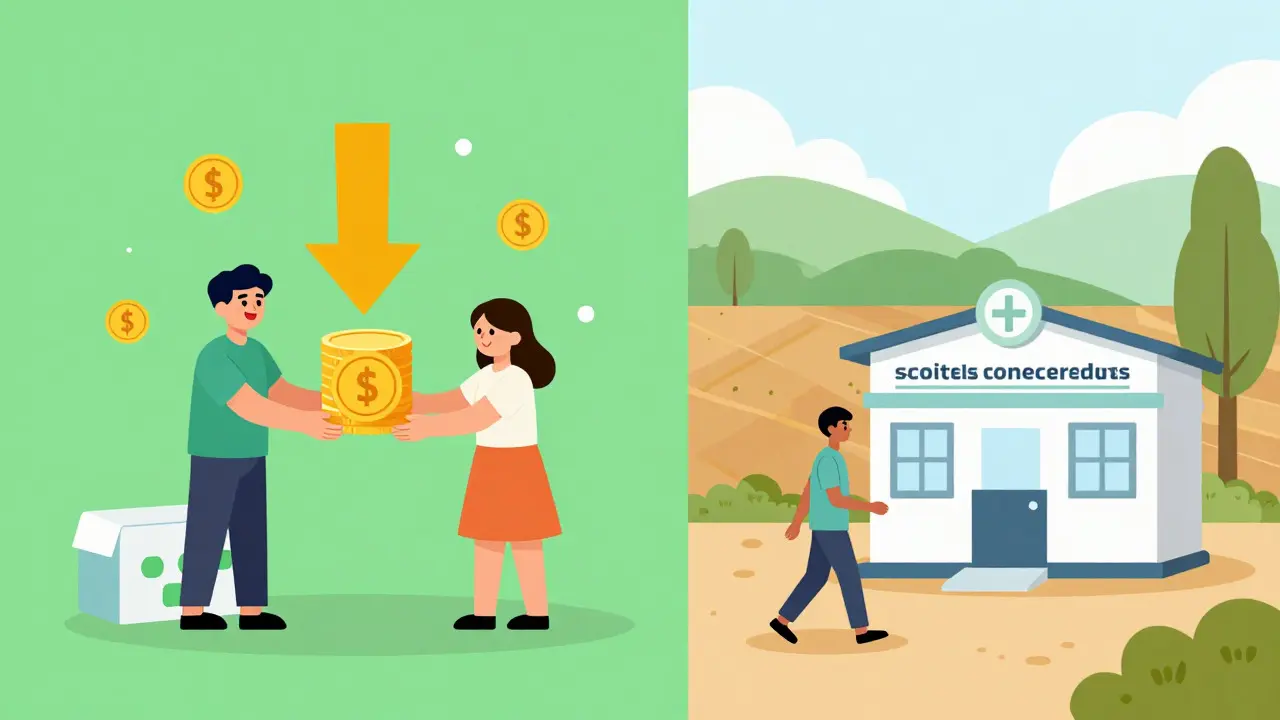
However, the economic benefit extends beyond national statistics. For individual patients, especially those in low-income populations, generics improve medication adherence by 22%, according to a 2021 study in Health Affairs tracking 3.2 million patients. When patients can afford their medication without financial strain, they are more likely to take it consistently. Community health presentations should frame generics not as a "cheap alternative," but as a sustainable choice that keeps patients healthy without bankrupting them.
| Attribute | Brand-Name Drug | Generic Drug |
|---|---|---|
| Active Ingredient | Original formulation | Identical to brand-name |
| Cost | High (market exclusive) | 80-85% lower on average |
| Bioequivalence | N/A (Reference standard) | Required (80-125% range) |
| Appearance | Proprietary shape/color | May differ (inactive ingredients) |
| Regulatory Review | Full NDA (New Drug Application) | ANDA (Abbreviated New Drug Application) |
Effective Communication Strategies for Presenters
Having the facts is only half the battle. How you present them matters. The FDA’s Generic Drugs Stakeholder Toolkit provides 14 evidence-based communication strategies validated through clinical trials. One of the most effective methods is the "Teach-Back" technique. Instead of simply telling patients that generics are safe, ask them to repeat back the key concept: "The FDA requires generic drugs to have the same active ingredient, strength, and dosage form as brand-name drugs." Studies show this method improves patient understanding by 28-42%.
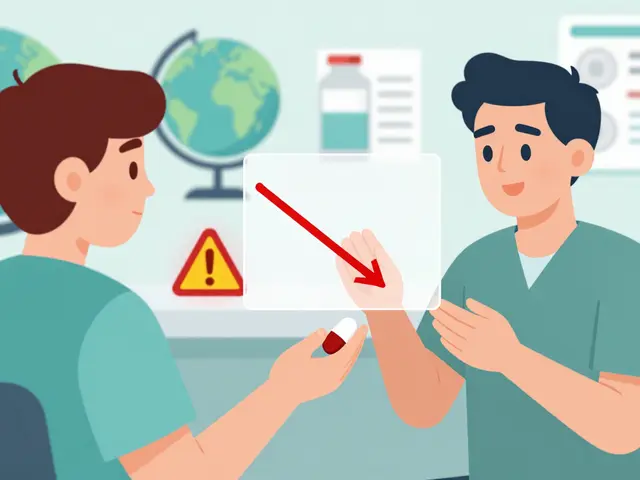
Another critical strategy is addressing appearance differences head-on. A 2022 University of Michigan School of Pharmacy survey found that 23% of patients questioned medication equivalence solely because of changes in shape, color, or size. Explain that while the active ingredient remains identical, inactive ingredients (like dyes or binders) may vary. Use analogies: just as two different brands of table salt taste the same despite having different packaging, two versions of a generic drug work the same way despite looking different.
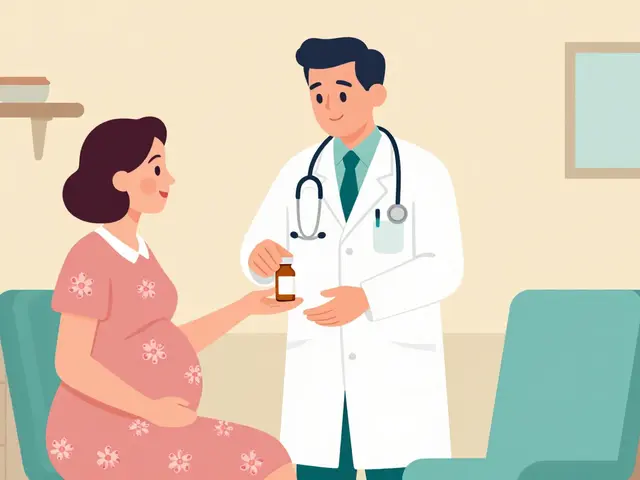
Physician endorsement plays a massive role here. A 2022 JAMA Internal Medicine study demonstrated that when doctors explicitly recommended generics, patient acceptance increased from 52% to 89%. Community health workers should encourage prescribers to verbally validate the switch during appointments, reinforcing the message delivered in educational sessions.
Navigating Specialized Therapeutic Areas
While generics are broadly accepted, certain therapeutic areas require nuanced discussion. For cardiovascular medications, generics achieve a 95% market share, indicating high trust. However, for central nervous system (CNS) drugs, such as antiepileptics, acceptance drops to 68% (IQVIA data, Q2 2023). This hesitation stems from concerns about narrow therapeutic indices, where small variations in drug levels could theoretically impact efficacy.
A 2023 study in Epilepsy & Behavior noted a 12.7% higher seizure recurrence rate with generic antiepileptic switches compared to brand continuations. While the American Academy of Neurology describes this as "an extremely rare exception proving the rule of generic equivalence," it is a valid concern for patients. In your presentations, acknowledge these exceptions. Transparency builds trust. Explain that for most drugs, switching manufacturers is safe, but for narrow therapeutic index drugs, consistency in manufacturer is preferred unless directed otherwise by a specialist.
Leveraging Digital and Print Resources
You don’t have to create educational materials from scratch. The FDA launched the "Generics 101" video series in 2023, specifically targeting Medicare beneficiaries. Preliminary data shows a 31% improvement in knowledge retention among viewers aged 65+. Incorporate these videos into your community health presentations to provide visual reinforcement of key concepts.
Additionally, the Association for Accessible Medicines’ "Generics for Better Health" campaign has distributed 2.7 million educational brochures through 14,300 community health centers nationwide. These print materials are available in both English and Spanish, making them ideal for diverse communities. Use these resources as handouts that patients can take home, serving as a reference point after the presentation ends.
For complex generic products like inhalers or topical creams, confusion rates are 40% higher (FDA 2023 Complex Generic Drugs Patient Survey). Supplement general education with device-specific demonstrations. Show patients how to use the new inhaler, emphasizing that while the mechanism may feel slightly different, the medication delivery is equally effective.
Addressing Disparities in Rural Communities
Health equity is a crucial component of modern patient education. Data from the 2022 CDC National Health Interview Survey reveals a disparity in generic utilization: only 78% in rural communities compared to 93% in urban areas. This gap often stems from limited access to healthcare providers who can explain the benefits of generics.
Community health presentations in rural settings should focus on accessibility and affordability. Highlight that generics are not just cheaper but also more widely available. With 287 brand-name drugs losing patent protection between 2023 and 2028, the availability of generics will continue to expand. Frame this trend as a positive development that increases local access to essential medications.
Future Trends and Legislative Support
The landscape of generic drug education is evolving. The 2023 Consolidated Appropriations Act includes Section 3302, which requires Medicare Part D plans to provide standardized generic drug education materials to all beneficiaries by January 1, 2025. This legislative push underscores the importance of patient literacy in maximizing healthcare value.
Furthermore, the National Association of Community Health Centers mandated generic education components in all patient counseling sessions starting January 2024. This institutional support means that community health workers are increasingly expected to be proficient in discussing generics. Stay updated with the latest guidelines from organizations like the Academy of Managed Care Pharmacy (AMCP), whose Position Statement #1 reaffirmed in February 2023 encourages the use of generic drugs as safe, cost-effective alternatives.
Are generic drugs exactly the same as brand-name drugs?
Generic drugs contain the same active ingredient, strength, dosage form, and route of administration as brand-name drugs. The main differences lie in inactive ingredients, which may affect the pill's color, shape, or flavor, but not its therapeutic effect. The FDA requires generics to meet strict bioequivalence standards, ensuring they perform identically in the body.
Why do some patients feel side effects from generic drugs?
Some patients experience the "nocebo effect," where negative expectations lead to perceived side effects. Studies show that when patients know they are taking a generic, they may report more side effects than if they were unaware. Education helps mitigate this by building confidence in the medication's efficacy and safety.
Is it safe to switch between different manufacturers of generic drugs?
For most medications, yes. All FDA-approved generics must meet the same bioequivalence standards. However, for drugs with a narrow therapeutic index (like certain antiepileptics or thyroid medications), consistency in manufacturer is preferred to avoid minor fluctuations in blood levels. Always consult your doctor or pharmacist for specific advice.
How much money can I save by using generic drugs?
On average, generic drugs cost 80-85% less than brand-name equivalents. This significant price difference contributes to billions in annual savings for the healthcare system and makes essential medications more affordable for individual patients, improving adherence and overall health outcomes.
What resources are available for educating patients about generics?
The FDA offers a comprehensive library of 2,147 educational resources, including videos, infographics, and provider toolkits. The "Generics 101" video series and the Generic Drugs Stakeholder Toolkit are particularly useful for community health presentations. Additionally, the Association for Accessible Medicines provides printed brochures in multiple languages.
 Medications