You take your morning pills. Then your afternoon ones. Maybe a few more at night. It’s easy to feel like you’re managing a pharmacy rather than living your life. If you are over 65 and taking five or more medications, you are part of a growing group facing polypharmacy, which is the concurrent use of multiple medications that increases the risk of adverse drug events. About 15% of older adults in this situation experience harmful side effects simply because their bodies can no longer handle the chemical load. The good news? You don’t have to accept dizziness, confusion, or fatigue as normal parts of aging. There is a medical process called deprescribing, defined as the supervised process of reducing medications to the minimum effective dosage or stopping them entirely when benefits no longer outweigh risks. But here is the catch: doctors rarely start this conversation on their own. Research shows 68% of patients want to take fewer meds, yet they wait for the doctor to suggest it. That silence costs people their quality of life. This guide gives you the exact words, questions, and preparation steps to lead that talk successfully.
Why Deprescribing Is Not Just "Taking Fewer Pills"
Many seniors think deprescribing means quitting medicine cold turkey. It doesn’t. In fact, doing so can be dangerous. Deprescribing is a careful, slow reduction. Think of it like tuning an old car engine-you remove parts that aren’t helping, but you keep the essentials running smoothly. The goal isn’t zero medications; it’s the right medications for your current health status.
The concept gained formal recognition around 2014 when researchers established it as an essential part of good prescribing. Today, organizations like the American Geriatrics Society mandate annual reviews for patients aged 65+ with five or more drugs. Why? Because time changes everything. A blood pressure med that helped you ten years ago might now drop your pressure too low, causing falls. An anxiety pill that kept you calm during a crisis might now cloud your memory. The benefit-risk balance shifts as we age, and our kidneys and livers process drugs slower. Ignoring this shift leads to what experts call "prescribing cascades," where one side effect triggers a new prescription, creating a cycle of unnecessary drugs.
Prepare Before You Walk Into the Office
Walking into a consultation saying "I want to take fewer pills" often backfires. Doctors hear this as non-compliance or misunderstanding. To get results, you need data. Preparation increases successful deprescribing outcomes by 37%. Here is how to get ready:
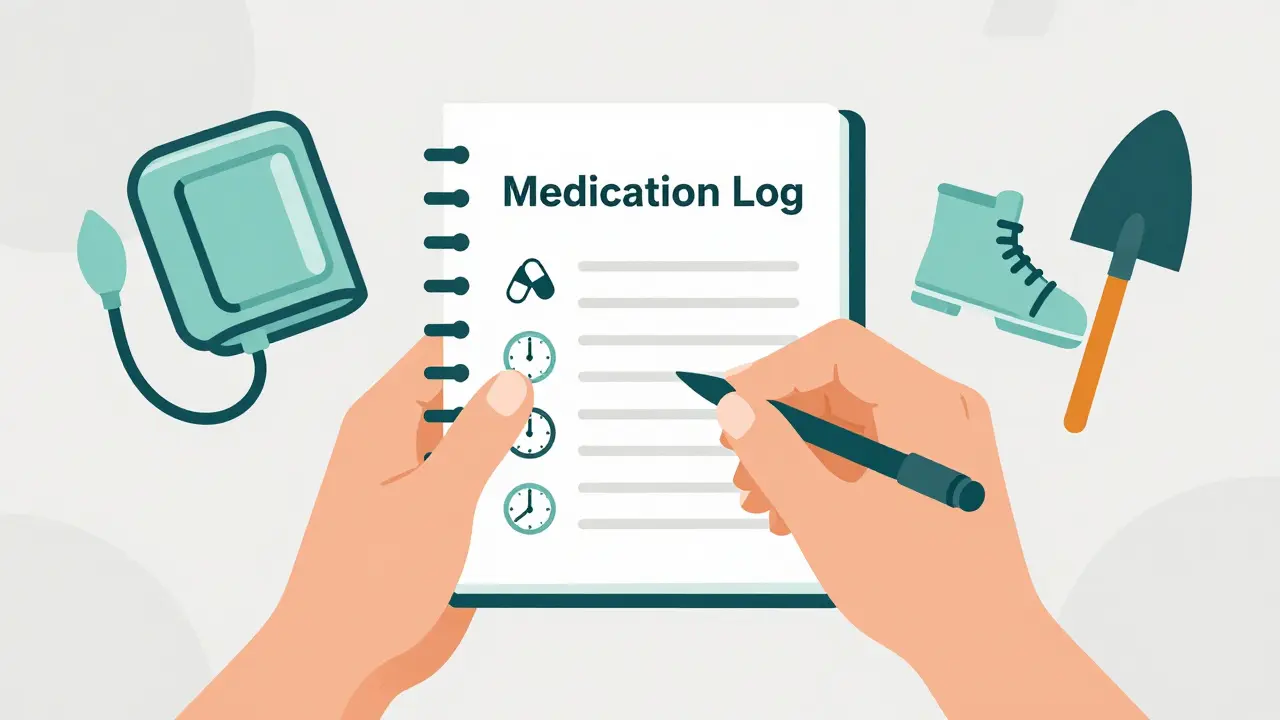
- Create a Complete List: Write down every pill, supplement, and over-the-counter remedy. Include dosages and times. Twenty-three percent of patients forget to mention supplements, which can interact dangerously with prescribed drugs.
- Track Side Effects: Don’t just say "I feel weird." Be specific. Note timing and severity. For example: "Dizziness occurs two hours after my morning dose, causing near-falls three times weekly." Specificity triggers clinical action.
- Identify Priorities: Pick one or two medications you suspect are causing issues. Use reputable sources like the Beers Criteria or STOPP/START criteria to research if these drugs are potentially inappropriate for your age group.
- Define Your Goals: Connect your health to daily life. Instead of "lower cholesterol," write "walk my granddaughter to school without getting winded." This shifts the focus from numbers to function.
- Schedule Time: When booking, specify "medication review." Rushed appointments lead to deferrals. Allocating specific time increases success rates by 42%.
The Right Words to Use (And Which to Avoid)
Language matters. How you frame the problem determines whether your doctor listens or dismisses you. Studies analyzing patient responses show that framing deprescribing around personal goals is significantly more effective than focusing on cost or simplicity.
| Approach | Example Phrase | Success Rate / Preference | Why It Works (or Fails) |
|---|---|---|---|
| Goal-Aligned | "I want to garden without feeling dizzy. Can we check if this med causes it?" | High (89% initiation success) | Connects medication to quality of life; invites collaboration. |
| Risk-Focused | "Some of these meds might be hurting my balance. Let's review them." | High (78.3% preference) | Patient values safety; clear link between drug and harm. |
| Cost-Focused | "These pills are too expensive. Can I stop some?" | Low (23.6% preference) | Doctors may fear you view care as transactional; misses clinical nuance. |
| Vague Request | "I just want to take fewer pills." | Very Low (29% success) | Lacks medical justification; easily dismissed as non-compliance. |
Avoid phrases that sound like you are withdrawing from care. Caregivers and patients often misinterpret cost-focused discussions as reduced quality of care. Instead, use the "Ask-Tell-Ask" technique recommended by medical communication experts:
- Ask: "What’s your view on how my current medications are working for me?"
- Tell: "I’ve noticed I’m falling asleep during the day since starting Drug X, and it’s affecting my ability to drive safely."
- Ask: "What would be the safest way to evaluate if we could reduce this dose?"
Overcoming Common Barriers and Fears
Even with preparation, conversations can stall. Fear is the biggest blocker. Sixty-seven percent of patients worry their conditions will worsen if they stop a med. Forty-one percent fear being seen as "difficult." These fears are valid but often misplaced.
Your doctor needs to know you understand the plan. Ask about monitoring. Seventy-nine percent of physicians require documented monitoring protocols before agreeing to deprescribe. Propose a trial: "Can we lower the dose by 25% for one month and track my symptoms?" This shows you are engaged, not rebellious.
If your doctor hesitates, ask for a second opinion or a referral to a geriatrician or pharmacist specializing in medication therapy management. In the UK, pharmacists play a crucial role in reviewing medicines lists. In the US, Medicare’s Annual Wellness Visit now includes billable medication optimization discussions. Know your rights and resources.

Real-Life Examples: What Success Looks Like
Consider "NanaCaregiver87," a user who shared her story online. She kept a "medication impact journal" for three weeks, noting how each pill affected her energy, mood, and mobility. When she showed this log to her physician, he agreed to deprescribe three medications over six months. The result? Better balance, clearer mind, and less fatigue.
Contrast this with "MedConfused45," who simply said, "I hate taking so many pills." His doctor dismissed the request as "not medically indicated." The difference wasn’t the desire-it was the evidence and the framing. Nana connected meds to function. MedConfused expressed frustration. Doctors respond to data and shared goals.
Next Steps: Making It Happen
Deprescribing is a journey, not a single event. Expect gradual changes. Eighty-six percent of successful cases involve tapered reductions or "drug holidays" rather than immediate stops. Withdrawal symptoms or condition recurrence can happen, so monitoring is key.
Bring printed information from reputable sources like the Canadian Deprescribing Guidelines to your next appointment. This increases success rates by 33%. Remember, you are the expert on your life. Your doctor is the expert on medicine. Together, you can optimize your regimen for the life you want to live-not just the diseases you have.
Is deprescribing safe for everyone?
Deprescribing is safe when done under medical supervision. It involves slowly reducing doses to monitor for withdrawal symptoms or return of original conditions. Never stop medications abruptly without consulting your doctor, as this can cause severe health complications.
How do I know which medications to discuss first?
Start with medications that cause noticeable side effects like dizziness, confusion, or fatigue. Also consider drugs for chronic conditions where your lifestyle has changed (e.g., statins if you no longer exercise). Resources like the Beers Criteria list potentially inappropriate medications for older adults.
What if my doctor refuses to deprescribe?
If your doctor resists, ask for the clinical rationale. You can request a referral to a specialist like a geriatrician or a clinical pharmacist. In many regions, independent medication reviews are available through community health services. Persistence and seeking second opinions are valid strategies.
Does insurance cover deprescribing consultations?
Coverage varies by location and provider. In the US, Medicare covers medication optimization during Annual Wellness Visits. In the UK, NHS pharmacists offer free medication reviews. Check with your insurer or local health authority for specific policies on medication therapy management services.
How long does the deprescribing process take?
It typically takes months, not days. Most successful cases involve gradual tapering over 3-6 months. This allows your body to adjust and helps identify any underlying issues that re-emerge. Patience and consistent tracking are essential for long-term success.
 Medications